 Ferndale
 Siding in Nooksack: What the Local Climate Actually Does to a Home
Nooksack sits in the rural, low-lying stretch of Whatcom County between the foothills and the coastal lowlands, and the exterior of a house here earns its keep. Homes in this part of the county deal with long stretches of driving rain in the fall and winter, high humidity that lingers under tree cover and along the river bottoms, and a moss season that can run most of the year on north-facing walls and shaded rooflines. Add in the marine-influenced air that moves through the whole county from the Salish Sea, and you get an exterior environment that's constantly working moisture into wood grain, paint film, and seams.
None of that is dramatic on its own. It's the accumulation that causes problems — siding that stays damp longer than it should, caulk joints that give out a season or two early, paint that chalks and peels faster than the can promised, and moss that takes hold in the low, shaded corners of a house and slowly holds moisture against the surface underneath it. Over years, that's how you end up with soft spots, delamination, or rot showing up behind siding that looked fine from the driveway.
We've built our approach around that reality rather than around what's cheapest to install. That's the whole reason we standardized on one siding product instead of offering a menu of options.
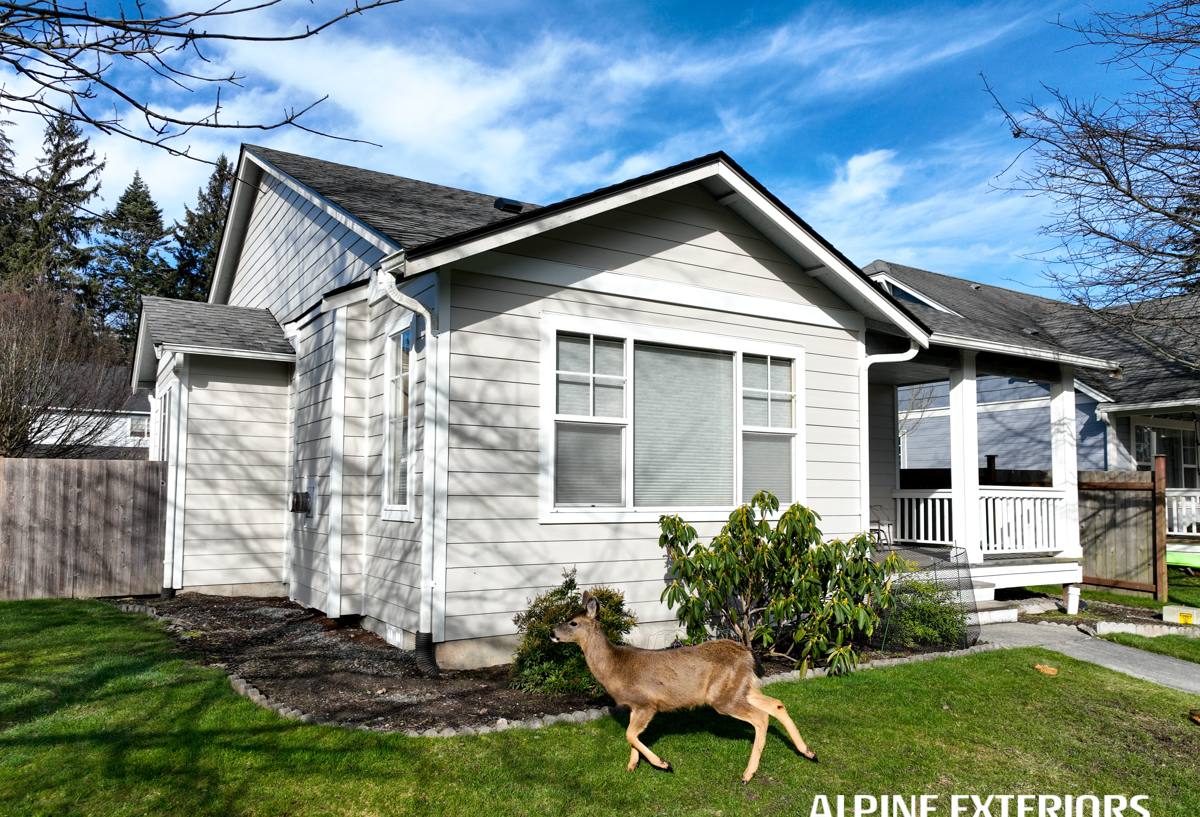
Why James Hardie Fiber Cement Is the Only Siding We Install
We install James Hardie fiber cement siding exclusively. We don't offer LP SmartSide, vinyl, Cemplank, Allura, primed spruce, or cedar — not because those products have no merit, but because after years of exterior work in this climate, we stopped being willing to put our name on materials that ask more of the homeowner than we think is reasonable in a place this wet.
Fiber cement is a mix of cement, sand, and cellulose fibers. It doesn't have the wood or wood-fiber content that gives moisture something to feed on, which matters directly in a climate where siding spends a large share of the year damp. It's non-combustible, which is worth something in a region where wildfire smoke and ember exposure have become a more regular late-summer concern even west of the mountains. And James Hardie's ColorPlus factory finish is baked on and warranted separately from the substrate, so you're not relying on a field-applied paint job to hold up against ten months of rain a year.
James Hardie also engineers specific product lines for different climate zones — the HZ5 line used in the Pacific Northwest is formulated around freeze-thaw and moisture exposure rather than a one-size-fits-all national spec. Paired with a transferable warranty that follows the house to the next owner, it's the product we're comfortable standing behind for the long haul, which is the same reason we won't install something we'd have reservations recommending to a friend.
What We're Not Saying
We're not telling homeowners that vinyl or wood siding is garbage — plenty of houses in this county wear it fine for years with regular upkeep. What we are saying is that once you weigh the maintenance burden, moisture sensitivity, and installation tolerances of those products against what fiber cement asks of a homeowner over 20-plus years, fiber cement is the more honest answer for this specific climate. That's a professional standard we hold ourselves to, not a knock on every other manufacturer.
Our Siding Process for Nooksack Homes
Inspection and Assessment
Every project starts with a walk-around of the existing exterior — checking for soft siding, failed caulk lines, moss buildup, and signs of moisture getting behind the cladding at trim, window returns, and the bottom courses near grade. On older homes in this area, that inspection often turns up sheathing or trim damage that isn't visible until the old siding comes off, which is why we build a reasonable contingency into the estimate rather than surprising you mid-project.
Removal, Prep, and Weather Barrier
Old siding comes off, and we assess the water-resistive barrier and flashing underneath before anything new goes on. This is the step that gets skipped or rushed on cut-rate jobs, and it's the one that matters most in a climate that sends rain sideways for days at a time. Flashing at windows, doors, and roof-to-wall transitions gets corrected here, not painted over.
Installation to James Hardie Spec
Fiber cement is unforgiving of shortcuts — correct fastener placement, proper clearances at grade and roof lines, and factory-specified joint treatment all affect how the product performs over time. We install to James Hardie's published specifications because that's what keeps the manufacturer's warranty intact and what actually keeps water out of the wall assembly, not just off the surface.
Trim, Caulk, and Final Detail
The last stage is where a lot of long-term performance gets decided — caulk quality and placement, touch-up matched to the ColorPlus finish, and making sure every penetration (vents, light fixtures, hose bibs) is sealed correctly. It's tedious work and it's where we spend real time rather than rushing to the next job.
Beyond Siding: Roofing, Windows, and Decks
Siding doesn't work in isolation — it's one piece of a home's exterior envelope. We also handle roofing, windows, and decks, which matters in a climate like this because those systems all interact at the same vulnerable points: roof-to-wall flashing, window integration with the weather barrier, and ledger board connections where a deck meets the house. A siding job done without regard for an aging roofline or a leaking window flange just moves the moisture problem somewhere else. Handling multiple trades under one crew means those transitions get planned together instead of handed off between contractors who never talk to each other.
Signs Your Nooksack Home May Need New Siding
- Moss or dark streaking that keeps returning to the same wall sections within a season of cleaning
- Paint that's peeling, bubbling, or chalking heavily rather than just fading evenly
- Soft or spongy spots when you press on siding, especially near the bottom courses or under windows
- Visible gaps, warping, or cupping in individual boards or panels
- Caulk joints that are cracked, shrunken, or missing at seams and trim
- A musty smell or visible staining on interior walls that back up to exterior siding
- Rising heating bills that suggest the wall assembly isn't sealing the way it used to
Cost Factors for a Siding Project
Every home is different, but the same variables tend to drive the price on Nooksack-area projects. This isn't a quote — it's what actually moves the number up or down.
| Factor | Why It Matters |
|---|---|
| Extent of hidden damage | Rot or sheathing damage found once old siding is removed adds repair scope before new siding can go on |
| Home size and wall complexity | Multiple stories, dormers, and cut-up wall lines take more labor and material than a simple rectangular footprint |
| Product line and profile | James Hardie plank, shingle, and panel styles vary in material and install cost |
| Trim and detail work | Corner boards, window trim, and fascia detailing add time but also protect the seams that fail first |
| Access and site conditions | Tree cover, fencing, or tight lot lines around a Nooksack property can slow staging and setup |
| Scope bundled with roofing/windows | Coordinating trades at the same time can reduce duplicated setup and flashing rework versus separate projects |
Why a Local Whatcom County Crew Matters
A crew that works this county year-round knows what a wet Nooksack winter actually does to a wall assembly, because we're the ones who come back to fix it when it's installed wrong the first time. That shows up in small decisions — where flashing gets extended an extra inch, how tight a caulk joint gets sealed, which corners never get cut regardless of what the schedule looks like. It also means someone local answers the phone if a warranty question comes up five years from now, instead of a call center for a company that installed once and moved on.
Maintenance After Installation
James Hardie siding is low-maintenance, not no-maintenance. In this climate, that means an annual rinse to keep moss and organic growth from establishing on shaded walls, a periodic check of caulk joints and trim seals, and prompt attention if you ever notice a soft spot or a section of siding taking on water. None of that is heavy lifting, but skipping it is how a 30-year product ends up needing attention at year twelve instead.
If your Nooksack home's siding is showing its age — or you're planning ahead before winter rains set in — we're happy to walk the property, tell you honestly what we see, and put together a free, no-pressure estimate. There's no obligation and no sales pressure, just a straight assessment from a crew that works this climate every day.