 Ferndale
 Why Nooksack-Area Homes Take a Different Kind of Beating
The Nooksack area sits close enough to Bellingham Bay and the Strait of Georgia that salt-laden air is a constant, low-grade factor on exterior materials, even though the water isn't in view from most yards. Add the volume of rain that moves through Whatcom County most of the year, plus the shaded, damp conditions along the Nooksack River corridor that keep siding wet longer after a storm passes, and you get a climate that's genuinely harder on a house exterior than most manufacturers' marketing photos suggest. Homes here don't fail because owners neglected them. They fail because the siding material wasn't built for this specific combination of salt, moisture, and shade.
North- and west-facing walls in this area are the ones we get called about most, and it's rarely about ugly wood grain or worn paint alone. It's soft trim boards, staining that won't scrub off, and siding that's holding moisture against the sheathing behind it. That's a maintenance and structural problem, not just a cosmetic one.
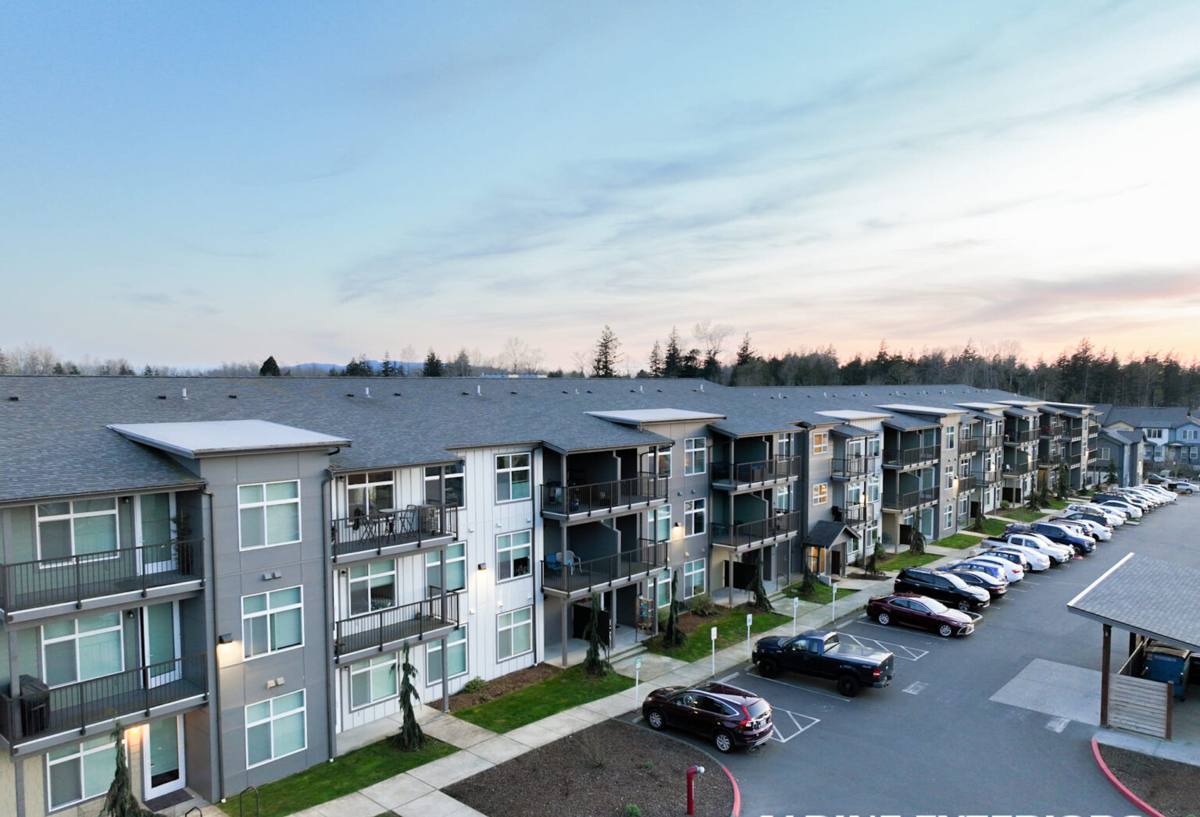
The Moss Season Problem
Whatcom County's moss season isn't a few weeks in fall — on shaded, north-facing walls it can run most of the year. Moss and algae need three things to take hold: moisture, organic surface texture for spores to grip, and limited direct sun to dry things out. Many siding materials, especially untreated wood and some composite products, give moss exactly the rough, porous surface it wants. Once moss establishes itself on a wall, it holds water against the material around the clock, which accelerates whatever decay process that material is already prone to.
This is one of the biggest reasons we standardized on James Hardie fiber cement. It's a cementitious product, not an organic one, so it doesn't feed mold or moss the way wood-based products can, and its factory finish gives spores less to grip onto than a rough-sawn or fuzzy-textured surface. That doesn't mean a Nooksack-area home never sees a streak of green on a shaded wall — nothing fully stops moss from landing and growing on any exterior surface in this climate — but the material itself isn't contributing to the problem, and it stands up to periodic washing without the surface breaking down.
What James Hardie Siding Actually Solves Here
James Hardie fiber cement is cement, sand, and cellulose fiber, factory-cured into boards and panels. That composition matters in a place like this for a few concrete reasons:
- It doesn't rot, and it isn't a food source for the fungi that cause rot in wood or wood-composite siding.
- It's dimensionally stable in swings between soaked and dry conditions, so it doesn't cup, warp, or telegraph fastener lines the way some wood and engineered-wood products can after repeated wet seasons.
- It's non-combustible, which matters everywhere but is a genuine, added layer of peace of mind on top of everything else it does well.
- The ColorPlus factory finish is baked on under controlled conditions, which holds up better against the freeze-thaw-drizzle cycle Whatcom County runs through most winters than field-applied paint does.
None of that means fiber cement is magic or maintenance-free. It means the material itself isn't the weak link — the installation is, which is why how it goes on matters as much as what goes on.
HZ5: Built for This Climate Zone, Not a Generic One
James Hardie engineers its products by climate zone, and the Pacific Northwest falls under the HZ5 designation. That's not a marketing label — it reflects real differences in the product's engineering for high-moisture, high-humidity regions compared to the HZ10 line built for hot, dry, high-UV climates in the Southwest. HZ5 products are engineered with this region's wet-dry cycling and moisture exposure in mind, which is part of why we don't treat "James Hardie siding" as a one-size-fits-all product — the version specified for a Nooksack-area home should be the one actually engineered for Nooksack-area weather.
What This Means for Product Selection
On a practical level, this affects which Hardie lines and profiles we recommend for a given wall, how we detail moisture management behind the siding, and what gapping and flashing tolerances we hold to. A correct HZ5 installation in this climate looks different in the details than a generic install manual assumes, even though the boards themselves may look identical from the yard.
What a Correct Installation Actually Involves
Fiber cement siding is only as good as the installation behind it, and that's true everywhere, but it's especially true where rain volume and moisture cycling are high. The things that separate a correct Hardie install from a problem waiting to happen include:
- Weather-resistive barrier and flashing done first — the siding is the last line of defense, not the only one. Proper house wrap, window and door flashing, and kick-out flashing at roof-wall intersections have to be right before a single board goes up.
- Correct gapping and clearances — Hardie specifies minimum gaps at butt joints, trim, and ground clearance for a reason: those gaps let the assembly dry out between rain events instead of trapping water.
- Fastener pattern and depth — over- or under-driven nails compromise both the water-shedding lap and the long-term hold, especially through repeated wet-dry cycling.
- Caulking and sealant only where Hardie specifies it — oversealing traps moisture behind the board just as reliably as underspecified flashing lets it in.
- Field-cut edge treatment — cut edges need to be primed and sealed per spec so the factory finish's protection isn't compromised at every seam.
Any one of these done wrong won't necessarily show up as a visible problem for a year or two. In a high-moisture climate, it shows up eventually — as staining, soft spots at trim, or paint failure at seams — and by then it's a repair, not a maintenance item.
Comparing Options for a Nooksack-Area Wall
| Factor | James Hardie Fiber Cement (HZ5) | Vinyl | Untreated/Primed Wood |
|---|---|---|---|
| Moisture & rot resistance | Cementitious, not an organic decay risk | Won't rot, but seams and J-channels trap moisture | Vulnerable, especially on shaded walls |
| Moss/algae growth | Doesn't feed growth; washes off a stable surface | Doesn't feed growth, but seams collect debris | Porous surface encourages growth |
| Finish durability in wet-dry cycling | Factory-baked ColorPlus finish | Color molded in, but can fade and become brittle | Field-applied paint fails faster with repeated cycling |
| Fire resistance | Non-combustible | Combustible plastic material | Combustible |
| Typical local lifespan when installed to spec | Decades, backed by a transferable warranty | Shorter, especially finish and impact durability | Highly dependent on maintenance follow-through |
We don't install vinyl, LP SmartSide, Cemplank, Allura, or unprimed cedar or spruce siding, and that's a deliberate standard, not an oversight. Each of those products has real strengths in the right application. What we've found, watching how exteriors actually age in this specific climate, is that they ask more of the homeowner in ongoing maintenance, or carry more risk in exactly the moisture conditions Nooksack-area homes deal with year-round, than we're willing to put our name behind. James Hardie, installed correctly, is the product we're confident standing behind for the long term here.
How We Work a Nooksack Job
- On-site assessment — we look at existing siding condition, wall orientation and shade exposure, moisture staining patterns, and any trim or flashing issues before quoting anything.
- Product and profile selection — HZ5 lines and profile chosen for the specific wall exposures on the house, not a blanket spec.
- Moisture management first — house wrap, flashing, and any sheathing repair happen before siding installation starts.
- Installation to Hardie's fastening, gapping, and sealant specs — no shortcuts on clearances or cut-edge treatment.
- Final walkthrough — we go over what was done, what warranty coverage applies, and what basic upkeep (if any) we'd recommend for that specific home's exposure.
Why It Matters That We Already Work This Area
A crew that works Ferndale and the Nooksack area regularly already knows which wall orientations tend to hold moisture the longest, how moss behaves on shaded elevations through the wet months, and what flashing details actually hold up against this rain volume year over year — not just what a national install manual says in general terms. That's the difference between a correct-on-paper installation and one that's actually correct for this specific climate.
What to Ask Any Contractor Before Hiring Them
- Are they James Hardie certified, and can they explain why they specify HZ5 products for this region?
- Will they detail the flashing and weather-resistive barrier work, not just the siding itself?
- Do they follow Hardie's published fastening and clearance specs, and can they explain what those are?
- What does the workmanship warranty cover, separate from Hardie's product warranty?
- Have they worked on homes in this specific area, with its specific moisture and shade conditions?
Maintenance and Longevity After Installation
A correctly installed James Hardie exterior in this climate is genuinely low-maintenance, but "low" isn't "none." Periodic gentle washing to keep organic buildup from establishing on shaded walls, an annual visual check of caulking at trim and penetrations, and prompt attention if a gutter starts overflowing onto a wall below it will keep the siding performing the way it's engineered to for decades. None of that requires refinishing or recoating the way painted wood siding does.
If you're weighing a siding project for a home in the Nooksack area or elsewhere around Ferndale, we're happy to take a look and give you a straight assessment — no pressure, no upsell, just what your walls actually need. Reach out for a free estimate using the form below.