 Ferndale
 Why Nooksack Roofs Take a Different Kind of Beating
Homes around Nooksack sit in a stretch of Whatcom County where the weather doesn't do anything gently. Rain comes in sideways off the marine air pushing up the valley, humidity lingers under the tree canopy for days after a storm passes, and the shoulder seasons bring long stretches where a roof surface never fully dries out. Add in the salt-tinged air that reaches inland from the Sound and a moss season that can run from late fall through spring, and you've got a roof assembly that's working harder than one in a drier climate, even if it looks fine from the driveway.
A new roof installation here isn't just "put shingles on a house." It's building an assembly — deck, underlayment, flashing, ventilation, and surface material — that's specifically suited to sustained moisture exposure and moss growth, not just wind and sun like a lot of national roofing guidance assumes. That's the lens we bring to every Nooksack-area job.
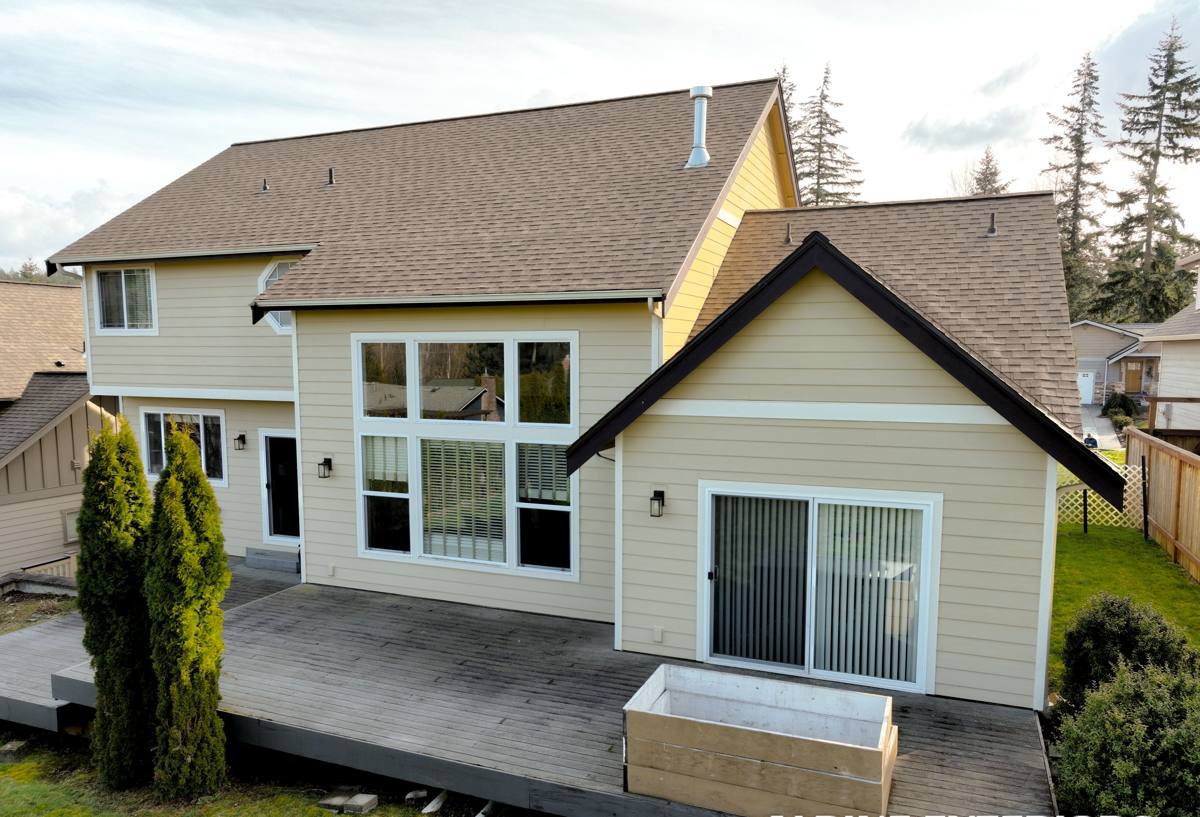
What Driving Rain and Moss Season Actually Do to a Roof
It helps to understand the failure pattern before you understand the fix. In this climate, roofs rarely fail because of one big storm. They fail because of years of small, repeated exposure:
- Wind-driven rain gets pushed uphill under shingle tabs and around flashing edges instead of running straight down, which is what most shingle products are designed to shed.
- Shaded, moisture-holding surfaces — north slopes, valleys, areas under overhanging trees — grow moss and algae that hold water against the roofing material far longer than an open, sun-exposed slope.
- Freeze-thaw cycling, even mild versions of it, opens up tiny cracks in aging materials that then take on water.
- Salt-bearing air accelerates corrosion on exposed metal — fasteners, flashing, drip edge — faster than it would inland in a drier climate.
None of these show up overnight. They show up as a five- or ten-year-old roof with soft spots, granule loss, or moss mats that a homeowner assumed just needed a cleaning — when the underlying deck and underlayment were already compromised.
Signs a Nooksack-Area Roof Needs Replacing, Not Patching
Not every roof problem means a full tear-off. But there's a point where patching individual leaks stops making financial sense and a full installation is the honest recommendation. Watch for:
- Moss or algae growth that returns within a season or two of cleaning, especially on north-facing or shaded slopes
- Granules collecting in gutters or at downspout outlets in noticeable amounts
- Shingles that are cupping, curling at the edges, or visibly thinning
- Soft or spongy spots when walked (we check this — homeowners shouldn't be walking their own roof)
- Daylight visible through the roof deck from inside the attic
- Rusted or lifted flashing around chimneys, vents, and valleys
- Interior staining on ceilings that reappears after heavy rain, even after a prior "fix"
- A roof approaching or past 20 years old on standard asphalt composition shingles
If you're seeing two or more of these, it's worth a real inspection before spending more money on spot repairs that won't hold.
What a Correct New Roof Installation Involves
The shingles or panels are the part everyone sees. The parts that actually determine whether a roof holds up in this climate are underneath them.
Deck Inspection and Repair
Before anything new goes down, the roof deck gets inspected for soft or delaminated sheathing — common in older homes where a slow leak went unnoticed for years. Any compromised sheathing gets replaced, not covered over. Installing new roofing over a soft deck just hides the problem and shortens the life of everything above it.
Underlayment and Water-Entry Protection
In a driving-rain climate, underlayment choice matters more than most homeowners realize. We use synthetic underlayment as the standard water-resistant layer across the field of the roof, with self-adhered ice-and-water membrane at the vulnerable points — eaves, valleys, around penetrations, and low-slope transitions — where wind-driven rain is most likely to work its way backward under the surface material.
Flashing and Valleys
Flashing failure is one of the most common causes of "mystery leaks" in this region. Correct installation means new flashing at every chimney, wall intersection, skylight, and valley — not reusing old, corroded flashing to save a step. Valleys in particular need to be built to shed high volumes of water fast, since that's exactly where rain concentrates during a heavy storm.
Ventilation
A roof assembly that can't breathe traps moisture underneath it, which speeds up deck rot and shortens shingle life from the inside out. Balanced intake and exhaust ventilation is part of a correct installation, not an optional upgrade — especially in a climate where the attic space is dealing with humid air more often than dry air.
Roofing Material Options for Nooksack Homes
There's no single "best" roofing material — the right choice depends on the home's roof pitch, budget, and how much moss and moisture exposure the specific slopes get. Here's how the common options compare for this climate:
| Material | Moss/moisture resistance | Typical lifespan | Notes for this climate |
|---|---|---|---|
| Standard asphalt composition shingle | Moderate | 20–25 years | Most common choice; algae-resistant (AR) shingle lines reduce staining and moss uptake compared to standard lines |
| Architectural/laminate shingle | Good | 25–30 years | Thicker profile sheds water better and resists wind uplift; a common upgrade from standard 3-tab |
| Metal (standing seam or panel) | Very good | 40–50+ years | Sheds water and moss buildup fastest of common options; higher upfront cost, low long-term maintenance |
| Synthetic/composite shingle | Good | 30–50 years | Mimics wood or slate appearance without the moisture absorption those materials are prone to |
We don't push one material as universally "better" — we walk through the trade-offs (upfront cost, maintenance expectations, appearance, warranty structure) against your specific roof and budget, and let you make the call with real information.
Our Installation Process
The process is the same discipline on every Nooksack-area home, adjusted for the specifics of that roof:
- On-site inspection and estimate — we walk the roof (not just look from the ground), check the attic for ventilation and moisture signs, and give you a written scope and price.
- Material selection — we go over the options above against your budget, roof pitch, and how exposed different slopes are to shade and moisture.
- Tear-off and deck inspection — old roofing comes off down to the deck, which gets inspected and any compromised sheathing replaced.
- Underlayment and flashing installation — ice-and-water membrane at vulnerable points, synthetic underlayment across the field, new flashing throughout.
- Ventilation check and correction — intake and exhaust balanced to the attic space.
- Roofing material installation — installed to manufacturer specification, which is what keeps the material's warranty valid.
- Cleanup and final walkthrough — magnetic sweep for stray fasteners, full site cleanup, and a walkthrough so you know exactly what was done.
Cost Factors for a New Roof in the Nooksack Area
Every roof is priced on its own specifics, but the same handful of factors drive most of the variation we see:
| Factor | Why it affects price |
|---|---|
| Roof size and number of slopes | More square footage and complexity (valleys, hips, dormers) means more material and labor time |
| Current deck condition | Rotted or soft sheathing found during tear-off adds material and labor to replace it correctly |
| Material choice | Standard asphalt, architectural shingle, metal, and synthetic products carry different material costs and install labor |
| Roof pitch and access | Steep or hard-to-access roofs take longer and require more safety equipment |
| Ventilation upgrades needed | Adding or correcting intake/exhaust ventilation is sometimes needed beyond a straight material swap |
| Tear-off layers | Removing multiple existing layers of roofing takes more labor than a single-layer tear-off |
We don't quote a number without seeing the roof — anyone who does is guessing, and that guess tends to change once the tear-off starts.
Why a Crew That Already Works Nooksack Matters
A roofing crew that works this specific area regularly knows things a crew from outside the region has to learn on your dime: which slopes in this valley tend to hold moss longest, how local building department inspections typically run, and what underlayment and ventilation choices actually hold up here versus what looks fine on paper in a drier climate. That local familiarity shows up in fewer surprises during the job and fewer callbacks after it.
It also matters for warranty follow-through. A crew based near Ferndale and working Whatcom County day to day is going to be around and reachable years down the line if a flashing detail needs a look or a warranty question comes up — which is worth more than it sounds like when you're comparing bids.
Living With Your New Roof: Maintenance Through Moss Season
A correctly installed roof still needs basic upkeep in this climate, and doing it right extends the life of the investment considerably:
- Keep gutters and downspouts clear so water isn't backing up under the roof edge during heavy rain
- Trim back overhanging branches where practical — less shade means less moisture retention and slower moss growth
- Have moss growth treated before it establishes a thick mat, rather than after — mats hold water against the roof surface and are harder to remove without damaging the material underneath
- Schedule a roof check after any major windstorm to catch lifted or displaced flashing early
- Avoid pressure washing shingles directly — it can strip granules and shorten the material's life; soft washing or manufacturer-approved cleaning methods are the safer route
None of this replaces the roof's own construction quality, but paired with a correctly installed assembly, it's what gets you the full lifespan out of the material instead of a shortened one.
Get a Straightforward Estimate
If your Nooksack-area roof is showing its age or you just want an honest opinion on whether repair or replacement makes more sense, we're happy to take a look. The estimate is free, there's no pressure attached to it, and you'll get a straight answer about what your roof actually needs — use the form below to get started.