 Ferndale
 Asphalt Shingle Roofing Built for Nooksack's Climate
Homes in the Nooksack area sit under a roof climate that doesn't forgive shortcuts. You're close enough to the water to pick up salt-laden air, exposed to long stretches of driving rain off the Pacific systems that roll through Whatcom County every fall and winter, and shaded by enough conifer cover that moss has months at a time to take hold before a dry spell ever shows up. An asphalt shingle roof installed the right way can handle all of that for decades. One installed with corners cut — thin underlayment, skipped flashing details, poor nailing — will show problems within a few wet seasons. This page covers what a correct asphalt shingle job actually involves in Nooksack, what to expect from a crew that knows this stretch of Whatcom County, and how to tell a roof that needs attention from one that's fine.
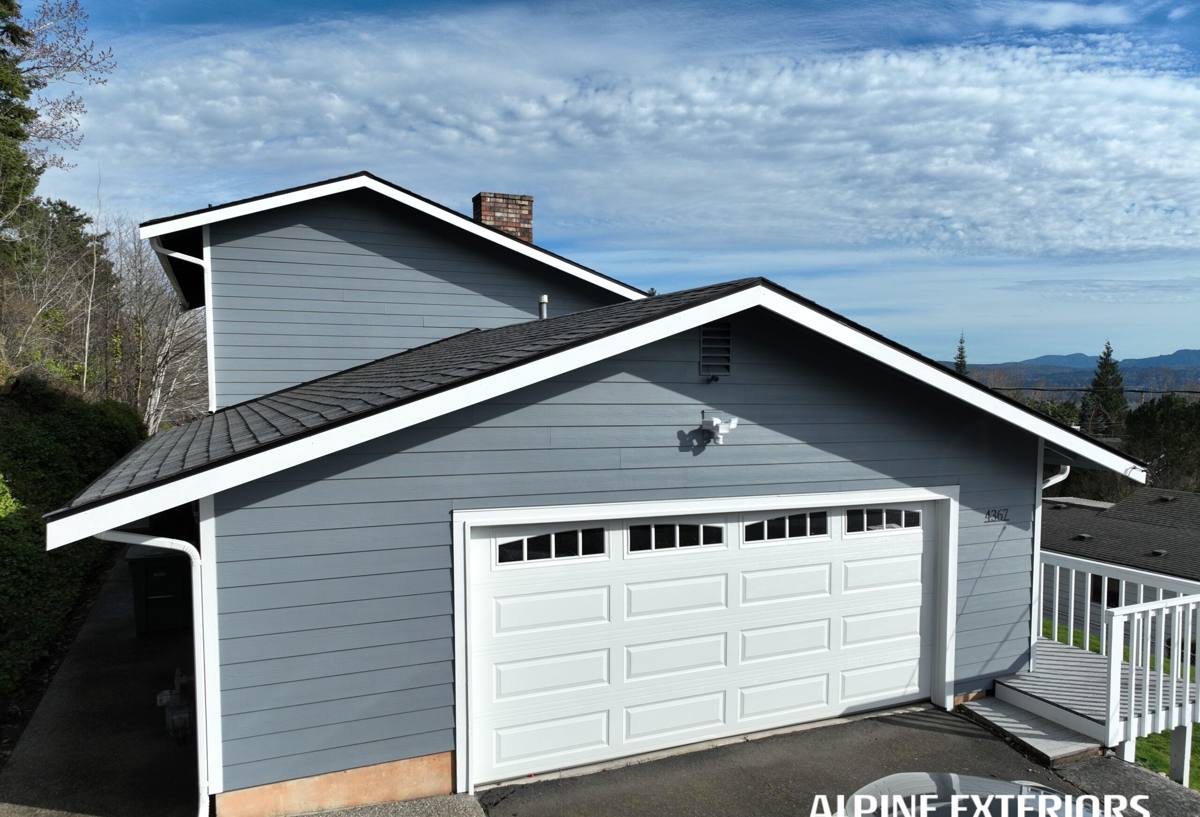
What This Climate Does to a Shingle Roof
Every roofing material has a regional stress test, and here it's a combination of three things working together rather than one dramatic event.
Moss and Organic Growth
North-facing slopes and anything shaded by trees stay damp for extended stretches, especially through the gray months. Moss doesn't just sit on the surface — its rhizoids work into the granule layer and lift shingle edges, which is exactly where wind-driven rain wants to get underneath. Left unaddressed, a moss mat holds moisture against the shingle around the clock, which shortens the life of the mat far faster than open sun exposure would.
Driving Rain and Wind-Driven Water
Straight-down rain is easy for any roof to shed. The problems start when wind pushes rain sideways or up under shingle tabs, which happens regularly during winter storm systems here. That's a flashing and sealing issue as much as a shingle issue — the shingles themselves can be in decent shape while water is still finding its way in around a chimney, skylight, or valley that wasn't detailed correctly.
Salt Air and Metal Fatigue
Proximity to Bellingham Bay and the Strait means a low but steady dose of salt in the air, which accelerates corrosion on exposed metal — nails, flashing, vent stacks, gutter hardware. A roof can look fine from the ground while the fasteners and flashing underneath are quietly degrading faster than they would inland.
None of these are reasons to avoid asphalt shingles. They're reasons the installation details matter more here than they would in a drier, calmer climate.
What a Correct Installation Actually Involves
A shingle roof is a system, not a single product. Skipping any layer of that system shows up as a leak later, usually well after the crew that installed it is gone.
- Deck inspection and repair: Any soft, delaminated, or water-stained sheathing gets replaced before a single shingle goes down — nailing into compromised decking is how you get a roof that fails from underneath.
- Ice and water shield at vulnerable points: Valleys, eaves, and roof-to-wall transitions get a self-adhering waterproof membrane, not just felt, because these are the spots where wind-driven rain and ice dams do the most damage.
- Synthetic underlayment across the field: A quality synthetic underlayment resists tearing and holds up to the extended wet exposure common during a multi-day install here, unlike older felt products that can wrinkle or degrade if weather moves in mid-job.
- Balanced ventilation: Ridge and soffit venting sized correctly for the attic keeps moisture from condensing on the underside of the deck — a major and underrated contributor to premature shingle failure and hidden rot.
- Correct nailing pattern: Manufacturer-specified nail placement and count, not a shortcut pattern. Under-nailed shingles are one of the most common causes of blow-offs during winter windstorms.
- New flashing, not reused flashing: Step flashing, counter-flashing, and pipe boots get replaced during a full re-roof rather than reused. Given the salt-air corrosion factor here, old flashing is rarely worth keeping.
Choosing the Right Shingle for a Nooksack Home
Not every asphalt shingle product is built the same way, and the right choice depends on your roof's exposure, pitch, and how much shade it sits under.
Architectural vs. 3-Tab
Architectural (laminated) shingles are heavier, rated for higher wind resistance, and generally hold up better to the driving rain and gusts common in winter storm systems here. Three-tab shingles are lighter and less expensive but have a thinner profile and lower wind rating, which matters more on exposed or higher-pitch roofs than on a sheltered single-story home.
Algae-Resistant Granules
Shingles with copper- or zinc-infused granules are formulated to resist the blue-green algae that causes dark streaking, which is a cosmetic issue more than a structural one but is common on shaded, damp roofs throughout Whatcom County. These are a reasonable upgrade on north-facing or heavily treed roofs and don't add meaningfully to install time.
Impact and Wind Ratings
For homes with more open exposure, a shingle with a higher wind rating (110 mph or better) is worth the modest price difference over a standard-rated product, given how often this area sees sustained wind events through the fall and winter.
| Shingle Type | Wind Rating | Best Suited For | Relative Cost |
|---|---|---|---|
| 3-Tab | Standard (60-70 mph) | Sheltered, low-pitch roofs | Lowest |
| Architectural | Higher (110-130 mph) | Most Nooksack-area homes | Moderate |
| Algae-Resistant Architectural | Higher (110-130 mph) | Shaded or north-facing roofs | Moderate to higher |
| Premium/Designer Laminate | Highest available | Steep or highly exposed roofs | Highest |
Ventilation and Moisture Control
A shingle roof doesn't fail in isolation — the attic underneath it plays a direct role in how long it lasts. In a climate with this much ambient moisture, an attic that isn't ventilated correctly traps humid air against the roof deck, and that moisture works both directions: it can rot the sheathing from below and shorten shingle life from above by keeping the underside of the deck perpetually damp. Balanced intake (soffit) and exhaust (ridge or box vents) venting is the fix, and it's something we check on every inspection, not just every install. It's also one of the most common gaps we find on older Nooksack-area homes where insulation was added or attic space was modified without anyone revisiting the venting math.
Our Process
- Inspection: We get on the roof (not just a ground-level look) and check the shingle field, flashing, vents, valleys, and attic ventilation, then walk you through exactly what we find — including if the honest answer is "this roof has a few more years left."
- Written estimate: A clear scope and price, broken out by material and labor, with no vague allowances buried in the fine print.
- Tear-off and deck check: Full removal of old material and a deck inspection before anything new goes down, since covering up bad sheathing is how small problems become expensive ones.
- Install: Ice and water shield, synthetic underlayment, new flashing, correctly ventilated, shingles nailed to spec.
- Cleanup and final walkthrough: Magnetic sweep for stray nails, debris hauled off, and a walkthrough so you know what was done and what to watch for going forward.
Repair, Restore, or Replace?
Not every roof problem means a full replacement, and we'll tell you that directly if it's true. The decision usually comes down to age, how widespread the damage is, and whether the underlying deck and ventilation are sound.
| Situation | Likely Fit | Why |
|---|---|---|
| Isolated leak, roof under 12-15 years old | Targeted repair | Localized flashing or shingle failure, rest of the roof still sound |
| Heavy moss coverage, shingles otherwise intact | Moss treatment and cleaning | Removes moisture-trapping growth without disturbing good material |
| Widespread granule loss, curling, or brittleness | Full replacement | Shingles past their service life across most of the roof |
| Roof over 20 years old with any active leaks | Full replacement | Underlayment and flashing are typically also at end of life |
| Soft or stained decking found during inspection | Deck repair plus replacement | Structural issue that a surface repair can't fix |
Maintenance That Actually Extends Roof Life
A little seasonal attention goes a long way in this climate, particularly heading into and out of the wet months.
- Clear gutters and valleys before the fall rains start — a clogged valley is one of the fastest ways to force water under shingles.
- Have moss treated before it forms a thick mat, not after — early growth is far easier and cheaper to deal with than an established layer.
- Trim back overhanging branches to cut down on shade, debris buildup, and physical abrasion against the shingle surface.
- Check attic ventilation isn't blocked by insulation, especially after any attic work or added insulation.
- Get a roof looked at after any major windstorm, even if nothing looks obviously wrong from the ground.
- Avoid pressure washing shingles — it strips granules and shortens the roof's life; low-pressure, roof-safe cleaning methods only.
Why a Crew That Already Works in Nooksack Matters
Roofing crews who mostly work drier, more sheltered parts of the state don't always price or detail for what this climate actually does to a roof over time — they under-spec ventilation, skip the extra flashing step, or use a standard-rated shingle where a higher wind rating would've been the better call. A crew that regularly works Nooksack and the surrounding Ferndale area knows which roof orientations tend to hold moss, which valley details tend to leak first, and how the salt air factor should shape flashing and fastener choices. That's not marketing — it's the difference between a roof that needs attention again in five years and one that doesn't.
Get an Honest Look at Your Roof
Whether you're dealing with a known leak, heavy moss buildup, or just want a straight answer on how much life is left in your current roof, we're happy to take a look. Fill out the form below for a free, no-pressure estimate — we'll tell you what we actually see, not just what sells a job.