 Ferndale
 Storm Damage Roofing in Nooksack: What Local Homes Are Up Against
Nooksack sits in a part of Whatcom County that gets hit from multiple directions at once. Pacific storm systems roll in off the water and dump driving, wind-blown rain for days at a time. Valley wind can funnel and gust harder than the forecast suggests. And because this corner of Washington rarely dries out for long, roofs here spend more months of the year damp than dry. That combination — wind, saturated wood, and moisture that lingers — is what actually causes most of the storm damage we get called out for, more so than any single dramatic weather event.
A lot of homeowners picture "storm damage" as a tree branch through the roof deck, and sometimes it is. But just as often it's a handful of lifted or cracked shingles from a windstorm that nobody noticed for weeks, quietly letting water in every time it rains. By the time a stain shows up on a ceiling, the damage has usually been building for a while. In a climate like ours, that lag between "the storm happened" and "the damage becomes visible" is the single biggest reason small problems turn into expensive ones.
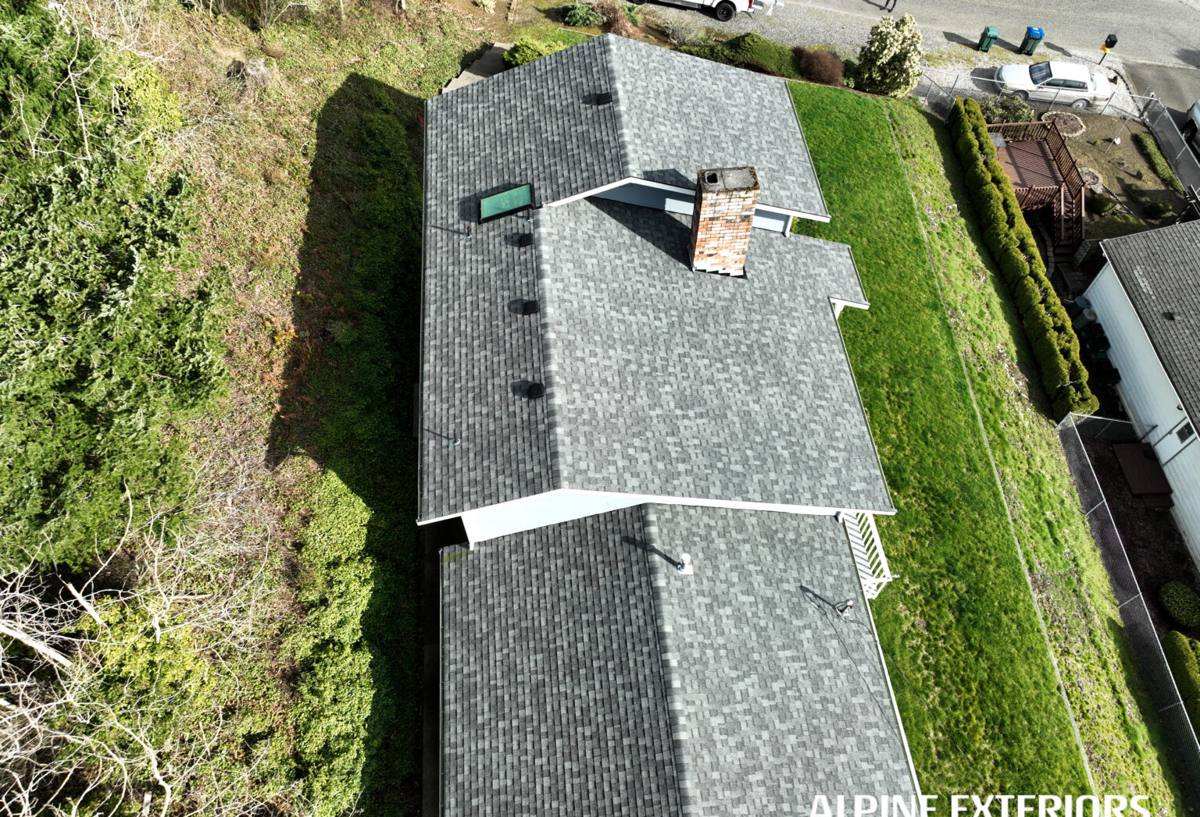
What Actually Counts as Storm Damage
Wind
Wind doesn't need to be a named storm to do damage. Sustained gusts work shingles and fasteners loose over time, lifting tab edges and breaking the seal strips that keep water out. Once a shingle's seal is broken, it usually won't reseal on its own — it just keeps flapping and letting more water underneath with each rain event.
Wind-driven and horizontal rain
This is the one that catches people off guard. A roof can be in decent shape and still take on water during a bad storm if the rain is coming in sideways. Horizontal rain pushes past flashing, under ridge caps, and into any gap that would never leak in a normal vertical downpour. Homes here see this pattern regularly, which is why flashing and edge details matter as much as the shingles themselves.
Debris impact
Falling branches, wind-thrown debris, and occasionally hail can crack shingles, dent metal flashing, or puncture the roof deck outright. Impact damage is usually the most obvious kind and the easiest to point to on an insurance claim — but it's often not the only damage present, which is why a full inspection matters more than a spot check.
Moss and moisture damage that storms expose
Moss doesn't cause storm damage on its own, but it sets the stage for it. A moss-covered roof holds moisture against the shingle surface long after a storm passes, and moss growing under lifted shingle edges keeps prying them further open. In a region with a moss season as long as ours, a roof that's gone a couple years without cleaning is simply more vulnerable when the next windstorm comes through.
How Small Damage Turns Into a Big Repair
The chain of events we see most often on Nooksack roofs looks like this: wind lifts or cracks a section of shingles → driving rain gets underneath during the next storm → moisture sits in the underlayment and decking because the area never fully dries between rain events → rot or mold sets into the deck → the repair goes from "replace a section of shingles" to "replace decking and shingles both." Each step in that chain is cheaper to stop than the one after it. That's the real argument for prompt storm damage repair — not fear, just how wet-climate roofing failures actually progress.
Signs your roof may have storm damage worth checking
- Shingles that look cupped, curled, or lifted at the edges, especially after a windy week
- Granules collecting in gutters or at downspout outlets
- Visible cracked, torn, or missing shingles from the ground
- Dented or bent flashing around chimneys, vents, or skylights
- Moss buildup along ridges or in shaded, north-facing slopes
- New ceiling stains, especially ones that appear after a storm and then seem to "dry up"
- Daylight visible through the roof deck from inside the attic
- Debris (branches, needles, granule buildup) that hasn't been cleared after recent weather
What a Correct Storm Damage Repair Actually Involves
Inspection before assumptions
We start on the roof, not on a ladder squinting from the ground. A proper storm damage inspection checks the shingle field, all flashing points, ridge and valley lines, and — critically — goes into the attic to look for moisture staining or deck softness that isn't visible from outside. Damage that's only assessed from the ground gets missed constantly, and it's usually the missed damage that causes the next leak.
Repairing to match, not just patch
A patch job that doesn't match the surrounding shingle course or flashing profile is asking for another leak at the seam. Correct storm repair means matching shingle type, exposure, and fastening pattern to the existing roof, and replacing flashing rather than caulking over damaged sections. Caulk is a stopgap, not a repair — it fails faster than proper flashing and it's one of the most common shortcuts we find when we're called to fix someone else's earlier "fix."
Addressing the underlying deck
If water made it to the decking, that wood needs to be assessed and, where needed, replaced before new shingles go down. Shingling over soft or rotted decking hides the problem instead of solving it, and it will fail again — usually sooner than the first time.
Checking ventilation and moisture pathways
Because Whatcom County roofs stay damp for long stretches, we also check that attic ventilation is doing its job. A roof that can't breathe holds moisture longer after every storm, which feeds moss growth and slows drying — setting up the next round of damage.
Repair vs. Replacement: What Actually Drives the Decision
| Factor | Leans toward repair | Leans toward replacement |
|---|---|---|
| Extent of damage | Isolated to one area or slope | Scattered across multiple slopes |
| Roof age | Well within expected lifespan | Already near end of service life |
| Deck condition | Solid, dry decking underneath | Rot or repeated soft spots found |
| Shingle availability | Matching shingles still obtainable | Discontinued or badly weathered mismatch |
| Storm history | First real damage event | Repeated damage in the same areas |
Most storm calls we get in Nooksack are legitimate repairs, not replacements. But we'll tell you honestly if a repair is just delaying a replacement you're going to need anyway — that's a judgment call we'd rather make with you up front than let you find out the hard way after paying for a patch.
Working With Your Insurance Claim
Storm damage is one of the more common roofing insurance claims, and having clear documentation matters. We photograph the damage, note the likely cause and approximate date range, and provide a written scope of repair that you can submit alongside your claim. We're not a public adjuster and we don't guarantee claim outcomes, but a well-documented inspection from a local roofer who's seen how Nooksack-area storms typically damage roofs tends to make the claims process smoother, not harder.
Our Process
- Inspection: We assess the roof, flashing, and attic, and identify what's storm-related versus general wear.
- Written estimate: You get a clear scope and price before any work starts — no surprise add-ons mid-job.
- Repair: Matching materials, proper flashing, deck repair if needed, done to hold up through the next storm season, not just look fixed.
- Documentation: Photos and notes provided for your records or insurance claim.
Why It Matters to Hire a Crew That Already Works This Area
Roofing here isn't identical to roofing in a drier climate, and it isn't identical to roofing right on the coast either. A crew that regularly works Ferndale and the surrounding Whatcom County communities, including Nooksack, knows how local storm patterns tend to load damage onto specific slopes and flashing details, how long moss season really runs here, and what repair methods actually hold up through repeated wet-dry cycles rather than just looking fine on a sunny inspection day. That local pattern recognition is what keeps a repair from becoming a callback.
Get a Free, No-Pressure Estimate
If a recent storm has you wondering whether your roof took damage, it's worth having it looked at before the next round of weather moves through. Fill out the form below for a free estimate — no obligation, no pressure, just an honest read on what your roof actually needs.