 Ferndale
 Siding Built for Custer's Coastline Climate
Custer sits in that stretch of northern Whatcom County where the land runs flat toward Birch Bay and the Strait of Georgia, close enough to salt water that homes here take on a different kind of weather load than houses further inland. The wind off the water carries salt, the rain comes in sideways more often than it falls straight down, and the tree cover that shades so many Custer properties keeps siding damp for days after a storm passes. Any exterior product installed here has to handle all three at once — salt exposure, wind-driven moisture, and prolonged dampness — not just one of them.
We're a Ferndale-based exterior contractor working the Custer area regularly, and we install James Hardie fiber cement siding exclusively. That's not a marketing angle — it's a standard we hold because we've seen how the alternatives perform in this exact climate over time, and we'd rather tell a homeowner the truth up front than sell a product we know will disappoint them in twenty years.
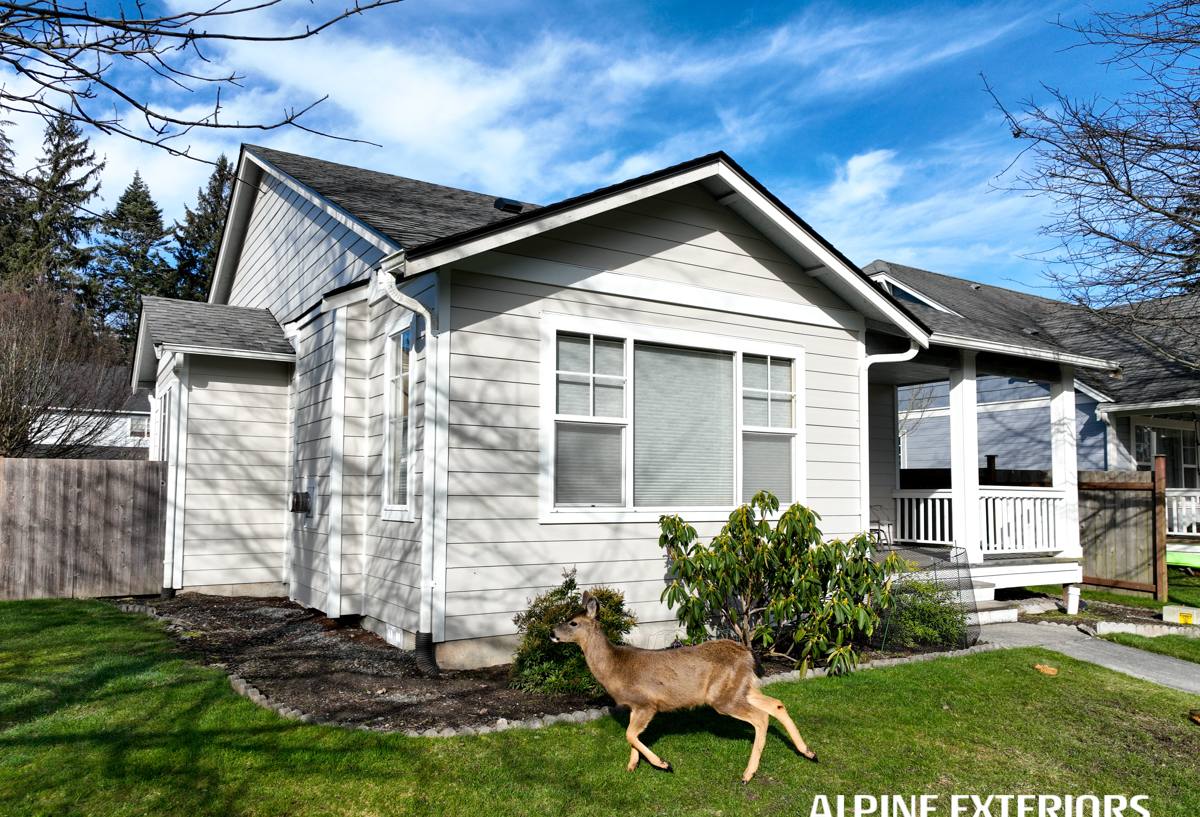
What Custer Homes Are Actually Up Against
Salt Air and Metal, Caulk, and Fasteners
Proximity to Birch Bay and the Strait means airborne salt reaches siding, trim, and fasteners even on properties that aren't waterfront. Salt accelerates corrosion in exposed metal fasteners and breaks down lower-grade caulks and sealants faster than manufacturers' published lifespans suggest. Siding materials that rely on face-nailing with exposed heads, or trim systems with a lot of caulked joints, tend to show their age here sooner than the same products would fifty miles inland.
Driving Rain
Storms coming off the water don't just fall on a house — they push against it. Wind-driven rain finds every lap gap, every under-caulked seam, and every spot where a siding panel wasn't fastened or flashed correctly. Products that depend on paint film or surface sealants to stay watertight are more exposed to this kind of weather than products that are dimensionally stable and factory-finished.
Moss, Shade, and a Long Damp Season
Whatcom County's tree cover and marine layer mean a lot of Custer properties stay shaded and damp well into the year. Moss and algae growth on north-facing walls and anywhere siding sits close to landscaping isn't just cosmetic — organic materials with any wood content can hold moisture against the surface long enough to start breaking down fiber or promoting rot at seams and butt joints. Non-organic, moisture-resistant siding doesn't eliminate moss growth on the surface, but it doesn't feed the problem the way wood-based products can.
Why We Only Install James Hardie Fiber Cement
We get asked regularly why we don't offer vinyl, LP SmartSide, cedar, or other fiber cement brands. The honest answer is that we standardized on James Hardie after weighing how each option actually performs over 15-30 years in exactly this kind of coastal, wet, shaded climate — not just how it looks on install day.
- Non-combustible: Hardie fiber cement doesn't contribute fuel to a fire, which matters for insurance considerations and peace of mind alike.
- Dimensionally stable: It doesn't expand and contract with moisture the way wood-based or vinyl products can, which means fewer gaps opening up at seams over time.
- Factory-applied ColorPlus finish: The color is baked on at the factory under controlled conditions, not brushed on at the jobsite, so it resists fading and chipping far better than field-applied paint.
- Climate-engineered HZ formulations: Hardie makes region-specific product lines engineered for exactly the kind of wet, temperate exposure Whatcom County gets.
- Strong transferable warranty: Backed by a manufacturer with decades in the fiber cement business, not a smaller player still building a track record.
Vinyl siding is inexpensive and easy to install, but it can warp or crack in temperature swings, fades over time, and offers little structural resistance to wind-driven rain finding its way behind panels. LP SmartSide and other engineered wood products perform reasonably well when installation is flawless, but any wood-based product remains more vulnerable to prolonged moisture exposure than fiber cement, and Custer's damp shoulder seasons don't leave much margin for installation error. Cedar is beautiful and has real appeal, but it demands a maintenance commitment — refinishing, sealing, and monitoring for rot — that most homeowners underestimate until they're a decade in. We're not saying these products are junk. We're saying that after installing and repairing exteriors in this exact region, Hardie is the product we're willing to put our name behind.
What Correct Installation Actually Involves
James Hardie siding performs to its rated lifespan only when installed to the manufacturer's specifications — and in a high-moisture area like Custer, the details matter more than they would in a drier climate.
Proper Water Management Behind the Siding
A correctly installed rainscreen or drainage plane, proper flashing at every window, door, and roofline intersection, and correct fastener placement all determine whether wind-driven rain stays out or works its way behind the cladding. This is the part of the job that's invisible once the siding is up, which is exactly why it has to be done right the first time.
Fastener and Gap Spec
Hardie's installation manual specifies fastener type, spacing, and clearance gaps at butt joints, corners, and trim. Skipping these specs to save labor time is one of the most common causes of premature failure we see when we're called out to look at another contractor's work.
Caulking and Sealant Choices in a Salt Environment
Given the salt exposure this close to the water, sealant quality and application matter more here than in most parts of the state. We use products rated for the exposure, not the cheapest option that meets minimum code.
Beyond Siding: Roofing, Windows, and Decks in Custer
Siding doesn't work in isolation — it's one piece of an exterior envelope that also includes the roof, windows, and any deck structures attached to the home. We handle all four because they interact directly with each other on a property exposed to this much wind-driven rain.
Roofing
A roof with failing flashing or worn underlayment sends water down onto siding and trim it was never meant to handle. We look at roof condition as part of any siding conversation, because a new wall system installed under a leaking roof is money spent solving the wrong problem.
Windows
Window flashing and integration with the new siding is one of the most common failure points we see in older installations. When we replace siding, we make sure window flashing is either already correct or brought up to spec as part of the job.
Decks
Decks attached to the house share ledger boards, flashing, and water paths with the siding above them. A poorly flashed deck ledger is a common source of hidden rot, and it's worth addressing at the same time as any exterior siding work.
Comparing Siding Options for a Custer Home
| Factor | Vinyl | LP SmartSide / Engineered Wood | Cedar | James Hardie Fiber Cement |
|---|---|---|---|---|
| Salt air resistance | Moderate; can become brittle over time | Moderate; vulnerable if moisture gets behind panels | Requires regular refinishing to hold up | Strong; non-organic, engineered for coastal exposure |
| Wind-driven rain performance | Depends heavily on installation quality | Good if installed and sealed correctly | Good if maintained; vulnerable if neglected | Strong when installed to spec, with proper water management |
| Fire resistance | Can melt or ignite | Combustible | Combustible | Non-combustible |
| Finish longevity | Color molded in, can fade | Field or factory finish varies by product | Needs periodic refinishing | Factory-baked ColorPlus finish resists fading and chipping |
| Maintenance burden | Low, but limited repair options | Moderate; monitor for moisture damage | High; ongoing sealing and refinishing | Low once installed correctly |
Why a Local Crew Matters in Custer
Whatcom County building departments, wind exposure categories, and the practical realities of working this close to the water are things a crew based elsewhere doesn't necessarily account for. We're a Ferndale-based company that works this area routinely, which means we're familiar with the drainage challenges, the moss and algae patterns on shaded lots, and the kind of flashing details that hold up against driving rain off the Strait. We're also around after the job is done — not a crew that worked through the area once and moved on.
What to Look For When Hiring an Exterior Contractor
- Manufacturer-trained or certified installers, specifically for the siding brand being installed
- A written scope that specifies fastener type, flashing details, and drainage plane approach — not just "siding replacement"
- Proof of licensing and insurance appropriate for exterior construction work in Washington
- A willingness to explain trade-offs between products honestly, rather than pushing whatever has the highest margin
- Local references or a local physical presence, not just a regional sales office
- A clear warranty structure — both the manufacturer's product warranty and the contractor's workmanship warranty
Getting Started
Every Custer property carries its own mix of shade, wind exposure, and moisture patterns, and the right approach depends on the specific condition of the home — how the current siding has held up, what the roof and window flashing look like, and where the property sits relative to prevailing wind and rain direction. If you're weighing a siding replacement, or wondering whether your roof, windows, or deck need attention alongside it, we're happy to take a look and give you a straightforward, no-pressure estimate.