 Ferndale
 Siding Replacement Built for Nooksack's Climate
Nooksack sits inland from the salt water but still gets the full weather package that defines exterior work in Whatcom County: long stretches of driving rain off the Pacific, damp air moving up the valley, and short, low-sun winters that keep every north-facing wall wet for days at a time. Add in the moss and algae growth that thrives in that kind of shade and moisture, and you have a climate that is genuinely hard on siding — not because any one storm is severe, but because the exposure never really lets up.
Homes in and around Ferndale and the Nooksack area often show the same wear pattern: siding that looked fine from the street for years, then started failing from the inside out once moisture worked its way behind cracked caulk, warped boards, or failed paint film. By the time it's visible, the sheathing and framing underneath may already be affected. Siding replacement done right in this area isn't just a cosmetic upgrade — it's a moisture-management project first and a finish-look project second.
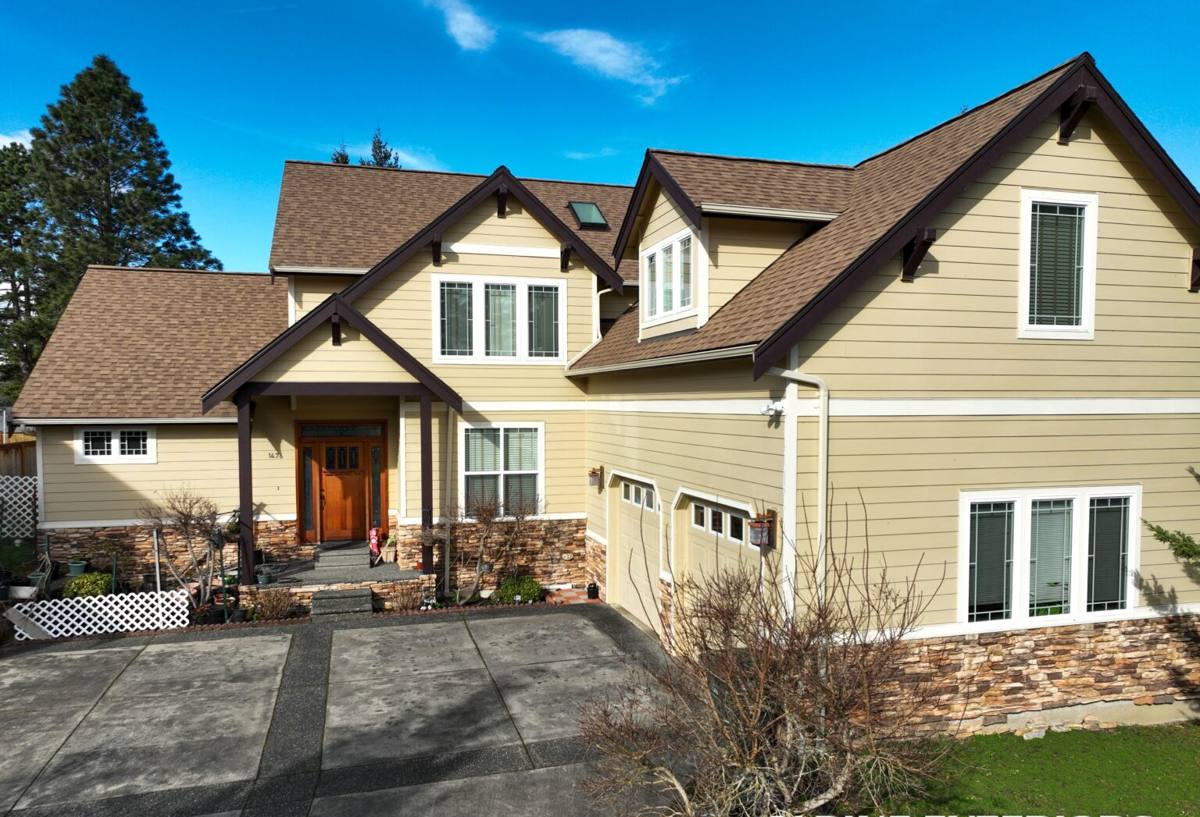
Why Local Homes Wear Out Siding Faster Than the Manufacturer's Brochure Suggests
Every siding product has a published lifespan, but those numbers assume ideal installation and average climate exposure. Nooksack and the greater Ferndale area are not "average" in the ways that matter most for siding longevity:
- Persistent moisture load: Extended rainy seasons mean siding spends more cumulative hours wet than in drier regions, which accelerates any weak point in the water-management system.
- Moss and algae pressure: Shaded walls, tree cover, and the region's humidity create ideal conditions for moss and algae to take hold on porous or textured surfaces, trapping additional moisture against the substrate.
- Salt-influenced air: Proximity to Puget Sound and the Strait of Georgia means the air carries fine salt content even well inland, which speeds up corrosion of fasteners, flashing, and unprotected metal trim.
- Temperature swings: Cool, wet winters followed by warmer, drier summers put repeated expansion-and-contraction stress on siding materials and their joints.
None of this means a home is doomed — it means the material and the installation details have to be matched to the actual environment, not a national average.
What a Correct Siding Replacement Involves
It Starts Underneath the Siding, Not With It
The single biggest mistake in siding replacement is treating it as a surface swap. A correct job always includes an inspection of what's behind the old siding: the water-resistive barrier (house wrap), the sheathing, window and door flashing, and any areas where past moisture intrusion has already caused rot or soft spots. In a climate like this one, skipping that step means locking in a hidden problem behind a brand-new wall.
The Full Scope of a Proper Replacement
- Removal of existing siding and trim, with a visual and probe inspection of sheathing for soft or delaminated areas.
- Repair or replacement of any compromised sheathing before anything new goes up.
- Installation of a new, continuous water-resistive barrier, correctly lapped and sealed at seams, penetrations, and terminations.
- Proper flashing at windows, doors, and any horizontal transitions — this is where the majority of long-term leaks originate.
- Installation of the new siding to the manufacturer's specified fastening pattern, gapping, and clearance requirements.
- Correct caulking and sealant use only where the manufacturer's install guide calls for it — over-caulking traps moisture just as badly as under-caulking allows it in.
- Trim, corner, and transition detailing that keeps water moving away from the wall assembly rather than pooling or wicking into it.
Every one of those steps matters more in a wet, moss-prone climate than it would somewhere dry. A rushed or partial job can look identical to a correct one for the first year or two — the difference shows up three, five, or ten years later.
Why We Install Only James Hardie Fiber Cement
We made a deliberate decision to install one product line — James Hardie fiber cement siding — and to stop installing vinyl, LP SmartSide, primed wood, or other fiber cement brands. That wasn't a marketing choice; it came from seeing how different materials actually perform over time in this specific climate.
What Matters for a Moss-Season, Salt-Air Climate
- Non-combustible core: Hardie's fiber cement composition doesn't feed a fire the way wood-based or vinyl products can, which matters for insurance and long-term risk regardless of climate.
- Engineered for moisture cycling: Hardie's HZ5 product line is specifically engineered for climates with freeze-thaw cycling and sustained moisture exposure — a closer match to the Pacific Northwest than product lines engineered for drier regions.
- Factory-applied ColorPlus finish: Because the color and finish are baked on at the factory under controlled conditions, the surface holds up more consistently against UV, rain, and moss/algae growth than field-applied paint, which is only as good as the weather conditions on the day it was applied and the surface prep underneath it.
- Dimensional stability: Fiber cement doesn't swell, warp, or rot the way wood-based products can when they take on repeated moisture — a real factor in a region where siding rarely gets a long dry stretch to fully release moisture.
- Transferable warranty backing: Hardie's warranty structure is well established and transfers with the home, which matters to owners thinking about resale.
We're not going to pretend other products are without merit — vinyl is inexpensive and low-maintenance in mild climates, and engineered wood sidings have improved over the years. But once you weigh moisture behavior, fire performance, and long-term finish durability against what this climate actually does to a wall over 15-20 years, fiber cement from a manufacturer that engineers specifically for this region is the standard we're willing to put our name behind.
Comparing Siding Options for the Nooksack Climate
| Factor | Vinyl Siding | Engineered Wood (LP SmartSide) | James Hardie Fiber Cement |
|---|---|---|---|
| Moisture tolerance | Doesn't absorb water, but can warp/buckle and trap moisture behind panels | Vulnerable to swelling and edge failure if moisture reaches the wood substrate | Cement-based core resists rot and moisture damage when installed to spec |
| Moss/algae resistance | Surface can host growth in shaded, damp areas | Textured surface can hold moisture and support growth | Factory finish sheds moisture better; growth is a maintenance item, not a structural one |
| Fire performance | Combustible | Combustible (wood-based) | Non-combustible core |
| Finish durability | Can fade and become brittle over time | Relies on factory or field-applied coatings | ColorPlus factory finish engineered for extended fade resistance |
| Typical lifespan (well installed) | 20-30 years | 20-30 years, shorter if moisture management fails | 30-50 years, backed by manufacturer warranty |
Our Process for a Nooksack-Area Project
A siding replacement in this area follows a consistent process, whether the home is a few years old with a specific problem area or a decades-old house due for a full re-side:
- On-site assessment: We walk the exterior, check for visible signs of moisture damage, and look at trouble spots like window flashing, roof-to-wall transitions, and low-clearance areas near grade.
- Written scope and product selection: We go over which James Hardie product and profile fits the home — lap siding, panel, or shingle-style — and explain the reasoning, not just the price.
- Sheathing and barrier work: Any repair needed behind the old siding gets handled before new material goes on, with photos documenting what was found.
- Installation to manufacturer spec: Fastening, gapping, and flashing details follow Hardie's published installation guidelines — the warranty depends on this, and so does actual performance.
- Final walkthrough: We review the completed work with the homeowner, including basic care and what to watch for going forward.
What to Check Before Hiring Anyone for Siding Work
- Do they inspect and address sheathing/moisture issues, or just cover over the old siding?
- Do they follow the manufacturer's written installation specifications, or their own shortcuts?
- Are they licensed and insured to work in Washington, and will they put the scope in writing?
- Do they explain flashing and water-management details, or only talk about color and style?
- Have they worked in this specific climate zone, with its moss and moisture patterns?
Why Local Experience in This Specific Area Matters
Whatcom County's microclimates vary more than people expect — a home a few miles from the water deals with different exposure than one further inland, and shaded, tree-lined properties around Ferndale and Nooksack face heavier moss pressure than open, sun-exposed lots. A crew that already works this area knows which walls typically show moisture damage first, which flashing details get skipped by out-of-area installers unfamiliar with the region, and how to sequence a project around the area's rainy stretches rather than fighting them. That local pattern-recognition is hard to substitute with general experience from a different climate.
Maintenance After Replacement
James Hardie siding is genuinely low-maintenance compared to wood-based alternatives, but "low-maintenance" doesn't mean "no maintenance" in a climate that grows moss on almost anything left damp and shaded long enough. A simple annual check goes a long way:
- Rinse siding periodically to remove built-up dirt, pollen, and early moss growth, especially on shaded north- and east-facing walls.
- Keep gutters clear so overflow doesn't run directly down the siding face.
- Trim back vegetation and tree limbs that keep a wall section shaded and damp longer than the rest of the house.
- Watch caulk lines at trim and penetrations for cracking, and have them addressed before water gets behind the surface.
Because ColorPlus finishes are factory-applied, most homeowners never need to repaint — a real difference from wood siding, which typically needs refinishing on a recurring cycle in this climate.
Get a Straightforward Estimate for Your Nooksack Home
If your siding is showing its age, or you just want an honest read on what's happening behind it, we're glad to take a look. We'll tell you what we find, what we'd recommend, and why — no pressure, no inflated scope. Use the form below to request a free estimate for your Nooksack-area home.