 Ferndale
 Why Decks Wear Out Faster Around Nooksack
Nooksack sits in a stretch of Whatcom County where the weather doesn't do decks any favors. Winters bring long stretches of driving rain, the river valley holds humidity in the air well past the point where a deck should have dried out, and a marine-influenced climate means salt-tinged air moves inland more than most homeowners realize. Add in the shade from mature evergreens common on rural and semi-rural lots in this area, and you get the ingredients for a slow, steady breakdown: moss and algae that hold moisture against wood fibers, ledger boards that stay damp for days after a storm, and fasteners that corrode from the inside out long before the surface boards look bad.
A deck built to a national average spec, without those local conditions in mind, tends to show real trouble in year eight to twelve instead of lasting the fifteen to twenty-five years it should. That's not a knock on any one builder — it's just what happens when a structure sees this much sustained moisture. When we talk about deck replacement in Nooksack, we're not just talking about swapping old boards for new ones. We're talking about correcting for a climate that punishes shortcuts.
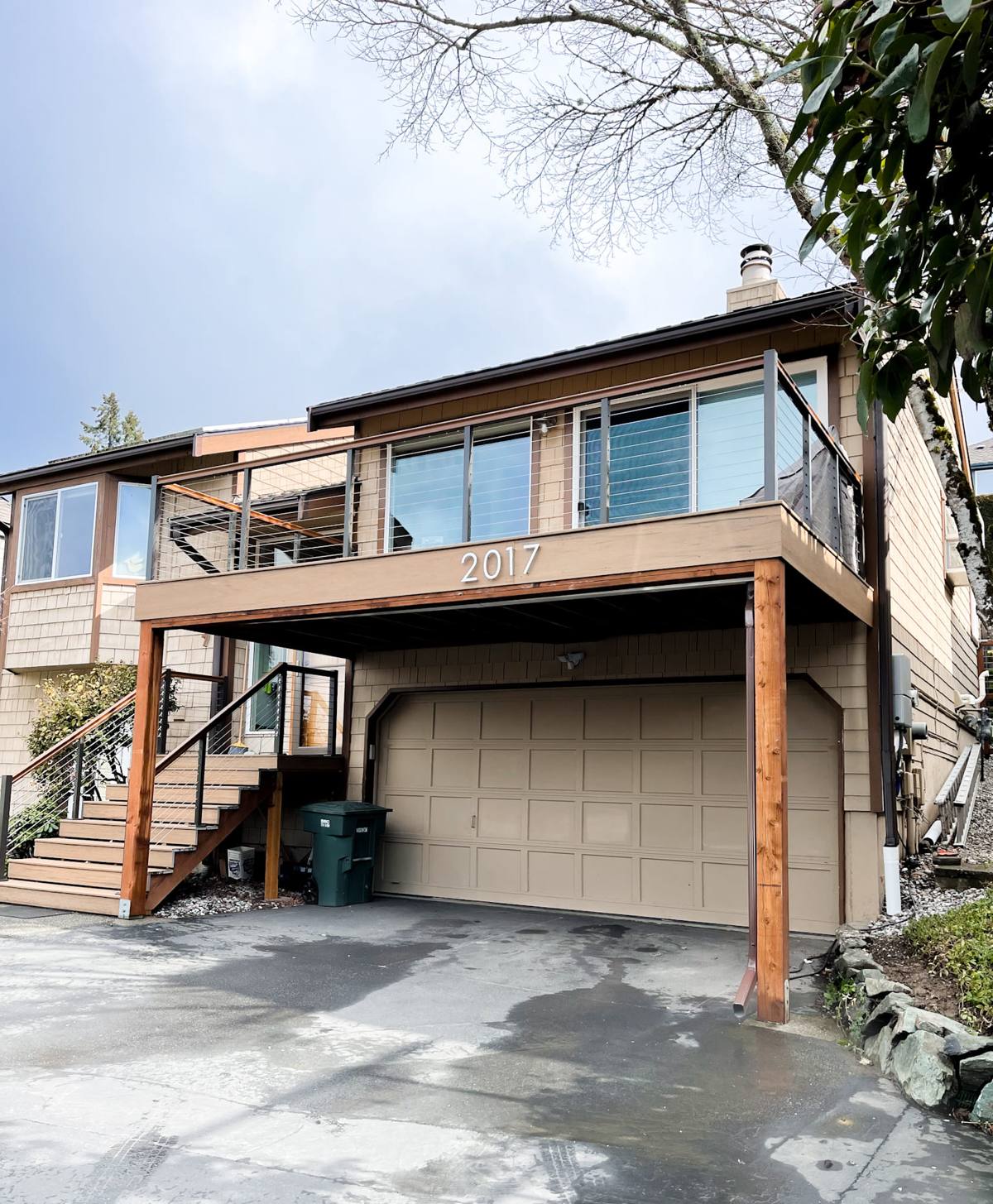
Signs a Deck Needs Replacement, Not Just Repair
Homeowners often call us assuming a few new boards will solve the problem. Sometimes that's true. Often, once we're underneath the deck, it isn't. Here's how we tell the difference.
Surface-level problems that usually mean repair
- A handful of cupped or splintering boards in an otherwise solid deck
- Surface moss and algae staining that hasn't penetrated the wood grain
- Loose railing balusters or a wobbly stair tread with sound framing underneath
- Faded finish on wood that still rings solid when tapped with a hammer
Structural problems that mean it's time to replace
- A ledger board (where the deck attaches to the house) that's soft, discolored, or was never properly flashed
- Joists that flex noticeably when you walk across the deck
- Posts or footings that have shifted, heaved, or show rot at the base
- Fasteners that have rusted, bled orange stains into the wood, or sheared off
- A deck built without permits, to old code, or with undersized framing for its actual use
The honest answer is that a screwdriver test tells you more than a visual inspection. If we can push a flathead screwdriver into a joist, post, or ledger board and it sinks in easily, that member is compromised no matter how the top of the deck looks. In our experience, once rot has reached the framing in a deck exposed to this much rain, patch repairs buy a year or two at most before the same problem resurfaces somewhere else on the same structure.
What a Correct Deck Replacement Actually Involves
A deck replacement done right in this climate is a structural project first and a finish-carpentry project second. The decking boards are the part everyone sees, but the framing underneath is what determines whether the deck is safe and how long it lasts.
Ledger and flashing
Most deck failures we find in this area trace back to the ledger board — the piece that bolts the deck to the house rim joist. If it wasn't flashed correctly when built, water works its way behind it every time it rains and rots both the ledger and the house framing behind it. A correct replacement means proper structural fasteners (not just deck screws), continuous flashing with a drip edge, and a gap or membrane that keeps water from wicking into the house wall.
Footings and posts
Whatcom County soils vary from sandy and well-draining to heavier clay that holds water, and that affects how footings perform over time. We check that footings are sized and set to current code depth, that posts aren't sitting in standing water or buried soil contact, and that post bases are set above grade with proper connectors rather than just toe-nailed or set directly in concrete.
Joists and framing
Joist spacing and span have to match the actual decking material and expected load — a hot tub or a crowded gathering space needs different framing than a simple sitting deck. We also make sure joist tape or another moisture barrier protects the tops of the joists, since that's one of the cheapest upgrades that meaningfully extends framing life in a wet climate.
Decking Material Options, Compared Honestly
There's no single "best" decking material — there's a best material for your budget, your maintenance appetite, and how much sun and rain your particular deck sees. Here's how the common options actually perform in this climate.
| Material | Upfront Cost | Maintenance | Moss/Moisture Behavior | Realistic Lifespan Here |
|---|---|---|---|---|
| Pressure-treated wood | Lowest | Annual cleaning and re-staining/sealing | Absorbs moisture; prone to moss and splintering if neglected | 10-15 years |
| Cedar | Moderate | Regular sealing to hold color and resist moisture | Naturally rot-resistant but still needs upkeep in constant damp | 12-18 years |
| Capped composite | Higher | Occasional washing, no staining or sealing | Shell resists moisture absorption and moss staining well | 25-30+ years |
| PVC decking | Highest | Lowest — periodic washing only | Doesn't absorb water at all; best moss resistance | 30+ years |
We install real wood for homeowners who want that look and don't mind the upkeep, and we install capped composite and PVC products from established manufacturers for homeowners who want to stop staining a deck every couple of summers. Our professional standard is to avoid low-grade uncapped composite boards from the early 2000s era of the product — those had real problems with moisture absorption and mold staining in wet Pacific Northwest climates, which is exactly why the industry moved to capped and PVC formulations. If a homeowner specifically wants an older-style composite, we'll talk through that trade-off honestly rather than just installing it.
A note on fasteners and hardware
Whatever decking material you choose, the hardware holding it together matters just as much. In an area with this much sustained moisture and some salt-air exposure, we use stainless steel or heavily coated exterior-rated fasteners and connectors rather than standard galvanized hardware, which corrodes faster than the wood around it in coastal-influenced climates.
Railings, Stairs, and Code Requirements
Railings and stairs are where a lot of older Whatcom County decks fall out of compliance, usually because they were built before current code or modified over the years without a permit. A replacement is the right time to correct that.
- Guardrails are required on any deck surface more than 30 inches above grade, generally at a minimum height of 36 inches
- Baluster spacing has to prevent a 4-inch sphere from passing through
- Stairs need consistent rise and run, with handrails required once there are more than a few risers
- Any structural connection — post-to-beam, rail-to-post — needs mechanical fasteners rated for the load, not just nails
We pull permits and schedule inspections through the appropriate local building department for deck replacements, because a deck without a valid permit history can become a real problem at resale, and because the inspection process is a second set of eyes confirming the structure is safe.
Our Deck Replacement Process
- On-site assessment. We inspect the ledger, framing, posts, and footings before quoting anything, including probing wood with a screwdriver rather than guessing from the surface.
- Written scope and estimate. You'll know exactly what's being replaced, what materials are involved, and what the permit and inspection process looks like for your project.
- Permitting. We handle the paperwork with the local building department so the finished deck is on record and inspected.
- Demolition. Full removal of the old decking, railings, and any compromised framing, hauled off site.
- Framing and structural work. New or reinforced ledger flashing, footings, posts, and joists built to current code and sized for your actual use.
- Decking, railing, and stairs installed. Using the material you've chosen, with fastener and flashing details appropriate to this climate.
- Final walkthrough and inspection. We confirm the deck passes inspection and walk the finished project with you before calling it done.
Keeping a New Deck in Good Shape
A properly built deck still needs some basic seasonal attention, especially given how long moss season runs in this part of Whatcom County. This short checklist covers what actually matters.
- Sweep debris and needles off the deck surface regularly, especially in fall, so moisture doesn't sit trapped underneath
- Keep gutters and downspouts clear so runoff doesn't dump directly onto or under the deck
- Check that the gap between the house siding and the ledger flashing stays clear and unblocked
- For wood decks, plan on cleaning and re-sealing every one to two years depending on sun exposure
- For composite or PVC decking, wash off moss and pollen buildup once or twice a year with a deck cleaner and soft brush
- Look underneath the deck once a year for any new soft spots, rust staining, or standing water near posts
Why It Matters to Hire a Crew That Already Works in Nooksack
Deck framing that works fine in a dry inland climate isn't automatically right for a river valley with this much annual rainfall and a long moss season. A crew that already works in and around Nooksack knows which details actually matter here — how far to hold decking off the house, which flashing details hold up against this rain pattern, and which local building department to coordinate permits and inspections with. That local knowledge is the difference between a deck that needs the same repair again in eight years and one that's still solid at twenty-five.
It also means someone who can get to your property without a long drive if a question comes up during or after the build, and who has an ongoing reputation in this specific community to stand behind. We'd rather walk you through the honest trade-offs between materials and framing choices up front than sell you the cheapest option and let the climate expose the shortcuts later.
If your current deck feels soft, wobbly, or is simply past its useful life, we're happy to take a look and give you a straight answer about repair versus replacement. Reach out for a free, no-pressure estimate using the form below.