 Ferndale
 Siding for Birch Bay Homes: A Different Kind of Coastal Exposure
Birch Bay sits right on the water in Whatcom County, and that changes what a home's exterior is up against compared to homes even a few miles inland in Ferndale or Lynden. Salt-laden air moves off the bay and settles on siding, trim, and fasteners day after day. Add driving winter rain off the Strait of Georgia and a moss season that can run from October through May, and you have a climate that is genuinely tougher on building exteriors than most of the county realizes. We've worked on homes throughout Whatcom County, and Birch Bay properties consistently show a different pattern of wear than homes set back from the water.
This page is about what that exposure actually does to a house, and how we approach siding, roofing, windows, and decks for homes in this specific setting. We're not going to pretend every material behaves the same way in a beachfront environment, because it doesn't.
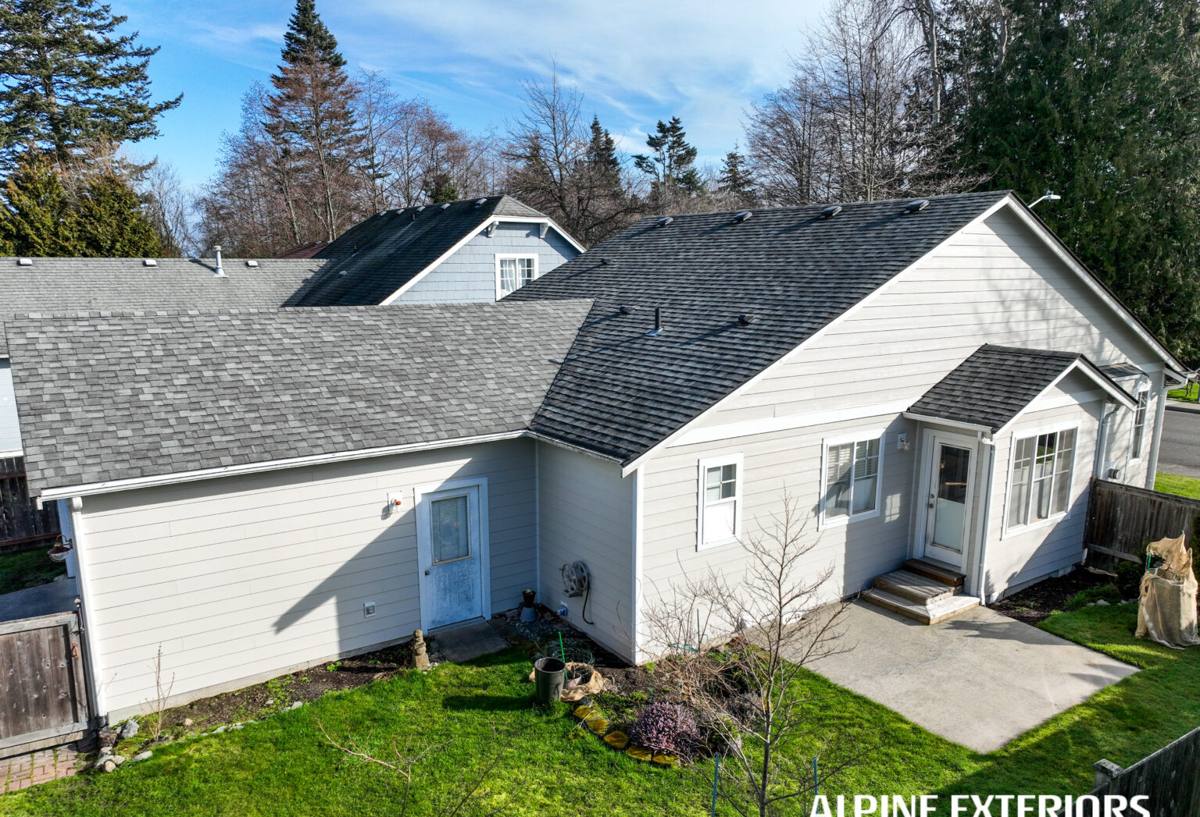
What Salt Air and Coastal Moisture Do to a Home's Exterior
Salt Air
Airborne salt is corrosive to exposed metal — nails, screws, flashing, hinges, and any fasteners that aren't rated for coastal exposure. Over years, salt exposure accelerates corrosion at the very connection points that hold siding and trim in place. It also settles into porous or absorbent siding materials, which can affect how paint and finishes hold up over time. Homes directly along the bay see this faster than homes set back even a short distance.
Driving Rain
Storms coming off the water don't fall straight down — wind pushes rain sideways into wall assemblies, especially on the water-facing sides of a house. That means seams, laps, butt joints, and penetrations (where pipes, vents, and fixtures pass through the wall) take on more water pressure than they would on a calmer inland elevation. Any weak point in the water-resistive barrier or flashing detail behind the siding gets tested repeatedly.
Moss and Prolonged Dampness
Western Washington's long wet season means siding and roofing surfaces often don't fully dry out for weeks at a stretch. That sustained dampness is exactly what moss, algae, and mildew need to establish themselves. On the shaded, north-facing sides of Birch Bay homes — and anywhere tree cover blocks sun and wind — moss can take hold on siding, trim, decking, and roofing that never gets a real chance to dry.
Why Material Choice Matters More Here Than Inland
We install James Hardie fiber cement siding exclusively, and Birch Bay is one of the clearest examples of why. Fiber cement is non-combustible and dimensionally stable — it doesn't absorb moisture the way wood-based products do, and it doesn't expand and contract with humidity swings the way vinyl and some engineered wood products can. In a marine environment with constant moisture cycling, that stability matters for how well the siding holds its seal, its paint, and its shape over decades rather than years.
We get asked fairly often about vinyl siding, LP SmartSide, and other engineered wood products because they're common across the region and often cost less upfront. We don't install them, and we think homeowners deserve a straight explanation of why, not a sales pitch against them.
Vinyl in a Coastal Setting
Vinyl siding is affordable and low-maintenance in mild conditions, but it's a petroleum-based product that expands and contracts significantly with temperature swings, and it can become brittle over time — a real consideration where storm winds carry debris. It also doesn't offer the same fire-resistance profile as fiber cement, which matters as wildfire smoke and ember exposure have become a more regular late-summer reality even west of the Cascades.
Engineered Wood Siding (LP SmartSide and Similar)
These products have improved a great deal and perform reasonably well in many settings. But they're wood-based at the core, and wood-based products are inherently more sensitive to sustained moisture exposure than fiber cement — especially at cut edges, seams, and any spot where the factory sealant gets compromised during installation or over time. In a bay-front moisture environment with a long wet season, that sensitivity is a real trade-off, not a hypothetical one.
James Hardie's HZ10 product line is engineered specifically for climates like ours — cold, wet, and humid for much of the year — with an emphasis on moisture and freeze-thaw performance. Combined with the factory-applied ColorPlus finish, which is baked on rather than field-applied, you get color and coating consistency that stands up to UV and salt exposure better than a job-site paint job.
Comparing Siding Materials for a Coastal Whatcom County Home
| Factor | Vinyl | Engineered Wood | James Hardie Fiber Cement |
|---|---|---|---|
| Moisture behavior | Doesn't absorb, but seams can gap/warp | Absorbent at cut edges and seams | Dimensionally stable, minimal absorption |
| Salt air resistance | Moderate; can become brittle | Moderate; edge sealing is critical | Strong; non-organic core |
| Fire resistance | Lower; petroleum-based | Wood-based, treated | Non-combustible core |
| Finish durability | Color molded in, can fade | Factory or field-applied | Factory-baked ColorPlus finish |
| Typical warranty | Varies by manufacturer | Varies by manufacturer | Strong transferable warranty |
How We Approach a Siding Project in Birch Bay
Every job starts with a look at the specific exposure of that particular lot — which sides face the bay directly, where the tree cover and shading fall, and where past moisture damage shows up on the existing siding, trim, or sheathing. Birch Bay lots vary quite a bit in how exposed they are depending on elevation, tree cover, and distance from the water, so a cookie-cutter approach doesn't serve the house well.
What Correct Installation Looks Like
- Proper drainage plane and water-resistive barrier behind the siding, so any moisture that gets past the cladding has somewhere to go
- Correctly flashed windows, doors, and penetrations — the most common failure points in wind-driven rain
- Fastener selection and spacing that accounts for coastal corrosion exposure
- Proper joint and seam treatment per manufacturer spec, not shortcuts that show up as gaps or caulk failures in a few years
- Ventilation and clearance details that let the wall assembly dry rather than trap moisture
Fiber cement siding performs the way it's supposed to only when it's installed to spec. A great product with a rushed or incorrect installation will still develop moisture problems — that's true of any siding material, but it's especially unforgiving in a marine climate where mistakes get tested by weather constantly rather than occasionally.
Roofing, Windows, and Decks in the Same Environment
Siding doesn't work in isolation — the whole exterior envelope has to handle the same coastal conditions together.
Roofing
Roofs in Birch Bay deal with the same moss pressure and wind-driven rain as siding does, often worse, since roofs take direct sun, wind, and precipitation with less shelter. Proper ventilation, underlayment, and flashing at valleys and penetrations matter as much here as anywhere in the county.
Windows
Window flashing and seal integrity are critical on wind-exposed elevations. A window that's slightly under-flashed on an inland home might go years without an issue; the same detail on a bay-facing wall gets tested by driving rain far sooner.
Decks
Decks facing the water take direct salt exposure on fasteners, railings, and any metal hardware, plus the same moss and algae growth on shaded boards. Material choice and fastener selection matter for longevity here too.
Maintenance Realities for a Bay-Front Property
No siding material is maintenance-free in this climate, but the maintenance burden differs a lot by material. Fiber cement with a factory finish generally needs periodic washing to keep salt residue and organic growth from building up, plus normal caulk and sealant checks at trim and penetrations. Wood-based and vinyl products in the same setting often need more frequent attention to seams, edges, and finish touch-ups to head off moisture problems before they start.
A Simple Seasonal Checklist
- Rinse salt residue off siding and trim periodically, especially on bay-facing elevations
- Check for moss or algae buildup on shaded sides each fall and spring
- Inspect caulking around windows, doors, and trim annually for cracking or gaps
- Look at gutters and downspouts before the wet season to make sure water is actually being carried away from the wall
- Watch for soft spots, discoloration, or bubbling paint, which often signal moisture getting behind the cladding
Why a Local Crew Matters for This Kind of Exposure
Understanding Birch Bay's specific microclimate — the bay-facing exposure, the shaded pockets where moss thrives, the way storms track in off the water — comes from working on homes in this exact area, not from a general contractor's playbook written for a drier or more sheltered region. A crew that's installed and inspected exteriors around Whatcom County's coastline knows where the failure points tend to show up on this kind of lot, and builds the installation accordingly rather than treating it like any other job.
We also stand behind our work with a real warranty backed by a manufacturer relationship, not just a handshake — which matters more, not less, when the material has to hold up against salt air and driving rain year after year.
Get an Honest Look at Your Home's Exterior
If you're weighing a siding, roofing, window, or deck project for a Birch Bay property, we're happy to take a look and talk through what your specific exposure calls for — no pressure, no sales script. Use the form below to request a free estimate.