 Ferndale
 What Primed Spruce Siding Is, and Why It's Still Around
Primed spruce siding is a solid-wood lap or panel product, typically finger-jointed or solid-sawn spruce, pine, or fir, that arrives from the mill with a factory-applied primer coat. It's been a staple of Pacific Northwest home building for decades because it's affordable, it's easy for framing crews to cut and hang, and a freshly painted spruce home looks genuinely good. Some of the older homes around Ferndale and throughout Whatcom County still wear their original wood siding, and when it's been maintained religiously, it can hold up.
That last phrase — maintained religiously — is the whole issue. We don't install primed spruce siding, not because it's a bad product on paper, but because of what it actually takes to keep it performing once it's on a wall in this climate, and what happens to homeowners who don't keep up with that work.
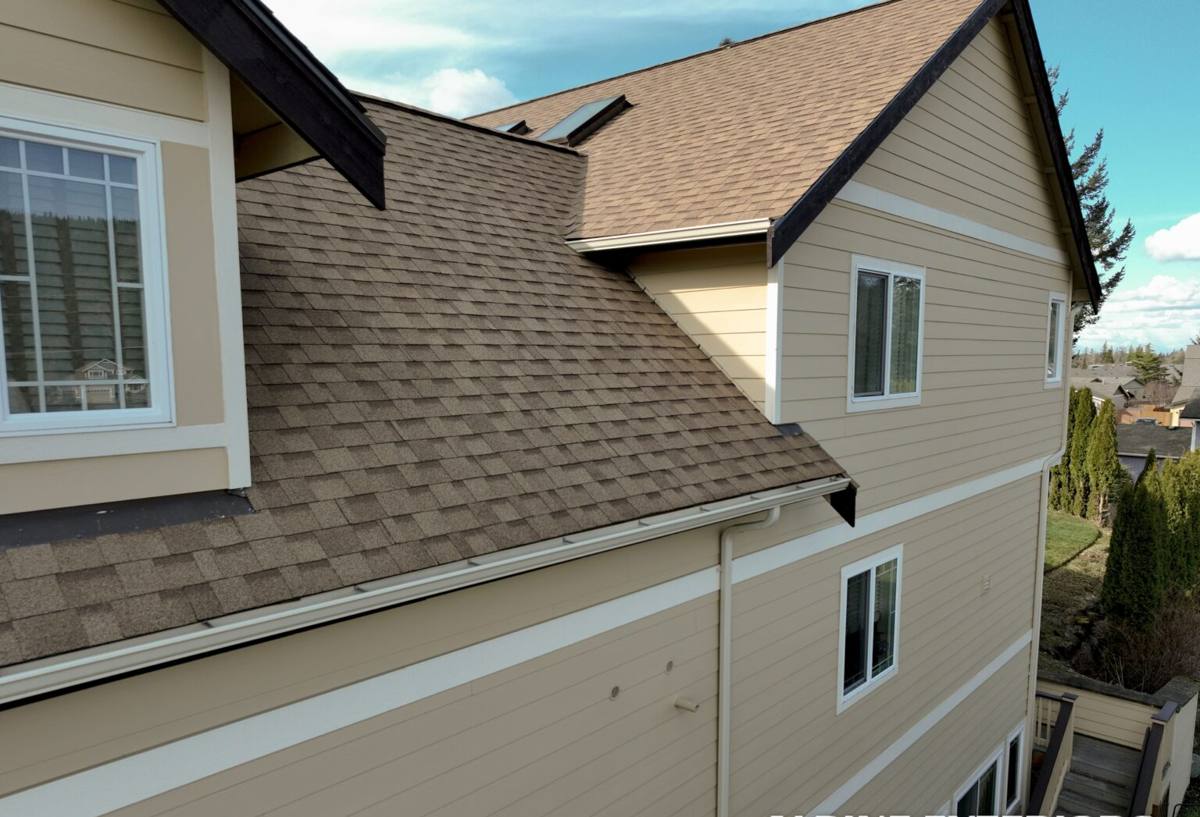
The Core Problem: Primer Is Not a Finish
Factory primer exists to protect the wood during shipping and to give a paint contractor a surface to work with. It is not designed to be the final, weather-facing layer, and it is not designed to sit exposed for more than a few weeks before a full paint system goes over it. In practice, that timeline gets stretched on real job sites — siding sits primed-only through a wet stretch of scheduling delays, or a homeowner puts off the topcoat for a season, and the primer starts absorbing moisture it was never built to handle long-term.
Even after a proper paint job, spruce is still solid wood. It expands and contracts with humidity, it has grain that wicks water along its length, and every cut end, nail hole, and lap joint is a place where water can get past the paint film and into the wood itself. Paint is a maintenance item, not a permanent seal — and that's true everywhere, but it matters a lot more here than it does in a dry climate.
How Whatcom County's Climate Accelerates the Failure
Ferndale sits close enough to the Strait of Georgia and Bellingham Bay that homes take on a real salt-air component along with the region's rain. That combination is hard on any painted wood surface. Salt-laden air holds moisture against surfaces longer, and it degrades paint films faster than inland exposure does, which shortens the window between repaints on wood siding right when the wood most needs that protective layer intact.
Layer on the driving rain that comes through Whatcom County in the fall and winter — often blown sideways by wind off the water — and you get water forced into laps, joints, and any hairline crack in the paint that a homeowner might not even notice from the ground. Then there's moss. Our long moss season, stretching from fall through spring, means algae and moss get a real foothold on any surface that stays damp and shaded, including painted wood siding on north-facing walls and under eaves. Moss holds moisture against the wood constantly, which is exactly the condition that leads to soft spots and rot.
None of this means spruce siding is doomed the moment it goes up. It means the maintenance interval that keeps it healthy is shorter here than it would be in a drier, calmer climate — and the consequences of missing that interval show up faster.
Where Spruce Siding Fails First
- End cuts and butt joints — factory primer rarely gets touched up on-site when boards are cut to length, leaving raw end grain exposed to water from day one.
- Bottom courses near grade — splash-back and standing moisture at the foundation line are the first places rot shows up.
- Nail penetrations — every fastener is a tiny breach in the finish; over years, these become entry points as the surrounding wood and paint age.
- Under eaves and north-facing walls — the shaded, slow-to-dry areas where moss and algae establish fastest in our climate.
The Maintenance Burden Homeowners Don't Expect
When we walk a homeowner through what primed spruce siding actually requires to last, the reaction is usually surprise — not because any single task is unreasonable, but because the cumulative commitment is bigger than most people budget for when they're comparing sticker prices at the time of installation.
| Maintenance Task | Typical Interval | What Happens If Skipped |
|---|---|---|
| Full repaint or recoat | Every 5-8 years (often shorter with salt-air exposure) | Paint film chalks and cracks, water reaches bare wood |
| Caulk inspection and touch-up at joints/trim | Annually | Water tracks behind boards, invisible from outside |
| Moss and algae removal | 1-2 times per year, more on shaded sides | Constant moisture retention, accelerated rot |
| Spot repair of soft or split boards | As discovered | Localized rot spreads to adjacent boards and sheathing |
| Gutter and grade drainage checks | Annually | Splash-back saturates lower courses |
Add that up over 15-20 years and the real lifetime cost of wood siding, paint included, competes with or exceeds a one-time factory-finished install on a lower-maintenance material. That math is a big part of why we made the call we did.
What Happens When Maintenance Slips
We're not describing a hypothetical. It's a pattern we see on older homes throughout the area: a homeowner keeps up with painting for the first decade, life gets busy, and the recoat gets pushed a year, then two. Meanwhile moss keeps building on the shaded walls every winter. By the time anyone notices a soft spot or a section of siding that's visibly cupping, the rot is often already into the sheathing behind it — which turns a siding maintenance issue into a structural repair. That's the failure mode we're trying to help homeowners avoid before they ever sign a contract with us.
Primed Spruce vs. James Hardie Fiber Cement
| Factor | Primed Spruce Siding | James Hardie Fiber Cement |
|---|---|---|
| Base material | Solid wood — absorbs and releases moisture | Fiber cement — dimensionally stable, won't swell or rot |
| Finish | Field-applied paint over factory primer; maintenance-dependent | Factory-baked ColorPlus finish, engineered for UV and moisture |
| Repaint interval | 5-8 years typical, shorter in salt air | ColorPlus finish is warranted well beyond that; no repaint needed to protect the substrate |
| Moss/algae resistance | Wood surface offers moss a foothold once damp | Engineered surface sheds moisture faster, less hospitable to growth |
| Fire performance | Combustible | Non-combustible material |
| Warranty | Varies by paint brand and applicator; not tied to the siding manufacturer | Manufacturer-backed, transferable warranty on the product itself |
Why We Standardized on James Hardie
We install James Hardie fiber cement exclusively, and it's a decision built around exactly the conditions Whatcom County throws at a house. Hardie's HZ5 product line is engineered for climates with freeze-thaw cycling and sustained moisture exposure, which describes a Ferndale winter well. The material itself doesn't rot, swell, or feed moss the way solid wood does, and the ColorPlus factory finish means the color and protective topcoat are baked on before the boards ever reach the job site — not dependent on field painting conditions, crew skill with a paint sprayer, or a homeowner's follow-through on recoating.
It's also non-combustible, which matters to a lot of homeowners simply as a long-term risk factor, independent of any specific local fire concern. And because the finish and the substrate come from one manufacturer, the warranty covers the whole system rather than being split between a siding maker and whoever applied the paint. When we install it to Hardie's spec — proper flashing, correct fastener placement, and clearances at grade and roof lines — it's a system built to go decades without the maintenance cycle spruce siding demands.
Questions Worth Asking Before You Choose Wood Siding
- Who is responsible for the first topcoat, and how soon after installation will it happen?
- What's the realistic repaint interval for this specific product in a coastal, high-moss climate — not the manufacturer's best-case number?
- Is the warranty on the wood itself, or only on the factory primer?
- Who is inspecting and caulking joints annually, and what does that cost over 15 years?
- What does the house look like on the shaded, north-facing walls after five moss seasons without treatment?
- Does the total cost of ownership, paint included, actually beat a factory-finished alternative?
Our Bottom Line
Primed spruce siding isn't a scam or a low-quality product — it's a legitimate building material that simply asks more of a homeowner than most people realize when they're standing at the estimate stage. In a climate with Ferndale's salt air, driving rain, and long moss season, that maintenance commitment is steep enough that we don't think it's the right long-term investment for most homeowners, and we don't install it. James Hardie fiber cement is what we put on homes instead, because it holds up to this specific climate with a fraction of the upkeep.
If you're weighing your siding options for a home in Ferndale or anywhere else in Whatcom County, we're happy to walk your house with you and talk through what actually makes sense for your budget and your walls. Reach out for a free, no-pressure estimate using the form below.