 Ferndale
 What Board and Batten Actually Is
Board and batten is one of the oldest siding patterns in North America, and it has never really gone out of style — it just goes in and out of fashion for how it's used. The classic version is wide vertical boards installed with narrow strips (battens) covering the seams between them. The look reads as clean, linear, and a little more modern or farmhouse than traditional horizontal lap siding, depending on the trim and color choices around it.
On older homes, board and batten was often solid wood, which meant real maintenance: repainting, caulking seams, and watching for rot at the bottom edge where boards sit closest to grade. James Hardie's version keeps the look but replaces the material with fiber cement, engineered specifically to hold up in wet, marine-influenced climates like ours here in Whatcom County.
Why It's a Good Fit for Ferndale and Whatcom County
Ferndale sits close enough to the Salish Sea that salt air is a real factor on siding, trim, and fasteners — not just a coastal talking point. Add in driving rain off Bellingham Bay, a long moss season under our regional tree cover, and stretches of gray, damp weather that can last for months, and you've got a climate that's genuinely hard on exterior materials. Board and batten's vertical lines actually help here in a small but real way: water runs down the face of the boards rather than pooling on horizontal ledges the way it can with some lap profiles, especially at butt joints and trim intersections.
That said, the pattern itself doesn't waterproof a house — the material and the installation do. That's where the difference between wood, engineered wood, and fiber cement board and batten really shows up over time.
The Hardie Board and Batten System
Panel and Batten Components
Hardie's board and batten siding is typically installed as a system: vertical panels (or individual boards) with battens fastened over the seams. James Hardie offers this in a few configurations, including pre-primed panels ready for site painting and, on many of their panel products, a factory ColorPlus finish that arrives with the color already baked on.
HZ5 Engineering for This Region
James Hardie engineers its siding by climate zone, and Whatcom County falls into the HZ5 category — the zone built for regions with real moisture exposure and freeze-thaw cycling. HZ5 products are formulated and tested for wet climates rather than being a one-size-fits-all national product. That distinction matters more here than it would in a dry inland market, because the failure modes we see locally (moss growth, moisture wicking, coastal humidity) are exactly what HZ5 is built to resist.
Thickness and Rigidity
Fiber cement board and batten is substantially thicker and more rigid than vinyl board and batten panels, and it doesn't have the thermal expansion and contraction problems that plastic siding deals with in temperature swings. It also won't dent from hail or a stray baseball the way vinyl can, and it doesn't attract woodpeckers or insects the way solid wood battens sometimes do.
Design Choices: Spacing, Width, and Proportion
Board and batten lives or dies on proportion. Get the spacing and board width wrong for the scale of the house and it can look busy or, on the other end, sparse and flimsy. A few things we walk homeowners through:
| Design Element | Typical Range | Effect |
|---|---|---|
| Board width | 12" – 16" | Wider boards read as more modern/minimal; narrower boards feel more traditional/farmhouse |
| Batten spacing | 16" – 24" on center | Tighter spacing feels formal and busy; wider spacing feels calmer and more contemporary |
| Batten width | 1" – 2" | Thinner battens look crisp and modern; wider battens read heavier and more rustic |
| Full house vs. accent use | Whole elevation or gable/entry accent only | Accent use pairs board and batten with lap siding for contrast without full-house cost |
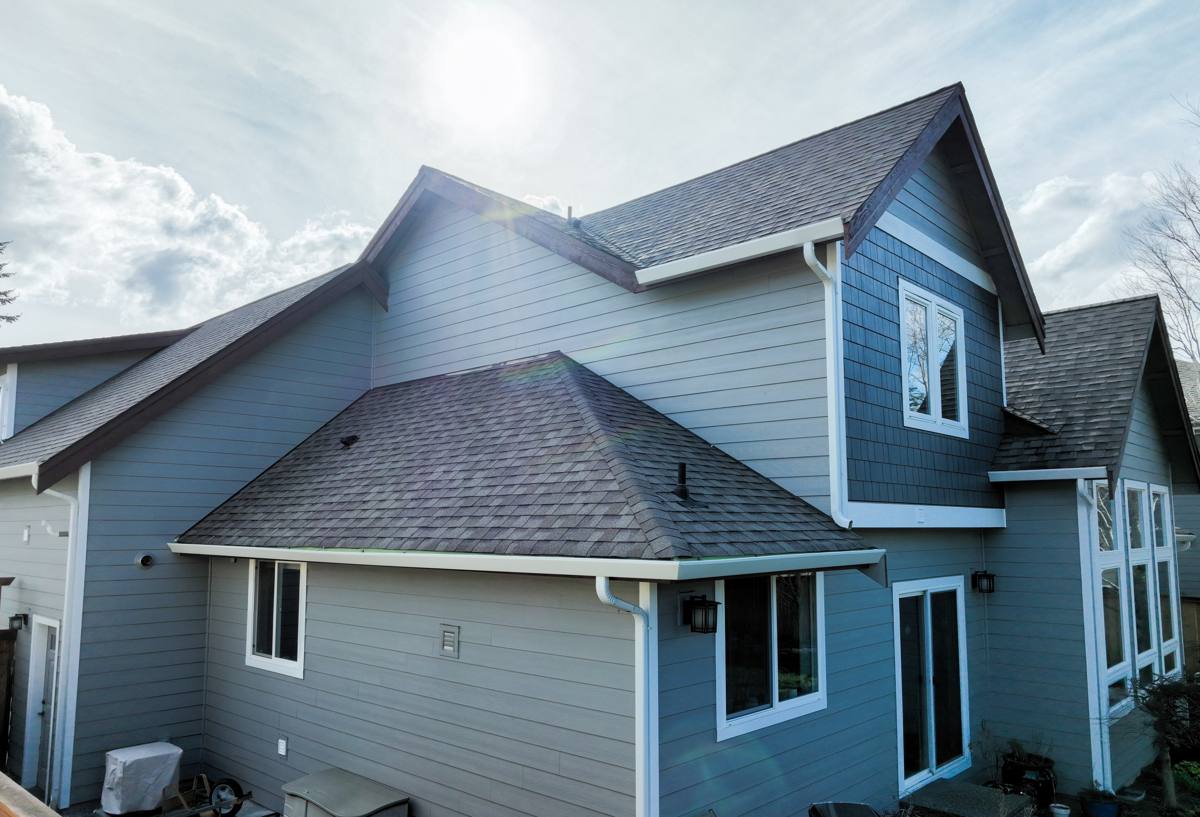
A lot of Ferndale homes use board and batten as an accent — a gable end, a dormer, an entry feature, or a porch surround — paired with horizontal HardiePlank on the main body of the house. That combination gives you visual interest without turning the whole exterior into one texture, and it's usually a more budget-conscious way to get the look where it has the most impact.
Color Options
Board and batten shows color differently than lap siding because of how much shadow line the battens create — the same color can look noticeably different in a vertical, high-contrast pattern than it does in a stacked horizontal one. James Hardie's ColorPlus palette includes a range of neutrals, deep charcoals and blacks, warm creams, and a handful of statement colors that read especially well against the strong vertical lines of board and batten. Because ColorPlus is a factory-applied, baked-on finish, the color is consistent panel to panel and holds up to UV and moisture exposure better than field-applied paint, which matters in a climate that gets as much sustained damp weather as ours does.
For homeowners who want a specific custom color not in the ColorPlus lineup, primed board and batten can be field-painted, though that shifts more of the long-term maintenance burden back onto the homeowner in the form of repainting on a normal exterior paint cycle.
What Correct Installation Involves
Board and batten has more seams and more fastening points than plain lap siding, which makes installation quality even more important than usual. A few of the details we pay attention to on every board and batten job:
- Proper clearance at the bottom of the wall — siding held up off grade, decking, and roofing to avoid wicking moisture
- Correct fastener type and spacing driven into framing, not just sheathing
- Weather-resistant barrier and flashing detailed correctly behind every seam and penetration
- Battens fastened to allow for the panel's normal expansion and contraction rather than pinning it rigidly
- Caulking used only where Hardie's install specs call for it — not as a substitute for proper flashing
- Field cuts sealed and primed per manufacturer instructions, especially at window and door returns
Fiber cement is a forgiving material when it's installed to spec, and an unforgiving one when it isn't. Gaps, missing flashing, or fasteners in the wrong location won't show up as a problem on day one — they show up two or three wet seasons later as staining, soft spots, or paint failure at the seams. That lag is exactly why we install strictly to Hardie's published specifications rather than treating siding install as generic carpentry.
Board and Batten vs. Other Vertical Siding Options
Board and batten isn't the only vertical siding pattern homeowners ask about, so it's worth knowing where it fits against the alternatives:
| Option | Material | Trade-off |
|---|---|---|
| Hardie board and batten | Fiber cement | Non-combustible, HZ5-engineered, factory finish, higher upfront cost than vinyl |
| Vinyl board and batten | PVC | Lower cost, but thinner, more prone to warping/fading, shorter realistic lifespan |
| Solid wood board and batten | Cedar or similar | Classic look, but high ongoing maintenance and vulnerable to moisture and pests in this climate |
| Engineered wood board and batten | Wood-strand composite | Lighter and easier to install, but more sensitive to moisture intrusion at cut edges and seams than fiber cement |
We've made the decision to install James Hardie exclusively rather than offering all of these side by side. That's not because the alternatives don't have a place in the industry — it's because after years of exterior work in this climate, fiber cement engineered for wet regions has consistently been the product we're comfortable standing behind long-term, both in performance and in the strength of the warranty behind it.
Maintenance Expectations
One of the real selling points of Hardie board and batten in a place like Ferndale is what it doesn't require. It won't rot, it's non-combustible, and it resists the moss and mildew staining that shows up on wood and some engineered products in our long wet season. Realistic maintenance is mostly about staying ahead of small things: rinsing off accumulated grime and moss spores once or twice a year, keeping gutters clear so water isn't sheeting down the face of the siding, and doing a visual check of caulking at trim joints every year or two. That's a meaningfully lighter workload than repainting or re-caulking a wood board and batten exterior on a recurring cycle.
Warranty Considerations
James Hardie backs its siding products with a non-prorated limited warranty, and ColorPlus finishes carry their own separate finish warranty covering the factory-applied color. Warranty coverage on fiber cement siding is also contingent on installation meeting Hardie's published guidelines — which is another reason installation quality isn't optional. A warranty is only as good as the install underneath it, and that's true no matter which manufacturer's name is on the product.
If you're weighing board and batten against lap siding, or trying to figure out where an accent feature would work best on your home, we're happy to walk your property with you and talk through the options. Reach out for a free, no-pressure estimate — there's no obligation, and it's a straightforward way to get real numbers for your specific house.