 Ferndale
 Why Nooksack Homes Need Windows Built for This Climate
Homes around Nooksack sit inland along the river valley, but they still live under the same weather system that soaks the rest of Whatcom County. Salt-tinged air drifting in off the Sound, wind-driven rain that comes at windows sideways instead of straight down, and a moss season that can stretch across most of the year — all of it works on a window whether the home is a mile from the water or twenty. Frames absorb moisture, seals get tested by temperature swings, and anything wood takes a slow beating if it isn't detailed correctly.
Windows are one of the few building components that have to do two jobs at once: keep weather out and let light and air in on command. When either job fails — a leaking seal, a warped sash, a frame that's started to rot at the sill — it usually fails quietly at first, behind trim and paint, before it shows up as a soft spot, a fogged pane, or a draft you can feel on a windy evening.
What "Custom" Actually Means Here
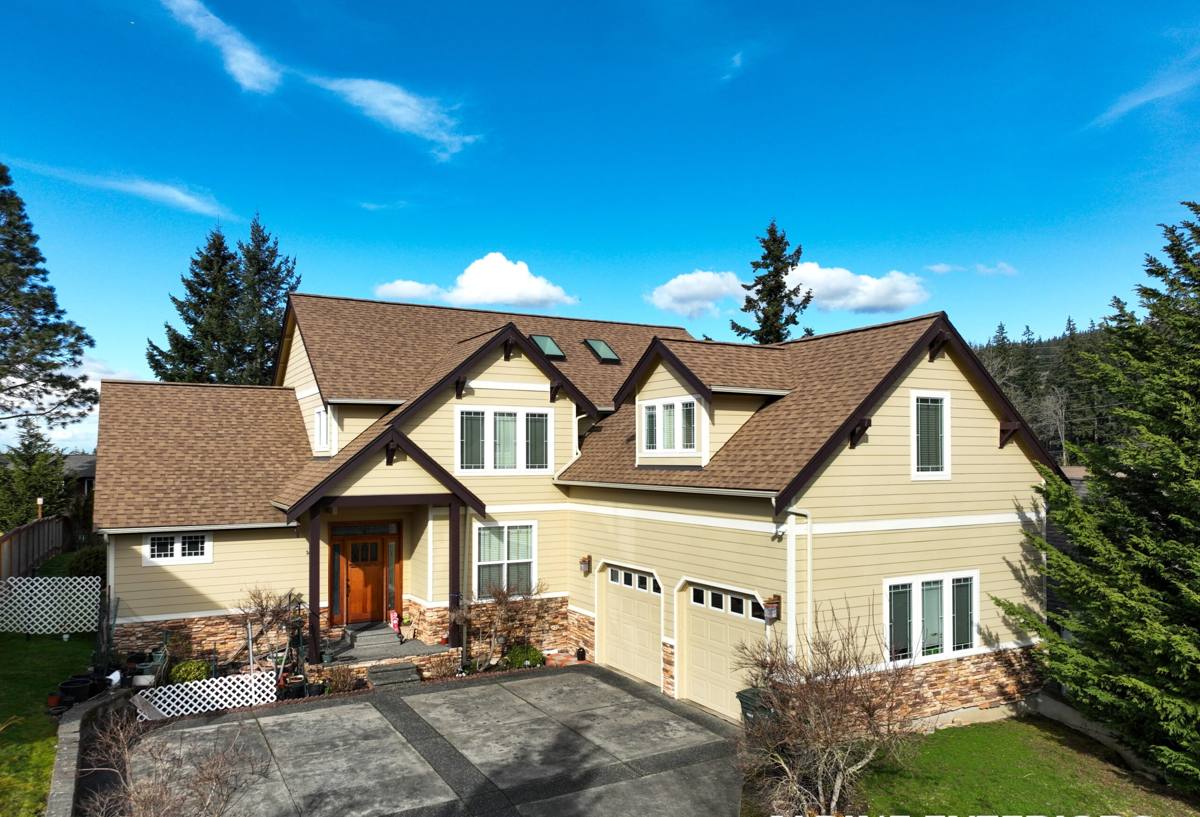
Custom doesn't mean fancy shapes or upgraded hardware for its own sake. It means the window is built and installed to fit the actual opening in front of us — not the nearest stock size. Older homes in this area have settled over the decades. Rough openings are rarely perfectly square anymore, siding profiles vary from house to house, and trim details on a farmhouse or older Craftsman-style home don't match what you'd find on a newer build.
A custom window job means measuring each opening individually, accounting for any settling or out-of-square conditions, and matching trim and sill details so the new window looks like it belongs — not like a generic replacement dropped into an old wall. It also means being honest when an opening needs more than a new window: sometimes the frame or sill underneath has to be repaired first for the new unit to perform the way it should.
Signs Your Current Windows Are Losing the Battle
Most window failures in this climate show up gradually. A few things worth checking before they turn into bigger repairs:
- Fogging or a milky haze between the panes — the sealed gas fill has failed and the insulating value is gone
- Noticeable drafts near the frame, especially on windy or storm-driven days
- A sill or frame that feels soft, spongy, or has visible paint failure and staining
- Windows that stick, won't latch fully, or are hard to open — often a sign the frame has warped
- Moss or dark algae growth on horizontal surfaces of the frame or sill, not just the roof or siding
- Rising heating bills without any other obvious cause
- Original single-pane windows still in place on an older, unrenovated home
Any one of these on its own isn't an emergency. Several at once, especially on walls that take the brunt of the weather, usually means it's worth having someone look before the damage moves from the window into the surrounding framing.
Frame Material — What Actually Holds Up Here
There's no single "best" frame material for every home — it depends on the home's style, budget, and how exposed a given wall is to wind and rain. Here's how the common options generally compare in a wet, marine-influenced climate like this one:
| Frame Material | Moisture Performance | Maintenance | Typical Cost Tier |
|---|---|---|---|
| Vinyl | Doesn't rot or corrode; performs well in damp conditions | Low — occasional cleaning | Lower to mid |
| Fiberglass | Very stable, resists expansion/contraction from moisture and temperature swings | Low | Mid to higher |
| Wood or wood-clad | Warm appearance but needs consistent sealing to resist rot and moisture intrusion | Highest — regular painting/sealing | Higher |
| Aluminum | Durable but can conduct cold and contribute to interior condensation | Low | Mid |
Our general standard is to steer homeowners away from solid wood frames on walls with heavy weather exposure unless they're genuinely committed to the upkeep — not because wood is a bad product, but because in this climate a neglected wood frame fails faster than the alternatives, and the maintenance burden is real. On sheltered or south-facing walls, wood-clad units can make sense and hold up well.
Full-Frame Replacement vs. Insert Replacement
There are two basic approaches to replacing a window, and which one fits depends on the condition of what's already there.
Insert (Pocket) Replacement
The new window is built to fit inside the existing frame, which stays in place. It's faster and generally less expensive, and it works well when the existing frame and surrounding wall are still sound. The tradeoff is that it doesn't give us a chance to inspect or address anything hidden behind that old frame.
Full-Frame Replacement
The old window and frame come out down to the rough opening, which lets us inspect the sheathing, framing, and flashing underneath before the new window goes in. This is the right call whenever there's any sign of past water intrusion, rot, or a home old enough that the original flashing details are questionable. It costs more in labor, but it's the only way to actually fix a problem instead of installing a new window over one.
We'll tell you honestly which approach a given opening needs rather than defaulting to whichever is faster to install.
Glass and Weatherproofing Details That Matter in This Climate
The glass package and the installation details around it matter as much as the frame material.
- Double vs. triple pane: Double-pane with a quality low-E coating and argon fill is sufficient for most homes in this region's climate — it's not the extreme cold of the mountains or inland Northwest. Triple-pane can be worth it on walls with heavy wind exposure or for homeowners prioritizing maximum efficiency, but it's a cost-benefit conversation, not an automatic upgrade.
- Low-E coatings: Help control heat loss and reduce interior condensation on cold, damp mornings — a common complaint in older single-pane homes.
- Sill pan flashing: A properly sloped, sealed pan under the window sill is what actually keeps wind-driven rain from working its way into the wall cavity over time. This is one of the most commonly skipped details in a rushed installation.
- Head and side flashing integration: The window has to tie into the home's weather-resistive barrier correctly, with flashing tape and sealant layered so water sheds outward at every point, not just caulked shut and hoped for.
A window can be an excellent product and still leak within a few years if these details are rushed. Most of the moisture problems we find in older window installations trace back to flashing that was skipped or done wrong, not to the window unit itself.
Our Installation Process
- On-site assessment: We check the existing frames, sills, and where visible, the sheathing behind them, for hidden moisture damage before recommending anything.
- Custom measurement: Each opening is measured individually — no assumptions based on stock sizes.
- Product selection: We help you weigh frame material and glass package against your budget and how exposed that particular wall is to wind and rain.
- Removal and inspection: Old units come out carefully; any rot or damaged framing found underneath is repaired before the new window goes in.
- Installation: New window is set, shimmed level and plumb, and sealed with proper sill pan and flashing integration.
- Trim and finish work: Interior and exterior trim is finished to match the home.
- Walkthrough and cleanup: We check operation of every window and clean up the job site before we leave.
Why Hiring a Crew That Already Works in Nooksack Matters
A contractor who works this area regularly has already seen how homes here age under this specific climate — which walls in a typical Nooksack property take the worst of the wind and rain, what kind of rot patterns show up in homes of a certain age, and what it actually takes to keep moss and algae from taking hold on new trim and sills. That's different knowledge than a crew that mostly works drier or more sheltered parts of the state.
It also matters for straightforward, practical reasons: knowing local permitting requirements through Whatcom County, being available for warranty follow-up without a long drive, and giving you a realistic answer about your home instead of a generic sales pitch. We'd rather tell you a wall doesn't need full-frame replacement than sell you more work than the job requires.
Keeping New Windows Performing After Installation
A correctly installed window with the right materials should need very little from you, but a few habits extend its life in this climate:
- Keep gutters clear so overflow doesn't run down across window heads and sills
- Rinse frames and sills occasionally to keep salt residue and grime from building up
- Trim back nearby vegetation so sun and airflow reach the window, which slows moss and algae growth
- Wipe interior condensation during cold snaps so it doesn't sit at the sill
- Have caulking and exterior seals checked every few years, especially on walls facing the prevailing weather
None of this is heavy maintenance — it's the same kind of upkeep that protects any exterior surface in this region. It just makes a bigger difference for windows because they're where the building envelope has the most seams.
If you're dealing with drafty, fogged, or aging windows on a Nooksack-area home, we're happy to take a look and give you a straight assessment — no pressure, no upsell. Use the form below to request a free estimate.