 Ferndale
 Why Nooksack Decks Wear Out Faster Than You'd Expect
If you own a deck in the Nooksack area, you've probably noticed it ages differently than a deck in a drier climate. Whatcom County sits under a marine layer that keeps things green most of the year, but that same moisture is constantly working against wood, fasteners, and finishes. Driving rain off the water gets pushed sideways by wind, soaking joints and end-grain that a vertical rain would never reach. Add in the salt-tinged air that rolls in off Bellingham Bay and the Strait of Georgia, and you've got a slow, steady corrosion process on every metal connector holding your deck together.
Then there's shade. Many lots in and around Nooksack sit close to mature trees or along the river corridor, which means decks here often stay damp longer after a storm than decks out in open sun. That extra drying time is exactly what moss, algae, and fungal decay need to get established. We see it every season: a deck that looks fine from the yard but has soft joists, corroded hardware, or a compromised ledger board underneath.
None of this means your deck is doomed. It means deck repair here has to account for the actual conditions the structure lives in, not a generic checklist. That's the difference between a repair that lasts and one you're redoing again in three years.
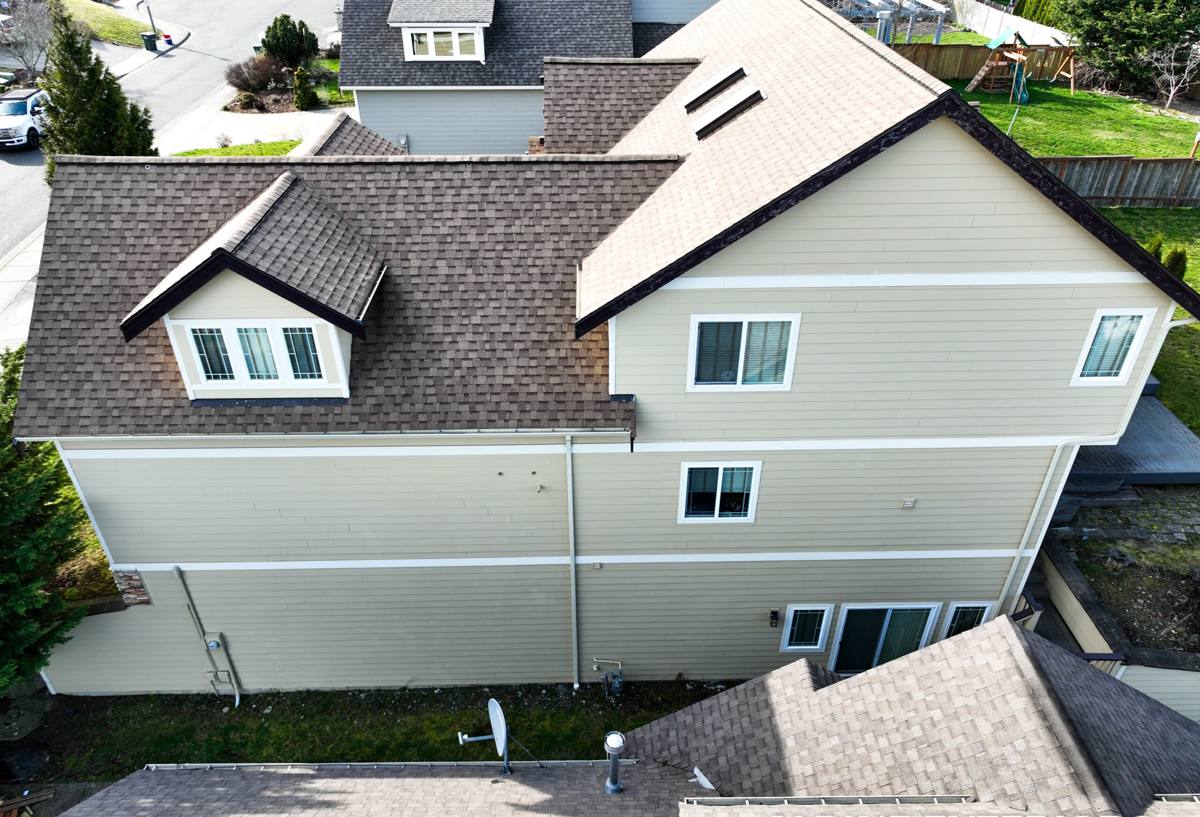
Signs a Nooksack Deck Needs Repair
Most deck problems don't show up as one dramatic failure. They show up as small warning signs that get ignored until the deck fails a simple bounce test. Here's what we look for, and what you should too:
- Boards that feel spongy or flex more than neighboring boards when you step on them
- Railings or posts that wiggle when pushed, even slightly
- Rust streaks running down from screw heads or bracket edges
- Gaps opening up where the deck meets the house (the ledger board connection)
- Persistent green or black staining that doesn't scrub off easily
- Stairs that feel uneven or have visibly sagging stringers
- A musty smell coming from underneath the deck, especially after rain
Any one of these on its own might be minor. Several together usually means moisture has been getting into the structure for a while, and it's worth having someone look underneath before you plan another summer of use on it.
What a Correct Deck Repair Actually Involves
It Starts Underneath, Not on the Surface
A repair that only replaces the boards you can see is treating the symptom. The framing underneath — joists, beams, posts, and especially the ledger board where the deck attaches to the house — is where structural failures actually start. In our climate, that ledger connection is one of the most common failure points we find, because it's the hardest area for water to escape once it gets behind the flashing.
Hardware Matters as Much as Lumber
A deck can have solid framing and still be unsafe if the connectors holding it together have corroded. Joist hangers, lag bolts, and post bases are constantly exposed to moisture and, this close to the water, some salt content in the air. We check hardware condition as carefully as we check the wood itself, because a rotted board is obvious and a rusted-through joist hanger often isn't until it fails.
Code-Correct, Not Just Code-Adjacent
Whatcom County has specific requirements for structural deck work, particularly around ledger attachment, guardrail height, and stair geometry. Repairs that touch structural elements should meet current code even if the original deck was built under older rules. We don't cut corners here — a repair that skips proper flashing or under-sized hardware to save time just sets up the next round of damage.
Moss, Algae, and the Realities of Shaded Lots
Moss on a deck is more than a slip hazard, though that's reason enough to deal with it. Moss and algae hold moisture directly against the wood surface, which accelerates rot and breaks down finishes faster than bare exposure to rain would. On decks near tree cover or the river corridor, we often see moss return within a season or two if it's only pressure-washed off without addressing the underlying moisture pattern — things like inadequate gaps between boards, poor airflow underneath, or overhanging branches keeping a section of the deck perpetually damp.
Part of a proper repair in this area means looking at why moss is establishing itself in the first place, not just removing it once. Sometimes that's a board-spacing adjustment during replacement, sometimes it's a recommendation to trim back vegetation, and sometimes it's simply setting realistic expectations about how often a shaded deck needs cleaning and re-sealing compared to one in full sun.
Repair or Replace: How We Help You Decide
Not every damaged deck needs to come down. Framing, in particular, can often be sistered, reinforced, or partially replaced without rebuilding the whole structure. But there's a point where patching stops making financial sense. Here's a general breakdown of how we think through it:
| Factor | Favors Repair | Favors Replacement |
|---|---|---|
| Framing condition | Isolated soft spots, main structure solid | Widespread rot in joists or beams |
| Ledger board | Attached correctly, minor flashing fix needed | Improperly flashed or pulling from the house |
| Age of structure | Under 15 years, built to reasonable standards | Original construction predates current code |
| Hardware | Mostly sound with a few corroded connectors | Widespread rust or undersized original hardware |
| Surface boards | Isolated warping or splitting | Most boards cupping, splintering, or soft |
We'll always give you a straight answer on which side of that line your deck falls on, including when replacement is genuinely the more cost-effective path over a five- or ten-year horizon.
Our Deck Repair Process
- Full inspection from underneath. We check joists, beams, posts, footings, and the ledger connection before we ever talk about surface boards.
- Moisture and hardware assessment. We probe questionable wood and check the condition of every accessible connector, not just the ones that look bad from a distance.
- Written scope with options. You get a clear explanation of what's structural, what's cosmetic, and what your realistic options are, in plain language.
- Structural repair first. Any compromised framing, flashing, or hardware gets addressed before decking or railing goes back on.
- Surface and rail work. Board replacement, railing repair, and stair work happen once the structure underneath is sound.
- Finish and seal. Depending on material, we finish with a stain, sealant, or cleaning treatment suited to our wet climate, not a generic one-size product.
Material Choices: What We Recommend and Why
Homeowners often ask whether to repair with matching wood or switch sections to composite decking. There's no universally right answer, but there are real trade-offs worth understanding.
Pressure-treated lumber is affordable and easy to source, and it's what most existing Nooksack-area decks are built from. It performs well when properly sealed and maintained, but it does require that ongoing maintenance to hold up against our rain and moss cycle. Composite decking costs more up front and resists moisture and moss growth better on the surface, but it's not maintenance-free either, and it has its own installation requirements around ventilation and fastening that matter more in a wet climate than a dry one. Cedar is a common choice for railings and visible trim because of its natural rot resistance, though it still needs periodic sealing here to perform as expected.
Our general standard is to match new material to the performance the rest of your deck needs, not just what's cheapest to install. If we recommend against a particular product for your situation, it's because of how it behaves under our specific rain and humidity pattern, not a blanket opinion on the product itself.
After the Repair: Keeping It Lasting
A properly repaired deck can go a long time before it needs attention again, but "properly repaired" and "properly maintained" go together here. A short seasonal checklist goes a long way:
- Sweep debris and leaves off the deck surface regularly, especially in fall
- Rinse or gently scrub moss and algae before it gets established, rather than after
- Check railings and stair connections for movement once or twice a year
- Reapply sealant or stain on the schedule appropriate for your material, not just when it looks faded
- Keep gutters and downspouts clear so water isn't draining directly onto or under the deck
- Trim back branches or shrubs that are keeping sections of the deck shaded and damp
None of this is complicated, but it's the difference between a repair that lasts a decade and one that starts showing the same problems in a couple of years.
Why It Matters to Hire a Crew That Already Works in Nooksack
A lot of deck problems in this area come from repairs done by people who don't build for our climate day in and day out. A contractor used to drier conditions might not flash a ledger board as aggressively as our rain demands, or might not think twice about hardware grade because corrosion isn't something they deal with often. We work on decks throughout Ferndale and the surrounding Whatcom County communities, including Nooksack, and the patterns repeat: the same moisture points, the same moss issues on shaded lots, the same hardware failures near the water. That familiarity means we're not guessing at what your deck needs — we've already seen the version of this problem your neighbor had.
If your deck is showing any of the warning signs above, or it's just been a while since anyone looked underneath it, we're happy to take a look. Reach out for a free, no-pressure estimate using the form below, and we'll give you an honest read on what your deck actually needs.