 Ferndale
 Exterior Work Built for Fairhaven's Coastal Climate
Fairhaven sits close enough to Bellingham Bay that salt-laden air is simply part of daily life for the homes there. Add in the driving rain that comes off the water during fall and winter storms, plus a moss season that can stretch for the better part of the year in the shade of mature evergreens, and you have one of the more demanding exterior environments in Whatcom County. Homes here don't fail because owners neglected them — they fail because the wrong siding, roofing, or trim materials were never built to handle this combination of moisture, salt, and shade in the first place.
We're a local exterior contractor serving Ferndale and the surrounding Whatcom County communities, including Fairhaven, and we've standardized our siding installs around one product line for a reason: fiber cement holds up to this climate in ways that wood, vinyl, and some engineered wood products simply don't. Below is an honest look at what Fairhaven homes are up against and how we approach siding, roofing, windows, and decks for properties in this area.
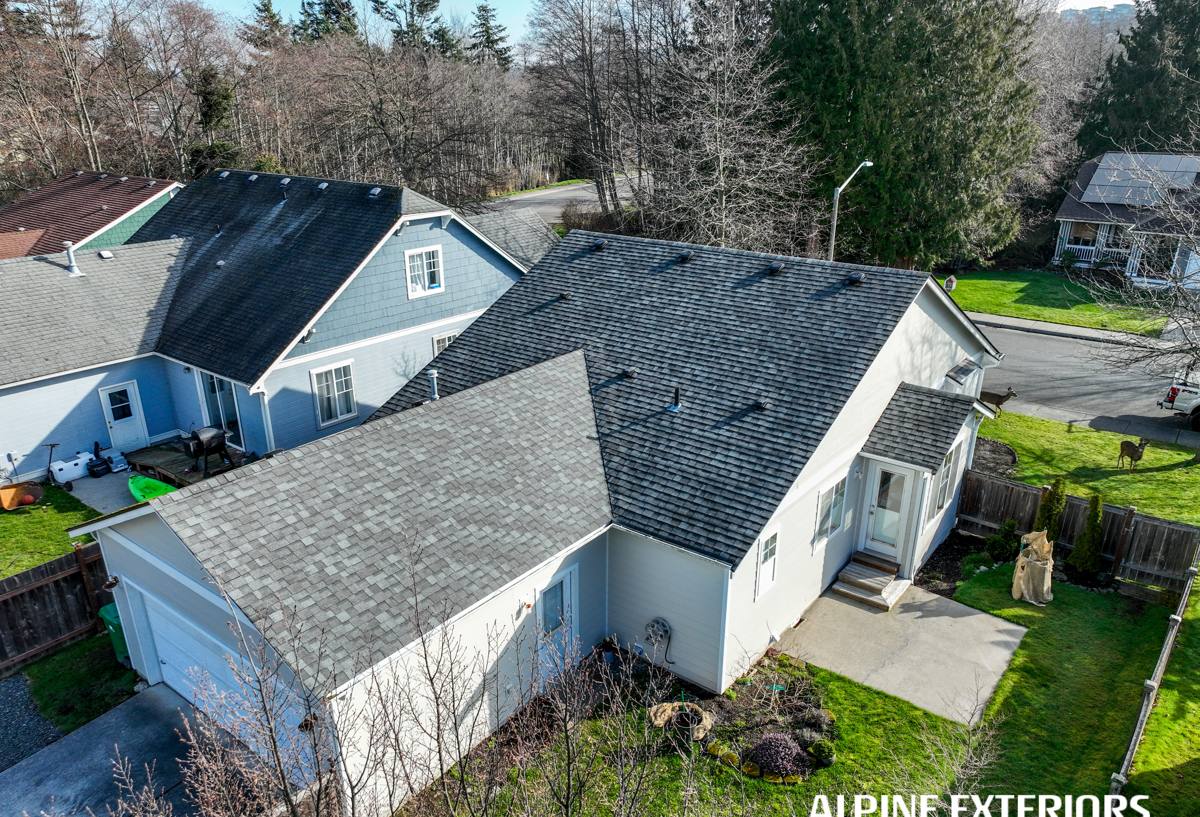
What Salt Air and Driving Rain Actually Do to a House
Salt Air
Proximity to saltwater accelerates corrosion on anything metal — fasteners, flashing, gutters, and hardware — and it can also degrade certain paint finishes and caulking faster than the same products would wear inland. Materials and fasteners that aren't rated for coastal exposure tend to show rust streaks, pitting, and premature caulk failure years before a homeowner expects to be doing maintenance.
Driving Rain
Wind-driven rain off the bay doesn't just fall straight down — it gets pushed sideways into wall assemblies, especially on west- and south-facing elevations. That means seams, laps, and penetrations (windows, vents, hose bibs) take on more water pressure than they would in a calmer inland setting. A siding system with poor water management, or one installed with the wrong lap exposure or flashing detail, will let moisture behind the cladding long before the surface itself looks damaged.
Moss and Shade
Fairhaven's tree cover and marine-layer humidity create ideal moss and algae conditions. Moss holds moisture against a surface, and on wood-based sidings and shake, that constant dampness is what drives rot from the outside in. Roofs in shaded, moss-prone areas need the same consideration — moss lifts shingles, traps debris, and shortens roof life if it's never addressed.
Why We Install Only James Hardie Fiber Cement
We made a deliberate decision to install James Hardie fiber cement siding exclusively, rather than offering vinyl, LP SmartSide, cedar, primed spruce, or other fiber cement brands. That's not a marketing position — it's a response to what we've seen hold up, and what doesn't, in coastal Pacific Northwest conditions.
- Non-combustible core: fiber cement doesn't burn, ignite, or contribute fuel the way wood-based sidings can.
- Moisture stability: fiber cement doesn't absorb and swell with water the way engineered wood or solid wood products can, which matters directly in a driving-rain environment.
- Factory-applied ColorPlus finish: baked-on, UV-cured color resists fading and chipping far better than field-applied paint, which matters when salt air is already stressing exterior finishes.
- Climate-engineered HZ product lines: Hardie's HZ5 formulation is specifically engineered for wetter, harsher climates like ours, rather than a one-size-fits-all product.
- Strong transferable warranty: a meaningful, transferable warranty matters to resale value in a market where buyers are increasingly asking about exterior materials.
We're upfront that other products have their place and their advocates. Vinyl is inexpensive and low-maintenance in mild conditions but can crack in cold snaps and doesn't hold up as well against wind-driven debris. LP SmartSide and other engineered wood products perform reasonably well when installation is flawless, but any breach in the factory seal invites moisture into the wood strand core, and repairs are rarely invisible. Cedar and primed spruce are beautiful but require an ongoing maintenance commitment — repainting, caulking, and moss control — that most homeowners underestimate until they're a few years in. In a climate like Fairhaven's, those trade-offs compound faster than they would somewhere drier.
How We Approach a Siding Project in a Coastal Neighborhood
Assessment First
Before we talk product selection, we look at the house: sun and shade exposure, prevailing wind direction relative to the bay, existing moisture damage, and the condition of the water-resistive barrier and flashing underneath the current siding. A house on a shaded, west-facing lot near the water needs a different level of attention to detail than one on a dry, south-facing lot inland.
Water Management Details
In a driving-rain environment, the siding panel itself is only part of the system. Correct lap exposure, properly integrated flashing at windows and doors, rain-screen gaps where called for, and stainless or coated fasteners rated for coastal exposure all matter as much as the cladding material. This is where a lot of siding failures actually originate — not in the product, but in shortcuts taken during installation.
Corrosion-Resistant Hardware
Given the salt air exposure in Fairhaven, we pay particular attention to fastener and flashing material selection so that hardware isn't the weak link in an otherwise well-installed system.
Beyond Siding: Roofing, Windows, and Decks
Siding is only one piece of a coastal home's exterior. We also handle roofing, window replacement, and deck construction and repair, because these systems interact — a roof shedding water improperly, a window leaking at the flange, or a deck ledger trapping moisture against the house can all undermine even a well-installed siding job.
Roofing
Moss and algae growth are a routine issue on shaded roofs in this area. We look at ventilation, underlayment condition, and moss-resistant strategies as part of any roofing conversation, not just shingle replacement.
Windows
Window flashing integration is one of the most common failure points we find during siding tear-off. Replacing aging or poorly flashed windows at the same time as a siding project is often more cost-effective than doing them separately, since the wall is already open.
Decks
Decks facing prevailing weather off the bay take a beating from rain and salt air just like siding does. Proper ledger flashing, fastener selection, and decking material choice all matter for longevity in this environment.
Cost Factors for a Coastal Fairhaven Home
Every project is different, but these are the variables that most affect scope and cost on homes in this kind of environment:
| Factor | Why It Matters Here |
|---|---|
| Extent of existing moisture damage | Driving rain and moss cover can hide rot behind old siding that isn't visible until tear-off |
| Home size and elevation complexity | More corners, gables, and window penetrations mean more flashing detail work |
| Current siding material | Removing wood or vinyl versus fiber cement affects labor and disposal |
| Sun/shade exposure | Shaded, moss-prone elevations may need additional prep or moss remediation |
| Trim and accessory scope | Corner boards, fascia, and soffit work often gets bundled with siding replacement |
| Access and site conditions | Mature landscaping and lot slope near the water can affect staging and labor |
What to Look For When Vetting an Exterior Contractor Locally
- Manufacturer-recognized installation training on the specific siding product being used
- Willingness to explain their flashing and water-management details, not just the finished appearance
- Local references and a physical presence in Whatcom County, not just a traveling crew
- Proper licensing, bonding, and insurance for exterior construction work in Washington
- A written scope that specifies fastener type, flashing approach, and product line — not just "siding replacement"
- Comfort walking you through why they recommend one product over another, including trade-offs
Why a Local Crew Matters
A contractor based in and around Ferndale sees how homes in Whatcom County's coastal pockets actually age over years, not just how they look on installation day. That local knowledge shapes decisions that don't show up in a generic estimate — which elevations need extra flashing attention, how much moss remediation a shaded roof needs before re-roofing makes sense, and which fastener specs actually hold up near the bay. It also means we're accountable locally if a warranty question or maintenance issue comes up down the road, rather than being a name from a sales pitch that's moved on to the next region.
If you own a home in the Fairhaven area and want a straight assessment of your siding, roofing, windows, or deck, we're happy to take a look and walk you through what we see — no pressure, no obligation. Reach out using the form below to schedule a free estimate.