 Ferndale
 Siding Built for Lynden's Corner of Whatcom County
Lynden sits inland from the coast, tucked into the Nooksack River valley near the Canadian border, and it has its own weather personality even compared to the rest of Whatcom County. You get the marine-influenced rain patterns that define western Washington, but layered with the cold-air drainage and fog that settle into the valley overnight, especially in the fall and winter months. Homes here spend a large share of the year damp, shaded in places, and slow to dry out — which matters more than most homeowners realize when it comes to what's on the outside of the house.
We're based out of Ferndale and work throughout Whatcom County, and Lynden is a regular part of our service area. That means we've seen how the local combination of driving rain, long stretches of overcast weather, and a moss season that can run from October well into spring actually plays out on real houses — not in a brochure, but on siding, trim, and roofing that either held up or didn't.
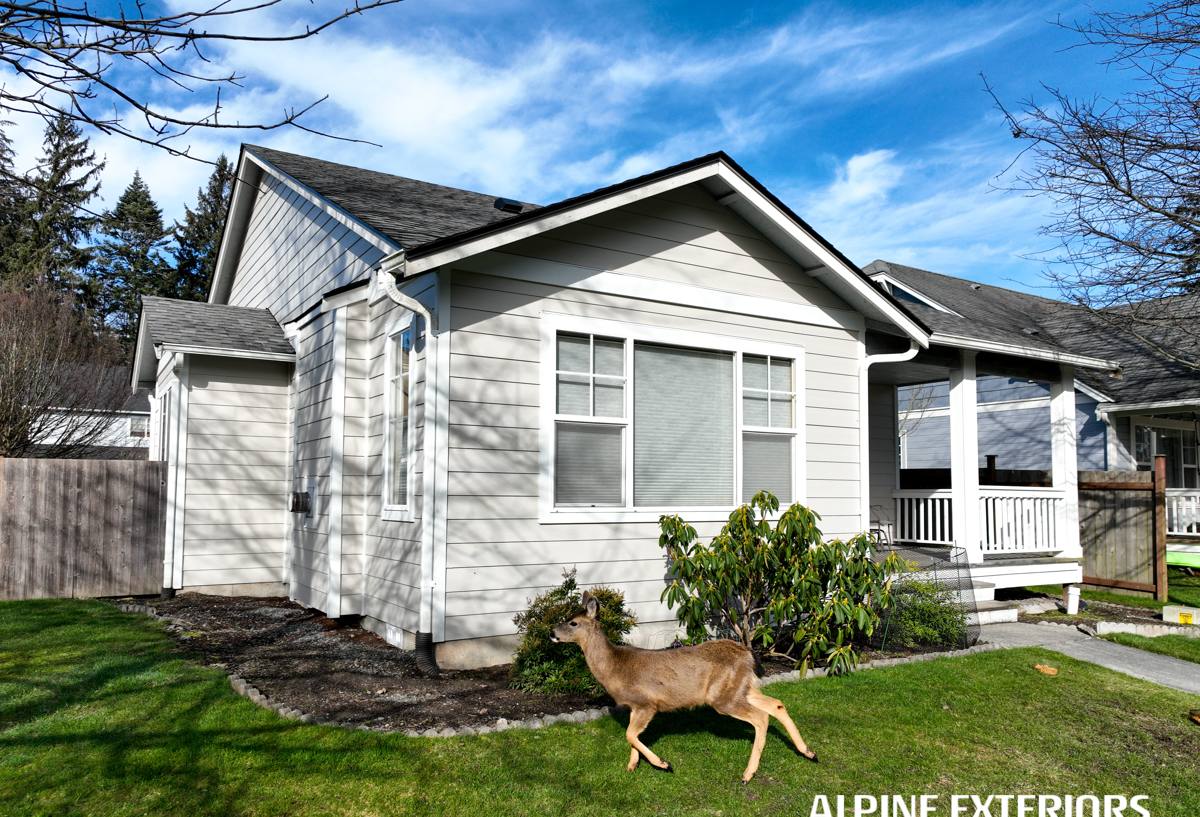
What the Climate Actually Does to a House Here
The challenges aren't dramatic — nobody's siding blows off in a single storm — they're cumulative. A few things show up again and again on homes we look at in and around Lynden:
- Moss and algae staining on north-facing walls and anywhere shaded by trees or fences, especially where siding doesn't get enough sun or airflow to dry between rain events.
- Paint and finish breakdown on lower-grade siding materials that weren't engineered for repeated wet-dry cycling, showing up as chalking, peeling, or color fade years earlier than the label promised.
- Swelling and soft spots at butt joints, corners, and any place water can sit against a seam — a common failure point on wood-based or engineered wood siding products.
- Freeze-thaw stress during the occasional cold snaps that come through the valley, which can widen small cracks in siding and caulking that started as cosmetic issues.
None of this is unique to Lynden, but the valley's tendency to hold moisture and fog longer than more exposed or breezier parts of the county means these issues tend to show up a bit earlier and progress a bit faster if the wrong material is on the wall — or if it wasn't installed with drainage and ventilation in mind.
Why We Only Install James Hardie Fiber Cement
We made a deliberate decision to install one siding system — James Hardie fiber cement — and not offer vinyl, LP SmartSide, Cemplank, Allura, or bare cedar and primed spruce alongside it. That's not because those products are worthless; plenty of them have a place. It's because after years of installing and repairing exterior siding in this climate, we didn't want to keep telling homeowners "well, it depends" when they asked which material would actually hold up.
Fiber cement is a mix of cement, sand, and cellulose fiber, engineered specifically to handle sustained moisture exposure without swelling, rotting, or feeding mold and mildew growth the way wood-based products can. It's also non-combustible, which matters in a region where wildfire smoke seasons have become a more regular late-summer concern even this far north. James Hardie's ColorPlus factory-applied finish is baked on under controlled conditions rather than field-painted, which gives it more consistent, longer-lasting color than a coat applied on site in Whatcom County's damp air.
Wood-based engineered sidings can perform well when detailed and maintained precisely to spec, but they're less forgiving of the small installation mistakes and long wet seasons that are just a fact of life here. Vinyl is inexpensive and low-maintenance, but it can warp in wide temperature swings, fade unevenly over time, and doesn't offer the same fire performance. We'd rather install one product we trust completely than offer several and hope the cheaper option performs like the better one.
Hardie Product Lines We Work With
| Product Line | Best Use | Notes for This Climate |
|---|---|---|
| HardiePlank Lap Siding | Most common wall application | HZ10 formulation engineered for the Pacific Northwest's wet climate zone |
| HardiePanel Vertical Siding | Modern facades, accent walls, gable ends | Clean lines that shed water well when flashed correctly |
| HardieTrim Boards | Corners, window and door trim, fascia | Resists the moisture wicking that rots wood trim over time |
| HardieShingle Siding | Accent gables, Craftsman and farmhouse styles | Popular for the barn- and farmhouse-influenced homes common around Lynden |
Full Exterior Protection, Not Just Siding
Siding is only one piece of how a house sheds water and holds up over the years. We also handle roofing, windows, and decks, because those systems work together — a roof with a failing drip edge or clogged gutter will send water straight down a wall no matter how good the siding is, and a deck built without the right ledger flashing can rot into the house behind it. When we're on a Lynden property for a siding project, we're looking at the whole envelope:
- Roofing — proper flashing, ventilation, and moss-resistant materials to handle the valley's long damp season
- Windows — correctly flashed and sealed openings, since a poorly integrated window is one of the most common sources of hidden water intrusion behind new siding
- Decks — built and flashed to shed water away from the house rather than trapping it against the structure
Approaching the exterior as one connected system, rather than four separate trades, is a big part of why siding we install tends to actually perform the way it's supposed to for decades.
Why a Local Crew Matters in Lynden
A lot of siding companies serve Whatcom County from a distance — quoting the job, subbing out the labor, and moving on. We're based right here in Ferndale, which means the crew that shows up to install your siding is the same crew that answers the phone if something needs a look after the fact. That matters in a rural, agriculture-influenced community like Lynden, where houses range from older farmhouses to newer developments, and where the right approach to trim, color, and detailing depends on knowing what actually fits the area rather than defaulting to a generic package.
Being local also means we know how Whatcom County's permitting and inspection process works, we're not learning the driving routes and drainage patterns for the first time on your job, and we're around for the long haul if you have a warranty question five or ten years down the road.
What the Process Looks Like
Every project starts with an honest look at the existing siding and the underlying wall condition — not just a measurement and a quote. From there:
- We walk the exterior with you, point out any moisture damage, rot, or ventilation issues we find, and explain what's driving them.
- We provide a written estimate that lays out the Hardie products, colors, and trim details being proposed, along with a realistic timeline.
- Old siding is removed and the wall sheathing and weather barrier are inspected and repaired as needed before anything new goes up — this step gets skipped by corner-cutting crews and it's where a lot of future problems start.
- Hardie siding is installed to manufacturer spec, with attention to flashing, clearances, and fastening patterns that matter for long-term performance in wet climates.
- We walk the finished job with you before calling it done.
Cost Factors to Expect
Every home is different, but a few factors consistently move the price on a Lynden siding project:
| Factor | Why It Matters |
|---|---|
| Amount of existing damage | Rotten sheathing or framing found during tear-off adds repair scope beyond the siding itself |
| House size and complexity | Multiple gables, dormers, and cutouts add labor time and trim detail |
| Siding profile and accessories | Shingle accents, vertical panel sections, and custom trim cost more than straight lap siding |
| Access and site conditions | Tight lots, fencing, or landscaping close to the house can slow removal and staging |
| Paired projects | Combining siding with roofing, window, or deck work in one visit can reduce overall disruption and sometimes overall cost |
Signs It's Time to Have Your Siding Looked At
- Persistent moss or dark streaking that comes back within weeks of cleaning
- Paint that's chalking, peeling, or fading noticeably faster on one side of the house
- Soft, spongy, or visibly swollen spots, especially near the bottom of walls or around trim
- Gaps opening up at seams, corners, or window trim
- A musty smell or visible staining on interior walls that back up to exterior siding
Get a Straight Answer for Your Home
If you're noticing any of these signs on a Lynden home, or you're simply planning ahead for a siding replacement, we're happy to come take a look and tell you honestly what we see — no pressure, no upsell to a product we don't believe in. Reach out for a free estimate and we'll walk the exterior with you and talk through what makes sense for your house and your budget.