 Ferndale
 Siding Built for Nooksack's Weather, Not Just Its Curb Appeal
Nooksack sits in the part of Whatcom County where the rain doesn't just fall, it blows sideways for months at a time, and where shade from fir and cedar cover keeps north-facing walls damp long after a storm has passed. Add in the salt-tinged, moisture-heavy air that moves inland off Bellingham Bay and the Strait of Georgia, and you've got a climate that's genuinely hard on exterior building materials. Siding here isn't just a design choice. It's the one layer standing between your framing and a wet season that can run from October into June.
We install fiber cement siding on homes throughout the Nooksack area and the rest of Ferndale's service radius, and the jobs we get called back to fix are almost always the same story: siding that was rated for a milder, drier climate than the one it ended up in. This page covers what fiber cement siding needs to do here, what a correct installation actually looks like, and why we've standardized on one product line instead of offering a menu of options.
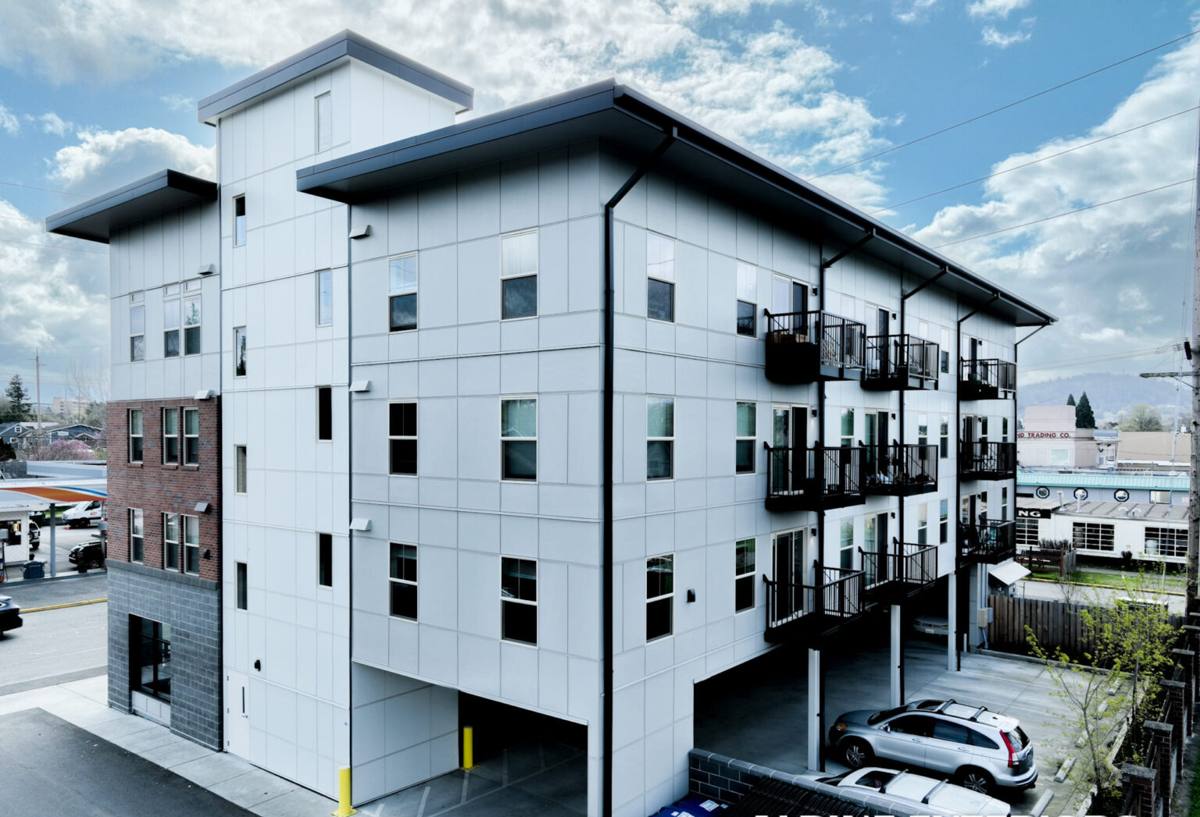
What Driving Rain, Moss, and Damp Air Do to the Wrong Siding
Wood-based siding products — including primed spruce, cedar, and engineered wood panels like LP SmartSide — depend on their coatings and sealed edges to keep water out. In a climate that delivers wind-driven rain from multiple directions and long stretches without real drying time, any gap in that protection becomes a slow-motion problem. Moisture gets into a cut edge, a nail hole, or a seam that wasn't caulked correctly, and the wood substrate underneath starts to swell, soften, or rot from the inside, often well before it's visible from the ground.
Moss and algae growth compound this. Shaded, north- and west-facing walls in the Nooksack area stay damp for days after a rain event, and organic growth on a wood-based product isn't just cosmetic — it holds moisture against the surface and accelerates the same breakdown. Vinyl siding avoids the rot problem but brings its own: it flexes and can crack in cold snaps, fades unevenly under UV exposure, and simply melts or warps near heat sources. None of these are defects so much as trade-offs, but they're trade-offs that show up faster in a wet, moss-friendly climate than in a drier one.
What a Correct Fiber Cement Installation Actually Involves
Fiber cement solves the moisture-absorption problem at the material level — it's cement, sand, and cellulose fiber, and it doesn't rot or support the kind of organic growth that feeds off wood sugars. But the material only performs as well as the install. A poorly installed fiber cement job can still leak, still trap moisture, and still fail early. Here's what we hold every job to.
Clearances and Flashing
Fiber cement siding needs a minimum gap above roof lines, decks, and grade — typically 6 inches above a roof surface and 1-2 inches above other horizontal surfaces — so water has somewhere to go instead of wicking up into the bottom edge of a board. Every window, door, and penetration gets proper flashing and house wrap integration before a single board goes up. This is the step that gets skipped most often on rushed jobs, and it's the step that causes almost every moisture failure we get called to diagnose.
Fasteners and Fastening Pattern
We use corrosion-resistant fasteners driven at the manufacturer-specified pattern and depth — not overdriven, which crushes the material and creates a moisture entry point, and not underdriven, which leaves boards loose and prone to rattling or cracking in wind. Given how much wind-driven rain this area sees, a fastener that's even slightly off spec is a long-term liability.
Joints, Caulking, and Factory-Finished Edges
Every seam and butt joint gets treated with the right sealant, and factory-cut edges are primed or touched up before installation so no raw material is left exposed to weather. This is a small detail that matters more here than almost anywhere else in the state, because raw cut edges are exactly where a damp climate finds its way in.
Our Process for Nooksack-Area Projects
Every project starts with a walk-around of the home, not a quote pulled from a square-footage formula. We look at which walls take the worst weather exposure, where existing moisture damage has already started, how the current siding was flashed around windows and trim, and what the substrate looks like once the old material comes off. That last part matters — you don't really know what condition the sheathing is in until it's exposed, and that's when we flag anything that needs repair before new siding goes up.
From there: removal of the old siding, sheathing repair where needed, house wrap or weather-resistive barrier installation or repair, then the fiber cement install itself following manufacturer clearance, fastening, and sealing specifications. We clean up as we go and haul away the old material — you're not left with a dumpster of debris for a week after the crew leaves.
Why We Only Install James Hardie
We made a decision to install one fiber cement system rather than carry multiple brands, and it's James Hardie. A few reasons that decision holds up in this climate specifically: Hardie's HZ5 product line is engineered for regions with more freeze-thaw cycling and moisture exposure, the ColorPlus factory finish is baked on under controlled conditions rather than field-applied, which means more consistent coverage on cut edges and better fade resistance over time, and the material itself is non-combustible, which matters as wildfire smoke and drought stress become more common even in a historically wet county like this one. Hardie also backs its siding with a strong transferable warranty, which carries real value if you ever sell the home.
We're not saying other fiber cement brands are bad products. We're saying that after years of installing and repairing siding in this exact climate, this is the system we trust enough to stand behind on every job, and it's simpler for a homeowner to work with a contractor who knows one product system inside and out than one who's spread across five.
Fiber Cement vs. What It's Replacing
| Factor | Fiber Cement (James Hardie) | Wood-Based (Cedar, Primed Spruce, SmartSide) | Vinyl |
|---|---|---|---|
| Moisture/rot resistance | Does not rot; cement-based core | Vulnerable at cut edges, seams, coating gaps | Doesn't rot, but water can get trapped behind panels |
| Moss/algae resistance | Doesn't feed organic growth; cleans off surface | Organic material can support growth if damp | Can grow algae film in shaded, damp areas |
| Fire resistance | Non-combustible | Combustible | Can melt or warp near heat |
| Finish durability | Factory-baked ColorPlus finish | Field-applied paint/primer needs recoating | Color molded in but can fade unevenly |
| Typical repaint interval | 15+ years with ColorPlus | 5-8 years in this climate | Doesn't repaint well if damaged |
What Affects Your Project Cost
We don't quote off square footage alone, but these are the factors that move a bid up or down on a real Nooksack-area project:
| Cost Factor | Why It Matters |
|---|---|
| Condition of existing sheathing | Rot found during tear-off means repair or replacement before new siding goes up |
| Home profile and trim detail | More corners, dormers, and trim transitions mean more cutting, flashing, and labor |
| Siding profile chosen | Lap width, board-and-batten, or shingle-style panels vary in material and labor cost |
| Story height and access | Two-story walls and steep or obstructed lots require more scaffolding and time |
| Removal and disposal | Full tear-off of old siding vs. a simpler starting condition changes labor scope |
Choosing a Siding Crew That Already Works Nooksack
A crew that already works this part of Whatcom County knows things a traveling or out-of-area contractor doesn't — how far this weather pushes clearance requirements, which wall orientations need extra attention, and what a correctly sealed job actually needs to hold up through a full wet season. A few things worth checking before you hire anyone:
- Ask specifically how they handle flashing at windows, doors, and roof-to-wall transitions — vague answers here are a red flag
- Confirm they're following manufacturer-specified clearances above roofs, decks, and grade, not just "what usually works"
- Ask what happens if they find sheathing damage during tear-off, and how that's priced
- Get clarity on which fiber cement product line and finish you're getting, not just "Hardie siding" as a generic term
- Ask about cleanup and disposal of the old material as part of the scope
- Check that fastener type and spacing are part of their written scope, not left to the installer's discretion on the day
Living With Fiber Cement Siding in This Climate
One advantage of switching to fiber cement in a place like Nooksack is how little ongoing attention it needs compared to what it replaces. There's no repainting cycle to keep up with for well over a decade, and the material itself won't feed moss the way bare or lightly coated wood can. That said, this is still a damp, shaded climate, and moss or algae can form a surface film on any exterior material given enough time without direct sun. A periodic gentle rinse — not pressure-washing directly into seams or up under laps — keeps painted and unpainted surfaces alike looking the way they should. Beyond that, an annual walk-around to check caulking at trim joints and around penetrations is the main maintenance task worth doing yourself.
If you're planning a siding project in Nooksack or anywhere else in the Ferndale area, we're happy to walk the property, look at what your current siding is telling us, and put together a straightforward estimate — no pressure, no obligation. Use the form below to get started.