 Ferndale
 Why Nooksack Homes Put Extra Demands on Windows
Nooksack sits inland from the coast, but that doesn't mean local homes are shielded from the marine climate that defines this part of Whatcom County. Weather systems pushing in off the water carry salt-laden moisture well into the river valleys, and that moisture doesn't need direct ocean exposure to do its work. Combine that with the driving, sideways rain typical of fall and winter storms, plus a moss season that can stretch from October into May, and you have a set of conditions that age window frames, seals, and flashing faster than homeowners in drier climates ever have to think about.
Older windows in this area often show the same pattern: fogged glass from failed seals, frames that have softened or discolored at the sill, and moss or algae creeping into corners that never fully dry out. None of that is a defect in the original window so much as it is the predictable result of decades of Whatcom County weather doing what Whatcom County weather does. Replacement, done correctly, is less about upgrading to something fancier and more about closing the gaps that years of moisture exposure have opened up.
What Makes This Different From a Dry-Climate Job
A window installed in a low-humidity region can get away with looser tolerances around flashing and sealant. A window installed in Nooksack cannot. Every gap, every skipped flashing step, and every cut corner around the rough opening becomes an entry point for water within a season or two, not a decade. That's the standard we install to.
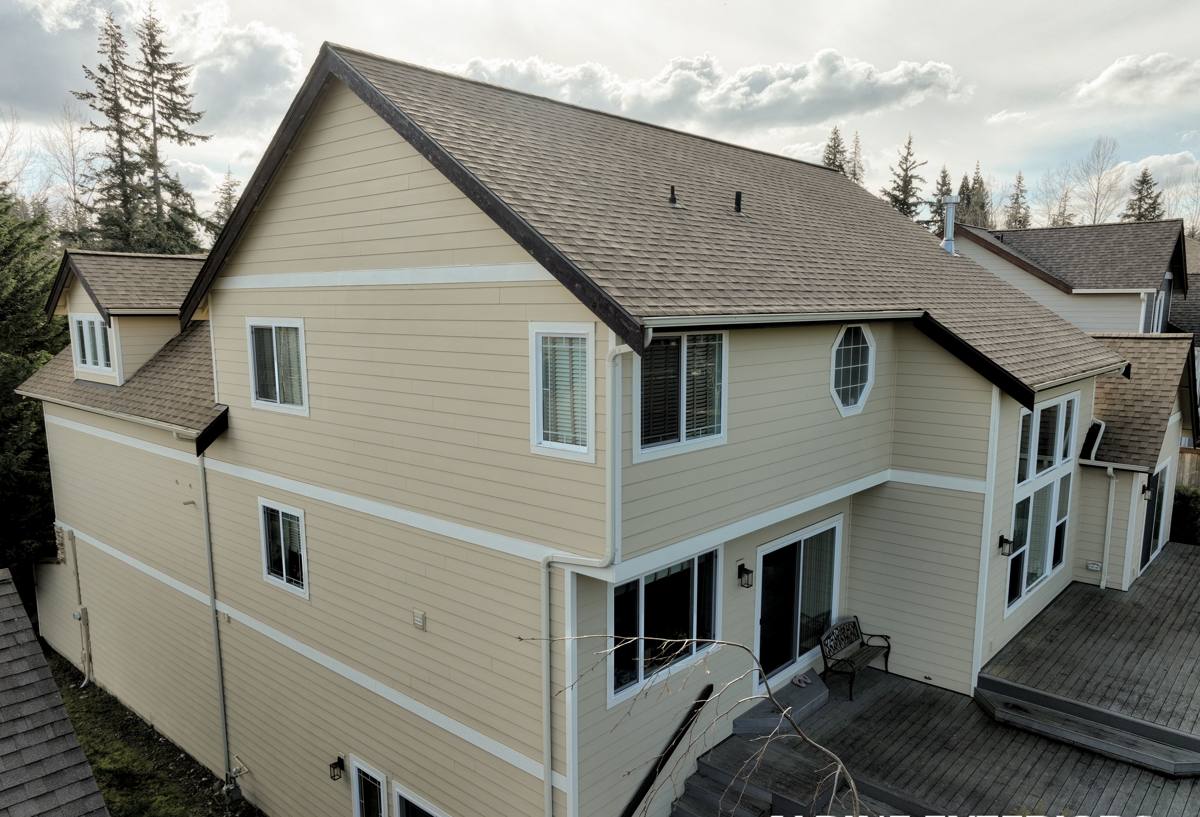
Signs Your Windows Are Ready for Replacement
Most homeowners don't wake up one day and decide they need new windows. The signs build gradually, and it's easy to write them off as normal wear. Here's what we actually look for when we walk a property in this area:
- Fogging or a hazy film between panes of double-glazed glass — the seal has failed and the gas fill (or airspace) is compromised
- Wood sills that feel soft, spongy, or show dark staining, especially on north- and west-facing walls that stay shaded and wet longer
- Visible moss or green growth building up in the corners of the frame or on the exterior trim around the window
- Drafts you can feel with a hand near the frame on a windy day, even with the window latched
- Windows that are difficult to open, close, or lock — often a sign the frame has swollen or shifted from moisture absorption
- Condensation forming on the inside of the glass regularly, which points to poor insulating performance, not just humidity in the house
Any one of these on its own might not mean urgent replacement. Several together, especially on a home that's had the same original windows for 20-plus years, usually means the frames and seals have reached the end of their useful life.
What a Correct Window Replacement Job Actually Involves
The window itself is only part of the job. In our experience, most window failures in this climate trace back to installation shortcuts, not product defects. A correct replacement follows a specific sequence, and skipping any step is where problems start.
Removal and Opening Inspection
Once the old window is out, the rough opening gets inspected before anything new goes in. This is the point where hidden rot, soft framing, or old flashing failures show up — problems that were likely the reason the original window failed in the first place. Installing a new window over a compromised opening just resets the clock on the same failure.
Flashing and Water Management
This is the step that matters most in a wet climate and the one that gets rushed most often. Proper flashing directs any water that gets behind the siding or trim back out, away from the framing, rather than letting it pool at the sill. That means correctly lapped house wrap, sill pan flashing, and head flashing installed in the right order — bottom to top, so each layer sheds water onto the one below it.
Air Sealing and Insulation
The gap between the window frame and the rough opening needs to be sealed and insulated correctly — not overpacked with expanding foam, which can bow the frame and cause operating problems, and not left with gaps, which is where drafts and moisture both get in.
Exterior Trim and Sealant
The final sealant bead around the exterior trim is a maintenance item, not a substitute for proper flashing underneath. Sealant fails eventually — usually within a handful of years, even with a quality product — so a job that relies on caulk instead of flashing to keep water out is a job that will leak again.
Choosing the Right Window for This Climate
There's no single "best" window material — the right choice depends on the home, the budget, and how much maintenance a homeowner wants to take on. Here's an honest comparison of what's commonly used in this region:
| Frame Material | Moisture Performance | Maintenance | Typical Fit |
|---|---|---|---|
| Vinyl | Won't rot; performs well in wet climates | Low — occasional cleaning | Most homes, best value |
| Fiberglass | Excellent; very stable in temperature and moisture swings | Low | Higher-end replacements, larger openings |
| Wood-clad | Good if the cladding stays intact, but vulnerable where cladding is damaged or seals fail | Higher — cladding and interior wood need periodic attention | Homes prioritizing a traditional wood interior look |
| Aluminum | Poor thermal performance, prone to condensation in this climate | Low | Rarely our recommendation for Whatcom County homes |
For most Nooksack homes, we lean toward vinyl or fiberglass. Both handle the region's driving rain and humidity without the ongoing maintenance burden that wood-clad frames carry, and neither gives moss or algae the porous surface it needs to take hold the way some wood trim does. That's a maintenance and moisture-management judgment on our part, not a knock on wood windows as a product — homeowners who want that look and are willing to stay on top of upkeep can still get good results with them.
Glass and Glazing
Double-pane, low-E glass is standard for this climate and worth the modest upgrade over single-pane in nearly every case — it cuts condensation risk on the interior significantly, which matters when the outside air is damp for months at a stretch. Argon-filled units add a small additional performance bump; we'll walk through whether it's worth it for a given project rather than upselling it automatically.
Our Process, Start to Finish
- Free on-site estimate — we look at your existing windows, note any signs of moisture damage or rot around the openings, and talk through what's actually needed versus what's optional
- Written quote — clear pricing by window, with materials and labor broken out, no surprise add-ons once work starts
- Scheduling — we work around Whatcom County's wet season where we can, but weather-tight flashing techniques mean we're not limited to a narrow dry-season window
- Removal and opening inspection — old windows come out, framing gets checked, any rot or damage gets flagged and addressed before the new window goes in
- Installation — flashing, insulation, and air sealing done in the correct sequence, window set, leveled, and secured
- Exterior finish work — trim, sealant, and paint or stain touch-up as needed to match the surrounding siding
- Final walkthrough — every window opens, closes, and locks the way it should before we call the job done
What Drives the Cost
Every home is different, but the same handful of factors determine most of the price difference between one window replacement job and another:
| Factor | Why It Matters |
|---|---|
| Frame material | Vinyl is typically the most economical; fiberglass and wood-clad cost more upfront |
| Window size and count | Larger openings and whole-house replacements bring per-unit costs down through efficiency of scale |
| Condition of the rough opening | Rot or framing damage found during removal adds repair work before the new window can go in |
| Glass upgrades | Low-E coatings, argon fill, or triple-pane options add cost but also long-term performance |
| Trim and exterior finish work | Matching existing siding or trim details takes more time than a straightforward swap |
We'd rather give a homeowner a real number after seeing the actual windows than a ballpark that turns out to be wrong once we're on site. That's the point of the free estimate.
Why a Crew That Already Works Nooksack Matters
Window flashing and water management aren't one-size-fits-all. A crew that installs windows mostly in drier parts of the state, or that treats every job the same regardless of climate, is more likely to skip steps that don't seem to matter — until the first wet winter proves otherwise. Working regularly across Ferndale and the surrounding Whatcom County communities, including Nooksack, means we're not guessing at how driving rain, humidity, and moss actually behave against a home here. We've seen what happens when flashing is done right and what happens when it isn't, and we build every job to the first standard.
It also means faster response if something needs a look after installation — a warranty callback, a question about how a window is performing in its first winter — from a crew that isn't driving in from out of the area.
Keeping New Windows Performing Long-Term
A correct installation does most of the work, but a small amount of ongoing attention keeps windows performing the way they should for the long run:
- Rinse frames and sills a couple of times a year to keep moss and algae from getting a foothold, especially on shaded sides of the house
- Check exterior sealant annually and have any cracked or peeling caulk redone before it becomes a leak path
- Keep gutters and downspouts clear so water isn't sheeting down past window heads during heavy rain
- Operate locks and hardware periodically through the year so mechanisms don't seize from disuse
- Watch for any new interior condensation on cold mornings — it's usually the first sign something needs attention
None of this is complicated, but it's the difference between windows that look and perform well fifteen years in and ones that start showing the same problems the old ones had.
If your windows are fogging, drafting, or showing signs of moss and moisture damage, we're happy to take a look and give you a straightforward, no-pressure estimate. Fill out the form below and we'll get in touch to schedule a time that works.