 Ferndale
 Sumas Sits in a Weather Corridor That's Hard on Exteriors
Sumas is a small border town tucked into the Nooksack lowlands, right up against the Canadian line, and its exterior siding takes a harder beating than most homeowners realize. This part of Whatcom County sits inside a marine-influenced climate system — driving rain rolls in off the Pacific and Puget Sound lowlands for months at a stretch, humidity stays high through fall and winter, and the valley's low-lying, shaded lots hold onto moisture longer than the drier uplands nearby. On top of that, Sumas gets a wind pattern most of western Washington doesn't see.
The result is a siding environment that punishes cheap materials and sloppy installation. Homes here need siding that can shed water fast, resist moisture intrusion at every seam and corner, and hold its paint or finish through repeated wet-dry cycles without cupping, swelling, or rotting.
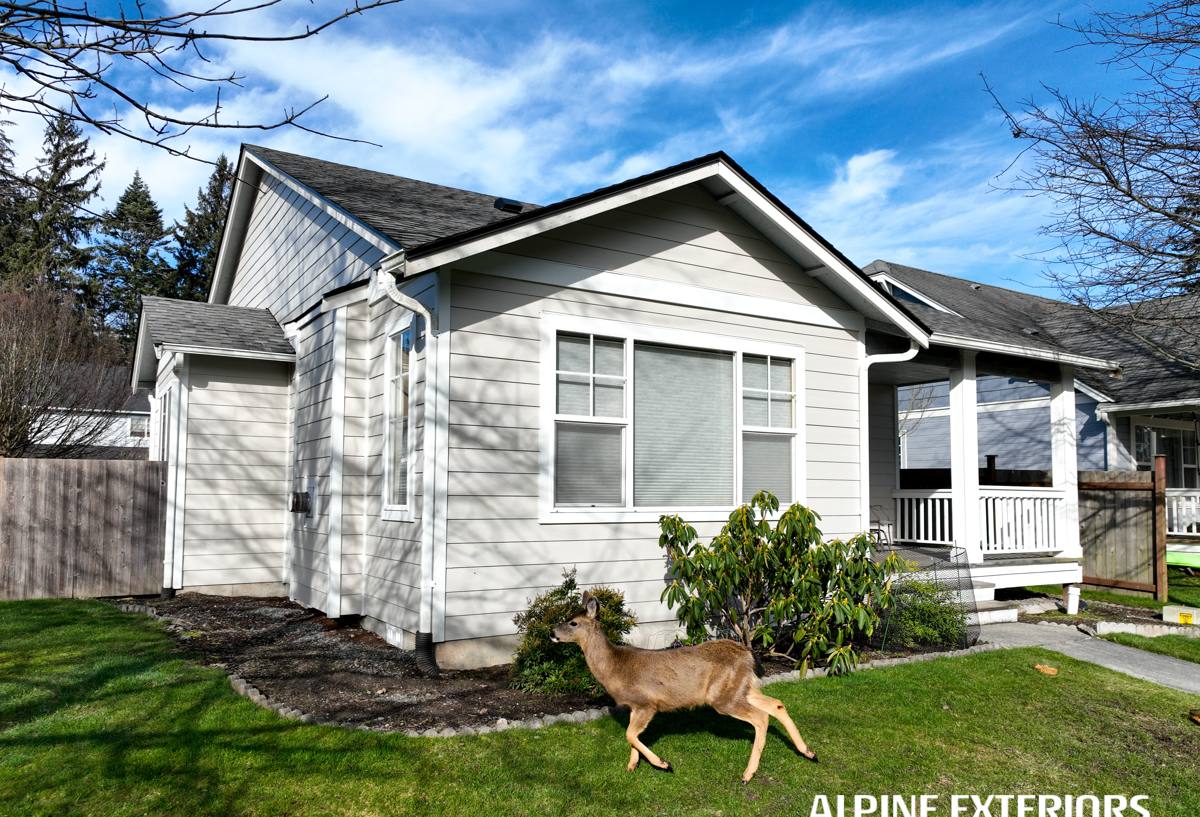
The Sumas Gap Wind Factor
Sumas sits near a low pass in the terrain that connects to British Columbia's Fraser Valley — a geographic feature that funnels cold, dense outflow air south into Whatcom County during certain winter weather patterns. Homeowners here know it as the wind that seems to come out of nowhere and hit harder than the forecast suggested. For siding, wind matters as much as rain does: it's what drives water sideways into laps, fastener holes, and trim joints that would otherwise stay dry in a calmer climate. Siding and flashing details that are "good enough" in a sheltered neighborhood can fail here within a few seasons.
That's one of the reasons installation quality matters more in Sumas than in a lot of Western Washington towns. Proper fastening patterns, correctly lapped house wrap, and flashing that's actually integrated with the siding system — not just caulked and hoped for — are what keep wind-driven rain out of the wall assembly.
What This Means for Siding Material Choice
We only install James Hardie fiber cement siding, and a climate like Sumas's is exactly why. Fiber cement doesn't absorb and swell the way wood-based products can, it doesn't get brittle and crack under UV and freeze-thaw cycling the way some vinyl does over time, and it carries a factory-applied ColorPlus finish that's baked on before it ever reaches the jobsite — so it isn't relying on field-applied paint to hold up against driving rain year after year.
Why Not LP SmartSide or Similar Engineered Wood Products
Engineered wood siding has a wood-strand core, and wood-based cores are dimensionally reactive to moisture no matter how well they're treated at the factory. In a climate that stays wet for long stretches, any breach in the finish — a scuff, a poorly sealed cut edge, a nail that backs out — gives moisture a path into that core. Once it's in, swelling and edge softening follow, and by the time it's visible from the ground, the damage is often already done underneath. We don't install it because we don't want to hand a Sumas homeowner a maintenance schedule that has to be followed perfectly, forever, to avoid that outcome.
Why Not Vinyl Siding
Vinyl is inexpensive and low-maintenance in mild climates, but it's a thin, flexible plastic product that expands and contracts with temperature and can crack or blow off in sustained high wind — a real concern given the outflow wind events this area sees. It also isn't fire-resistant, which matters more every year as wildfire smoke and ember exposure become a bigger part of Pacific Northwest summers.
Why Not Cedar or Primed Spruce
Real wood siding is beautiful, but it's the most maintenance-intensive option in a wet climate like this one — regular refinishing, vigilance about caulk joints, and real risk of rot if upkeep slips even one season. In a valley that holds moisture as long as Sumas does, that's a demanding commitment for most households.
Why James Hardie
Hardie's fiber cement is engineered specifically for climates like ours, with product lines built around regional moisture and temperature profiles. It's non-combustible, it holds paint and color far longer than wood-based alternatives, and it comes with a strong transferable warranty when installed to Hardie's specifications. That's the standard we build every siding job around.
How We Approach a Siding Job in Sumas
Every property is different, but the process follows the same core steps on every job we do in this area:
- Full exterior inspection, including a check of existing sheathing and house wrap condition before anything is removed
- Removal of old siding and identification of any hidden moisture damage that needs to be addressed before new siding goes on
- Repair or replacement of damaged sheathing — this is not an optional step, and we don't cover over problems
- Installation of a properly lapped weather-resistive barrier and correctly integrated flashing at every window, door, and penetration
- Installation of James Hardie panels or lap siding per manufacturer fastening and clearance specifications
- Final trim, caulking at appropriate joints only, and a walkthrough with the homeowner
That sheathing check matters more here than it might elsewhere. In a wet valley climate, siding failures often aren't visible from the street — they're happening behind the old siding, at the sheathing level, for years before anyone notices. Pulling old siding off is the only real chance to catch that early.
We Handle the Rest of the Exterior Too
Siding doesn't work in isolation — it's one part of a building envelope that also includes the roof, windows, and any attached structures like decks. We handle all four, which matters in a climate that stresses the whole exterior at once:
Roofing
A roof that's shedding water properly protects the siding below it. Poor roof drainage or clogged gutters send extra water down the wall face exactly where siding is most vulnerable — at the top courses and around trim.
Windows
Window flashing integration is one of the most common failure points in any siding job, ours included if it's not done carefully. We treat window replacement and siding work as connected jobs, not separate ones, because the flashing has to tie together correctly at that interface.
Decks
Attached decks create another wall penetration and another spot where water management has to be right. We build and repair decks with the same attention to how they interact with the siding and structure around them.
What Siding Work Typically Costs to Consider
Every home is different, and the only way to get an accurate number is a walkthrough, but these are the factors that generally drive the cost of a siding project in this area:
| Factor | Why It Matters |
|---|---|
| Home size and wall complexity | More corners, gables, and trim details mean more labor and material per square foot |
| Sheathing condition underneath existing siding | Hidden rot or moisture damage found during removal adds repair scope |
| Siding profile chosen | Lap siding, panel siding, and shingle-style Hardie products carry different material and labor costs |
| Trim and accessory scope | Fascia, soffit, and trim replacement alongside siding changes total cost |
| Window and door count | Each opening adds flashing and trim work |
| Access and site conditions | Steep lots, tight setbacks, or limited equipment access affect labor time |
We'd rather walk a homeowner through these factors honestly up front than offer a number over the phone that doesn't hold up once we see the actual wall condition.
Choosing a Contractor for Exterior Work in Sumas
Whatcom County has plenty of contractors who'll travel out to the border towns for a job, but a few things are worth checking before hiring anyone for siding, roofing, window, or deck work:
- Confirm active Washington state contractor licensing and current liability insurance — ask for proof, not just a claim
- Ask specifically whether sheathing will be inspected during tear-off, not just covered over
- Ask how window and door flashing will be integrated with the new siding, not just caulked afterward
- Get manufacturer installation specifications in writing if a specific product like James Hardie is being quoted
- Ask about warranty coverage — both the manufacturer's product warranty and the contractor's workmanship warranty
- Be wary of any bid that's dramatically lower than others without a clear explanation of scope differences
A crew that knows this specific stretch of Whatcom County — the wind pattern, the valley moisture, the way water moves across these lots — is going to make different, better calls on flashing and detailing than a crew that mostly works drier inland climates.
Moss, Mildew, and Long-Term Exterior Maintenance
Moss and mildew growth on siding, roofing, and decking is a fact of life in this climate, especially on shaded north- and west-facing walls that stay damp longest after a rain. It's mostly a cosmetic issue on fiber cement siding with a factory finish, but it's worth staying ahead of with periodic gentle washing rather than letting it build up for years. On roofing and decking, moss buildup can hold moisture against the surface longer and is worth addressing more proactively. Good gutter maintenance — keeping them clear so water isn't overflowing down the wall face — does more for long-term siding condition than almost anything else a homeowner can control between professional service visits.
Ready When You Are
If you're weighing a siding, roofing, window, or deck project on a Sumas property, we're happy to come take a look and walk you through what we're seeing — no pressure, no obligation. Fill out the form below for a free estimate.