 Ferndale
 Building Exteriors for a Salt Air Coastline
Semiahmoo sits on a narrow strip of land where the Salish Sea meets Whatcom County, and that location shapes everything about how a home's exterior ages here. Waterfront and near-waterfront properties in this part of the county deal with a combination of conditions that inland homes rarely see all at once: salt-laden air moving off the bay, wind-driven rain that hits siding at an angle instead of falling straight down, and a moss and algae season that can run most of the year given how much moisture stays in the air. Any one of those factors is manageable. Together, they wear down the wrong exterior materials faster than most homeowners expect.
We're a Ferndale-based crew, and Semiahmoo is part of our regular service area. That matters more than it sounds — a contractor who works this stretch of Whatcom County regularly knows how differently a home performs a quarter mile from open water versus set back in the trees, and adjusts the approach accordingly.
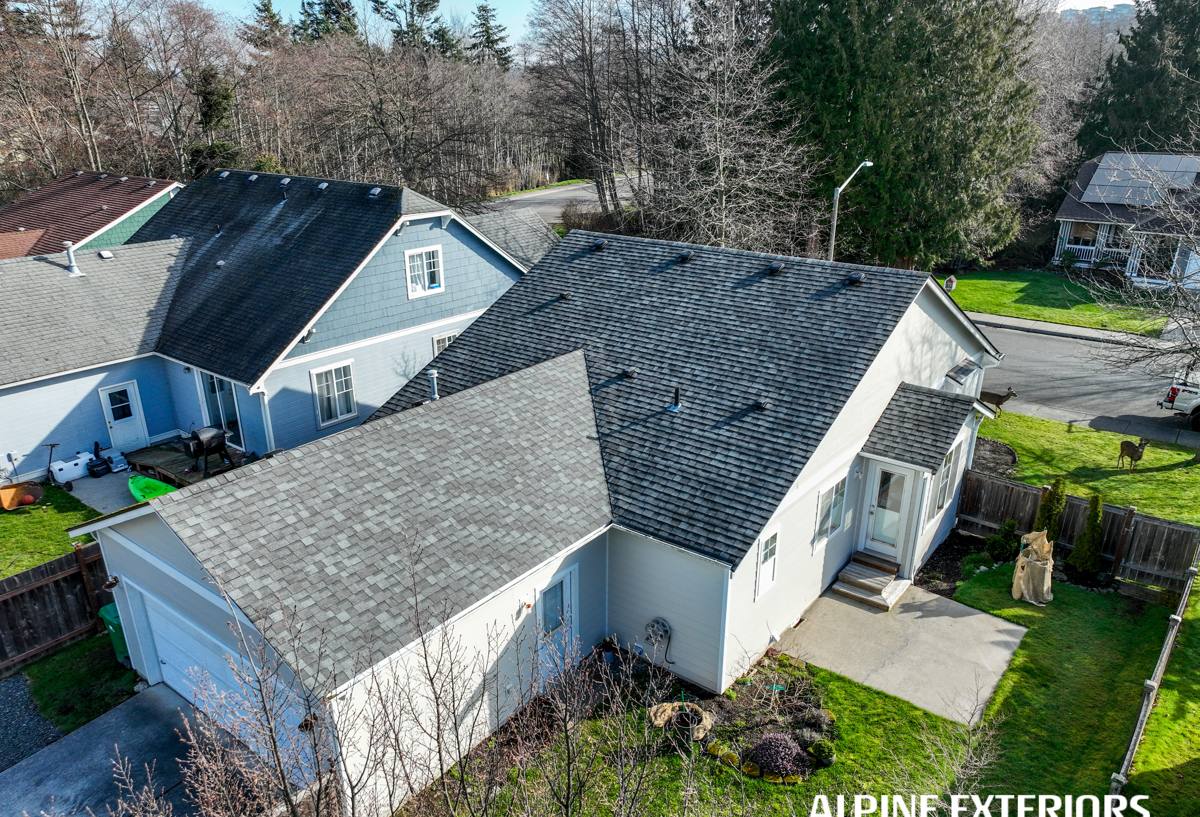
What Salt Air and Coastal Moisture Actually Do to Siding
Salt Air
Airborne salt doesn't just sit on a wall — it's hygroscopic, meaning it pulls moisture out of the air and holds it against whatever surface it lands on. On metal fasteners, trim, and flashing, that accelerates corrosion. On wood-based or wood-composite siding, that constant low-level dampness feeds rot and delamination at seams and cut edges. It also breaks down some paint and coating systems faster than manufacturers' published lifespans suggest, because those ratings are usually based on inland test conditions.
Driving Rain
Semiahmoo's exposure to wind off the water means rain frequently arrives sideways rather than straight down. That changes how water behaves at every horizontal joint, window head, and butt seam on a house. Siding systems and installation details that work fine on a sheltered inland lot can let water track behind the cladding here if laps, caulking, and flashing aren't done to a higher standard.
Moss and Algae
Whatcom County's damp, mild climate supports moss and algae growth on north- and shade-facing walls for much of the year, and coastal humidity extends that window further. Moss holds moisture against a surface long after rain has stopped, which is exactly the condition that rots wood trim and stains paint. It's cosmetic at first, then a maintenance problem, then — on the wrong material — a structural one.
Why We Only Install James Hardie Fiber Cement
We made a deliberate decision to install one siding system — James Hardie fiber cement — rather than offer a menu of products at different price points. In a climate like Semiahmoo's, that decision comes down to how each material category actually holds up over decades, not just how it looks on installation day.
| Material | Coastal Performance Concern |
|---|---|
| Vinyl siding | Can warp or distort in temperature swings and strong wind exposure; seams can allow moisture intrusion over time |
| Wood-based composite (LP SmartSide and similar) | Engineered wood core is vulnerable to swelling and edge deterioration if moisture reaches cut ends or damaged coating |
| Primed cedar or spruce | Natural wood requires ongoing repainting and sealing; salt air and moss shorten the interval between maintenance cycles |
| Other fiber cement (Cemplank, Allura) | Similar base material to Hardie but without the same factory finish warranty and regional product engineering we standardize on |
| James Hardie fiber cement | Non-combustible, dimensionally stable, engineered for Pacific Northwest moisture with a factory ColorPlus finish |
We're not saying every one of those alternatives fails on every home — plenty perform adequately in the right setting with diligent upkeep. Our position is narrower: given what we see happen to exteriors on this coastline over 10, 15, 20 years, we'd rather stand behind one product we trust than sell whatever a homeowner asks for. James Hardie's fiber cement formula resists moisture absorption, doesn't support rot the way wood-based products can, and holds its factory-applied finish far longer than field-painted materials — which matters enormously when moss and salt spray are working against the coating every day.
James Hardie Product Lines for This Climate
James Hardie makes region-specific product formulations, and homes in Whatcom County's marine climate zone get the HZ5 formulation engineered for wetter, more variable Pacific Northwest conditions. Within that, we typically work with:
- HardiePlank lap siding — the most common choice, available in multiple exposure widths and textures (smooth or cedar-grain)
- HardiePanel vertical siding — often used for accent walls, gables, or a modern board-and-batten look
- HardieTrim boards — matched trim for a finished, consistent look at corners, windows, and fascia
- HardieShingle siding — for homeowners who want a shingle-style appearance without the maintenance burden of real cedar shingles
All of these come with the ColorPlus factory finish system baked in — a coating cured under controlled conditions rather than applied on-site, which is a meaningful advantage anywhere the coating is going to be tested by salt air and prolonged dampness.
Installation Details That Matter More on a Coastal Lot
Fiber cement siding is only as good as its installation, and that's especially true where wind-driven rain is common. A few details we treat as non-negotiable on Semiahmoo-area homes:
- Proper flashing at every window, door, and horizontal transition — not just caulk as a substitute
- Correct fastener spacing and type to prevent movement and corrosion at penetration points
- Rainscreen or drainage gap detailing where the wall assembly calls for it, so incidental moisture behind the siding can escape
- Manufacturer-specified overlaps and gaps at butt joints, sized for the moisture and temperature range of the region
- Sealed and primed cut edges on every field cut, since an unsealed edge is where moisture problems start
None of this is exotic — it's standard best practice. But it's also exactly what gets skipped when a crew is moving fast or unfamiliar with what coastal exposure demands. Skipping it doesn't usually show up as a failure in year one. It shows up in year eight or ten, as staining, soft spots, or a warranty claim that gets denied because the installation didn't meet spec.
Roofing, Windows, and Decks — the Rest of the Envelope
Siding is one piece of how a home handles a coastal, wet climate, but it works alongside the roof, windows, and any exterior decking. We handle all four because they interact: a roof that isn't shedding water correctly can send moisture down behind siding at the eaves; window flashing that's tied into the siding wrong is a common source of leaks regardless of how good the siding itself is; and a deck built without the right ledger flashing and fastener hardware corrodes and rots quickly this close to salt water. Homeowners often come to us about one of these and end up glad we looked at the whole exterior rather than just the piece they called about.
What a Semiahmoo Siding Project Typically Involves
Assessment
We start by looking at the existing siding, trim, and any moisture damage already present — particularly around windows, at the base of walls, and on north-facing or shaded sections where moss has had time to work. Coastal homes sometimes have damage that isn't obvious from the ground.
Removal and Sheathing Check
Once old siding comes off, we check the sheathing and house wrap underneath. This is often the point where hidden moisture damage from years of a failing exterior gets found — better to catch it now than have it discovered by a soft wall years later.
Installation
HardiePlank, panel, trim, and shingle products go up to manufacturer spec, with the flashing and drainage details described above built in from the start rather than treated as extras.
Finish and Walkthrough
We finish with trim, caulking at the points that need it, and a walkthrough so the homeowner understands what's been done and what (if any) maintenance is expected — with Hardie's factory finish, that list is short.
Cost Factors for Coastal Siding Projects
| Factor | Why It Affects Cost |
|---|---|
| Home size and wall complexity | More corners, gables, and dormers mean more cutting, trim, and labor time |
| Extent of existing damage | Rot or moisture damage found under old siding adds sheathing repair before new siding goes on |
| Product line and texture | Lap width, panel style, and shingle profile carry different material costs |
| Site access | Waterfront lots, steep grades, or tight access can affect staging and labor time |
| Trim and detail work | Custom trim packages and accent details add time beyond basic lap siding |
We don't quote a job without seeing the home — anyone who does is guessing, and coastal exteriors are exactly the kind of project where guessing leads to change orders.
Why a Local Crew Matters Here
Working out of Ferndale, we're in Whatcom County every week, which means we're not learning this region's climate on a homeowner's project. We know how differently a wall on the water side of a lot behaves compared to one tucked behind trees, and we build the flashing and drainage detailing accordingly rather than applying a generic approach. That local familiarity, paired with sticking to one siding system we trust rather than juggling several, is the whole basis of how we work.
If you're weighing a siding, roofing, window, or deck project for a home in the Semiahmoo area, we're happy to come take a look and give you a straight assessment — no pressure, no obligation. Reach out below for a free estimate.