 Ferndale
 Two Different Materials, Often Confused as "The Same Kind of Siding"
Homeowners in Ferndale researching siding replacement almost always run into James Hardie and LP SmartSide in the same breath. Both get marketed as upgrades over vinyl. Both come in lap boards, panels, and trim. Both promise to hold paint well and resist the usual siding problems. But they are not variations on the same product — they're built from fundamentally different materials, and that difference matters more here than it does in a drier inland climate.
James Hardie siding is fiber cement: a mix of Portland cement, sand, and cellulose fiber, cured into a rigid, non-combustible board. LP SmartSide is an engineered wood product — strand-based wood substrate treated with resins, waxes, and zinc borate, then coated. Wood, even engineered and treated wood, and cement behave differently when they sit through a Whatcom County winter of driving rain followed by weeks of damp, shaded moss season. This page walks through both products honestly, including what LP SmartSide does well, so you can see why our crews only install Hardie.
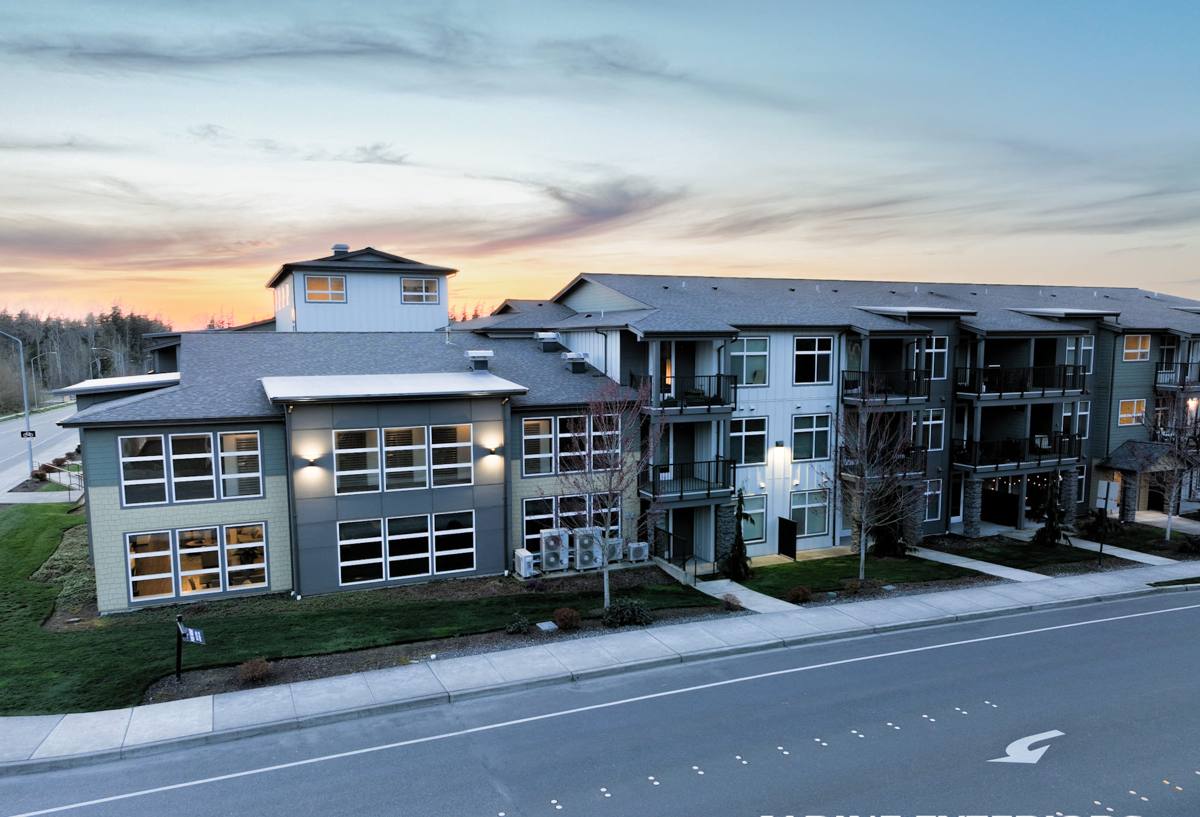
What LP SmartSide Gets Right
It's worth saying plainly: LP SmartSide is a legitimate, engineered product, not a budget gimmick. It's a real step up from OSB siding products of decades past, and LP has put real engineering into the resin treatment and the SmartGuard process that resists fungal decay and termites better than untreated wood ever did.
- Lighter than fiber cement, which can mean lower shipping and handling cost
- Easier to cut and fasten with standard wood-working tools, which can shorten install time
- Holds paint reasonably well when the factory finish and caulking are maintained on schedule
- Costs less per square foot installed than James Hardie in most markets
For a drier climate, or a builder working to a tight budget on a spec home, that combination has real appeal. Our concern isn't that LP SmartSide is a bad product in the abstract — it's that its weak points line up almost exactly with what Ferndale weather throws at a house.
Where Engineered Wood Siding Struggles Here
LP SmartSide's substrate is still wood at its core. Wood expands, contracts, and — if moisture gets past the surface treatment — swells and eventually deteriorates. The company's own installation manual is strict about caulking, flashing, and ground clearance for a reason: those details are what keep water out of the strand board over the long run.
Whatcom County doesn't offer much margin for error on that front. Ferndale sits close enough to the Salish Sea that homes take on real salt air, on top of a genuinely long wet season where driving rain comes sideways off the water and moss has weeks of shade and damp to take hold on north-facing walls and anything close to overhanging trees. Three specific failure patterns show up more often on engineered wood siding in this kind of climate:
Edge and Cut-End Swelling
The factory-applied coating protects the face of the board well. Every cut end, though, exposes raw substrate, and if that cut end isn't field-treated and sealed exactly per spec at every joint, it's the first place moisture gets in. Once a cut edge starts absorbing water, swelling shows up as a visibly raised, spongy edge — and it doesn't reverse itself.
Caulk-Dependent Maintenance
Engineered wood siding relies on sealant at joints, trim, and butt seams staying intact. In a climate with this much annual rainfall, caulk lines take more of a beating and need more frequent inspection and recaulking than most homeowners expect when they sign up for a "low-maintenance" product.
Moss and Organic Growth on a Wood Substrate
Moss and algae growing on any siding surface is mostly a cosmetic and cleaning issue — but on a wood-based product, prolonged organic growth traps moisture right up against the substrate in exactly the shaded, north-facing spots this area's moss season targets, which raises the stakes if that moisture ever finds a compromised seam underneath.
None of this means every LP SmartSide installation fails. Plenty perform fine for years when installation and maintenance are dead-on. But "dead-on installation and maintenance, indefinitely, in a wet coastal climate" is a demanding bar, and it's the reason we stopped installing wood-based siding products altogether.
How James Hardie Is Built for This Kind of Weather
Fiber cement doesn't have a wood substrate to swell, rot, or feed organic growth. It's dimensionally stable across wet and dry cycles, which means less stress on caulk joints and paint film over time. Hardie also engineers specific product lines for climate zones — its HZ5 formulation is built for exactly the wet, temperate Pacific Northwest conditions Ferndale sits in, with moisture and freeze-cycle performance tuned for this region rather than a one-size-fits-all national spec.
The factory-applied ColorPlus finish is baked on under controlled conditions and backed by its own finish warranty, which means the color coat isn't depending on field application quality the way a site-painted or lightly factory-coated product does. Cut ends still need to be primed and sealed on Hardie too — no siding material is entirely installation-proof — but the consequence of a missed cut end is different when the substrate itself doesn't absorb and swell with water.
Side-by-Side: The Practical Differences
| Factor | James Hardie Fiber Cement | LP SmartSide Engineered Wood |
|---|---|---|
| Core material | Cement, sand, cellulose fiber | Resin-treated wood strand |
| Combustibility | Non-combustible | Combustible (treated for decay/insects, not fire) |
| Moisture behavior | Dimensionally stable, doesn't swell | Can swell at compromised cut ends/seams |
| Salt air / coastal exposure | Climate-specific HZ5 line available | No regional formulation variant |
| Factory finish | ColorPlus, separately warranted | Factory primed or coated, field paint common |
| Typical installed cost | Higher | Lower to moderate |
| Maintenance rhythm | Periodic inspection, minimal recaulk | Regular caulk/seam inspection recommended |
Cost Factors Worth Understanding Before You Compare Bids
A per-square-foot number in isolation is misleading, because it doesn't capture what you're paying for over the life of the siding. Here's what actually drives the cost difference between the two products, and what it buys you:
| Cost Factor | What It Reflects |
|---|---|
| Material price | Fiber cement costs more per board than engineered wood strand |
| Installation labor | Fiber cement is heavier and requires specific fastening/scoring technique; both need trained crews |
| Long-run maintenance | Wood-based product's ongoing caulk/paint upkeep is a real recurring cost most estimates leave out |
| Warranty exposure | Failure at a cut end or seam years out is a homeowner repair cost either way if not covered |
| Resale positioning | Fiber cement is widely recognized by buyers and appraisers as a premium, low-maintenance material |
Installation Sensitivity: Both Products Reward a Careful Crew
It's tempting to frame this as "one product is installation-proof and the other isn't." That's not accurate. Every fiber cement or engineered wood siding failure we've seen traced back to installation almost always comes down to the same things: unsealed cut ends, missing or wrong-gauge flashing, siding installed too close to grade or a deck surface, and nail patterns that don't match manufacturer spec. Hardie is more forgiving of minor lapses because the substrate itself doesn't absorb water the way wood strand does — but "more forgiving" is not the same as "doesn't matter." We follow James Hardie's published installation instructions to the letter on every job: proper clearance above grade and roofing, correct fastener spacing, sealed and primed cut ends, and flashing details sized for this area's rainfall, not a generic minimum.
Warranty: Read What's Actually Covered
James Hardie backs its fiber cement products with a non-prorated limited warranty that's transferable to a subsequent homeowner within its terms — a meaningful detail if you plan to sell within the coverage period. The ColorPlus finish carries its own separate finish warranty. LP SmartSide's warranty covers manufacturing defects and, under specific terms, certain decay and termite damage, but warranty terms on any siding product typically require proof of installation according to spec and ongoing maintenance — read the actual document, not the marketing summary, before treating either warranty as a substitute for correct installation.
Questions Worth Asking Before You Choose
- Is the substrate a manufactured wood product, or fiber cement — and do you understand how each behaves if water reaches it?
- Does the installer follow the manufacturer's published fastening, clearance, and flashing spec exactly, or their own shortcut version?
- Are all cut ends being factory- or field-sealed per spec, on every board, not just the visible ones?
- What does the warranty actually require of you as the homeowner to stay valid?
- Is the product line matched to this region's moisture exposure, or a generic national spec?
- What's the realistic long-term maintenance schedule — caulk inspection, repainting, cleaning — and who's telling you that, the salesperson or the installation manual?
Why We Standardized on James Hardie for Ferndale Homes
We used to install a wider range of siding products. We narrowed to James Hardie exclusively because, across coastal Whatcom County conditions — salt air, sustained driving rain, and a moss season that keeps north walls damp for weeks at a stretch — fiber cement's dimensional stability and non-combustible, climate-matched HZ5 formulation hold up with less maintenance risk than any wood-based alternative we've installed, LP SmartSide included. That's not a knock on every use case for engineered wood siding elsewhere. It's a judgment call about what performs best on homes in this specific climate, and it's the standard our crews install to on every project.
If you're weighing options for an upcoming siding project, we're glad to walk your home with you, point out what your current siding is telling you, and put together a straightforward, no-pressure estimate — no obligation either way.