 Ferndale
 Siding Built for Sudden Valley's Weather
Homes around Sudden Valley sit close enough to Bellingham Bay and the open water of Whatcom County that salt-laden air is a daily fact of life, not an occasional nuisance. Add in the driving, wind-pushed rain that comes off the Strait through fall and winter, and a moss season that can stretch from October well into spring, and you've got a climate that is genuinely hard on exterior building materials. This isn't a place where "good enough" siding holds up for its full expected lifespan. It's a place where the wrong product choice shows up as a maintenance headache within a few years.
Ferndale Siding works this corner of Whatcom County regularly, and we've seen how the combination of moisture, wind, and organic growth plays out on different siding types over time. That experience is why we install exclusively James Hardie fiber cement siding — no vinyl, no engineered wood, no primed cedar. We'll explain why below, but the short version is that Sudden Valley's climate rewards materials that don't absorb water, don't feed mold and moss, and don't rely on a perfect paint job to stay protected.
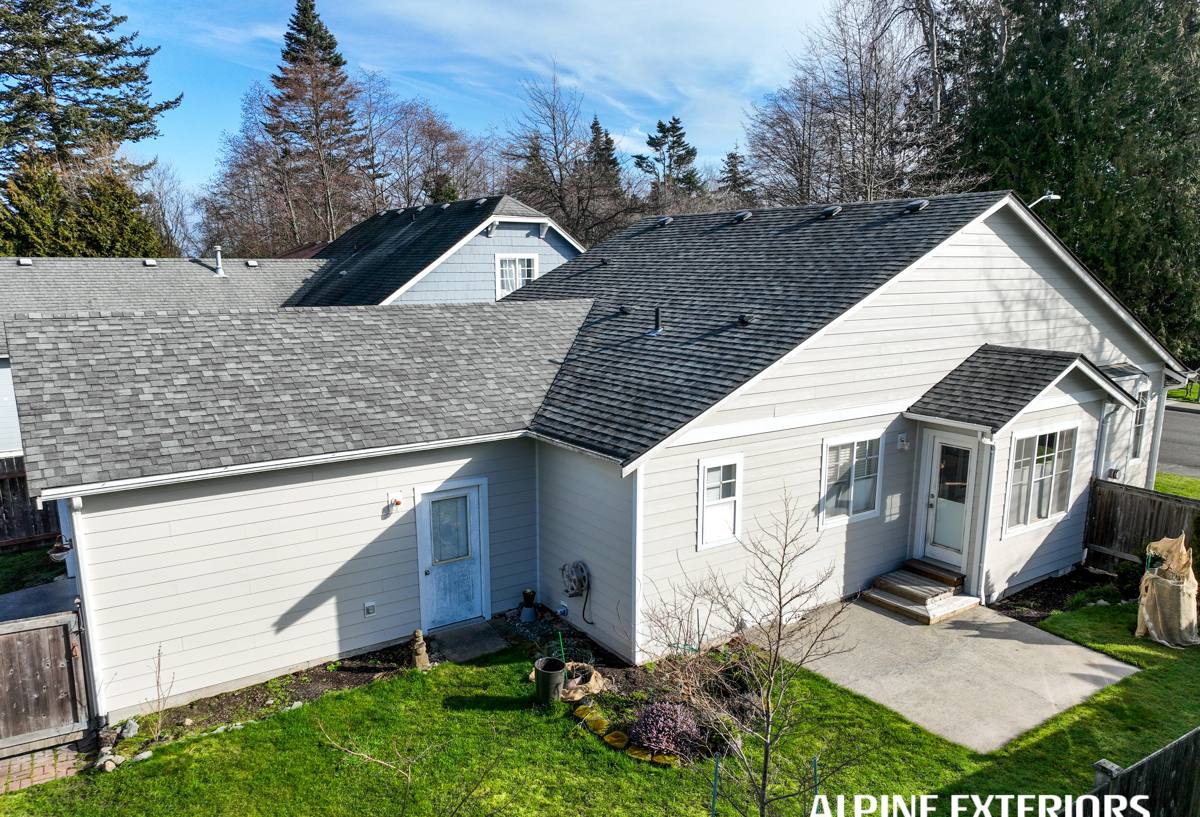
What Salt Air and Driving Rain Actually Do to a Home
Salt Air's Slow Corrosion
Airborne salt doesn't just sit on a surface — it works its way into fasteners, trim joints, and any exposed edge of siding material. Over years, that accelerates corrosion on lower-grade nails and hardware, and it can degrade certain coatings and finishes faster than a manufacturer's spec sheet would suggest for an inland installation. Homes with direct water exposure or consistent onshore wind feel this more, but even homes set back from the water get a steady, low-level dose of salt in the air during storm season.
Driving Rain and Wind-Driven Moisture
Whatcom County doesn't just get rain — it gets rain pushed sideways by wind, which finds every gap, seam, and poorly flashed joint in a home's exterior. Siding that swells, warps, or delaminates when it takes on water is a poor match for this pattern. The real damage usually isn't visible from the street; it's happening behind the siding, at the sheathing and framing level, long before a homeowner notices a problem on the surface.
Moss, Mildew, and the Long Wet Season
A moss season that runs half the year means any organic-based siding material spends a large share of its life damp. Moss and mildew don't just look bad — they hold moisture against the siding surface, which speeds up rot in wood-based products and creates a maintenance cycle of washing, treating, and repainting that never really ends.
Why We Standardized on James Hardie
James Hardie fiber cement is engineered from cement, sand, and cellulose fiber — there's no wood component to rot, and no foam or wood substrate underneath to trap moisture against the structure. It's also non-combustible, which matters more every year as wildfire smoke and dry-season fire risk become a bigger part of Pacific Northwest summers, even in a historically wet county like Whatcom.
Hardie's ColorPlus factory-applied finish is baked on under controlled conditions, which gives it better adhesion and UV resistance than a field-applied paint job can typically achieve — and it comes with its own finish warranty separate from the product warranty. For a climate that alternates between salt air, driving rain, and long damp stretches, a factory finish that isn't relying on a contractor's paint schedule and weather window is a real advantage.
| Climate Stress | How It Affects Siding | James Hardie's Response |
|---|---|---|
| Salt air | Corrodes fasteners, degrades weaker coatings | Non-organic cement composition, factory finish resists coastal exposure |
| Driving rain | Swelling, warping, hidden moisture intrusion | Dimensionally stable, doesn't absorb and swell like wood-based products |
| Moss/mildew season | Feeds on organic material, traps moisture | Cement composition doesn't feed organic growth |
| Wind exposure | Stresses joints, seams, and fastening | Engineered HZ5 product line rated for demanding climate zones |
Why We Don't Install Vinyl, LP SmartSide, or Cedar
We get asked about alternatives regularly, and it's a fair question — these are all legitimate products used across the industry. Here's our honest reasoning for standardizing on one system instead of offering all of them.
- Vinyl siding is affordable and low-maintenance in mild conditions, but it can warp or become brittle under wide temperature swings and strong wind exposure, and it doesn't offer the same fire resistance or the premium, paintable look many Sudden Valley homeowners want.
- LP SmartSide (engineered wood) performs reasonably well when installation and caulking are perfect and maintained perfectly forever, but it has a wood core, and wood cores plus a long wet season is a combination we're not willing to put our name behind long-term.
- Primed cedar or spruce looks great on day one, but it demands an ongoing repainting and sealing schedule to keep water out, and in a climate with this much sustained moisture, that maintenance burden falls squarely on the homeowner year after year.
None of these are "bad" products in the abstract. They're just not what we'd choose to put on a home in a place where salt air, wind-driven rain, and moss are constants rather than occasional weather events.
How Our Sudden Valley Siding Projects Work
1. On-Site Assessment
We walk the exterior, check current siding condition, look at moisture exposure patterns specific to the home's orientation and exposure to prevailing wind and rain, and inspect for any hidden water damage that needs to be addressed before new siding goes on.
2. Moisture Barrier and Flashing
Correct installation in this climate depends as much on what's behind the siding as the siding itself. Proper water-resistive barriers, flashing at windows and doors, and correct fastening patterns are what actually keep driving rain out — Hardie siding installed poorly will still have problems, so we follow manufacturer installation specs closely, including the fastener and clearance details that matter most in high-moisture regions.
3. Product Selection
James Hardie's HZ5 product line is engineered specifically for climates like ours — freeze-thaw cycles, sustained moisture, and coastal exposure. We help homeowners choose the right plank profile, panel type, and ColorPlus finish for their home's style and exposure.
4. Installation and Finish Detail
Trim, corner boards, and caulking details are where a lot of siding jobs fail early — not the field material itself. We pay particular attention to these transition points since they're the first places driving rain finds a weakness.
Beyond Siding: A Full Exterior Approach
Siding doesn't work in isolation. A roof that's shedding water improperly, windows with failing seals, or a deck that's trapping moisture against the house all undermine even a well-installed siding job. Ferndale Siding also handles roofing, window replacement, and deck construction, which means we can look at a Sudden Valley home's exterior as one connected system rather than a series of unrelated projects. When water management fails at the roofline or around a window, it often shows up as a siding problem months or years later — so addressing the whole envelope tends to save homeowners from repeat repairs.
Signs Your Current Siding May Be Struggling With Local Conditions
- Visible moss or mildew buildup that returns quickly after cleaning
- Soft spots, bubbling, or delamination, especially on north- and west-facing walls
- Paint that's peeling or chalking faster than expected between repaint cycles
- Gaps or separation at trim boards and corner joints
- Rust staining near fasteners or hardware
- Musty odor near exterior walls, which can indicate moisture intrusion behind the siding
Why a Local Crew Matters Here
Whatcom County's microclimates vary more than people expect — a home a few miles inland can face noticeably different wind and moisture exposure than one closer to the water. A crew that works this specific area regularly understands which walls typically take the worst weather, how local permitting and inspection processes work, and what installation details actually hold up here versus what's fine in a drier region. That local knowledge shows up in the details — flashing choices, fastener spacing, product line selection — that don't get caught until years later if they're wrong.
What a Siding Project Typically Involves
| Factor | What Affects It |
|---|---|
| Timeline | Home size, existing siding removal, weather windows during wetter months |
| Prep work | Condition of sheathing, extent of moisture damage found once old siding is removed |
| Product line | HZ5 climate-engineered planks vs. standard lines, panel vs. lap profile |
| Finish | Factory ColorPlus color selection vs. field-applied primed product |
| Scope | Siding only, or bundled with roofing, window, or deck work on the same exterior |
Every home is different, and the only way to get real numbers is a walk-through, but these are the main variables that shape both cost and timeline on a Sudden Valley project.
If you're seeing moss buildup, moisture staining, or aging siding on a Sudden Valley home, we're happy to take a look and walk you through what James Hardie fiber cement would mean for your specific house — no pressure, no obligation. Use the form below to request a free estimate.