 Ferndale
 Roofs on the Semiahmoo Waterfront Take a Different Kind of Beating
Homes near Semiahmoo sit in one of the more exposed corners of Whatcom County. You're close enough to the water that salt-laden air is a constant, and open exposure off the bay means wind-driven storms hit roofs here harder and more directly than they do a few miles inland in Ferndale proper. That combination — salt air plus wind-driven rain plus a moss season that runs long and wet — wears roofing down faster than most homeowners expect, and it changes what "storm damage" actually looks like once you get up close.
A roof that's been through a few winters out here isn't starting from the same baseline as a roof in a sheltered inland neighborhood. Fasteners corrode faster. Flashing pits and weakens sooner. Underlayment that's already been softened by months of moss and standing moisture has less to give when a real windstorm comes through. That's the context we bring into every storm repair call in this area — we're not treating your roof like a generic repair, we're treating it like a roof that's been fighting salt air and driving rain for years before this particular storm ever showed up.
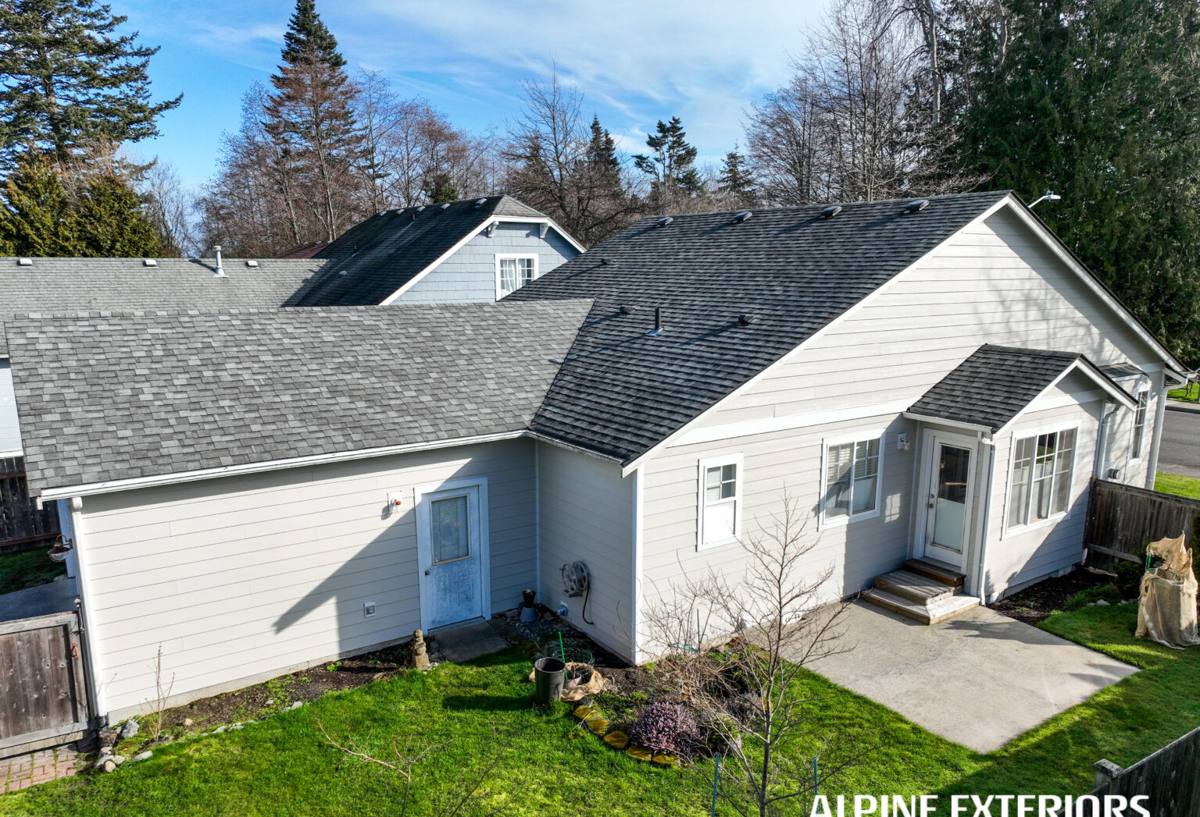
What Actually Counts as Storm Damage (and What Doesn't)
Not every roof problem after a windy night is storm damage in the insurance or repair sense, and it's worth knowing the difference before you call anyone out.
- Wind-lifted or missing shingles — tabs peeled back, creased, or torn off completely, usually along ridges, edges, or exposed slopes facing the water.
- Flashing pulled loose or bent — around chimneys, vent stacks, skylights, and roof-to-wall transitions, often the first thing to fail in a strong gust.
- Impact damage — from tree limbs, debris, or hail, showing up as punctures, cracked shingles, or dented vents and caps.
- Active leaks — water stains on ceilings or in the attic that appeared during or right after a storm.
- Pre-existing wear mistaken for storm damage — brittle, curling shingles or granule loss from age and sun that a storm simply exposed rather than caused.
That last category matters because it affects whether a repair is a straightforward fix or a sign the roof needs a broader conversation. Part of an honest inspection is telling you which one you're actually looking at, not just patching whatever's visible and moving on.
Why Moss Season Makes Storm Damage Worse
Whatcom County's wet season stretches long, and moss doesn't need much encouragement to take hold on a north-facing slope or anywhere shade keeps a roof from drying out between rains. On its own, moss is a maintenance issue. Combined with storm damage, it becomes a bigger problem: moss holds moisture against the roof surface, and once wind or impact opens even a small gap in the shingle layer, that trapped moisture finds its way in faster than it would on a dry, well-maintained roof.
We see this pattern often on Semiahmoo-area homes — a storm creates a small opening, but the real leak develops over the following weeks as moss-retained moisture works its way into underlayment that's already compromised. That's one reason we don't just look at the obvious storm damage during an inspection; we check the surrounding roof for moss buildup and softened decking nearby, because that's usually where a "small" repair turns into a bigger one if it's ignored.
Salt Air's Slower, Quieter Damage
Salt air doesn't announce itself the way a storm does. It works on metal — flashing, fasteners, vent caps, gutter hardware — corroding it gradually until a normal wind event is enough to finish the job. A fastener that would hold fine on an inland roof can be weakened enough near the water that the same gust pulls shingles loose instead of just rattling them. When we repair storm damage on homes in this area, we're always checking whether salt-related corrosion contributed to the failure, because replacing the shingle without addressing corroded flashing or fasteners underneath just sets up a repeat failure next storm season.
What a Correct Storm Repair Actually Involves
A storm repair done right isn't just "replace what's missing." It's a sequence, and skipping steps is how a $500 repair turns into a $5,000 one two winters later.
- Ground-level and roof inspection — documenting damage from the ground first, then a hands-on roof inspection to check for issues that aren't visible from below.
- Interior check — attic and ceiling inspection for moisture intrusion, even if there's no visible stain yet.
- Temporary weatherproofing if needed — tarping or sealing an active leak point the same day, especially if more rain is forecast.
- Removal of damaged materials — shingles, flashing, or underlayment pulled back far enough to see the actual extent of the problem, not just the visible edge of it.
- Decking assessment — checking for soft spots or rot before anything new goes back down.
- Proper reinstallation — matching materials and fastening patterns appropriate for a wind- and salt-exposed roof, not just whatever's fastest.
- Final inspection and cleanup — confirming the repair is sealed and weathertight, and clearing debris from gutters and the roof surface.
Repair vs. Replace: How We Help You Decide
| Situation | Usually a repair | Worth discussing replacement |
|---|---|---|
| Damage is isolated to one slope or section | Yes | — |
| Roof is under 10-12 years old and otherwise sound | Yes | — |
| Multiple slopes show storm damage plus significant wear | — | Yes |
| Decking is soft or rotted in more than one area | — | Yes |
| Roof already has heavy moss/algae staining throughout | Sometimes, with treatment | Yes, if underlayment is compromised |
We'll never push a full replacement when a repair genuinely solves the problem — but we'll also tell you honestly when a repair is just delaying a bigger cost, especially on a roof that's already been fighting salt air and moss for a decade or more.
Our Process, Start to Finish
When you call about storm damage, here's what to expect. We start with a phone conversation about what you're seeing and how urgent it is — an active leak gets prioritized differently than a shingle that's loose but the roof is otherwise dry. From there, we schedule an inspection, walk the roof, and give you a clear explanation of what we found, in plain terms, before any work starts. If temporary protection is needed to get you through the next rain, we handle that first. Once we've agreed on scope, we do the repair, and we walk you through what was done and what to watch for afterward — including any moss or drainage issues we noticed that aren't storm-related but are worth addressing before they become one.
We don't believe in surprise add-ons. If we find something during the repair that changes the scope — soft decking under a shingle, for example — we stop and talk to you before proceeding, not after.
Materials That Actually Hold Up Out Here
Not every roofing material or fastener performs the same way a quarter mile from the water as it does further inland. For storm repairs in this area, we favor:
- Corrosion-resistant flashing and fasteners — standard galvanized hardware corrodes noticeably faster in salt air than higher-grade coated or stainless options, and flashing failure is one of the most common repeat problems we see.
- Matching shingle profiles and proper nailing patterns — mismatched or under-fastened shingles are often the reason the same section fails again in the next windstorm.
- Ice-and-water shield at vulnerable points — valleys, eaves, and around penetrations, which gives extra protection where wind-driven rain is most likely to find a way in.
We won't install materials or use shortcuts that look fine for a season but create maintenance headaches down the road — that's a standard we hold regardless of what a homeowner's budget pressure might tempt a less careful crew to skip.
Documentation and Insurance
If you're planning to file an insurance claim for storm damage, documentation matters as much as the repair itself. We photograph damage before we touch anything, note the likely cause, and can provide a written scope of the repair for your claim. We're not a public adjuster and we won't promise a specific claim outcome, but we can make sure the physical evidence of the damage is properly recorded before it gets covered up by the repair.
Signs It's Time for a Storm Inspection
- Shingles visible in the yard or gutters after a windstorm
- Water stains on ceilings, especially ones that appeared suddenly
- Visible gaps, lifted edges, or bent flashing from the ground
- A musty smell in the attic that wasn't there before
- Heavy moss buildup combined with recent high winds
- Any roof leak during or immediately following a storm, even a small one
If any of these sound familiar, it's worth getting eyes on the roof soon. Small openings near the water don't stay small for long once moss and salt-air moisture get involved.
Why It Matters to Hire a Crew That Already Works This Area
Storm repair isn't one-size-fits-all. A crew that mostly works inland, sun-exposed roofs is used to a different set of failure patterns than what shows up on a roof exposed to Semiahmoo's wind and salt air. We work roofs throughout Ferndale and Whatcom County, including homes right along the water, and that means we're not guessing about which fasteners hold up, which flashing details fail first, or how moss and salt exposure change the timeline on a repair. It also means we can usually get to you faster after a regional storm, because we're already local and not driving in from across the county.
If your roof took a hit in the last storm — or you're just not sure whether what you're seeing needs attention — we're happy to take a look. Reach out for a free, no-pressure estimate using the form below, and we'll give you a straight answer about what's going on and what it would take to fix it right.