 Ferndale
 Why Semiahmoo Roofs Wear Differently Than Roofs Further Inland
Homes along the Semiahmoo shoreline in Whatcom County deal with a combination of conditions that most inland Ferndale properties don't see nearly as often: near-constant salt-laden air off the water, wind-driven rain that gets pushed sideways into fascia and roof edges, and long stretches of gray, damp weather that let moss and algae take hold and stay there. None of these things are dramatic on their own, but stacked together year after year, they shorten the useful life of a lot of roofing materials faster than the manufacturer's warranty paperwork would suggest.
Metal roofing has become a popular answer for exactly this kind of exposure, but "metal roofing" covers a wide range of products and installation approaches, and not all of them hold up the same way this close to the water. This page focuses specifically on what a metal roof needs to do right for a Semiahmoo-area home, and what separates a roof that performs for decades from one that starts causing problems in year five or six.
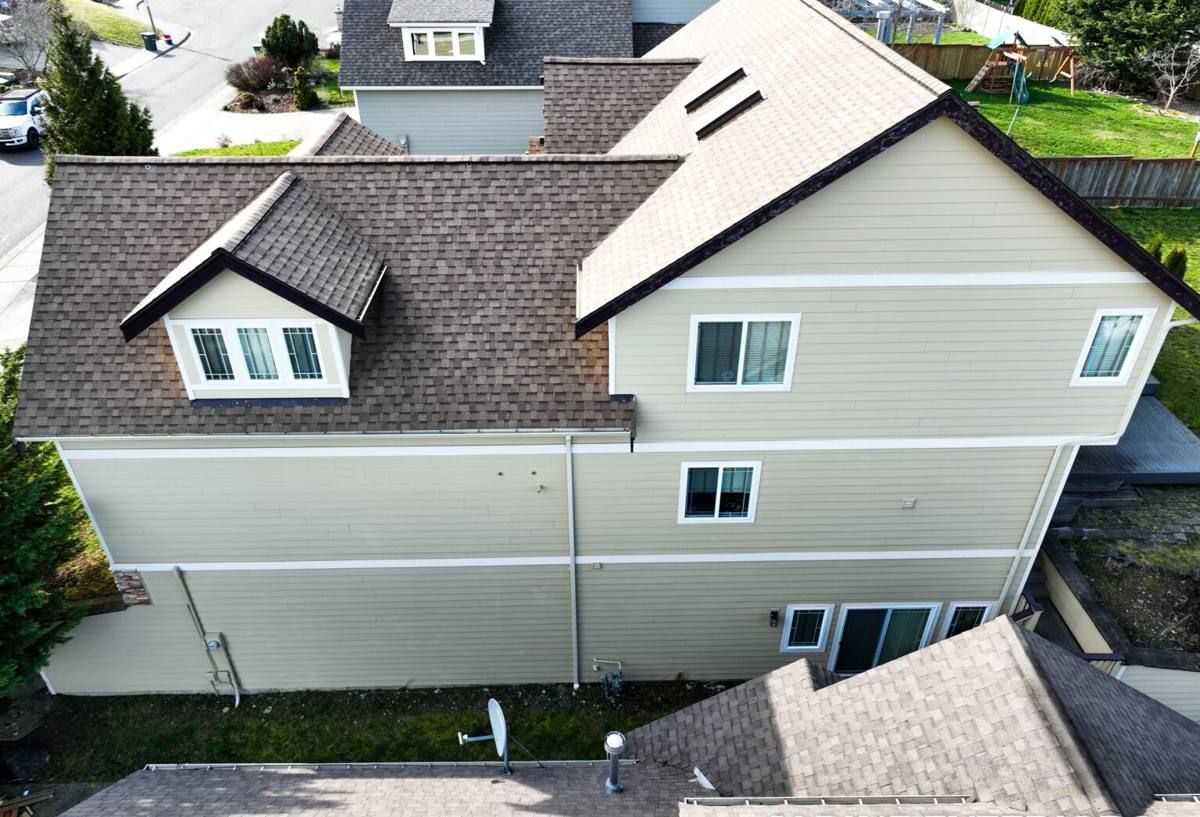
What Salt Air Actually Does to a Roof
Salt air isn't just a smell — it's airborne moisture carrying dissolved salts that settle on every exterior surface, including the roof. Over time, that salt film accelerates corrosion on unprotected or poorly coated metal, works into fastener heads, and can degrade sealants faster than their rated lifespan. It's a slow process, which is part of the problem: by the time visible rust or streaking shows up, the underlying coating has usually already been compromised for a while.
Why This Matters for Material Choice
Not every metal roofing product is engineered with coastal exposure in mind. Some panel finishes and fastener grades are perfectly fine a few miles inland but start showing premature wear once they're taking on salt spray on a regular basis. Part of doing this job correctly in a Semiahmoo-area location is matching the panel coating, fastener material, and flashing metal to the actual exposure the roof will see — not just defaulting to whatever's standard for a typical Whatcom County job further from the water.
Driving Rain and the Details That Actually Keep Water Out
Metal roofing sheds bulk water very well — that's one of its main advantages. But wind-driven rain doesn't behave like rain falling straight down. It gets pushed under panel laps, up under eaves, and into any gap around penetrations like vents, chimneys, and skylights. A metal roof's water resistance depends far more on the details around those transition points than on the panels themselves.
Where Problems Actually Start
- Panel end laps and side laps that aren't sealed or overlapped to spec for the pitch and exposure
- Valley flashing that's undersized or doesn't extend far enough up each roof plane
- Penetration flashing (vents, pipes, skylights) installed with generic boots instead of metal-specific flashing
- Fastener patterns that are too sparse or placed where they can back out under wind uplift
- Eave and rake edge trim that doesn't kick water clear of the fascia
A correct installation treats every one of these as a deliberate decision, not an afterthought. On a wind-exposed site, that usually means tighter fastening schedules, upgraded underlayment at eaves and valleys, and flashing details built for sideways rain rather than straight-down rain.
Moss, Algae, and the Long Gray Season
Whatcom County's wet season runs long, and shaded or north-facing roof planes near Semiahmoo can stay damp for weeks at a stretch. That's exactly the environment moss and algae need to establish. On composition shingles, moss roots into the mat and lifts granules, which is a slow but real form of damage. Metal roofing doesn't give moss the same foothold — there's no organic mat to root into — but that doesn't mean it's immune to buildup.
What Still Needs Attention on a Metal Roof
- Debris (needles, leaves) can collect in valleys and behind protrusions, holding moisture against the panel
- Moss can still grow on top of surface grime even if it can't root into the panel itself
- Standing organic debris shortens the life of factory coatings faster than bare exposure would
- Gutters and downspouts clogged with debris push water back under eave edges
The practical takeaway: a metal roof reduces the moss problem significantly compared to shingles, but it doesn't eliminate the need for periodic debris clearing, especially on shaded planes.
Panel Types and What We Recommend for This Exposure
There are several common metal roofing profiles, and the right one depends on the home's roof pitch, style, and how much salt and wind exposure the site actually gets.
| Panel Type | Best Fit | Coastal Exposure Notes |
|---|---|---|
| Standing seam | Most residential roofs, especially lower slopes | Concealed fasteners reduce corrosion entry points; strong choice for wind-driven rain |
| Exposed-fastener panel | Simple gable roofs, outbuildings | Lower upfront cost, but fastener seals need more frequent attention near the water |
| Stone-coated steel | Homes wanting a shingle or tile look | Good moss resistance; coating quality matters more in salt air |
| Metal shingles/shakes | Traditional-style homes wanting metal's durability | More seams than standing seam, so flashing detail work matters even more |
For most homes directly exposed to the water at Semiahmoo, we lean toward standing seam with a coating rated for marine or coastal environments, simply because it minimizes the number of exposed fasteners and lap joints that salt air can work on over time. That said, roof pitch, existing structure, and the look the homeowner wants all factor into the final recommendation — this isn't a one-size answer.
Our Process for a Semiahmoo-Area Metal Roof
1. On-Site Assessment
We look at the roof's exposure — how directly it faces prevailing wind and water, how much shade it gets, and the condition of the existing deck and flashing. This is also when we check for any deck rot or ventilation issues that need to be addressed before new roofing goes on, coastal moisture tends to find weak spots in decking over time.
2. Underlayment and Deck Prep
We use underlayment suited to metal roofing's thermal movement and install it with extra attention at eaves, valleys, and around penetrations — the areas most likely to see wind-driven water intrusion.
3. Panel and Flashing Installation
Panels, trim, and flashing are matched in compatible metals and coatings to avoid galvanic corrosion between dissimilar metals, a detail that gets overlooked more often than it should on coastal jobs. Fastening schedules are set for the site's actual wind exposure rather than a generic minimum.
4. Final Walkthrough
We walk the roof and the ground perimeter with the homeowner, review what was done at penetrations and edges, and go over the basic maintenance a metal roof in this location actually needs — which is far less than a shingle roof, but not zero.
What a Correct Job Should Include — A Homeowner's Checklist
- Panel and fastener materials specified for coastal/marine exposure, not just a standard grade
- Compatible metals used throughout to prevent galvanic corrosion between dissimilar materials
- Upgraded underlayment and ice/water protection at eaves, valleys, and penetrations
- Fastening schedule matched to the site's actual wind exposure
- Flashing detail work at every penetration, not generic boots or minimal step flashing
- A clear explanation of the coating warranty and what voids it
- A written scope that specifies panel gauge, coating type, and fastener spec — not just "metal roof"
If a bid doesn't specify these details in writing, it's worth asking why before signing anything.
Maintenance: What a Metal Roof Near the Water Actually Needs
Metal roofing is genuinely low-maintenance compared to shingles, but "low" isn't "none," especially this close to salt water. A simple annual routine covers most of what matters:
- Clear debris from valleys and behind roof protrusions once or twice a year
- Keep gutters and downspouts flowing so water isn't backing up under eave edges
- Do a visual check of flashing and sealant at penetrations after major windstorms
- Rinse off heavy salt film or grime buildup periodically, especially on shaded planes
None of this requires a specialist visit every year — most homeowners can handle it themselves, or have it done as part of a broader gutter-cleaning routine.
Why It Matters That We Already Work This Area
Metal roofing done well is mostly about details, and those details change depending on how directly a site faces the water and prevailing weather. A crew that's already worked roofs in and around Semiahmoo and the broader Whatcom County coastline has a feel for which flashing approaches actually hold up here versus what's fine on a roof twenty miles inland. That's not something you can fully substitute with a generic spec sheet — it comes from having seen how these roofs age in this specific environment.
If you're weighing a metal roof for a home near Semiahmoo, we're happy to walk your roof, talk through what your specific exposure calls for, and give you a straight answer on what it would take. There's a free, no-pressure estimate form below whenever you're ready.