 Ferndale
 Composite Decking for Homes on the Semiahmoo Spit
Semiahmoo sits out on a narrow spit between Semiahmoo Bay and Drayton Harbor, right at the edge of Blaine near the Canadian border. It's one of the more exposed residential settings in Whatcom County — water on more than one side, little to break the wind, and a marine climate that stays damp for long stretches of the year. A deck out here has no roofline or siding to share the load with. It sits directly in the weather, full-time, which means the material choice and the build details underneath it matter more than they would on a sheltered inland lot.
Composite decking is often the right call for a Semiahmoo property, and we install it regularly in this area. But "composite" covers a range of products with real differences in how they handle sustained salt exposure, driving rain, and a moss season that doesn't let up for long. This page walks through what a Semiahmoo deck actually needs, what a correct composite installation involves, and how we approach a project on this specific stretch of coastline.
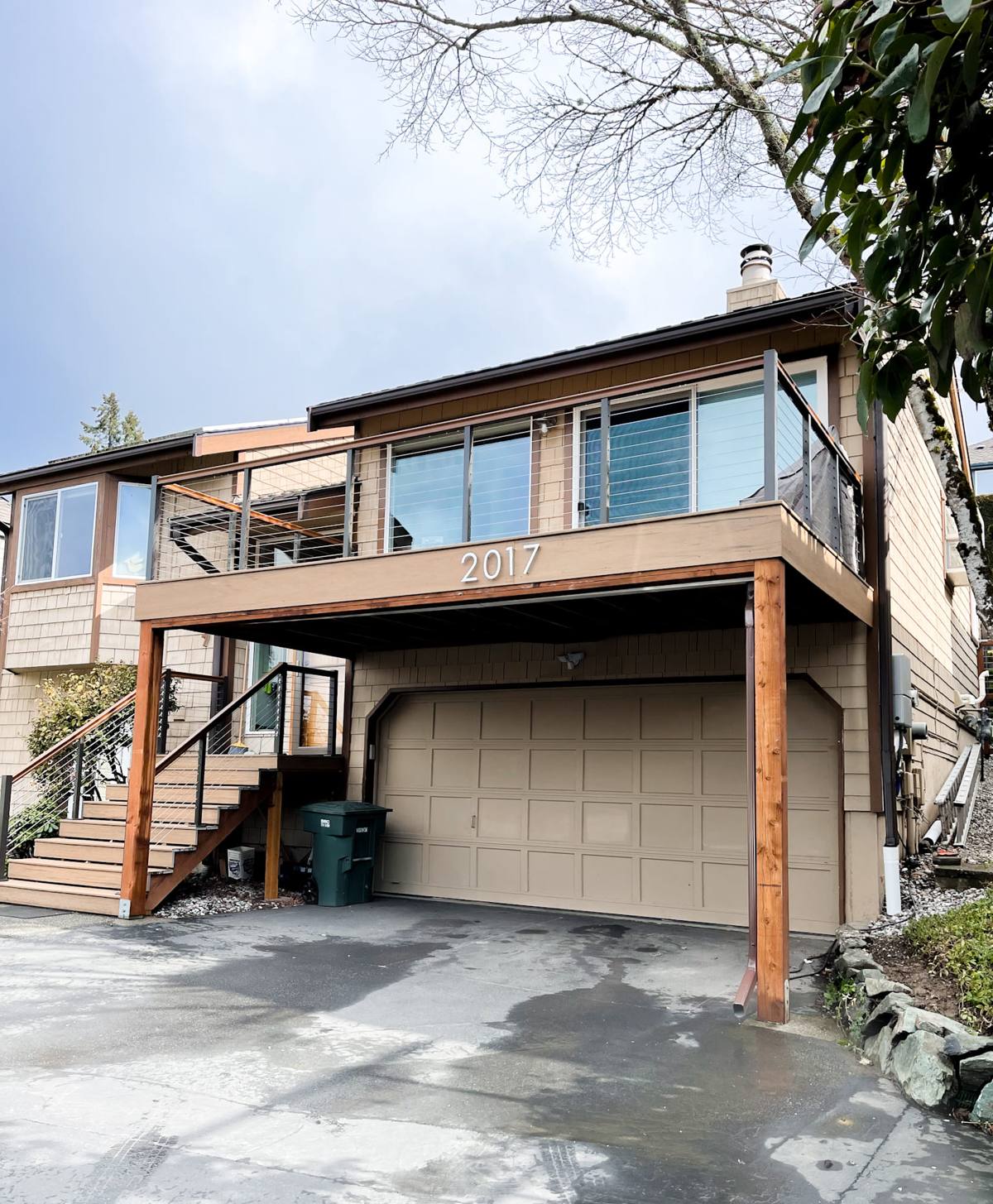
What This Climate Does to a Deck
Salt Air From More Than One Direction
Because the spit has water on more than one side, homes here pick up salt-laden air from multiple directions instead of a single prevailing exposure. That matters more on a deck than almost anywhere else on a house, because a deck's fasteners, brackets, railing hardware, and structural connectors sit fully exposed with nothing shielding them. Salt accelerates corrosion in metal hardware, and a fastener that's losing holding strength to corrosion often looks fine on the surface well after the damage has started underneath.
Driving Rain and Open Wind
With almost no windbreak out on the spit, rain doesn't fall straight down so much as get driven sideways, up under railings, into ledger connections, and between deck boards that aren't gapped correctly. A decking surface that would shed water fine on a calm day can still trap moisture the moment wind gets involved, and on Semiahmoo, wind is involved more often than not. That wind-driven pattern is a heavier moisture load on a deck than the region's rainfall totals alone suggest.
A Moss Season That Runs Most of the Year
Mild temperatures and near-constant humidity give moss a long growing season across Whatcom County, and a horizontal deck surface is one of the first places it takes hold — it holds water longer than a vertical wall and stays damp between storms. Shaded decks and north-facing surfaces usually show it first, and any decking material with even a little surface porosity gives moss something to grip onto and hold moisture against.
Why Composite Decking Fits a Property Like This
Capped composite decking pairs a wood-fiber composite core with a plastic shell wrapped around it, and that cap layer is doing real work on an exposed property like this, not just adding a marketing claim. It resists moisture absorption at the surface, holds its color under sustained UV better than uncapped products, and doesn't feed moss and mildew growth the way a porous, unprotected surface does. For a deck taking salt air from more than one direction and a wind-driven rain pattern most inland decks never see, that combination of moisture resistance and finish stability is the main reason we recommend it here as often as we do.
That said, composite isn't automatically the right answer for every homeowner, and we say so plainly. Wood costs less upfront and some homeowners simply prefer the look and feel of it, accepting the added maintenance that comes with it. Cellular PVC costs more than composite and contains no wood fiber at all, so it handles sustained moisture even better in some respects, though it can flex more under heavy point loads. We'll walk through the real trade-offs for your specific deck rather than defaulting to whichever material is easiest to sell.
| Material | Salt Air & Moisture Behavior | Moss Resistance | Typical Upkeep |
|---|---|---|---|
| Capped composite | Strong — cap layer resists moisture absorption and staining | Good on most product lines | Periodic washing |
| Uncapped composite | Moderate — some moisture absorption at exposed fiber | Fair; more prone to buildup over time | Regular cleaning |
| Cellular PVC | Excellent — no wood fiber to absorb moisture | Strong, smooth non-porous surface | Occasional washing |
| Pressure-treated wood or cedar | Weak to moderate — absorbs and releases moisture readily | Poor without regular sealing | Regular sealing or staining |
What a Correct Composite Installation Involves Here
The decking surface gets most of a homeowner's attention, but on a Semiahmoo property, the framing, fasteners, and drainage details underneath it are what actually determine how long the deck holds up. A composite deck built correctly for this site includes several things that are easy to skip and hard to notice until they've already failed:
- Joist spacing matched to the specific composite product's span rating — composite boards flex differently than wood, and framing built to a generic layout instead of the manufacturer's spec can lead to bounce or sag over time
- Stainless steel or coastal-grade corrosion-resistant fasteners and structural connectors throughout, since standard hardware starts corroding in this salt air within a few seasons
- Hidden fastener systems on the decking surface where the product supports them, which leaves less exposed metal on the walking surface for salt air to work on
- Correct board gapping for drainage and thermal movement, so wind-driven rain and standing moisture can actually drain and dry between boards instead of sitting
- Cut composite board ends properly capped, coated, or trimmed with matching end-cap trim rather than left exposed — an exposed cut edge is the one place even a well-capped board can absorb moisture
- Ledger board flashing done correctly where the deck ties into the house, since that connection is one of the most common places moisture works its way into the wall behind it
- Ventilation and grading underneath the deck so moisture doesn't sit against the framing between storms
Skip any one of those and the deck usually still looks fine the first year. The problems tend to show up a few winters later — a soft joist, a loosening railing post, or fastener corrosion staining the boards around it. On a site that takes this much wind and salt, those details aren't upgrades. They're the baseline for a deck that's actually built for where it sits.
Choosing the Right Composite Board for a Semiahmoo Deck
Once composite is the right call, the remaining decisions come down to the specific board. Capped composite is the starting point we recommend for most Semiahmoo decks, since the cap layer is what actually resists the salt and moisture exposure this site sees. Board profile matters too — grooved-edge boards allow hidden fastener systems, which keep exposed metal off the walking surface, while square-edge boards are typically face-screwed and show more hardware over time. Color is more than a look decision here as well: darker boards can show surface residue and salt film more visibly between washings than lighter tones do, which is worth factoring in for a deck that's going to face sustained onshore weather.
We don't lock homeowners into one composite manufacturer the way we do with siding. Several manufacturers build capped composite lines that perform well in a marine climate when installed to spec, and the right one for your project usually comes down to warranty terms, color and finish options, and budget rather than one product being universally correct. We'll talk through those options directly rather than pushing whichever line happens to be easiest for us to source.
Cost Factors for a Semiahmoo Composite Deck
| Factor | What It Affects | Why It Matters Here |
|---|---|---|
| New build vs. replacing an existing deck | Demolition, disposal, and substrate access | Older decks on exposed lots often hide framing damage from years of salt and moisture exposure |
| Fastener and hardware grade | Material cost, longevity | Multi-directional salt air calls for coastal-grade or stainless hardware, not standard fasteners |
| Composite board tier and cap type | Material cost, moisture and fade resistance | A fully capped board costs more upfront but holds up longer against sun and salt exposure off the water |
| Framing and joist spacing | Labor and material scope | Spacing has to match the chosen composite product's span rating, not a generic layout |
| Site access and elevation | Labor time and equipment needs | Waterfront and spit lots can have tighter staging areas or elevation changes that affect the substructure |
| Railing and stair design | Material and labor cost | Open railing designs perform differently in wind-driven rain than more solid or partially screened designs |
Exact pricing depends on the specific lot, its exposure, and the existing structure if it's a replacement, which is why we walk the site in person before giving a real number rather than quoting off a generic price sheet.
What Composite Decking Still Needs From You in This Climate
Composite decking cuts down on maintenance compared to wood, but "low-maintenance" isn't the same as "no maintenance," especially on a property taking this much salt air and moisture. A few habits go a long way toward getting the full lifespan out of the material:
- Rinse the deck surface periodically to clear salt residue, pollen, and organic buildup before it works into the cap layer or surface texture
- Keep the gaps between boards clear of leaves and debris so water and air can actually move through the way the design intends
- Check railing posts, brackets, and visible hardware once a year for early corrosion or loosening, ideally before the wet season sets in
- Trim back overhanging branches or plants that hold moisture against the deck surface or block sun and airflow
- Address any soft framing, loose ledger connections, or standing water underneath the deck right away — that's a structural issue, not a cosmetic one
How Our Process Works
We start with a site visit to look at what's actually there: existing structure and framing condition if it's a replacement, drainage and grade around the deck area, sun and wind exposure through the day, and how directly the site faces the bay or harbor. From there we talk through composite board options that fit the budget and how the space will actually get used, whether that's a small deck off the back door or a larger one built for entertaining.
Permitting for deck work in Blaine and the rest of Whatcom County generally follows standard setback, structural, and elevation requirements, and we handle that as part of the job rather than leaving it for the homeowner to sort out. Once permitted, the build follows the sequence above — substructure and framing first, sized and fastened for what this site actually sees, then the composite decking surface, railing, and any stairs or trim. We finish with a walkthrough covering what the specific board you chose actually needs going forward, which for most modern composite is minimal, but not nothing.
Why a Crew That Already Works Semiahmoo Matters
A crew that mostly builds decks a few miles inland can still put a competent deck together, but a Semiahmoo job has variables that don't come up nearly as often elsewhere in Whatcom County: corrosion-grade fastener requirements from salt air coming off more than one body of water, wind loads tied to open spit exposure, and a moss season that runs longer here than in more sheltered parts of the county. Working this stretch of coastline regularly means we're not guessing at those requirements on your project — we've seen which composite lines actually hold up against Semiahmoo's specific combination of salt, wind, and moisture, and which fastener grades and framing details are worth the extra time rather than an upsell.
That familiarity also shows up in smaller judgment calls: how to orient a deck for the wind a particular lot on the spit actually sees, which board colors hold up best against sun reflecting off open water, and being straightforward with homeowners about what a deck here realistically needs to last versus what's just an extra line item.
If you're weighing composite decking for a Semiahmoo property, whether it's a new build or replacing a deck that's showing its age, we're happy to walk the site with you and lay out the options honestly. Reach out using the form below to schedule a free, no-pressure estimate.