 Ferndale
 New Roof Installation for Semiahmoo Homes
Semiahmoo sits out on a narrow spit between Semiahmoo Bay and Drayton Harbor, at the edge of Blaine near the Canadian border. It's one of the more exposed residential settings in Whatcom County — water on more than one side, little to break the wind, and a marine climate that stays damp for long stretches of the year. A roof out here takes the first and hardest hit from that exposure, and it takes it from more directions than a typical inland roof ever sees.
A new roof on a spit property has to be built for that reality from the first course of underlayment, not patched together with whatever material happens to be on the truck. We install roofs specifically for this kind of exposure — salt air, wind-driven rain, and a moss season that runs longer here than almost anywhere else in the county — and the material choices, flashing details, and ventilation decisions all follow from that.
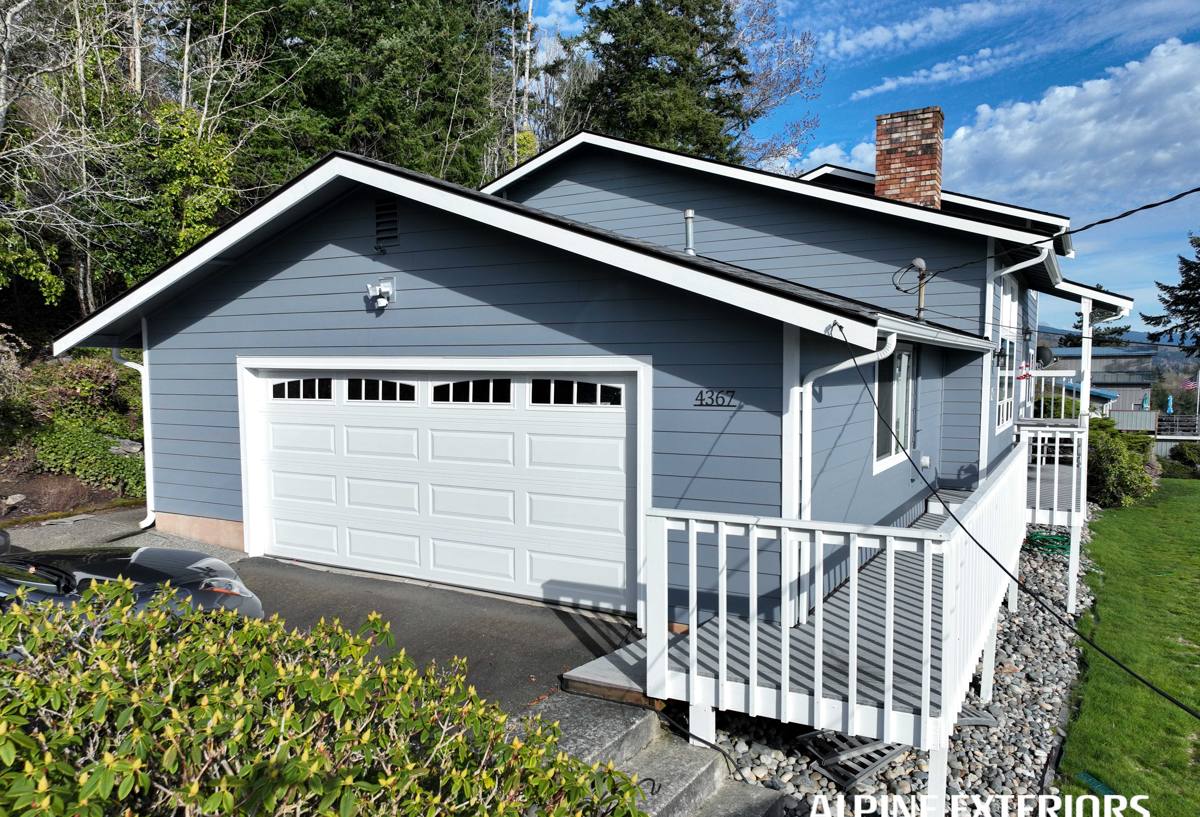
What This Exposure Does to a Roof
Salt Air From More Than One Direction
Because Semiahmoo has water on multiple sides, salt-laden air reaches a roof from more than one prevailing direction instead of the single exposure most Whatcom County homes deal with. Salt accelerates corrosion in exposed fasteners, flashing, and any unprotected metal on the roof, and it breaks down lower-grade sealants and coatings faster than a drier, more sheltered site would. A roof detailed without that in mind will show rust streaks and failed metal well before its shingles or panels are actually worn out.
Wind-Driven Rain at Valleys and Roof-to-Wall Transitions
With almost no windbreak out on the spit, rain doesn't just fall on a Semiahmoo roof — it gets driven sideways into valleys, chimney crickets, and every place the roof meets a wall or dormer. Those transition points are where most roof leaks actually start, and they're also the points most likely to be under-flashed on a lower-quality install. A roof built for calmer inland weather can perform fine there for years and still leak on a spit property within a single hard winter, simply because the water is arriving at more of an angle and with more force behind it.
A Moss and Mildew Season That Doesn't Quit
Mild temperatures, near-constant humidity, and plenty of shaded, north-facing roof plane add up to a moss and algae season that runs most of the year in this part of Whatcom County. On a roof, that shows up as dark streaking, moss mats building in valleys and behind chimneys, and shingle granules loosening faster than they should as organic growth holds moisture against the surface. It's a maintenance issue first, but left alone long enough it becomes a leak issue.
Open Wind and Uplift
A roof on an open, waterfront lot takes real wind load — enough that fastening pattern and shingle wind rating matter more here than they would on a sheltered inland roof. Under-nailed shingles or a marginal wind rating might hold up fine on a protected lot and still lift, crack, or blow off outright on a spit property during a strong storm off the water.
Choosing a Roofing Material for This Exposure
There isn't a single roofing material that's automatically right for every Semiahmoo home — it depends on the roof's pitch, the home's style, and how much the homeowner wants to spend upfront versus over the life of the roof. What we won't do is recommend a material without being upfront about how it actually performs under salt air and sustained wind-driven rain, since that's the condition this roof will live in every year, not just during the occasional bad storm.
| Material | How It Handles This Exposure | Trade-Offs |
|---|---|---|
| Architectural (dimensional) asphalt shingle | Good wind ratings available; algae-resistant granule options help with the local moss and mildew season | Best value upfront; still needs correct fastening and flashing to perform under open wind |
| Standing seam metal | Sheds wind-driven rain cleanly, handles uplift well when properly fastened | Higher upfront cost; fasteners and coatings need to be rated for salt exposure or they'll corrode early |
| Synthetic/composite shingle | Doesn't absorb moisture the way wood-based products do; holds color and shape under salt air | Mid-to-upper cost range; product quality varies more between manufacturers than with shingle or metal |
| Cedar shake | Traditional look, but a wood-based roofing surface in a climate that's damp most of the year | Highest maintenance burden here — regular treatment needed to manage moisture uptake and moss growth |
For most Semiahmoo homes, a well-specified architectural shingle or a properly detailed standing seam metal roof is the practical answer — one on cost, the other on longevity and wind performance. We'll walk through the honest trade-offs for your specific roof rather than pushing whatever's easiest to install.
What Correct Installation Actually Involves Here
The material on top only does half the job. On a roof this exposed, the installation details underneath and around it are what actually determine whether it holds up.
- Ice and water shield at eaves, valleys, and every roof-to-wall transition — not just where code requires it, given how often wind pushes rain into those spots here
- Synthetic underlayment across the full roof deck for a more consistent moisture barrier than older felt products provide
- Step and counter-flashing at chimneys, skylights, and dormers, formed and lapped correctly rather than relying on caulk to close gaps
- Balanced intake and exhaust ventilation so the attic and roof deck can actually dry out between storms instead of trapping moisture against the sheathing
- Fastening pattern matched to the shingle or panel manufacturer's high-wind specification, not the minimum standard pattern
- Corrosion-resistant fasteners and flashing metal throughout, given the salt exposure from multiple directions
Skip any one of those and the roof can still look right for a season or two. On a spit property, the gap between "looks fine" and "is actually sealed against this exposure" tends to show up faster than it would a few miles inland.
Signs an Older Semiahmoo Roof Needs Replacing, Not Just Patching
Not every roofing problem on a Semiahmoo home calls for a full tear-off. But a few signs usually mean patching is just delaying a bigger job:
- Granule loss heavy enough to show up in gutters and downspouts, not just occasional shedding
- Moss or algae that keeps returning to the same valleys or shaded slopes shortly after cleaning
- Flashing around chimneys, skylights, or roof-to-wall transitions that's visibly lifted, rusted, or resealed with caulk more than once
- Soft decking, sagging ridgelines, or daylight visible in the attic at any seam
- Interior ceiling staining near exterior walls, especially after a windy storm off the water
- A roof approaching or past its expected service life with multiple prior repairs already on record
If you're only seeing one isolated issue — a section of lifted flashing, storm damage to a small area — a repair can often be the right call. We'll tell you honestly which situation you're actually looking at rather than defaulting to a full replacement recommendation.
Our Roof Installation Process
- On-site inspection of the existing roof, decking, flashing, and ventilation to assess actual condition, not just surface appearance
- An honest recommendation on repair versus full replacement, and a material recommendation suited to a spit property's specific exposure
- A written scope and estimate before any work begins, with no pressure to sign on the spot
- Tear-off and decking inspection, with any soft or rotted sheathing replaced before new underlayment goes down
- Installation of ice and water shield, underlayment, flashing, and the new roofing material to manufacturer spec for high-wind, high-moisture conditions
- Final walkthrough covering ventilation, warranty documentation, and basic maintenance expectations for this climate
Cost Factors for a New Roof on Semiahmoo
| Factor | What It Affects | Why It Matters Here |
|---|---|---|
| Tear-off vs. overlay | Labor scope and access to the deck underneath | Tear-off reveals hidden moisture and rot damage that's common under an older roof in this exposure |
| Decking condition | Repair costs before new underlayment and roofing go on | Long-term moisture intrusion can rot sheathing that isn't visible until the old roof comes off |
| Material choice | Upfront cost and expected service life | Salt exposure and wind load change how different materials perform, not just how they look |
| Roof complexity | Labor time and flashing detail required | More valleys, dormers, and roof-to-wall transitions mean more of the leak-prone points this climate targets |
| Site access | Staging and equipment setup | Narrow spit lots can have tighter staging space than a typical in-town Ferndale lot |
Exact pricing depends on the specific roof and its exposure, which is why we walk the property in person before giving a real number instead of quoting off a generic price sheet.
Why a Crew That Already Works Semiahmoo Matters
A crew that works this stretch of Whatcom County coastline regularly already knows how salt air, open wind, and sustained moisture behave differently here than they do even a few miles inland. That shows up in the decisions that don't make it onto a spec sheet — which fastener grade actually holds up on a spit property, how much extra flashing attention a given roof-to-wall transition needs, and which ventilation setup keeps a roof deck dry through a full wet season instead of just looking adequate on install day. Semiahmoo's exposure is different from a typical Ferndale roof job, and treating it that way from the first estimate is what keeps a new roof performing for its full service life instead of needing attention again in a few years.
If you're weighing a new roof for a Semiahmoo home, we're glad to walk it with you and give an honest read on what it actually needs. Reach out using the form below to schedule a free, no-pressure estimate.