 Ferndale
 Why Custer Roofs Wear Differently Than Roofs Inland
Custer sits close enough to the water and open farmland that its roofs take a different kind of beating than a roof twenty miles inland. Between the salt-tinged air rolling in off the Strait and Bellingham Bay, the wind-driven rain that comes through in fall and winter storms, and the long gray stretch of moss season that runs from October through May, a roof out here is working harder than most homeowners realize. We're a Ferndale-based crew that installs new roofs throughout Whatcom County, and Custer is one of the areas we work in regularly enough to know exactly which failure points show up first and why.
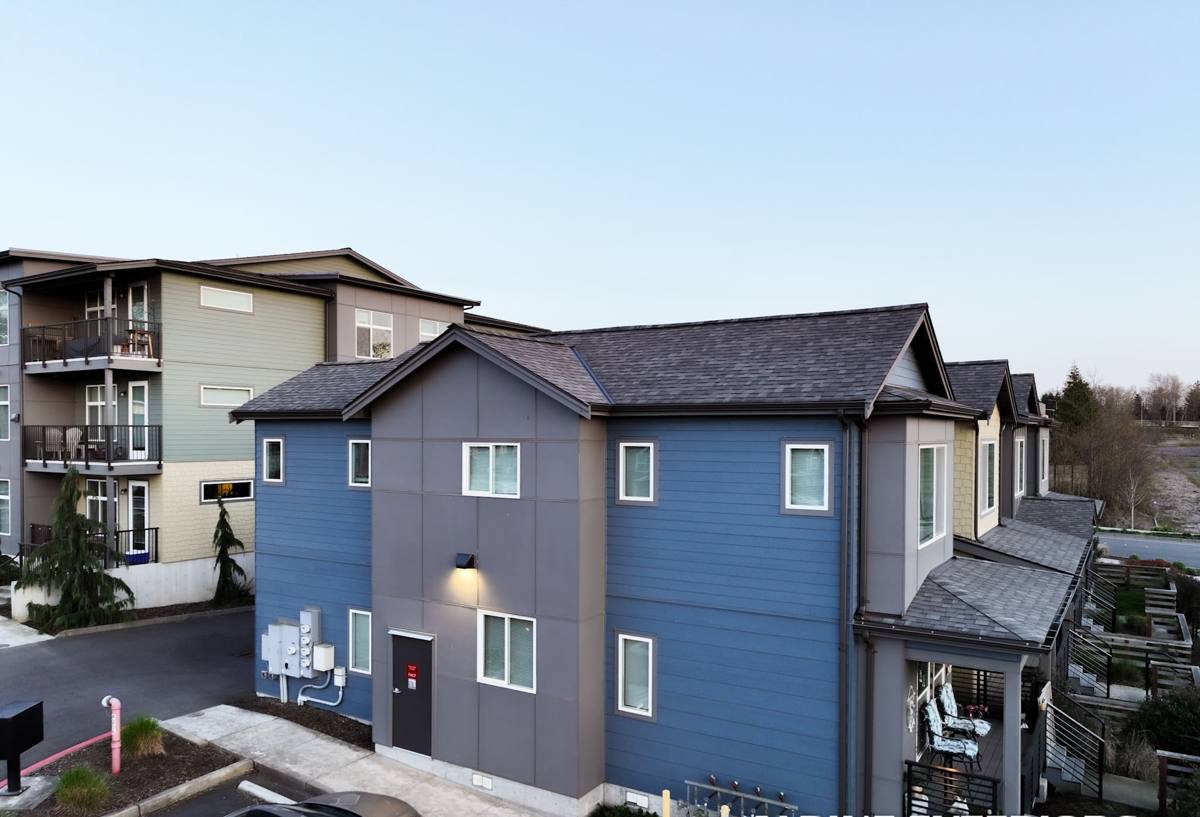
This page is about one job done right in one place: a full new roof installation for a Custer home. Not a repair, not a patch — a properly installed roof system built for the conditions this specific stretch of Whatcom County actually sees.
The Climate Factors That Actually Matter Here
Salt Air and Metal Fatigue
Homes closer to the water deal with airborne salt that accelerates corrosion on anything metal — flashing, fasteners, vent caps, gutter hardware. Cheap or mismatched metal components corrode faster than the shingles around them, which is one of the more common causes of hidden leaks we find on roofs that otherwise "look fine" from the ground. A new install is the best time to get every metal component right, because once shingles are down, swapping out corroded flashing means tearing into finished work.
Driving Rain, Not Just Rain
Whatcom County gets plenty of rain, but the kind that causes problems is wind-driven rain — the kind that hits siding and roof edges at an angle instead of falling straight down. That matters for roofing because it pushes water sideways under shingle edges, into ridge caps, and around anything that penetrates the roof plane (vent stacks, chimneys, skylights). A roof that would perform fine somewhere calmer can leak here if flashing details and shingle sealing weren't done with wind-driven rain specifically in mind.
A Long Moss Season
Custer gets enough shade, humidity, and cool damp stretches that moss isn't a once-a-decade nuisance — it's a recurring maintenance item. Moss holds moisture against the roof surface, lifts shingle edges as it grows, and works its way into any gap it can find. A new roof gives you a clean start, but the material choice, the ventilation, and the pitch all affect how fast moss comes back and how much damage it does in the meantime.
Signs a Custer Home Actually Needs a New Roof (Not Just a Repair)
Not every roof problem calls for full replacement. Here's what we actually look for before recommending a new install instead of a repair:
- Shingles that are cracking, curling, or losing granules across large sections rather than one isolated spot
- Soft or spongy decking felt underfoot in the attic or discovered during a repair — a sign water has already gotten into the plywood
- Repeated leaks in different locations after previous patch jobs
- Heavy, persistent moss growth that keeps returning within a season or two of cleaning
- Visible daylight through the roof deck from inside the attic
- A roof at or past the manufacturer's expected service life for the material and local exposure
- Flashing that's rusted, loose, or was clearly installed as an afterthought around vents and chimneys
If a roof is showing one or two of these in a limited area, a targeted repair is often the honest answer. When several show up together, a repair usually just delays the same failure — and can end up costing more over time than doing the job once, correctly.
Choosing a Roofing Material for This Specific Exposure
There's no single "best" roofing material — the right choice depends on how exposed the home is to salt air, how much shade and moss risk the lot has, and what the homeowner wants to budget for over the life of the roof. Here's how the common options stack up for a property like a Custer home:
| Material | Salt Air / Rain Performance | Moss Resistance | Typical Lifespan |
|---|---|---|---|
| Architectural asphalt shingle | Good with correct flashing and underlayment | Moderate — depends on pitch, shade, and cleaning | 25–30 years |
| Standing seam metal | Excellent when properly coated fasteners are used | Very good — sheds moisture, little for moss to grip | 40–50+ years |
| Cedar shake | Requires more upkeep near salt air and damp shade | Poor without regular treatment and cleaning | 20–30 years with maintenance |
| Composite/synthetic shingle | Good, consistent performance | Good — resists moisture absorption | 30–50 years |
We don't push one material on every job. Cedar shake, for example, can look great and perform fine — it just asks for more ongoing maintenance in a damp, shaded, salt-air environment than most homeowners want to sign up for, so we make sure that trade-off is understood up front rather than discovered five years in. Metal costs more at install but asks the least of a homeowner over time in this climate. Architectural asphalt remains the most common choice because it balances upfront cost, appearance, and performance reasonably well when installed correctly.
What "Installed Correctly" Actually Means
The material on top gets most of the attention, but the layers underneath are what actually keep a Custer roof dry through driving rain and a long wet season. A correct new roof installation includes:
Full Tear-Off and Deck Inspection
We don't install new roofing over old — a full tear-off lets us inspect the actual plywood or OSB decking underneath for soft spots, rot, or prior water damage that a layover would simply hide. Any damaged decking gets replaced before anything new goes down.
Ice and Water Shield at Vulnerable Areas
Eaves, valleys, and roof penetrations get a self-adhering waterproof membrane underneath the primary underlayment. This is the backup layer that protects the deck if wind-driven rain or ice does get past the shingles — and given how much wind-driven rain this area sees, it's not an optional upgrade, it's standard on every roof we install.
Synthetic Underlayment Across the Full Deck
A quality synthetic underlayment sheds water, resists tearing during install, and holds up better over the life of the roof than older felt products, especially under repeated wet-dry cycling.
Properly Detailed Flashing
Every chimney, vent stack, skylight, and roof-to-wall transition is a place water can get in if flashing is reused, undersized, or installed loosely. New roofs get new flashing, sized and layered correctly — step flashing at walls, counter-flashing where needed, and corrosion-resistant metal chosen with the salt air exposure in mind.
Balanced Attic Ventilation
Intake at the eaves and exhaust at the ridge keep air moving through the attic space, which does two things that matter here: it controls condensation that can rot decking from the inside, and it reduces the cool, stagnant, moist air that moss and algae thrive in on the roof surface above.
Our Installation Process, Start to Finish
- On-site inspection and estimate — we walk the roof and attic, note the current material, decking condition, ventilation setup, and any problem areas, then give a written estimate with no pressure to commit on the spot.
- Material selection — we go over the trade-offs for this specific home's exposure and the homeowner's budget, and settle on a material and color.
- Tear-off and disposal — old roofing comes off down to the deck, with debris hauled and disposed of properly.
- Deck repair — any damaged sheathing found during tear-off is replaced before underlayment goes down.
- Underlayment and ice/water shield — installed across the full deck with extra protection at eaves, valleys, and penetrations.
- Flashing and ventilation components — new flashing and vent components installed and sealed correctly at every roof-to-wall and roof-to-vent transition.
- Roofing material installation — shingles, panels, or shakes installed to manufacturer specification, including proper nailing pattern and exposure for wind resistance.
- Final walkthrough — we go over the finished roof with the homeowner, including care and maintenance notes specific to this climate.
What Drives the Cost of a New Roof in This Area
Every roof is priced based on its own specifics, but these are the factors that move the number up or down most on jobs like this:
| Factor | Effect on Cost |
|---|---|
| Roof size and number of stories | More square footage and steeper access both add labor time |
| Roof pitch and complexity | Steep or multi-plane roofs with several valleys take longer and need more flashing detail |
| Material choice | Metal and premium composite cost more upfront than standard architectural asphalt |
| Decking condition | Rot or soft spots found during tear-off add repair cost that can't always be predicted before demo |
| Ventilation upgrades | Adding proper intake/exhaust venting where none exists adds cost but pays off in roof lifespan |
| Layers of existing roofing | Removing multiple old layers adds labor and disposal cost versus a single-layer tear-off |
We give exact numbers after seeing the actual roof, not before — anyone quoting a firm price over the phone without an inspection is guessing.
Why a Crew That Already Works Custer Makes a Difference
A roofing crew that only occasionally works this far north treats every job as a one-off. A crew based in Ferndale that regularly works Custer and the surrounding parts of Whatcom County has already seen how salt exposure, driving rain, and moss behave on roofs in this specific area, season after season. That shows up in small decisions — which flashing metal holds up, how much ventilation a shaded lot actually needs, where moss tends to establish first on a given roof orientation — that don't come from a spec sheet, they come from doing the work here repeatedly. It also means we're not disappearing after the install; if a question comes up two years down the road, we're still local and still reachable.
Get a Free, No-Pressure Estimate
If your Custer home's roof is showing its age or you're planning ahead for a replacement, we're happy to come take a look, answer questions honestly, and put together a written estimate — no pressure, no obligation. Use the form below to get started.