 Ferndale
 Custer's Roof Climate Is Tougher Than It Looks
Custer sits close enough to the water that homes here deal with a combination most inland Whatcom County properties don't: salt-laden air drifting off the Strait of Georgia and Birch Bay area, wind-driven rain that hits roofs sideways during winter storms, and a wet season that stretches from October well into May. Add in the fir and cedar cover common around Custer properties, and you get a fourth factor — near-constant shade and moisture that feeds moss growth on anything that holds water.
Asphalt shingles were never designed with this combination in mind. They absorb moisture, granules wash off faster under driving rain, and moss roots into the shingle surface itself, lifting edges and shortening the roof's life well before its rated years are up. Metal roofing handles all four of these stressors better — but only when the material, fasteners, and installation details are matched to a coastal climate. That's the part that gets skipped when a crew installs metal roofs occasionally instead of regularly.
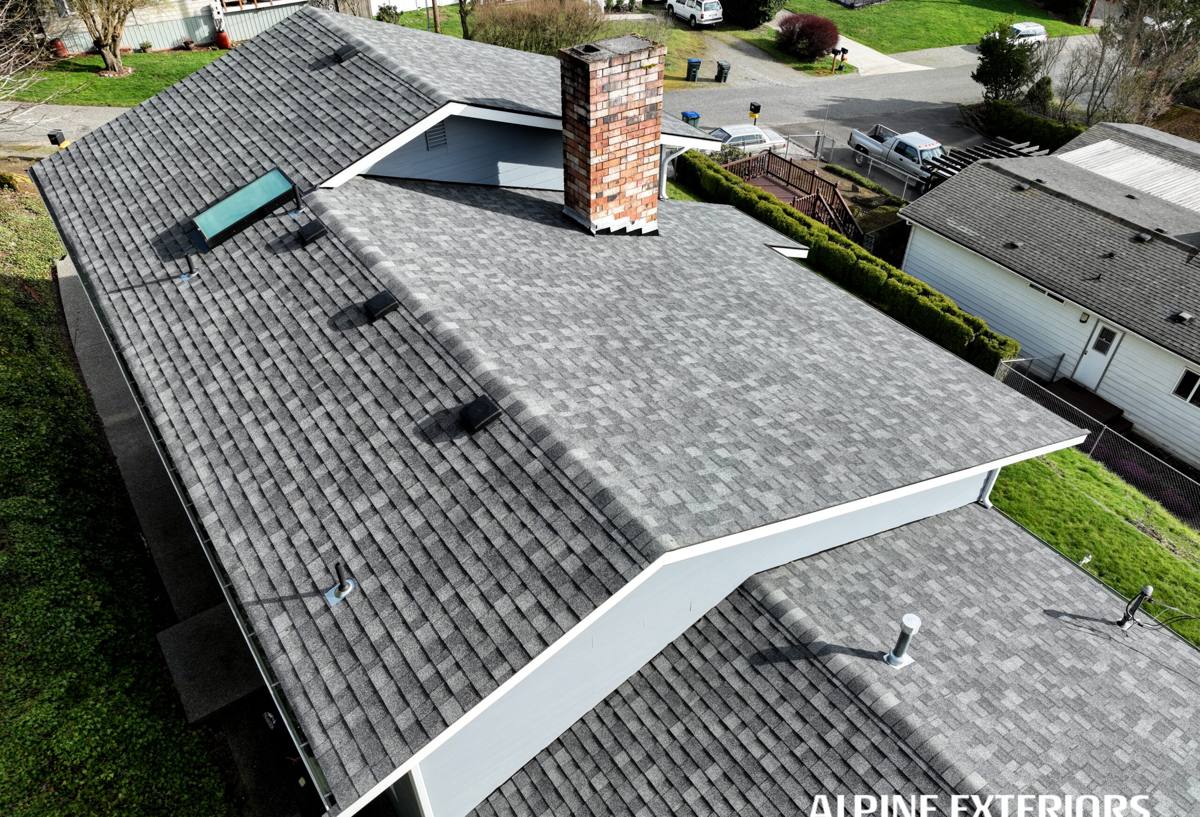
Why Metal Roofing Makes Sense for Custer
A correctly installed metal roof gives Custer homeowners a few specific advantages over shingles in this climate:
- Sheds wind-driven rain instead of absorbing it, reducing the chance of wind-driven water finding its way under the roofing material during winter storms off the water
- Non-porous surface that doesn't hold moisture the way shingle granules do, which slows moss and moss-related rot at the roof deck
- Steep-slope metal panels shed moss and debris far more readily than shingles when the panel profile and pitch allow it
- Longer service life than shingles under the same salt-air and rain exposure, which matters when you're weighing upfront cost against how often you'll be back on the roof
- Better resistance to wind uplift when flashed and fastened correctly, relevant for the exposed, open-field wind exposure common around Custer
None of that is automatic. Metal roofing is less forgiving of installation mistakes than shingles — a poorly flashed valley or the wrong fastener in a coastal environment will fail faster on a metal roof than it would on shingles, not slower. That's why the installation details below matter as much as the material choice itself.
What Metal Roofing Doesn't Fix
Metal roofing isn't a substitute for good ventilation, proper underlayment, or well-maintained gutters. A metal roof over a poorly ventilated attic will still trap moisture underneath, and a metal roof with clogged gutters will still back water up at the eaves. We treat metal roofing as one part of a system, not a standalone upgrade.
Panel Systems We Install in Custer
Not every metal roofing product performs the same way in a coastal, high-moss climate. We walk Custer homeowners through the real trade-offs rather than pushing one system for every roof.
| System | Best For | Coastal Trade-Offs |
|---|---|---|
| Standing seam (concealed fastener) | Steep roofs, long-term low-maintenance priority | Higher upfront cost; fasteners are hidden under the seam, which removes the most common long-term leak point on a coastal roof |
| Exposed-fastener metal panel | Budget-conscious projects, outbuildings, simpler rooflines | Lower cost, but exposed fasteners and their washers are the first thing salt air degrades — expect more maintenance over the roof's life |
| Metal shingle / shake panel | Homeowners who want a traditional look with metal performance | More seams and laps than standing seam, so flashing detail at valleys and penetrations matters even more |
For most Custer homes with direct exposure to open wind and rain off the water, we recommend concealed-fastener standing seam. The lower long-term maintenance burden usually outweighs the higher install cost once you factor in how often exposed fasteners need attention in salt air. That said, exposed-fastener panel remains a sound, honest choice for shops, garages, and lower-slope structures where the budget math works differently.
What a Correct Metal Roof Installation Actually Involves
The panels themselves get most of the attention, but the layers underneath them are what determine whether a metal roof holds up through a Custer winter. A correct install includes:
- Deck inspection and repair — any soft, delaminated, or moisture-damaged sheathing gets replaced before anything goes down, not covered over
- High-temp synthetic or self-adhered underlayment — a second line of defense against wind-driven rain that gets forced past the panel seams during storms
- Ice-and-water shield at eaves and valleys — the areas most exposed to standing water and wind-driven rain get an extra, fully-adhered membrane
- Correct fastener spec — matched to the panel metal to avoid galvanic corrosion, discussed further below
- Proper panel overlap and seam direction — set to shed water with the prevailing wind and rain direction for the specific roof plane
- Detailed flashing at every penetration — vents, chimneys, skylights, and wall transitions are where the overwhelming majority of roof leaks originate, metal or otherwise
- Ridge and hip venting — sized to the attic space so moisture generated inside the home has somewhere to go
Skipping any one of these doesn't show up on day one. It shows up two or three winters later, after enough wind-driven rain cycles have found the weak point.
Salt Air and the Fastener Problem
This is the detail that separates a metal roof that lasts decades from one that starts showing rust streaks within a few years, and it's specific to Custer's proximity to the water. When a fastener, flashing piece, or trim metal doesn't match the roof panel's metal type, you get galvanic corrosion — one metal accelerates the breakdown of the other wherever they touch, and salt air speeds the whole process up.
We spec fasteners, flashing, and trim to match the panel system, not just whatever's on the truck. That means stainless or coated fasteners rated for coastal exposure, and flashing metal that's compatible with the panel rather than a dissimilar metal that will corrode at every contact point. It costs more upfront and it's the difference between a roof that still looks clean in year fifteen and one that's streaking with rust by year five.
Moss, Debris, and Long-Term Maintenance
Metal roofing resists moss far better than shingles, but it isn't moss-proof, especially on shaded slopes common around tree-lined Custer lots. Moss and organic debris that collect in valleys, at panel laps, or against chimneys and skylights can still hold moisture against the metal surface long enough to cause problems over time.
What actually protects a metal roof long-term in this climate:
- Keeping overhanging branches trimmed back so less debris lands on the roof in the first place
- Periodic gentle rinsing of valleys and low-slope sections where debris naturally collects
- Keeping gutters clear so water isn't backing up under the eave edge during heavy rain
- A visual check after major windstorms for lifted trim or debris buildup at penetrations
None of this requires the aggressive pressure-washing or chemical treatments that shingle roofs sometimes need to control moss. That lighter maintenance load is one of the practical reasons metal makes sense for a property with heavy tree cover.
Our Process, Start to Finish
Estimate and Roof Assessment
We start with an on-site look at the existing roof — deck condition, current ventilation, roof pitch, and how exposed the property is to prevailing wind and rain. That assessment drives the panel and fastener recommendation, not a one-size-fits-all pitch.
Tear-Off and Deck Prep
Old roofing comes off, the deck gets inspected board by board, and any damaged sheathing is replaced before underlayment goes down. This is also when we confirm attic ventilation is adequate for the home.
Underlayment and Flashing
Ice-and-water membrane goes down at eaves, valleys, and penetrations first, followed by synthetic underlayment across the rest of the deck. All flashing is fabricated or selected to match the panel metal.
Panel Installation
Panels are run and fastened to the manufacturer's spec for the pitch and exposure of that specific roof plane, with seam direction set to shed wind-driven rain correctly.
Final Walkthrough and Cleanup
We walk the finished roof with the homeowner, check every penetration and edge detail, and do a full magnetic sweep of the property for stray fasteners before we consider the job done.
Why It Matters That We Already Work in Custer
A roofing crew that mostly works dry, inland roofs will still build you a roof — but they're making judgment calls about fastener spec, underlayment placement, and flashing detail based on conditions that aren't what Custer actually sees. A crew that regularly works properties this close to the water treats salt-air fastener compatibility and wind-driven rain detailing as standard practice, not an afterthought raised mid-project.
That familiarity also shows up in smaller ways: knowing which roof orientations around Custer take the worst of the winter wind, recognizing early moss patterns tied to the tree cover common in the area, and understanding how Whatcom County's permitting and inspection process works for a re-roof. It adds up to fewer surprises during the project and a roof that's built for the conditions it will actually face.
If you're weighing a metal roof for your Custer home, we're happy to take a look and walk you through the options honestly — no pressure, no upsell. Use the form below to request a free estimate.