 Ferndale
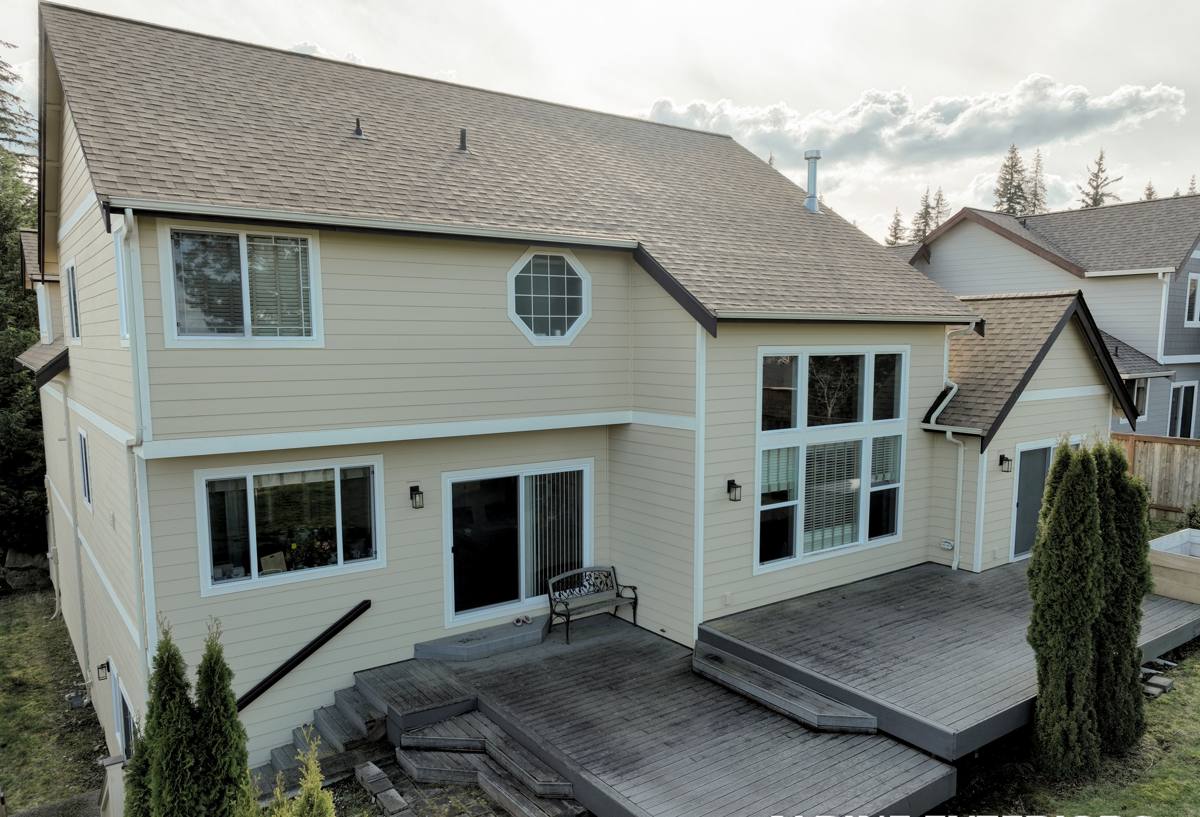
 Decks in Custer Take a Beating Most Homeowners Don't Expect
Custer sits in the part of Whatcom County where weather doesn't take a season off. The rural, tree-lined properties out here catch driving rain off the Salish Sea, salt-laden air that drifts in from the coast, and a moss season that can stretch from October well into May. A deck built the same way you'd build one in a drier inland climate simply doesn't hold up the same way in Custer. We see it constantly: decks that look fine from the porch door but have soft ledger boards, corroded fasteners, or moss working its way into joints that were never meant to stay wet this long.
This page is about one job, in one area: repairing decks for homes in and around Custer. Not a general "we fix decks everywhere" pitch — the specific damage patterns we find here, what a proper repair actually involves, and why it matters to hire a crew that already knows this stretch of Whatcom County.
How Salt Air, Rain, and Moss Actually Damage a Deck
Salt Air and Metal Fasteners
Homes closer to the coastline see accelerated corrosion on anything metal — nails, screws, joist hangers, bolts. Salt air speeds up rust, and rusted fasteners lose their grip strength long before the wood around them looks bad. A deck can appear structurally sound while the connectors holding it together are quietly failing underneath.
Driving Rain and Standing Water
Whatcom County's rain doesn't fall straight down — wind-driven rain gets pushed sideways into ledger boards, under railings, and into any gap where boards meet the house or posts meet footings. Water that gets trapped instead of shedding is what turns a cosmetic issue into a structural one.
The Long Moss Season
Shaded, damp decks in this area can grow moss for more than half the year. Moss itself isn't the real problem — it's what moss does. It holds moisture against the wood surface, keeps boards from drying out between rain events, and creates a slick, slippery walking surface. Left alone, that constant dampness accelerates wood rot underneath the moss you can see.
Signs a Custer Deck Needs Repair
Most deck problems don't announce themselves. Homeowners usually notice a symptom — a bounce underfoot, a stain, a squeak — long after the underlying damage started. Here's what we tell Custer homeowners to check for before calling anyone:
- Soft or spongy spots when you walk across the deck, especially near the house or stair landings
- Rust streaks running down from screw heads or metal connectors
- Gaps opening up where the ledger board meets the house siding
- Wobbly railings or posts that move when pushed
- Persistent moss or algae in the same spots every year, even after cleaning
- Boards that stay damp or dark long after the rest of the deck has dried
- Nails backing out or popping above the board surface
- Visible daylight or gaps between decking boards that weren't there originally
Any one of these on its own might be minor. Two or three together, especially near the ledger or support posts, usually means it's time for a real inspection.
What a Correct Deck Repair Actually Involves
Structural Inspection First
Before we touch a single board, we check the parts of the deck you can't see from the surface: the ledger board connection to the house, the condition of the posts and footings, and the joist hangers underneath. This is where the majority of serious deck failures actually start, and it's the step that gets skipped by anyone just swapping out bad-looking boards.
Board-by-Board Assessment
Not every deck needs every board replaced. We go across the surface checking for soft spots, checking fastener condition, and separating boards that are cosmetically weathered from boards that are structurally compromised. Replacing only what's actually failed keeps the repair honest and the cost reasonable.
Fastener and Connector Upgrades
Given the salt air and rain exposure common around Custer, we don't reuse corroded fasteners just because the wood around them still looks okay. Part of a correct repair is upgrading connectors to hardware rated for wet, coastal-influenced conditions — not because the original hardware was defective, but because this climate asks more of it over time.
Drainage and Airflow Correction
A lot of repeat deck problems come from poor drainage or airflow underneath the structure — not the boards themselves. If we find standing water, blocked drainage paths, or vegetation growing up against the deck framing, we address that as part of the repair. Otherwise the same damage just comes back in a year or two.
Repair or Replace? How We Make That Call
Homeowners often assume any deck problem means a full teardown. That's rarely true. The table below is a general guide to how we think through it — every deck still gets an actual inspection before we recommend either path.
| Condition Found | Usually Means |
|---|---|
| Isolated soft boards, framing solid underneath | Board-level repair |
| Surface moss, graying, minor fastener rust | Cleaning, refastening, and sealing |
| Rot at the ledger board or house connection | Targeted structural repair |
| Widespread rot through multiple framing members | Partial or full rebuild |
| Undersized or failing footings | Full rebuild recommended |
| Cosmetic wear only, structure sound | Refinishing, no repair needed |
We'd rather tell a homeowner their deck just needs board replacement and a re-seal than sell a full rebuild it doesn't need — and we'll say so plainly if a deck really has reached the end of its structural life.
Our Deck Repair Process
- On-site inspection of the full deck structure, including areas underneath and behind the house connection
- Written explanation of what we found, in plain terms, before any work starts
- A clear scope: what gets replaced, what gets repaired, and what's left alone
- Removal of damaged boards, hardware, and any rot-affected framing
- Structural repairs to joists, posts, or the ledger connection as needed
- Installation of new boards and corrosion-resistant fasteners suited to this climate
- Correction of drainage, grading, or airflow issues found during inspection
- Final walkthrough so you can see exactly what was done and why
Materials We Use — and the Trade-Offs We're Honest About
There's no single "right" decking material for every home in Custer — it depends on your budget, how much upkeep you want to take on, and how the deck is used. We'll walk through the honest trade-offs rather than push whatever's easiest for us to install.
| Material | Upfront Cost | Maintenance in This Climate | Trade-Offs |
|---|---|---|---|
| Pressure-treated lumber | Lower | Needs periodic sealing to resist moss and moisture | Most affordable; requires the most ongoing attention |
| Cedar | Mid-range | Natural rot resistance, but still needs sealing near the coast | Attractive grain; softer, so more prone to surface wear |
| Composite decking | Higher | Low maintenance, resists moss staining better | Higher upfront cost; installation sensitivity around fastening and spacing |
| Stainless or coated fasteners | Small upcharge | Resists salt-air corrosion far longer than standard hardware | Costs more per fastener; we consider it worth it here |
Our standard for repair work leans toward corrosion-resistant fasteners and, where budget allows, moisture-resistant board materials — not because cheaper options are bad products, but because Custer's combination of salt air and long wet seasons asks more of a deck than a typical dry-climate build.
Maintenance After the Repair
A repaired deck still needs seasonal attention in this climate. A few habits go a long way toward protecting the work:
- Sweep off moss and debris regularly through the fall and winter months
- Keep gutters and downspouts clear so runoff isn't draining directly onto the deck
- Trim back vegetation that shades the deck and keeps it from drying between rains
- Reseal wood decking on the schedule recommended for the product used
- Check fastener heads and railings once a year for early rust or looseness
None of this is complicated, but skipping it is exactly how the same problems come back a few years after a repair.
Why It Matters to Hire a Crew That Already Works Custer
Deck repair isn't identical everywhere, even within Whatcom County. A crew that regularly works Custer and the surrounding Ferndale area already knows how salt air behaves on hardware out here, how long moss actually sits on a shaded deck through a Pacific Northwest winter, and where wind-driven rain tends to find its way into a structure. That's not something you get from a crew that mostly works drier, inland jobs and treats every deck the same way. Local experience means fewer surprises, a repair scope that's realistic from the start, and materials chosen for how this specific climate actually treats a deck over time.
Get a Straight Answer on Your Deck
If you're not sure whether your deck needs a few boards replaced or something more involved, we're happy to take a look and give you an honest answer — no pressure, no upsell. Fill out the form below for a free estimate on deck repair for your Custer home.