 Ferndale
 Siding Repair Built Around Custer's Weather, Not a Generic Checklist
Custer sits close enough to the water and the Canadian border that its siding takes a specific kind of beating: salt-laden air that reaches most lots in the area, wind-driven rain that comes in sideways more often than straight down, and a moss and mildew season that runs long because the temperature rarely gets cold enough or dry enough to stop growth. A siding repair that ignores those three factors tends to fail again within a few years. A repair that accounts for them holds up.
This page is specifically about siding repair for Custer properties, not a general "how siding works" overview. If you're looking at a section of damaged, stained, or failing siding on a Custer home and trying to figure out whether it needs a patch, a panel swap, or something more serious, this is written for that decision.
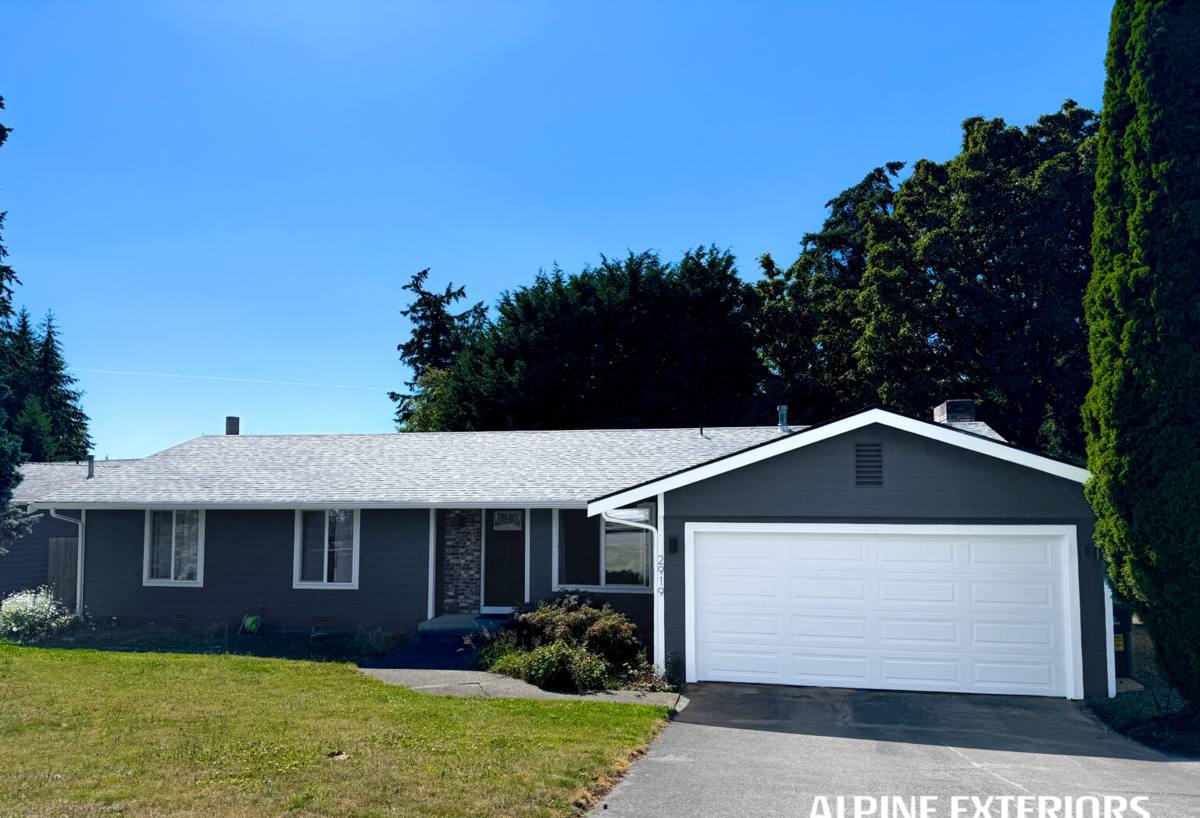
What Custer's Climate Actually Does to Siding Over Time
Salt Air
Salt exposure speeds up corrosion on fasteners, trim hardware, and any exposed metal flashing, and it accelerates the breakdown of factory and field-applied finishes. That damage is rarely dramatic when it starts. It shows up as chalking, streaking, or fastener rust years before anyone notices a functional problem, and by the time it's visible, the coating underneath has usually already lost some of its protective value.
Wind-Driven Rain
Rain that's pushed sideways by wind finds its way into lap joints, behind trim boards, and into any seam where flashing or caulk isn't doing its job. That's a harder test than a simple annual rainfall number suggests, because the water isn't just falling on the siding, it's being driven up and under it. Most of the repair calls we see in this area trace back to water finding one of these entry points, not to the siding material failing on its own.
A Long Moss Season
Mild, damp conditions keep moss and mildew active across most of the calendar on shaded or tree-lined lots, which describes a large share of properties around Custer. Organic growth on a siding surface holds moisture against the wall behind it, and that trapped moisture is where a lot of long-term rot and delamination problems actually start. A repair that just power-washes the moss off and repaints, without addressing what's happening behind the surface, is treating the symptom.
Common Siding Damage We See on Custer Homes
Every property is different, but a few damage patterns show up repeatedly on repair calls in this area:
- Soft or spongy panels near ground level, deck ledgers, or roof-to-wall intersections, usually a sign that moisture has been getting behind the siding for a while.
- Cracked or missing caulk at seams, trim, and window and door edges, which is often the entry point that caused the damage in the first place rather than a separate issue.
- Rust streaking from fasteners that were the wrong type, under-driven, or simply reaching the end of their service life in salt-exposed air.
- Persistent moss and black staining on north-facing or shaded walls, which signals a moisture problem even before any physical damage is visible.
- Buckled, warped, or loose panels, common on older engineered wood and cedar products where the substrate has absorbed moisture and expanded.
- Delaminating or crumbling edges on older fiber cement or engineered wood siding where a field cut was never properly sealed.
Repair or Replace? How We Make That Call
Not every damaged section needs a full re-side, and not every repair is worth doing instead of replacing a section outright. We look at three things: how far the damage has spread, whether the sheathing and framing behind the siding are still sound, and whether a matching repair is even realistic given the age and condition of the existing material.
| Signal | Usually Points To |
|---|---|
| Isolated damage, one or two boards, sound sheathing underneath | Targeted repair or panel replacement |
| Soft sheathing, visible rot, or damage spreading across multiple wall sections | Larger repair or partial re-side, sometimes more than one wall |
| Widespread moss staining plus fastener corrosion across the whole exterior | Full re-side is usually the better long-term value than repeated patch repairs |
| Original siding is a discontinued color, profile, or product line | Repair may be visible as a patch; replacement of the affected elevation is often the cleaner fix |
| Damage limited to caulk, flashing, or trim rather than the siding panels themselves | Water-management repair without touching the panels at all |
We'll always tell you honestly which category a given repair falls into, including when the honest answer is that a patch will hold for a while but isn't the last time you'll deal with that wall.
What a Correct Repair Actually Involves
A siding repair that's done right starts before anyone touches the exterior surface. Here's what that looks like in practice:
- Open it up and look. Before we replace a visible board, we check what's happening behind it, sheathing condition, insulation moisture, framing, so we're not covering up a problem instead of fixing it.
- Match or plan around the material. If the existing siding can be matched closely enough that a repair won't be an obvious patch, we do that. If it can't, we'll say so and talk through whether a full elevation or full re-side makes more sense.
- Fix the water path, not just the hole. Flashing, kick-out details at roof-to-wall intersections, and proper lap sequencing get corrected as part of the repair, not left as-is because "that's how it was."
- Use the right fasteners and spacing. Corrosion-resistant fasteners, correctly placed and driven to spec, matter more here than in a drier inland climate.
- Seal only where sealant belongs. Caulk is for specific joints, not a substitute for correct flashing. Over-caulking can trap moisture behind siding just as easily as a missing bead can let it in.
Repairing Different Siding Types: An Honest Look
We only install James Hardie fiber cement on new work and full re-sides. But repair calls in Custer come in on whatever is already on the house, and we're straightforward about what each material realistically allows.
- Cedar and primed spruce can often be patched or partially replaced if the rot hasn't spread far, but the repair only lasts as long as the paint or stain schedule that follows it is kept up. In a climate with this much sustained moisture, that maintenance burden is real and ongoing.
- Vinyl siding is generally simple to patch or panel-swap when a section is cracked or wind-damaged, as long as a matching profile and color are still available. Older vinyl fades unevenly, so a patch on a sun-faded wall can be visibly mismatched even with the "same" product.
- Engineered wood (like LP SmartSide) can be repaired if the damage is caught early, but once moisture has gotten into the wood-fiber core, the affected section typically needs full replacement rather than a surface patch, since the core doesn't recover once it's swollen or delaminating.
- Older fiber cement (Hardie or other brands) holds up well structurally, but discontinued colors and profiles can make an invisible patch difficult. We'll tell you upfront if a repair will be visible as a repair.
When a homeowner asks whether it's worth repairing an aging, non-Hardie exterior versus re-siding with James Hardie fiber cement, we give a direct answer based on the extent of the damage and the age of the existing material, not a blanket sales pitch either way.
Our Process for a Custer Siding Repair
The process is the same whether the job is a single damaged board or a multi-wall repair:
- Walk the property. We look at the damage you called about and check the rest of the exterior for related issues you may not have noticed, since siding damage rarely stays isolated for long in this climate.
- Give you a straight assessment. That includes whether it's a repair, a partial replacement, or something we'd recommend re-siding instead, and why.
- Provide a written estimate before any work starts, with the scope spelled out so there's no ambiguity about what's included.
- Do the repair to spec, including the flashing and water-management details, not just the visible surface.
- Walk the finished work with you so you can see what was done and ask questions before we consider the job complete.
Why a Crew That Already Works Custer Matters
Siding repair is a trade where local exposure knowledge actually changes the outcome. A crew that's worked a lot of Custer properties already knows which wall orientations tend to hold moss longest, where wind-driven rain typically causes the most damage on this kind of coastline exposure, and how fast fastener corrosion tends to show up given the salt air here versus a drier inland town. That's not something you can fully substitute with general siding experience from a different climate. It affects where we look first, what we flag as a developing problem versus a cosmetic one, and what repair details we insist on even when they add a little time to the job.
Cost Factors for Siding Repair
Repair costs vary more than replacement costs, because they depend heavily on what's hiding behind the visible damage. These are the factors that actually move the number:
| Factor | Why It Matters |
|---|---|
| Extent of hidden rot or moisture damage | Sheathing and framing repair adds cost beyond the visible siding fix |
| Material availability and match | Discontinued profiles or colors may require a wider repair area for a clean look |
| Accessibility of the damaged area | Second-story walls, tight side yards, and areas near decks or landscaping take longer |
| Number of separate repair locations | Several small spots across the exterior can add up to more labor than one larger contiguous repair |
| Flashing and trim work involved | Correcting water-management details takes more time than a straight panel swap but prevents repeat calls |
Between-Visit Maintenance Checklist
A few habits catch problems early, before they turn into a bigger repair:
- Walk the exterior once or twice a year, especially after winter storms, and look for cracked caulk, loose panels, or new staining.
- Keep gutters clear so overflow isn't running down the siding face during heavy rain.
- Trim back vegetation and tree cover where practical to reduce shaded, damp conditions that feed moss growth.
- Check fastener heads and trim edges near ground level and roof intersections, common spots for early corrosion or water entry.
- Address small caulk or trim issues promptly rather than waiting, since a small entry point for wind-driven rain rarely stays small in this climate.
If you've got a section of siding on a Custer home that's stained, soft, cracked, or just not holding up the way it should, we're glad to take a look and give you a straight answer about what it needs. Reach out using the form below to schedule a free, no-pressure estimate.