 Ferndale
 Storm Damage Roof Repair for Custer Homes
Custer sits in the part of Whatcom County that takes the full brunt of what comes off the Salish Sea — salt-laden wind, driving rain that runs sideways as much as down, and a moss season that stretches for most of the year under the region's tree cover. Roofs out here don't fail the way roofs fail in drier climates. They fail at the edges, at the flashing, and at the spots where wind and standing moisture have been quietly working against each other long before a storm ever shows up to finish the job. If you've had a wind event or a heavy rain system move through and you're looking at lifted shingles, a leak, or debris damage, this page is about what an honest, correct repair looks like for a home in this specific area.
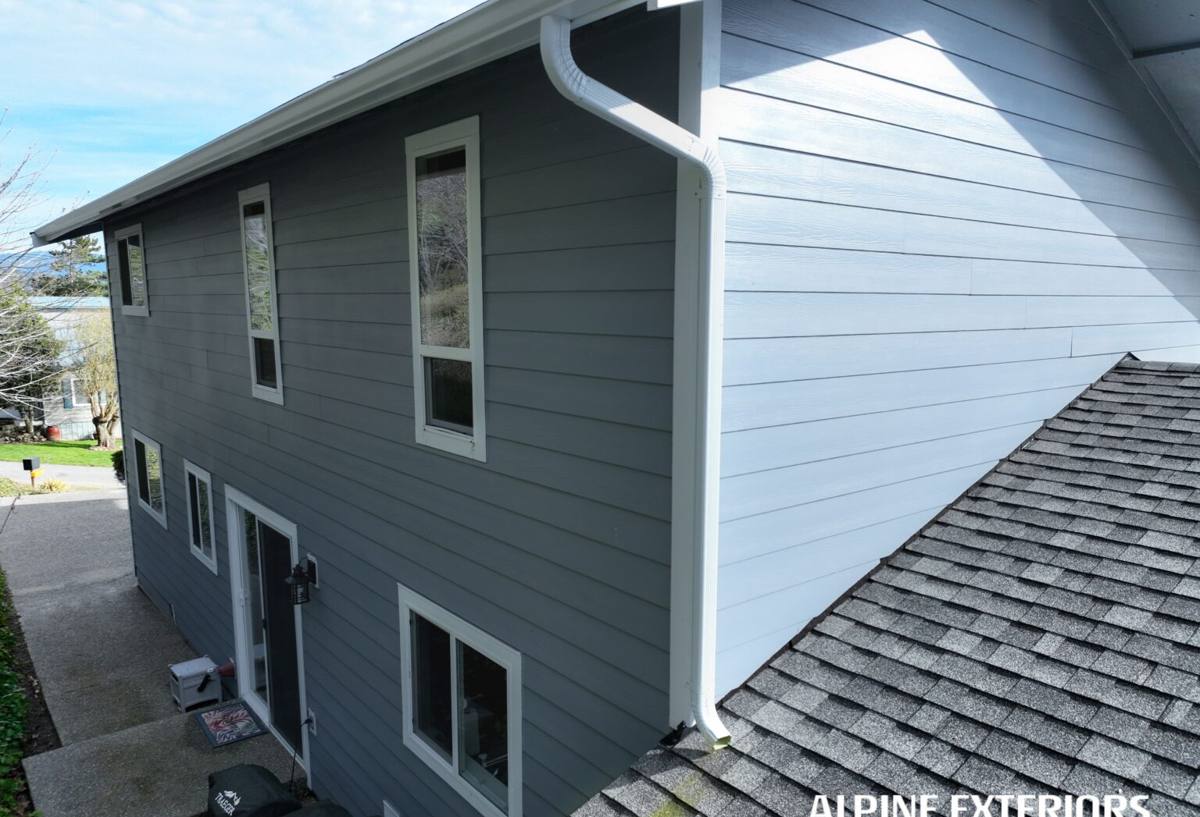
Why Custer Roofs Take a Different Kind of Beating
Three things stack up against roofs here, and they compound each other rather than acting alone.
Salt Air
Proximity to the water means airborne salt settles on roofing metal — flashing, vent caps, gutter hardware, fastener heads — and accelerates corrosion compared to an inland roof of the same age. Corroded fasteners and flashing are exactly the components that fail first in a wind event, because they're the parts holding everything else down.
Driving Rain
Pacific storm systems in Whatcom County don't just drop rain, they push it. Wind-driven rain finds gaps that vertical rain never would — under lifted shingle tabs, behind poorly lapped flashing, into nail holes that have backed out even slightly. A roof that's watertight in a calm rain can still leak in a wind-driven one.
A Long Moss Season
Shaded, damp conditions for much of the year mean moss and moisture-loving growth get a foothold fast, especially on north-facing slopes and anywhere debris collects. Moss holds water against the roofing surface long after the rain stops, and it works its way under shingle edges and around fasteners — softening the very areas that need to stay sealed to resist wind.
What Actually Counts as Storm Damage
Not every roof problem that shows up after a storm was caused by that storm — and telling the difference matters for both the repair plan and any insurance claim. Storm damage typically looks like:
- Shingles that are creased, lifted, or missing entirely, usually starting at ridges, hips, and roof edges where wind uplift is strongest
- Flashing that's been bent, pulled loose, or separated from a chimney, wall, or valley
- Impact damage from falling branches or debris — punctures, cracked shingles, dented vents or caps
- Granule loss concentrated in one area (a sign of wind abrasion or impact, not general wear)
- Gutters pulled away from the fascia or downspouts torn loose
- Active leaks that started or worsened during or right after the storm, even if the entry point isn't obvious from the ground
What it usually isn't: a roof that was already at the end of its service life and simply gave out under normal weather. Part of an honest assessment is telling you plainly which category your roof falls into, because the repair approach — and whether insurance is even the right path — depends on it.
The Moss Complication After a Storm
A wind event that lifts a few shingle tabs on a moss-free roof is a straightforward tab-and-fastener repair. The same event on a roof with established moss growth is a different job, because the moss has often already been holding moisture against the deck in that area for months. When we open up a storm-damaged section on a Custer roof, we're checking the underlayment and decking underneath for softness or rot before we simply reattach or replace the visible shingles — patching over compromised decking looks fine for a season and then fails again at the first hard rain.
What a Correct Storm Repair Actually Involves
A Real Inspection, Not a Guess From the Ground
Storm damage is frequently worse — or in some cases less extensive — than it looks from the driveway. A correct assessment means getting on the roof, checking the deck underneath compromised areas, and tracing water stains in the attic back to their actual entry point, which is often several feet from where the ceiling stain appears.
Matching Materials, Not Just Covering the Hole
Shingle color and profile drift over time as manufacturers update product lines. We match as closely as current products allow and are upfront when an exact match isn't possible, rather than letting a customer assume a patch will be invisible when it won't be.
Flashing and Underlayment, Not Just Shingles
A repair that replaces damaged shingles but reuses corroded or bent flashing hasn't fixed the actual failure point — it's just delayed the next leak. Flashing at valleys, chimneys, and wall intersections gets evaluated and replaced as part of the repair when it's compromised, not left in place because it's "not the part that's obviously broken."
A Ventilation Check
Poor attic ventilation traps moisture that accelerates both moss growth and deck rot from the underside. If we find signs of that while we're already up there for a storm repair, we'll tell you — it's cheaper to address alongside a repair than as a separate visit later.
How Our Process Works
- Assessment and documentation — a full roof walk, photos of every area of concern, and a written summary of what we find, including anything that's cosmetic versus anything that's a real water-entry risk.
- Temporary protection if needed — if there's active exposure, we get the vulnerable area covered and dry before we ever talk about scheduling the permanent repair.
- Insurance documentation, if you're filing a claim — the same photos and written assessment from step one are what most adjusters need to evaluate the claim; we provide it in a format that's useful for that process.
- The repair itself — matched materials, corrected flashing and fasteners where needed, and a check of the surrounding area so we're not just treating the one spot that happened to show a leak.
- Cleanup and a final walk-through — debris and old materials removed, and we show you what was done and why before we consider the job finished.
Repair or Replace? What Actually Drives That Decision
Storm damage sometimes reveals that a roof was closer to the end of its life than anyone realized. Here's how we think through it, in plain terms:
| Factor | Leans Toward Repair | Leans Toward Replacement |
|---|---|---|
| Age of the roof | Well within expected service life | Already near or past typical lifespan for the material |
| Extent of damage | Isolated to one or two areas | Scattered across multiple slopes |
| Decking condition | Solid underneath the damaged area | Soft, rotted, or delaminated in multiple spots |
| Material availability | Close match available for the existing shingle | Discontinued product with no reasonable match |
| Underlying moss/moisture history | Minimal prior growth | Long-term moss coverage with visible moisture damage |
| Typical cost range | Several hundred to a few thousand dollars, depending on scope | A full re-roof, priced by square footage and material |
We'll give you a straight answer on which side of that line your roof falls, and we won't push a full replacement when a repair genuinely solves the problem.
What Custer Homeowners Should Know About Insurance Claims
Wind and impact damage from a specific storm event is generally the kind of damage homeowners insurance is built to cover, while gradual wear, existing moss damage, and deferred maintenance usually are not. We're not your insurance company and won't promise a claim outcome, but we can give you an honest, well-documented assessment that separates true storm damage from pre-existing wear — which is the same distinction an adjuster is going to be looking for.
After a Storm: A Quick Homeowner Checklist
- Walk the exterior and look for shingle debris in the yard or gutters — it's often the first visible clue
- Check the attic (if accessible) for new water stains, damp insulation, or daylight showing through the deck
- Photograph anything unusual before cleanup, even if you're not sure it's storm-related
- Avoid climbing onto the roof yourself, especially on wet or moss-covered surfaces — this is where most storm-related injuries happen
- Get a professional assessment before assuming a small visible issue is the whole story
- Don't wait through another rain system once a leak is suspected — a small entry point gets worse with every storm, not better
Why It Matters to Hire a Crew That Already Works Custer
Storm repair isn't just a general roofing skill — it's knowing what this specific stretch of Whatcom County does to a roof over time. A crew that regularly works Custer and the surrounding Ferndale area already knows which slopes tend to hold moss, how salt exposure shows up in corroded flashing before it shows up anywhere else, and what a wind-driven rain leak actually looks like versus a slow moss-related one. That context shortens the diagnosis and means the repair addresses the real cause, not just the visible symptom.
If a recent storm has left your roof looking worse for wear, we're happy to take a look and give you a straightforward, no-pressure assessment of what's actually going on and what it would take to fix it right. There's a form below — reach out for a free estimate.