 Ferndale
 Custer sits close enough to the water and the Canadian border that its homes take a different kind of weather beating than houses further inland in Whatcom County. Salt-laden air off the strait, wind-driven rain that comes in sideways during winter storms, and a moss season that can stretch from October into May all put real, ongoing stress on exterior siding. If you're planning a siding installation for a home in Custer, understanding how that specific combination of conditions affects material choice and installation detail will save you money and headaches for decades.
Why Custer's Climate Is Harder on Siding Than It Looks
On paper, Custer gets the same general Pacific Northwest weather as the rest of Ferndale and Whatcom County. In practice, its proximity to open water and exposed, wind-swept terrain means a few things hit harder here.
Salt Air and Coastal Moisture
Homes closer to Birch Bay and the Strait of Georgia deal with airborne salt that settles on exterior surfaces. Salt exposure accelerates corrosion of fasteners, flashing, and any metal trim, and it can degrade certain paint and coating systems faster than the manufacturer's rated lifespan suggests. Siding material and finish matter more here than they would on a home twenty miles inland.
Driving Rain and Wind-Driven Water
Open exposure means rain doesn't just fall on Custer homes — it gets pushed into siding laps, trim joints, and butt seams by wind. A siding system that isn't detailed correctly at those joints will let water behind the cladding, where it soaks sheathing and framing long before anyone notices a problem on the surface.
A Long Moss and Algae Season
Shaded, north-facing walls and anything under tree cover stay damp for extended stretches, which is exactly what moss and algae need to take hold. Once organic growth establishes on a siding surface, it holds moisture against the material and accelerates whatever deterioration process that material is prone to — rot in wood-based products, coating breakdown in others.
What This Means for Material Choice
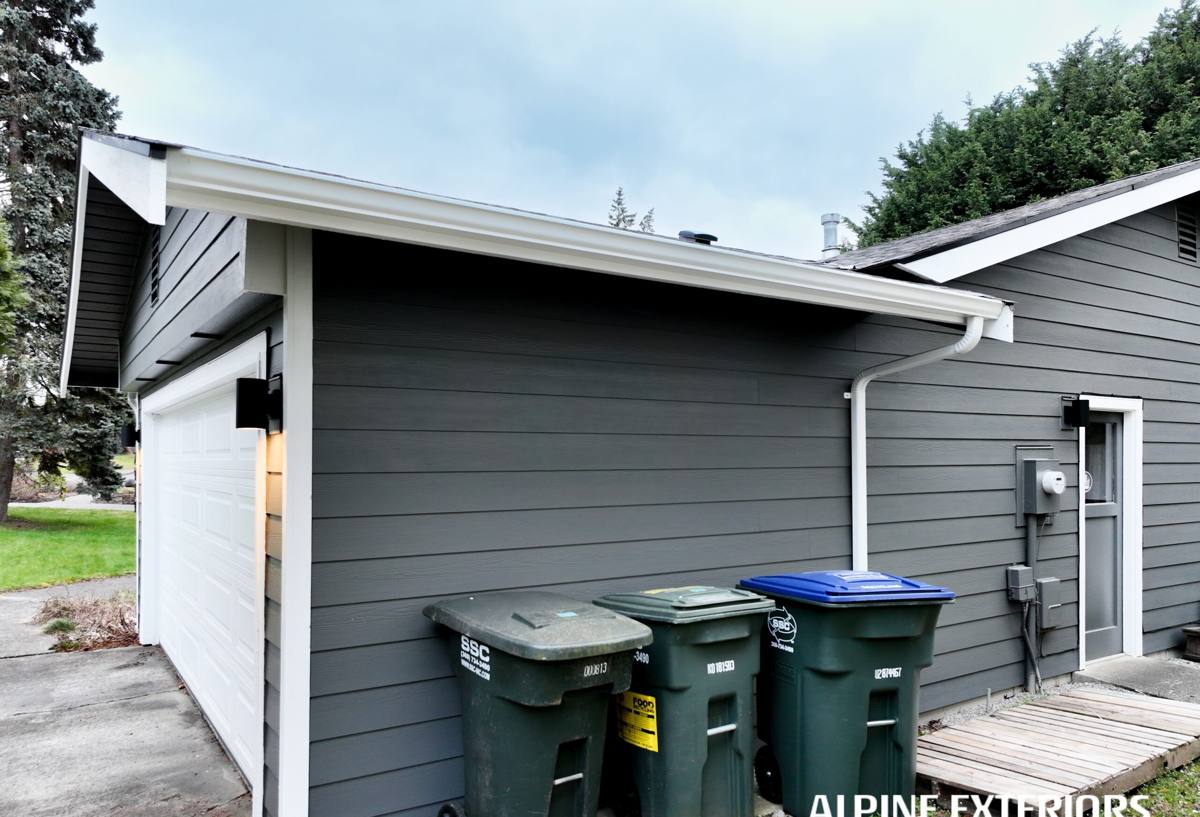
We install James Hardie fiber cement siding exclusively, and Custer is a good example of why. Fiber cement doesn't rot, doesn't provide organic material for moss to feed on the way wood-based products can, and holds up to sustained moisture exposure without the swelling, delamination, or fastener corrosion issues that plague other materials in coastal, high-rainfall settings. It's also non-combustible, which matters given the dry-season wildfire risk that has become a bigger part of Pacific Northwest summers even in traditionally wet counties.
James Hardie's HZ5 product line is engineered specifically for the kind of freeze-thaw and moisture cycling common in the Pacific Northwest, and the factory-applied ColorPlus finish resists fading and holds up to UV and moisture exposure far better than field-applied paint. For a Custer home facing salt air and long wet stretches, that factory finish is doing real work — it's not a cosmetic upgrade.
What a Correct Installation Involves
Material choice only gets you halfway there. Most siding failures we see on older Custer and Ferndale homes trace back to installation shortcuts, not the material itself. A correct James Hardie installation in this climate includes:
- A properly lapped weather-resistive barrier (housewrap) with all seams taped and integrated with window and door flashing — this is the drainage plane behind the siding, and it matters more than the siding itself in a driving-rain climate
- Rainscreen or furring strip installation where conditions call for it, creating an air gap that lets any moisture that gets behind the siding drain and dry out instead of sitting against the sheathing
- Correct fastener type and spacing — using hot-dipped galvanized or stainless fasteners rated for coastal exposure, driven per Hardie's specifications rather than shot in with a framing nailer set for speed
- Proper clearance at grade, decks, and patios — Hardie siding needs a minimum gap above hard surfaces and soil to avoid wicking moisture
- Caulking and sealant only where Hardie's install guide calls for it, and never as a substitute for correct flashing
- Butt joints and corners detailed to shed water outward rather than trap it
Skip any one of these and you can end up with a home wearing an excellent siding product that still fails early — usually starting at the exact spots most exposed to Custer's wind-driven rain: window heads, butt joints, and lower courses near grade.
Our Process for a Custer Siding Installation
1. On-Site Assessment
We walk the home and look at exposure direction, existing moisture damage, current siding condition, and anything specific to the lot — tree cover, wind exposure, proximity to water — that should inform the installation plan.
2. Tear-Off and Sheathing Inspection
Once old siding comes off, we inspect the sheathing underneath. This is the point where hidden rot or moisture damage from a prior installation shows up, and it needs to be addressed before anything new goes on the wall.
3. Weather Barrier and Drainage Plane
We install and properly lap the weather-resistive barrier, integrate it with flashing at every penetration, and add a rainscreen gap where the exposure and wall assembly call for it.
4. James Hardie Installation to Spec
Siding, trim, and accessories go on following Hardie's published installation instructions — the specifics that keep the manufacturer's warranty valid and keep the assembly performing the way it's designed to.
5. Final Walkthrough
We review the completed job with the homeowner, covering basic maintenance expectations and what to watch for going forward.
Comparing Siding Options for Custer's Conditions
| Factor | James Hardie Fiber Cement | Vinyl | Wood / Cedar / Primed Spruce |
|---|---|---|---|
| Moisture and rot resistance | Does not rot; engineered for wet climates | Won't rot, but can warp and gap, letting water behind panels | Vulnerable to rot without diligent maintenance |
| Moss/algae resistance | No organic material for growth to feed on | Can host surface growth in shaded, damp areas | Organic material — moss and algae take hold readily |
| Salt air performance | Factory ColorPlus finish holds up well; fiber cement itself unaffected | Can become brittle over time; fasteners still a concern | Coatings break down faster in salt exposure, exposing wood |
| Fire resistance | Non-combustible | Combustible, can melt/deform near heat | Combustible |
| Finish durability | Factory-baked finish, long fade resistance | Color molded in but can fade/chalk over decades | Requires repainting/restaining on a recurring cycle |
Cost Factors for a Custer Siding Job
Every home is different, but the main variables that drive cost on a Custer installation are consistent:
| Factor | Why It Matters |
|---|---|
| Home size and wall complexity | More corners, dormers, and trim details mean more labor and cut waste |
| Existing siding removal | Tear-off and disposal of old material adds time and cost versus new construction |
| Sheathing repair | Rot or water damage found during tear-off needs to be repaired before new siding goes on |
| Rainscreen/furring installation | Adds labor and material but pays off in longevity for exposed sites |
| Product line and profile | HardiePlank, HardiePanel, and shingle-style products carry different material and labor costs |
| Trim and accessory scope | Fascia, soffit, and trim work bundled into the project add to the total |
We provide a specific, itemized number after walking the home — broad ranges without seeing the actual house tend to be more misleading than helpful.
Why Local Experience in Custer Matters
A crew that already works in Custer and the surrounding Ferndale area knows which walls take the worst of the wind-driven rain, which lots hold moss longer because of tree cover or shade, and how salt exposure differs depending on how close a property sits to the water. That knowledge shapes real decisions on a job — where a rainscreen gap is worth the added cost, where extra flashing attention pays off, and which details can't be shortcut on this specific site. It also means a crew that's still local and reachable if a question comes up after the job is done, not a company that worked the area once and moved on.
What to Look For When Hiring
- A written estimate that specifies the exact James Hardie product line, profile, and color
- Clear detail on weather barrier, flashing, and rainscreen approach — not just "we'll install siding"
- Manufacturer training or certification with James Hardie products
- A plan for what happens if sheathing damage is found during tear-off
- Straightforward answers about fastener type and installation method for coastal exposure
- References or examples of completed work in Whatcom County conditions
If your Custer home is due for new siding, we'd be glad to take a look and walk you through what a correctly installed James Hardie system would involve for your specific property. Reach out for a free, no-pressure estimate using the form below.