 Ferndale
 New-Construction Windows in Custer: A Different Job Than Replacement
When a home in Custer is being framed, the windows go in before the siding, before the trim, and often before the roof is fully dried in. That's new-construction window installation, and it's a fundamentally different job from replacing a window in a wall that's already finished. On a new build, the window opening is raw framing wrapped in a water-resistive barrier (WRB), and every layer of flashing has to be built up in the correct order so water sheds down and out, never in. Get that sequence wrong and the mistake gets buried under siding for years before it shows up as rot, stains, or a soft spot on an interior wall.
We install new-construction windows for builders, remodelers, and homeowners working on new builds and additions around Ferndale and Custer. Because this is framing-stage work, it has to be coordinated with the builder's schedule, done right the first time, and built to hold up to what Whatcom County weather actually throws at a house.
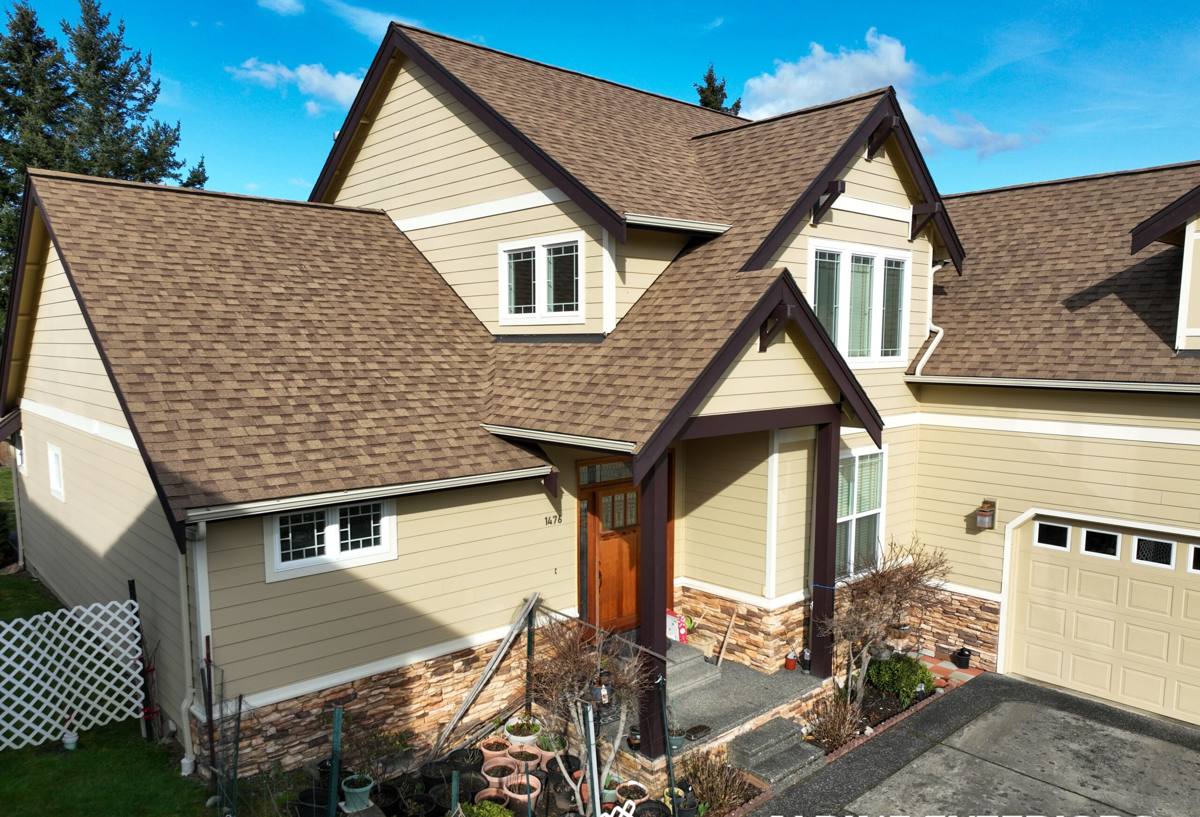
Why Custer's Climate Changes How Windows Should Be Installed
Custer sits in the part of Whatcom County where marine air off the Salish Sea, near-constant winter rain, and a long stretch of low sun and shade combine into conditions that are hard on window openings. Three things matter most for a new-construction install here:
- Salt-influenced air: proximity to Puget Sound and the Strait of Georgia means airborne moisture carries salt content that accelerates corrosion on unprotected fasteners, hinges, and lesser window hardware over time.
- Driving rain: wind-driven rain doesn't just fall on a window, it pushes sideways and up under trim and flanges. A flashing detail that would be fine in a drier climate can fail here within a few wet seasons.
- A long moss season: shaded, north-facing walls and window sills stay damp for months at a time, which means any sill or sealant detail that traps water instead of shedding it becomes a slow, ongoing problem rather than an occasional one.
None of this means Custer needs exotic materials. It means the basics — sill pan flashing, proper WRB lap sequencing, corrosion-resistant fasteners, and window products rated for the exposure — have to be done correctly and consistently, on every opening, not just the ones facing the weather.
What a Correct New-Construction Window Install Involves
The Flashing Sequence We Follow
Every new-construction window opening gets the same layered approach, regardless of window brand:
- Sill pan flashing installed first, sloped slightly to the exterior so any water that gets past the window has somewhere to go.
- Window set into the opening, checked for level, plumb, and square before a single fastener goes in — a window installed slightly out of square will bind, leak at the corners, or fail to seal properly under the sash.
- Nailing fin fastened per the manufacturer's schedule, then flashed at the sides and head so each layer overlaps the one below it — never the reverse.
- Backer rod and sealant at the interior and exterior gaps, sized and installed so the window can move slightly with temperature changes without breaking the seal.
- WRB integration tied back into the housewrap or building paper before siding closes the opening up for good.
Window Selection for New Builds
New construction gives more flexibility than replacement work because the opening isn't fixed by an existing frame. That means the right window can be sized and specified for the wall rather than fit around whatever was already there. For Custer's exposure, we generally steer builders and homeowners toward:
- Corrosion-resistant hardware and fasteners rated for coastal or marine-influenced environments.
- Frame materials that don't rely on paint or finish alone to resist moisture intrusion at the frame itself.
- Glass packages with a U-factor and solar heat gain coefficient suited to Western Washington's mild-but-damp climate, not a hotter or drier region's defaults.
Our Process, Start to Finish
New-construction work runs on the builder's or GC's schedule, so coordination matters as much as installation quality. Here's how a typical Custer job goes:
| Stage | What Happens |
|---|---|
| Plan review | We review window schedules and rough openings against the framing plan before delivery, catching sizing issues before they become change orders. |
| Delivery and staging | Windows are checked against the order on arrival and staged to avoid job-site damage before install. |
| Sill pan and flashing prep | Openings are prepped and sill pans installed ahead of setting windows, so nothing gets rushed. |
| Window setting | Each window is set, shimmed, and fastened per manufacturer spec, then flashed in the correct shingle-lap order. |
| Sealing and WRB tie-in | Interior and exterior sealant is applied and the WRB is integrated so the wall is ready for siding. |
| Final walkthrough | Every opening is checked for operation, seal, and squareness before we sign off. |
Comparing Window Frame Materials for Custer's Exposure
There's no single "best" window material for every project — it depends on budget, the home's design, and how much maintenance an owner wants to take on. Here's how the common options stack up for a new build in this area:
| Material | Moisture Behavior | Maintenance | Typical Fit |
|---|---|---|---|
| Vinyl | Doesn't rot or corrode; performs well in damp climates | Low — no painting or refinishing | Most new-construction budgets |
| Fiberglass | Very stable in moisture and temperature swings | Low | Higher-end builds wanting a slimmer sightline |
| Wood-clad | Good if the cladding and flashing details are correct; interior wood needs protection from condensation | Moderate to higher | Homeowners wanting a wood interior look |
| Aluminum | Prone to corrosion in salt-influenced air without proper coatings and thermal breaks | Moderate | Specific architectural applications only |
We'll walk through these trade-offs honestly during an estimate rather than pushing one product line — the right call depends on the specific home and how it's built, not on what's easiest for us to install.
Mistakes We See on New-Construction Window Openings
Most window failures on new builds don't come from a bad window — they come from an installation detail that was skipped or done out of order. On Custer jobs, we specifically watch for:
- Sill pans skipped or installed flat instead of sloped to drain.
- Flashing tape lapped in the wrong direction, which channels water into the wall instead of away from it.
- Fasteners that aren't rated for coastal or marine-influenced conditions, leading to early corrosion and staining.
- Windows set out of square, which stresses the frame and breaks the seal over time as the house settles.
- Sealant used as a substitute for proper flashing instead of as a secondary layer of protection.
- WRB not properly integrated with the window flange, leaving a gap water can find during driving rain.
Why It Matters to Hire a Crew That Already Works in Custer
A window installer who's never worked this stretch of Whatcom County doesn't have a feel for how hard the wind-driven rain comes off the water, how long moss season really runs on a shaded wall, or which details fail first when a house sits exposed to that combination year after year. That local pattern recognition is what separates a technically correct install from one that's actually built for how Custer weather behaves.
It also matters for coordination. New-construction window work has to slot into a builder's timeline without holding up siding, trim, or interior work behind it. A crew that regularly works with local builders and understands typical Whatcom County permitting and inspection expectations keeps the schedule moving instead of becoming the bottleneck.
Questions Worth Asking Before You Commit
Whoever installs your new-construction windows in Custer, it's worth confirming a few things up front:
- Do they install sill pan flashing on every opening as standard practice, not as an upsell?
- Can they explain their flashing lap sequence in plain terms, not just point to a brand warranty?
- Do they use fasteners and hardware rated for coastal or marine-influenced exposure?
- Will they coordinate directly with your builder's schedule and other trades?
- Do they stand behind their installation work separately from the manufacturer's product warranty?
A straight answer to each of these tells you more about the quality of the work than any brochure will.
Get a Free Estimate for Your Custer New-Construction Windows
If you're framing a new home or addition in Custer and need windows installed correctly the first time, we're glad to take a look at your plans and walk the site. There's no pressure and no obligation — just a straightforward look at what your project needs and what it'll cost to do right. Use the form below to request a free estimate.