 Ferndale
 Roof Repair Built for Custer's Coastal Climate
Custer sits close enough to saltwater that the air itself works against a roof. Add Whatcom County's long stretch of driving winter rain and the moss season that follows every wet fall, and you've got a roof that's under more or less constant pressure for eight or nine months of the year. A repair that would hold up fine in a dry inland climate can fail here within a season if it doesn't account for salt exposure, wind-driven rain, and the shade and moisture that let moss take hold. We repair roofs in Custer with those specific conditions in mind, not a generic patch job.
Most of the calls we get aren't from roofs that are old and worn out everywhere. They're from roofs with one or two failure points — a flashing detail that was never sealed right, a section of moss that's held water against shingles for months, a vent boot that's cracked and letting rain track down into the attic. Fixing that correctly, so it stays fixed, is a different job than fixing it fast.
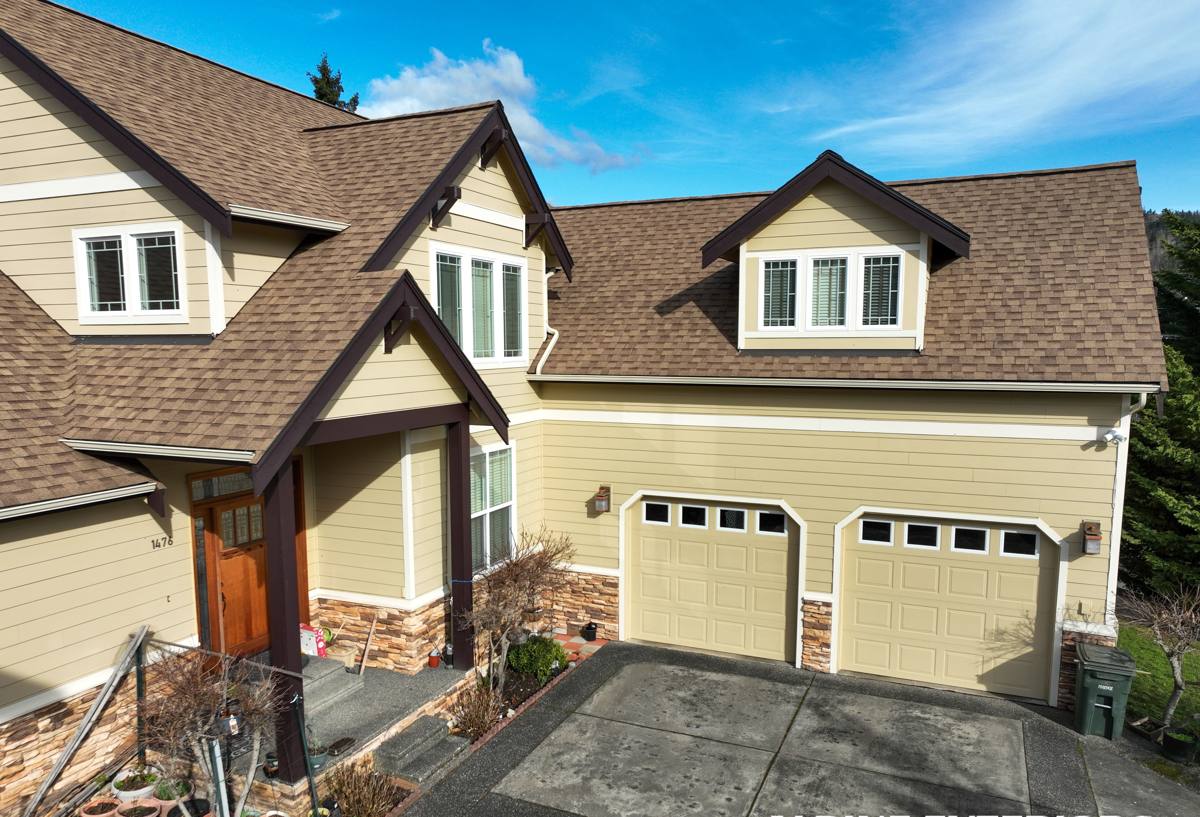
Common Roof Problems We See in Custer Homes
Moss and Organic Growth
Shaded, north-facing slopes and roofs under fir or cedar cover hold moisture longer than the rest of the roof, and moss moves in. Left alone, moss lifts shingle edges, holds water against the roof deck, and accelerates granule loss. By the time moss is visible from the ground, it's usually been established long enough to have already started lifting shingles underneath.
Wind-Driven Rain Intrusion
Rain in this part of Whatcom County rarely falls straight down. Storms off the water push rain sideways, which finds any gap in flashing, any short nail, any shingle that isn't sealed tight at the tab. Leaks from wind-driven rain often show up several feet from where the water actually entered, which is why a proper repair starts with tracing the path, not patching the ceiling stain.
Salt-Air Corrosion
Salt-laden air corrodes exposed metal faster than it does further inland — fasteners, flashing, and vent components all age quicker here. A repair that reuses corroded fasteners or unprotected steel flashing is a repair that's already on a shorter clock than it should be.
Flashing and Penetration Failures
Chimneys, plumbing vents, skylights, and roof-to-wall transitions are where most leaks actually originate, not the open field of shingles. These details get overlooked in quick patch jobs because they take more time to do right.
What a Correct Roof Repair Actually Involves
A repair that lasts starts with an honest diagnosis, not a guess based on where the ceiling stain shows up inside. Water travels along the roof deck and framing before it drips somewhere visible, so the actual entry point is often well away from the interior damage. We inspect the surrounding area, not just the spot that's been pointed out to us, because a repair that only addresses the visible symptom often leaves the real problem in place.
Once we've found the actual cause, the repair itself needs to match the existing roof — same or compatible shingle profile and color when possible, correctly lapped flashing, proper underlayment at the repaired section, and fasteners rated for coastal exposure. A patch that looks close enough from the ground but isn't properly integrated into the surrounding roofing will often leak again at its edges within a year or two.
What We Won't Do
We don't caulk over a flashing problem instead of re-flashing it, and we don't recommend roof coatings or sealants as a substitute for a proper repair when the underlying issue is a failed detail. Sealant-based fixes can buy a little time, but they're a maintenance item, not a repair, and we'll tell you which one you're actually getting before we do the work.
Our Roof Repair Process in Custer
- Inspection. We walk the roof (weather permitting) and check attic access from inside when relevant, looking for the actual water path, not just the visible symptom.
- Diagnosis and explanation. We tell you what's actually wrong, in plain terms, before we talk about fixing it.
- Written estimate. A clear scope of work and price range, so you know what you're approving.
- Repair. Matched materials, correct flashing and fastening practices, and attention to the details that fail first in this climate.
- Cleanup and check-in. We clear debris from gutters and the surrounding roof area disturbed by the repair, and walk you through what was done.
Repair vs. Replacement: How We Help You Decide
Not every roof problem in Custer needs a full replacement, and not every roof problem should be treated as a simple patch. The right call depends on the roof's age, how widespread the damage is, and whether the issues are isolated or systemic.
| Factor | Favors Repair | Favors Replacement |
|---|---|---|
| Roof age | Well within expected service life | At or beyond typical lifespan for the material |
| Damage extent | Isolated to one or two areas | Widespread across multiple slopes |
| Moss/organic growth | Limited, recently established | Long-established, shingles visibly lifted or degraded underneath |
| Underlying deck condition | Solid, no rot found | Soft spots or rot found during inspection |
| Prior repair history | First repair or isolated fix | Repeated repairs to the same areas |
We'll always give you our honest read on where your roof falls on that table, including when replacement is the more cost-effective option over the next several years rather than continuing to repair the same failure points.
Materials and Methods We Use for Coastal Durability
Given the salt exposure and rain load in Custer, we favor corrosion-resistant fasteners and flashing metals over standard-grade materials whenever a repair calls for new hardware. Underlayment choice matters too — a self-adhered membrane at vulnerable transitions (valleys, eaves, penetrations) holds up to wind-driven rain far better than felt alone. None of this adds significant cost to a repair, but it does mean the fix is built for the actual conditions it has to survive, not just a baseline standard that assumes a milder, drier climate.
Working Around Whatcom County's Rainy Season
We plan repair work around weather windows rather than forcing it, since a roof repair done in active rain doesn't seal properly. In Custer, that sometimes means a short wait for the right window, especially in the wettest winter months, but it's better than a repair that fails because it was rushed into wet conditions.
When to Schedule a Roof Repair in Custer
Moss growth is easiest to deal with before it's had a full wet season to establish and lift shingles, so late summer and early fall — before the rain really sets in — is a good window for moss-related repairs. Storm damage and active leaks obviously need attention whenever they happen, and we respond to those as a priority regardless of season. For non-urgent repairs, scheduling ahead of the wettest months means the work gets done in a proper weather window rather than squeezed between storms.
Signs You Need a Roof Repair Now
- Visible moss or dark streaking on shaded roof slopes
- Granules collecting in gutters or at downspout outlets
- Shingles that are curling, lifting at the edges, or missing entirely
- Water stains on interior ceilings, especially near chimneys, vents, or valleys
- Daylight visible through the attic roof deck
- Rusted, corroded, or visibly gapped flashing around chimneys or vents
- Sagging in any section of the roofline
- Increased indoor humidity or musty smell in upper rooms after rain
Any one of these on its own doesn't necessarily mean a major problem, but they're worth having looked at before the next stretch of driving rain finds the gap.
Why Hire a Crew That Already Works Custer
A roofer who mainly works drier, inland areas doesn't necessarily think about salt-air corrosion or wind-driven rain the same way a crew that works this specific stretch of Whatcom County does. We know which details fail first out here, which slopes tend to hold moss, and what it actually takes for a repair to hold up through a full coastal winter rather than just looking finished on the day it's done. That local familiarity shows up in the small decisions — which fasteners to use, how much lap to give a flashing detail, whether a patch will actually integrate with the surrounding roof or just sit on top of it.
If you're dealing with a leak, visible moss, or just want an honest read on a roof's condition before it becomes a bigger problem, we're happy to take a look. Reach out for a free, no-pressure estimate using the form below — we'll tell you what we actually find, not just what's easiest to sell.