 Ferndale
 Roofing in Custer: A Different Set of Demands
Custer sits in the northwest corner of Whatcom County, close enough to the water that salt-laden air is a daily fact of life for anything on a rooftop. Add in the long, wet Pacific Northwest winters and the shaded, moisture-holding tree cover common on rural Custer lots, and you have a climate that is genuinely harder on a roof than what you'd find on the drier side of the state. Asphalt shingles can absolutely hold up here for their full service life, but only when the installation accounts for what this specific area throws at it — not when it's treated like a generic re-roof.
We work on homes throughout the Ferndale area, and Custer roofs tend to show a recognizable pattern of wear: granule loss and premature aging on the sides facing prevailing wind and rain, moss colonization on north-facing and shaded slopes, and corrosion on fasteners and flashing that weren't rated for a salt-air environment. None of that is inevitable. It's a function of materials and workmanship, and it's exactly what a correct installation is designed to prevent.
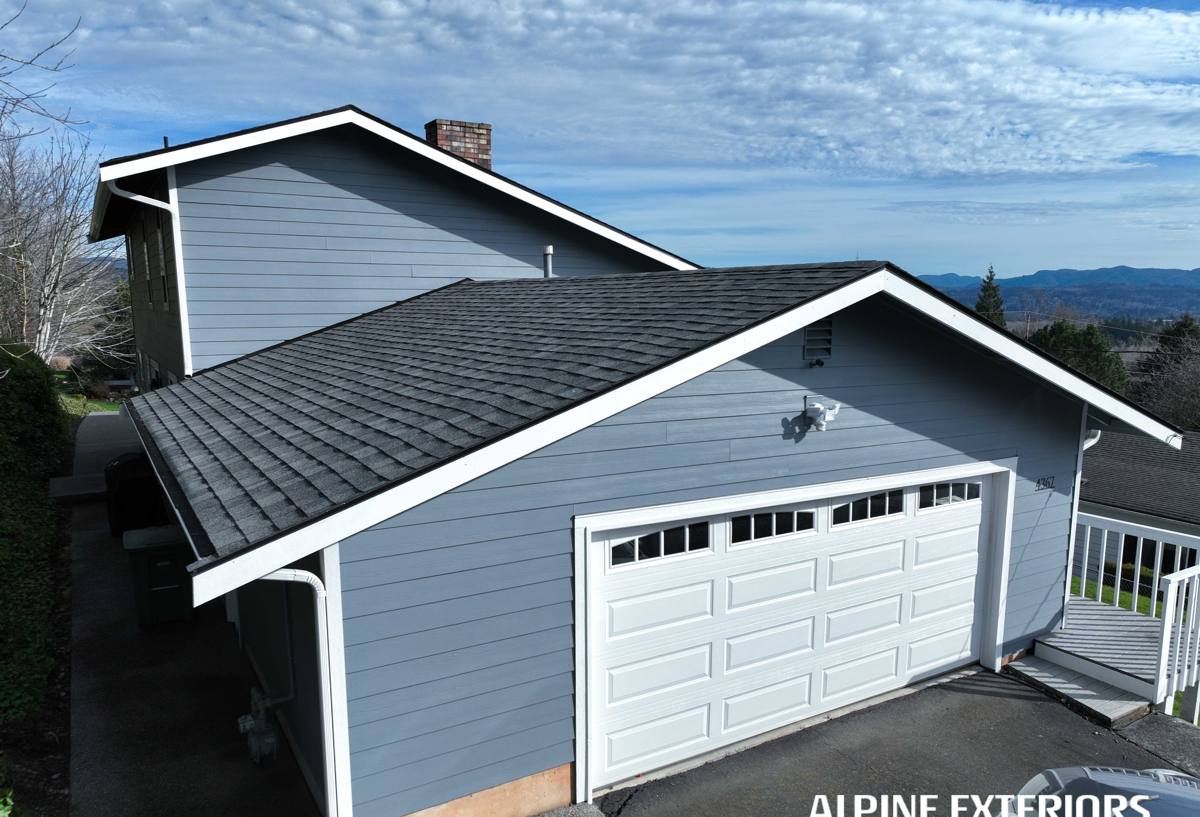
What Custer's Climate Actually Does to a Roof
Salt Air
Airborne salt from the nearby marine environment accelerates corrosion on exposed metal — nails, flashing, vent stacks, and drip edge. Standard electro-galvanized fasteners can start showing rust streaks and weakening well before the shingles themselves are due for replacement. Once a fastener corrodes and loses grip, the shingle above it becomes vulnerable to wind lift, and a small metal problem turns into a leak.
Driving Rain
Wind-driven rain off Puget Sound and the Strait of Georgia doesn't just fall straight down — it gets pushed sideways and upward under shingle tabs, into valleys, and around any penetration in the roof (vent pipes, chimneys, skylights). A roof that would perform fine in a calmer climate can leak in Custer if the underlayment, valley protection, and flashing details aren't built for wind-driven water.
Moss Season
Whatcom County's moss season runs long — realistically most of the year on shaded, north-facing, or tree-covered slopes. Moss isn't just cosmetic. As it grows, it lifts shingle edges, holds moisture against the roof deck, and creates channels for water to travel where it shouldn't. Left unaddressed for a few seasons, moss growth can shave meaningful years off an otherwise sound roof.
What Custer Homes Need From an Asphalt Shingle Roof
- Corrosion-resistant fasteners and flashing suited to a marine-influenced climate, not standard electro-galvanized hardware
- Ice-and-water shield at eaves, valleys, and penetrations — the areas most exposed to wind-driven rain and ice damming during cold snaps
- A shingle product with a real algae-resistance rating (look for "AR" in the shingle's warranty), especially on shaded or tree-covered lots
- Proper attic ventilation, so moisture from inside the home doesn't add to what's already landing on the roof from outside
- Valley and flashing details built for sideways rain, not just straight-down rain
- A maintenance plan that accounts for moss, not a one-time installation and no follow-up
Asphalt Shingles vs. Other Roofing Options for This Area
Asphalt shingles remain the right call for most Custer homes — they're cost-effective, widely available, straightforward to repair, and perform well when installed correctly for this climate. That said, it's worth understanding the trade-offs against the alternatives homeowners ask us about.
| Roofing Type | Upfront Cost | Moss/Algae Resistance | Maintenance | Typical Lifespan Here |
|---|---|---|---|---|
| Asphalt shingles (standard) | Lowest | Moderate without treatment | Periodic cleaning, gutter care | 20-25 years |
| Asphalt shingles (algae-resistant) | Low-moderate | Better, not immune | Lighter, still needs attention | 25-30 years |
| Metal roofing | Highest | Very good | Low | 40-50+ years |
| Cedar shake | High | Poor without diligent upkeep | High — regular treatment needed | 20-30 years, climate-dependent |
We install asphalt shingles as our primary product because, for the price point and repairability, it's the most practical choice for the majority of Custer homes. When we do steer a homeowner toward a different material, it's a straightforward conversation about upfront cost versus long-term maintenance — not a claim that asphalt is inferior. It's about matching the roof to the house, the budget, and how much upkeep the homeowner actually wants to do.
What a Correct Asphalt Shingle Installation Involves
A roof that's going to hold up in Custer's conditions is built in layers, and each layer matters:
- Tear-off and deck inspection. We remove the old roofing down to the deck and check for soft spots, rot, or damage that needs to be corrected before anything new goes down. Covering a compromised deck is one of the most common shortcuts that leads to early failure.
- Ice-and-water shield. Applied at eaves, valleys, around chimneys and vent penetrations, and anywhere wind-driven rain is most likely to find a way in.
- Synthetic underlayment. A full water-resistant barrier across the deck, providing backup protection under the shingles themselves.
- Drip edge and flashing. Corrosion-resistant metal at all edges, valleys, and penetrations — sized and installed to shed wind-driven rain rather than let it wick underneath.
- Shingle installation. Installed to manufacturer nailing specifications (correct fastener placement and count, not just "close enough"), with attention to exposure and alignment for both performance and appearance.
- Ventilation check. Intake and exhaust ventilation confirmed or corrected so the attic can breathe — critical in a climate where trapped moisture is already a problem from the outside.
- Final inspection and cleanup. Walk the roof, check every penetration and valley, and clear the property of debris and stray nails.
Our Process for Custer Homeowners
We start with an on-site inspection, not a phone estimate. That means getting on the roof, checking the attic when access allows, and looking at the specific exposure of your home — which slopes face prevailing wind and rain, which stay shaded and hold moss, and what condition the deck and existing flashing are in. From there we give you a written estimate that spells out materials, scope, and timeline in plain language.
If you move forward, we schedule around weather windows — asphalt shingle installation needs dry conditions to go in correctly, and we won't rush a job into a rain window just to hit a date. Once the crew is on site, most straightforward residential re-roofs are completed in one to a few days depending on size and complexity. We handle permitting where required, protect landscaping and gutters during tear-off, and do a full site cleanup — including a magnetic nail sweep — before we consider the job done.
Cost Factors for a Custer Re-Roof
Every roof is different, but the main variables that move the price are consistent. We'll walk through all of these during your estimate so there are no surprises.
| Factor | Why It Matters |
|---|---|
| Roof size and pitch | More square footage and steeper pitches mean more material and labor time |
| Number of layers to remove | Tear-off of multiple existing layers adds disposal and labor cost |
| Deck condition | Rotten or soft decking needs repair or replacement before shingles go on |
| Shingle grade chosen | Standard three-tab, architectural, and algae-resistant lines vary in material cost |
| Roof complexity | Valleys, dormers, skylights, and multiple penetrations add flashing work |
| Ventilation upgrades | Adding or correcting intake/exhaust vents is sometimes needed for a healthy attic |
Signs Your Custer Roof May Need Attention
- Visible moss or dark streaking on north-facing or shaded slopes
- Granules collecting in gutters or downspouts
- Curling, cupping, or cracked shingle edges
- Rust staining around vent stacks, flashing, or fasteners
- Daylight visible through the roof deck from inside the attic
- Soft or spongy spots when walking the roof
- Water stains on interior ceilings, especially after wind-driven storms
Catching these early usually means a repair. Ignoring them usually means a full re-roof arrives sooner than it should have.
Ongoing Maintenance in a Moss-Heavy Climate
Even a well-installed asphalt shingle roof in Custer benefits from periodic attention. We recommend a visual check at least once a year — more often on heavily shaded lots — looking for early moss growth, debris buildup in valleys, and clogged gutters that can back water up under the shingle edge. Gentle, low-pressure moss removal and keeping tree limbs trimmed back from the roofline go a long way. We're happy to advise on a maintenance schedule for your specific property, not just sell an installation and disappear.
Why Hire a Crew That Already Works in Custer
A roofer who mainly works drier, less exposed parts of the state may not default to the fastener grade, flashing details, or ventilation approach that Custer's salt air and rain patterns actually call for. We're based in Ferndale and work throughout Whatcom County, including Custer, so we're already familiar with how local exposure — proximity to the water, shaded rural lots, prevailing wind direction — shows up as wear on a roof. That familiarity shapes the materials we spec and the details we don't skip, before a single shingle goes down.
If your Custer home needs a new asphalt shingle roof, a repair, or you just want an honest opinion on what condition your current roof is in, we'll come take a look. Reach out for a free, no-pressure estimate using the form below.