 Ferndale
 Roof Repair Built for Sudden Valley's Conditions
Homes in Sudden Valley deal with a specific mix of weather that most roofing crews only see in passing. This part of Whatcom County sits close enough to the water to catch salt-laden air, gets hit with driving rain off and on for months at a time, and holds onto shade and moisture longer than open, sunnier neighborhoods. That combination is hard on a roof in ways that aren't always obvious from the ground. A shingle that looks fine from the driveway can already be losing granules underneath, and a patch of moss that seems cosmetic can be holding water against the deck for weeks at a stretch.
We repair roofs in this area regularly, and the calls we get from Sudden Valley tend to follow a pattern: slow leaks that show up after the first hard rain of the season, moss and organic buildup in shaded valleys and north-facing slopes, and flashing that's worked loose after years of wind and temperature swings. None of that is unusual for the climate here — but it does mean a roof repair in this neighborhood needs to account for conditions a generic repair quote often skips over.
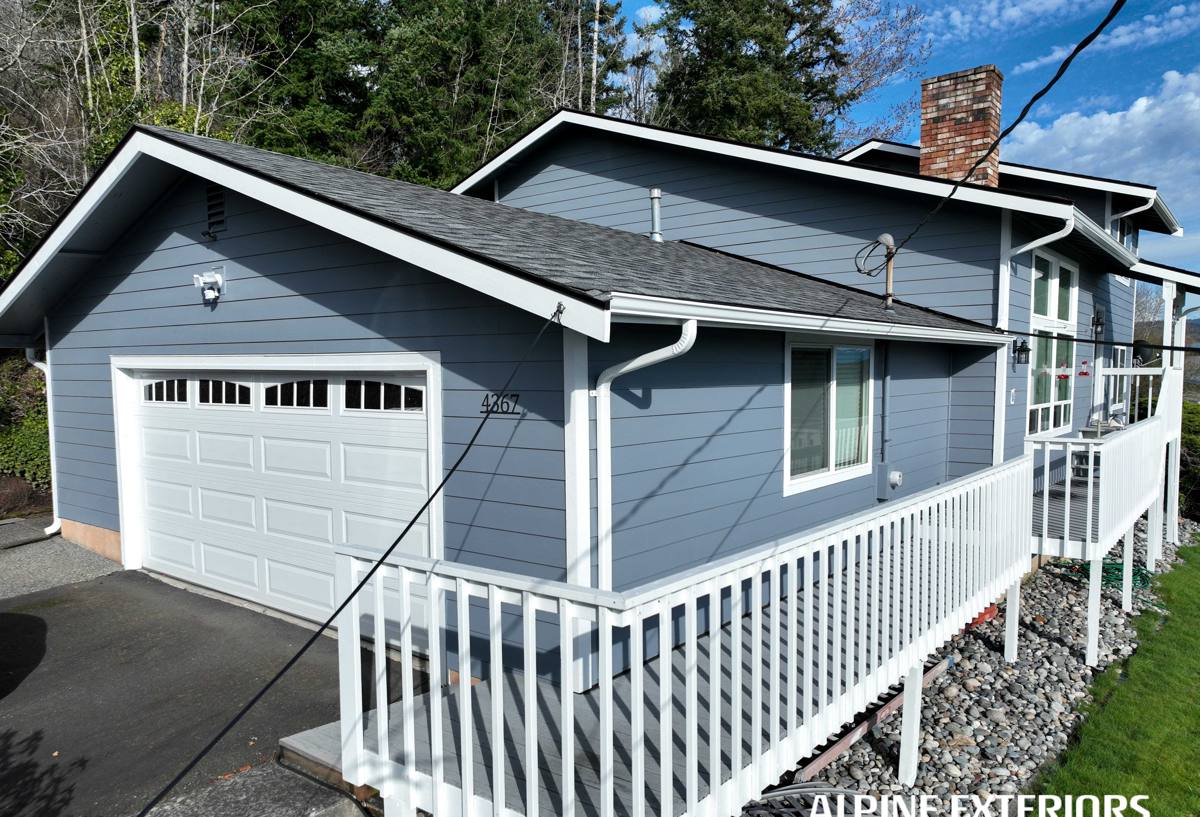
Signs Your Sudden Valley Roof Needs Attention
Roof problems in this climate rarely announce themselves with a dramatic leak on day one. More often, they show up as small, easy-to-dismiss signs first. Worth checking for:
- Dark streaks, green tint, or thick moss growth on shaded sections of the roof
- Granules collecting in gutters or at the base of downspouts
- Shingles that look cupped, curled, or lifted at the edges
- Soft or discolored spots on ceilings, especially after a stretch of heavy rain
- Daylight visible through the attic roof deck
- Rust staining or gaps around flashing at chimneys, vents, and skylights
- Sagging areas along the roofline or in valleys where debris tends to collect
If you're seeing any of these, it doesn't automatically mean a full replacement is coming. Most of the time, it means the roof needs targeted repair before a small issue becomes a bigger, more expensive one.
What a Correct Roof Repair Actually Involves
Diagnosing the Real Problem, Not Just the Symptom
Water travels. A stain on your ceiling might be directly under the source of the leak, or it might be several feet away, following a rafter or piece of sheathing before dripping down. A proper repair starts with tracing the water back to where it's actually entering — through cracked flashing, a failed pipe boot, wind-lifted shingles, or a seam that's opened up — rather than just patching the spot where the damage shows up indoors.
Matching Materials and Techniques to the Existing Roof
A repair should blend into the roof it's fixing, not stand out as an obvious patch. That means matching shingle type, color, and exposure as closely as possible, and using fasteners and underlayment appropriate to the existing system. Mismatched materials aren't just a cosmetic problem — they can create uneven wear patterns and new points where water can get in.
Flashing and Penetrations Get Extra Attention
The majority of roof leaks we find don't come from the field of the shingles at all — they come from the details: chimney flashing, skylight curbs, vent pipe boots, and valleys where two roof planes meet. In a climate with this much sustained rain, these are the areas that fail first, and they're the areas a rushed repair is most likely to overlook.
Why Moss and Shade Cause More Damage Here Than in Open Areas
Wooded, hillside lots like the ones common in Sudden Valley hold shade for a large part of the day, which slows down drying time after every rain. Moss and algae take advantage of that moisture and organic debris — falling needles, leaves, and pollen — settles into valleys and along shingle tabs, creating a spongy layer that keeps the roof deck damp far longer than it should be.
Over time, that trapped moisture works into the shingle mat, breaks down the adhesive seal between tabs, and can eventually reach the wood decking underneath. A roof on an open, sun-exposed lot might handle years of rain without issue; a similarly aged roof under heavy tree cover can develop soft spots and hidden rot well before its expected lifespan is up. Repair work in these conditions has to address the moisture source — not just reshingle over it.
Repair or Replace? How We Help You Decide
Not every roof problem calls for a new roof, and not every roof problem should be patched indefinitely either. We look at the age, condition, and extent of damage before recommending either path.
| Factor | Repair Usually Makes Sense | Replacement Is Likely the Better Call |
|---|---|---|
| Roof age | Under roughly two-thirds of expected lifespan | Nearing or past its expected service life |
| Damage extent | Localized — one section, valley, or penetration | Spread across multiple slopes or repeat leak points |
| Decking condition | Solid, dry sheathing under the damaged area | Soft, delaminated, or rotted decking found |
| Moss/algae history | Recent growth, roof otherwise sound | Long-term staining with granule loss underneath |
| Cost of repair vs. remaining life | Repair cost is a small fraction of replacement | Repeated repairs are adding up with no end in sight |
We'll walk you through where your roof falls on that spectrum honestly. If a repair will genuinely hold up, we say so. If a repair would just delay an inevitable replacement while costing you money along the way, we'll tell you that too.
Our Roof Repair Process
- On-site inspection. We get up on the roof, not just look from the ground, and check the attic side where accessible for signs of moisture or rot.
- Clear explanation of findings. You get a plain-language rundown of what's actually wrong, what's causing it, and what your realistic options are.
- Written estimate. No vague verbal quotes — you see the scope of work and cost before anything starts.
- Repair work. This includes removing and replacing damaged materials, correcting flashing and penetrations, and clearing moss or debris that's contributing to the problem.
- Final check and cleanup. We confirm the repair is sound, clear the site of debris and old materials, and leave the area the way we found it.
What Roof Repair Typically Costs — and What Changes the Price
Repair costs vary a lot depending on scope, so we won't quote a number without seeing the roof. What we can tell you is which factors move the price up or down:
| Cost Factor | Why It Matters |
|---|---|
| Roof pitch and access | Steeper slopes and difficult access take more time and safety setup |
| Number of penetrations involved | Each vent, chimney, or skylight needing new flashing adds labor and materials |
| Extent of decking damage | Rotted or soft sheathing has to be replaced before new roofing goes down |
| Material match | Matching an older or discontinued shingle profile can take more sourcing time |
| Moss/debris removal needed | Heavy buildup requires careful clearing before the actual repair can start |
The honest range for most straightforward repairs is a few hundred dollars up to a few thousand for larger sections with decking replacement. Anything beyond that scope usually means it's worth comparing repair cost against replacement.
Why It Matters That We Already Work in Sudden Valley
A crew that's worked this neighborhood before isn't guessing at what your roof is dealing with. We know that shaded, tree-covered lots hold moisture longer, that hillside terrain and tighter driveways can affect how a job gets staged, and that a roof here needs different attention than one out in open, unshaded areas of Ferndale or elsewhere in Whatcom County. That familiarity means fewer surprises during the job and a repair that's built for the conditions your roof is actually facing, not a one-size-fits-all patch.
It also means we're not learning on your roof. We've seen how moss recurs in the same valleys year after year if it isn't addressed properly, and we know which flashing details tend to fail first in this kind of sustained rain. That experience shows up in the quality of the repair, not just the speed of the quote.
Keeping a Repaired Roof in Good Shape Between Visits
A repair holds up longer when the roof gets basic upkeep in between. A few things worth doing on your own, or having us handle during a service visit:
- Keep gutters and downspouts clear so water isn't backing up under the roof edge
- Remove leaves, needles, and debris from valleys and behind chimneys before winter rains set in
- Address new moss growth early rather than letting it establish over a full season
- Have penetrations and flashing checked every couple of years, even if there's no visible leak
- Trim back overhanging branches that keep sections of the roof shaded and slow to dry
None of this replaces a professional inspection, but it goes a long way toward protecting the repair work and catching new problems before they turn into ceiling stains.
If you're dealing with a leak, moss buildup, or a roof that just doesn't look right anymore, we're glad to take a look. Fill out the form below for a free, no-pressure estimate — we'll give you a straight answer on what's going on and what it'll take to fix it right.