 Ferndale
 Deck Repair Built for Sudden Valley's Conditions
A deck in Sudden Valley works harder than a deck in a drier climate, and it shows in different ways than most homeowners expect. It's rarely one dramatic failure — it's a slow accumulation of moisture, shade, and freeze-thaw cycles that turns a solid structure into a soft, spongy, or wobbly one over the course of several winters. We repair decks in this area regularly, and the patterns are consistent enough that we can usually tell you what we'll find before we ever pull a board.
This page is specifically about deck repair — not new deck builds, and not a general overview of every siding or exterior service we offer. If your deck is aging, sagging, staining, or just doesn't feel as solid as it used to, this is what a correct repair looks like and how we approach it in Sudden Valley specifically.
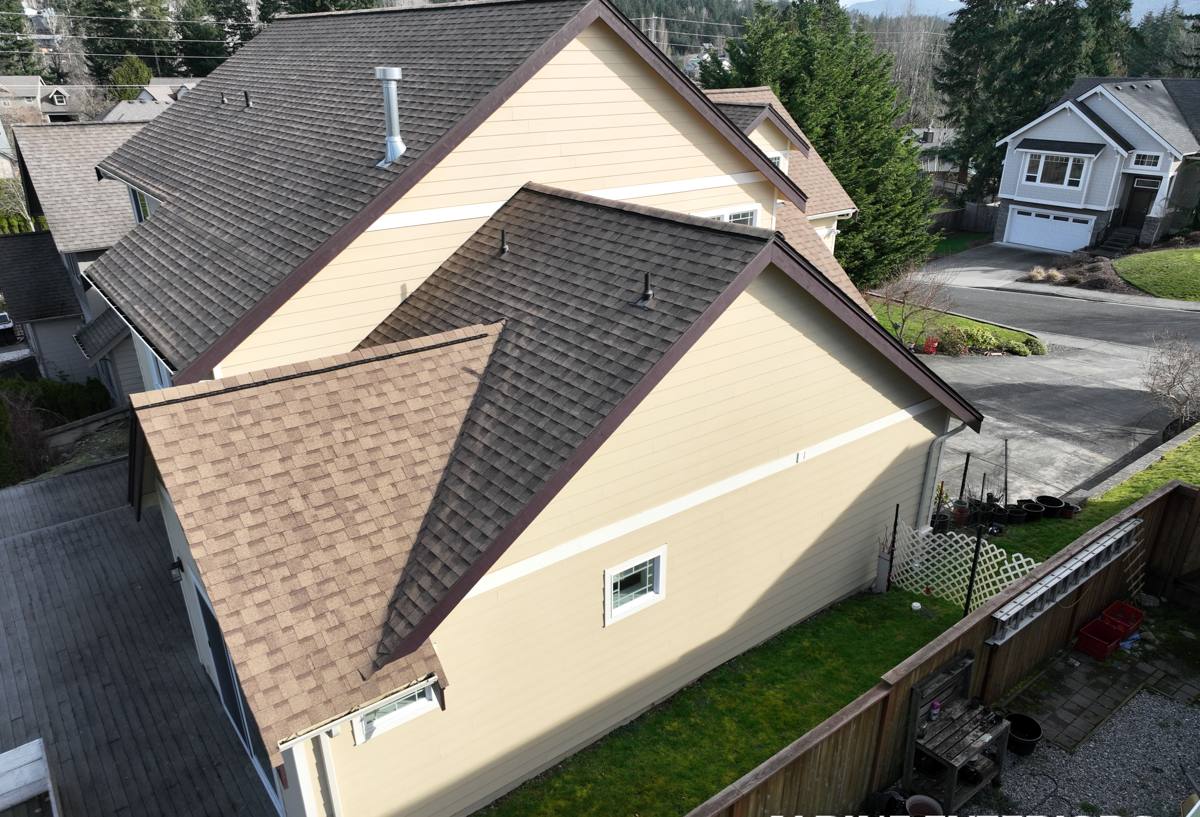
What Whatcom County's Climate Does to a Deck Over Time
Ferndale and the surrounding parts of Whatcom County sit under a long, wet marine-influenced weather pattern for much of the year. Driving rain, extended stretches of overcast humidity, and a moss season that can run from fall through spring all put steady stress on exterior wood structures. Add in salt-tinged marine air that moves through this part of the county, and you get a slow but relentless corrosion factor working on fasteners, brackets, and any exposed metal hardware — even on decks that never see standing water.
Sudden Valley in particular tends to have more tree cover and shaded exposure than open, sun-baked properties closer to town. Shade keeps a deck's surface damp longer after every rain, which is exactly the condition moss, algae, and wood rot need to establish themselves. A deck that gets full sun for a few hours a day dries out and resets; a deck that stays shaded and damp doesn't get that reset, and the damage compounds season after season.
The Three Things That Do the Most Damage
- Trapped moisture — between boards, under ledger boards, and anywhere debris collects and holds water against wood
- Corroding fasteners — old nails, non-coated screws, and undersized brackets that weaken structural connections from the inside out
- Moss and organic growth — not just cosmetic; moss holds moisture directly against the decking surface and accelerates rot underneath it
Signs Your Sudden Valley Deck Needs Repair, Not Replacement
Most decks we're called out for don't need to be torn out and rebuilt. They need targeted repair to the areas that actually failed, while the sound structural framing is left alone. Knowing the difference matters, because full replacement costs several times what a proper repair does — but only if the underlying frame is still sound.
- Boards that feel spongy, bouncy, or soft when you walk across them
- Visible gaps, cupping, or splitting in individual deck boards
- Rust streaks running down from screws, nails, or metal brackets
- A railing or post that wiggles more than it used to
- Green or black staining that keeps coming back after cleaning
- A ledger board (where the deck attaches to the house) that shows dark staining, gaps, or soft wood when pressed
- Stairs that feel less solid underfoot than the rest of the deck
If you're only seeing one or two of these signs isolated to a small area, that's usually a repair. If the softness or staining is widespread across most of the deck surface and into the framing below, that's a conversation about whether repair still makes sense — one we'll have honestly with you before any work starts.
What a Correct Deck Repair Actually Involves
A repair that only replaces what's visible on the surface without checking what's underneath tends to fail again within a couple of years. We start every repair by getting underneath the deck, not just walking across the top of it.
Structural Inspection First
Before replacing a single board, we check the framing: joists, beams, posts, and — critically — the ledger board connection to the house. The ledger is where most serious structural failures start, because it's the hardest area to inspect from the surface and the most exposed to water running off the house. We also check post bases and any concrete footings for movement or rot at the base, which is a common failure point in older or original-build decks.
Fastener and Hardware Replacement
Corroded fasteners get replaced with corrosion-resistant, code-rated hardware — not just matched to what was there before. A lot of older Whatcom County decks were built with fasteners that weren't rated for the moisture exposure they've actually seen over the years, and that's often the real root cause of a "surprise" repair.
Board and Framing Replacement
Damaged decking boards, joists, or beams are cut back to solid, sound wood and replaced — not patched over. Partial patches on rotted framing members are a shortcut that fails; if a joist is compromised, it gets sistered or replaced properly.
Drainage and Airflow Correction
Where trapped moisture caused the original damage, we address the cause, not just the symptom. That can mean adjusting board spacing, clearing blocked airflow under the deck, or correcting flashing at the ledger so water sheds away from the house instead of pooling against it.
Repair vs. Replacement: What Actually Drives the Cost
| Factor | Leans Toward Repair | Leans Toward Replacement |
|---|---|---|
| Framing condition | Joists and beams are sound, only decking is worn | Multiple joists or the ledger board are soft or rotted |
| Age of structure | Under 15-20 years, built to a reasonable standard | Original build is decades old or was undersized to begin with |
| Extent of damage | Localized to specific boards, stairs, or a railing section | Widespread across most of the deck surface |
| Fastener condition | Isolated corrosion, easily replaced | Systemic corrosion throughout the structure |
| Code compliance | Meets current railing and structural code | Falls short on railing height, spacing, or footing depth |
We walk through this with you in person rather than guessing from a photo. Two decks that look similar from the top can have completely different stories once we're underneath them.
Our Process From Estimate to Finished Deck
- On-site inspection. We check the deck from above and below, including the ledger connection, post bases, and any areas you've flagged as concerning.
- Honest scope and estimate. You get a clear breakdown of what actually needs repair, what's still sound, and a realistic cost range — with repair and replacement both explained if the deck is borderline.
- Scheduling around the weather. Given how much rain this area gets, we plan structural work for windows where we can keep exposed framing dry, and sequence the job to minimize how long anything is left open.
- Repair work. Structural fixes first — framing, fasteners, and ledger — followed by decking, railings, and stairs.
- Final walkthrough. We check the repaired areas with you, point out any maintenance you should keep an eye on, and confirm everything feels solid before we consider the job done.
Materials We Use and Why
For structural framing, we use pressure-treated lumber rated for ground contact where it's in contact with soil or persistent moisture, matched with corrosion-resistant fasteners rated for treated wood contact — mismatched hardware is a common cause of premature fastener failure in this climate. For decking surfaces, the right choice depends on your existing deck, your budget, and how much upkeep you want going forward.
Wood decking is more affordable up front and repairs easily board by board, but it needs regular sealing or staining to hold up against this area's rain and moss exposure — skip that maintenance for a couple of seasons and you're back to rot. Composite decking costs more initially and doesn't need staining, but it has its own installation sensitivities: it needs correct spacing and fastening to manage moisture and thermal movement, and it's not something we treat as maintenance-free, just lower-maintenance. We'll walk you through the honest trade-offs for your specific deck rather than pushing one material as a universal answer.
Why a Crew That Already Works Sudden Valley Matters
Deck repair in this specific area isn't the same job as deck repair somewhere dry and open. A crew that's worked Sudden Valley knows to expect shaded, moisture-heavy conditions underneath the deck even when the surface looks fine, and knows which failure points show up first in homes built to this area's typical original construction standards. That means fewer surprises mid-project and a more accurate estimate from the start — we're not guessing at what Whatcom County moisture does to a structure over a decade or two, we're seeing it on jobs regularly.
Being a Ferndale-based crew also means we're not driving in from out of the area for a callback, a follow-up question, or a warranty concern. If something needs a second look after the work is done, we're close by.
Keeping Your Deck in Good Shape After Repair
A repaired deck lasts a lot longer with a little regular attention — and in this climate, that attention matters more than in drier regions.
- Sweep off leaves and debris regularly, especially in fall and through the wet season, so moisture and organic matter don't sit trapped between boards
- Keep gutters and downspouts clear so runoff isn't dumping extra water directly onto or under the deck
- Check the ledger board area once a year for staining or softness, since it's the hardest spot to see and the most exposed to house runoff
- Re-seal or re-stain wood decking on the manufacturer's recommended schedule rather than waiting until it visibly needs it
- Treat moss and algae growth early rather than letting it establish, since it's easier to remove before it's had a season to take hold
- Have any wobble, soft spot, or rust staining checked out promptly rather than waiting for it to spread
If your deck is showing any of these signs, or it's just been a while since anyone looked underneath it, we're happy to come take a look. We offer free, no-pressure estimates for Sudden Valley homeowners — you'll get an honest read on whether you're looking at a repair or something bigger, with no obligation either way. Use the form below to get started.