 Ferndale
 Sudden Valley's Climate Is Harder on Siding Than It Looks
Sudden Valley sits in one of the wetter, shadier corners of Whatcom County, and that combination is tougher on exterior siding than most homeowners realize. The tree cover that makes the neighborhood attractive also keeps siding damp longer after every rain, since sun and wind don't reach shaded walls the way they do on an open lot. Add in the salt-laden air that moves through this part of Washington off the nearby coastline, and you have three separate stresses working on the same wall at the same time: constant moisture, salt exposure that accelerates corrosion on fasteners and trim, and a moss season that can run from fall through spring.
None of that is a problem for siding by itself. It becomes a problem when a wall assembly traps moisture instead of shedding it, or when a product wasn't designed to handle repeated wet-dry cycling in the first place. That's the lens we use on every Sudden Valley project — not just what siding looks like new, but what it's doing on the wall in year eight, when the moss has had several seasons to establish and the fasteners have been through hundreds of damp mornings.
Why We Install James Hardie and Nothing Else
We install James Hardie fiber cement siding exclusively. We don't install vinyl, LP SmartSide, Cemplank, Allura, or unfinished wood species like cedar or primed spruce, and that's a deliberate professional standard, not a sales pitch. Each of those alternatives has genuine strengths — vinyl is inexpensive, engineered wood is easy to work with, cedar has a look some homeowners love — but each also carries a trade-off that shows up specifically in a climate like this one: moisture absorption, seam vulnerability, a maintenance schedule that gets harder to keep up with once moss and mildew are established, or a warranty structure that doesn't hold up the same way over decades of Pacific Northwest weather.
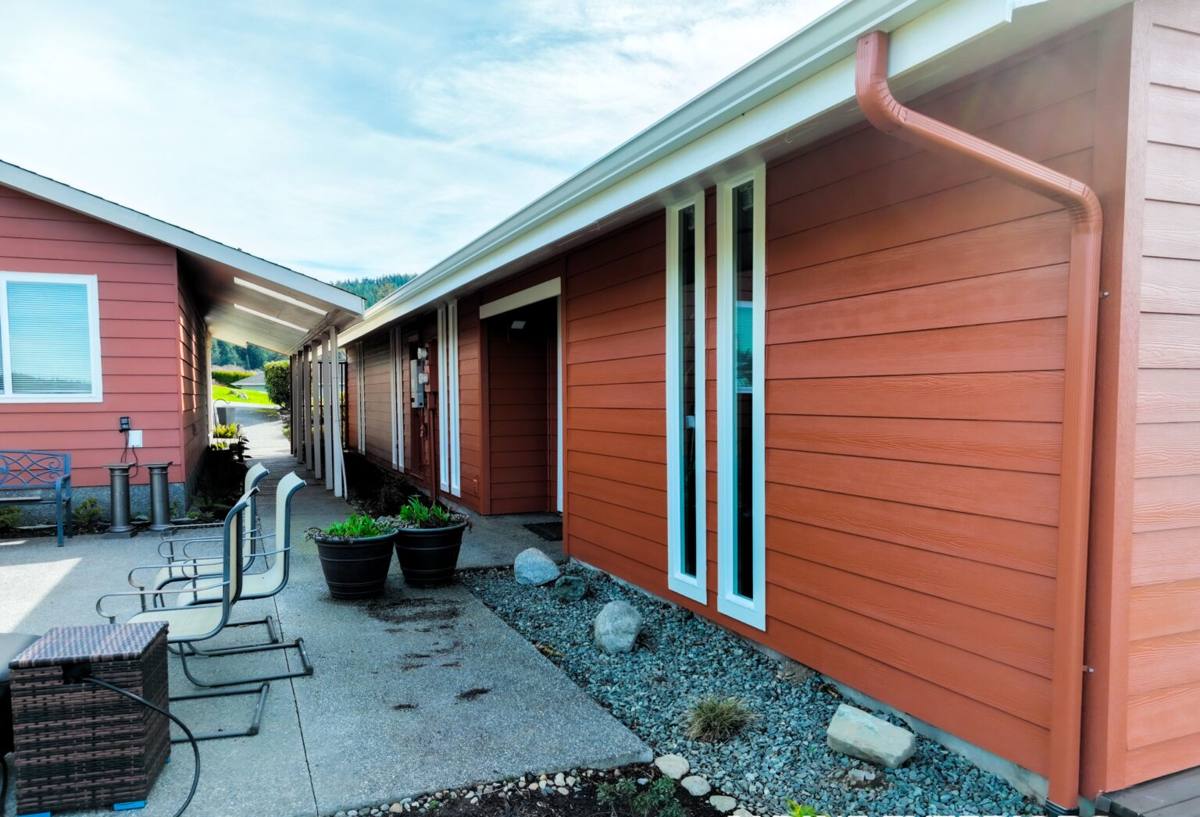
James Hardie's fiber cement is non-combustible, doesn't swell or delaminate the way wood-based products can when water gets behind them, and is engineered specifically for high-moisture regions through its HZ5 product line, which the Pacific Northwest falls under. The factory-applied ColorPlus finish is baked on in controlled conditions rather than brushed on-site, which gives it better long-term adhesion and fade resistance than field-applied paint — a meaningful advantage in a spot where siding stays damp for extended stretches and shaded surfaces are exactly where moss and algae like to take hold.
What HZ5 Engineering Actually Means
James Hardie makes region-specific formulations of its siding, and the HZ5 line is built for wetter, cooler climates like ours. It's not a marketing label — it reflects a different moisture-management engineering target than the products Hardie sells in the Southwest or the Southeast. For a Sudden Valley home surrounded by trees and regularly exposed to driving rain, that regional engineering is part of why the product performs the way it does rather than gradually absorbing water at the edges the way lesser fiber-cement or wood-composite products can.
What a Correct Installation Involves
Fiber cement siding is only as good as the wall assembly behind it. A rushed or generic install can leave a good product performing like a bad one within a few wet seasons. On every job we treat the water-resistive barrier, flashing, and fastening details as the actual work — the siding itself is almost the easy part.
Moisture Management Behind the Panel
Before a single piece of Hardie goes up, the sheathing gets inspected for existing rot or soft spots, especially on shaded, north-facing walls where past moisture problems tend to hide. A code-compliant weather-resistive barrier goes on correctly lapped, with proper flashing at every window, door, and horizontal trim transition — including kick-out flashing where a roofline meets a wall, a detail that's easy to skip and is one of the most common sources of hidden rot in older homes in wet regions like this one. Siding also needs proper clearance from grade, decks, and roof lines so it isn't sitting in standing water or snowmelt runoff.
Fastening, Gaps, and Caulking
James Hardie publishes specific fastener types, spacing, and penetration requirements for HZ5 installations, and those specs exist for a reason — under-driven or over-driven nails, or the wrong fastener material, are a common cause of premature corrosion staining in salt-air environments. Panels also need the manufacturer-specified expansion gaps at butt joints and trim, and caulking should only go where Hardie's instructions call for it. A common mistake we see on other companies' work is sealing every seam solid in an attempt to "weatherproof" the house — that traps moisture behind the panel instead of letting it drain and dry, which is the opposite of what you want in a climate that stays wet this much of the year.
Comparing Siding Materials in a Wet, Shaded Climate
Homeowners planning a re-side in Sudden Valley are usually weighing more than one material. Here's an honest comparison of how the common options actually behave under the conditions this neighborhood sees.
| Material | Moisture Behavior | Fire Resistance | Upkeep in Shade/Moss Areas | Typical Lifespan |
|---|---|---|---|---|
| Cedar / primed wood | Absorbs water; prone to swelling, cupping, and rot without diligent upkeep | Combustible | Needs regular refinishing; moss and mildew take hold quickly in shade | 15-25 years with consistent maintenance |
| Vinyl | Doesn't rot, but seams and J-channels can let moisture behind the panel undetected | Combustible, can deform in heat | Low upkeep but moss and algae staining are hard to fully remove from textured finishes | 20-30 years, often fading or warping first |
| LP SmartSide (engineered wood) | Treated to resist moisture, but any cut or damaged edge exposes vulnerable wood substrate | Combustible | Edge sealing and touch-up paint are ongoing maintenance items | 25-30 years with proper edge maintenance |
| James Hardie fiber cement | Engineered for HZ5 moisture conditions; doesn't rot or swell | Non-combustible | Factory finish resists moss adhesion better; occasional gentle rinse is typically enough | 30+ years, backed by a long transferable warranty |
Our Process on a Sudden Valley Project
- On-site assessment of the existing siding, sheathing condition, and shaded or moisture-prone wall sections specific to the lot and tree cover
- Tear-off of old siding and inspection of the sheathing underneath for hidden rot before anything new goes on
- Installation of a code-compliant weather-resistive barrier with correct flashing at every penetration and transition
- James Hardie panel, plank, or trim installation to manufacturer HZ5 fastening and gap specifications
- Final walkthrough covering caulking, trim details, and touch-up before cleanup
We don't skip the tear-off inspection step even when it slows a project down. On a home that's had years of trapped moisture behind old siding, finding and correcting soft sheathing before the new Hardie goes on is the difference between a 30-year installation and one that has problems again in five.
Living With Moss, Rain, and Salt Air After Installation
Correctly installed James Hardie siding is low-maintenance, not no-maintenance. A short seasonal routine keeps it performing the way it's designed to for decades in this climate:
- Rinse shaded, north-facing walls with a garden hose once or twice a year to discourage moss and algae buildup before it establishes
- Keep gutters and downspouts clear so overflow doesn't run down the siding face during heavy rain
- Trim back tree and shrub branches that keep siding in constant shade or brush against the surface
- Inspect caulking at windows, doors, and trim annually and have gaps re-sealed before winter
- Avoid pressure washing directly into seams or at close range — a garden hose and soft brush are enough for factory-finished Hardie siding
Why Local Experience in Sudden Valley Matters
A crew that already works this neighborhood knows things a generic install team doesn't: which elevations take the worst of the wind-driven rain, which walls stay shaded most of the year and need extra attention to moisture detailing, and how tree cover and lot access affect scheduling and equipment staging. That local familiarity also extends to permitting and inspection expectations for Whatcom County and the Ferndale area, so there are no surprises mid-project.
It also means faster turnaround on materials and trim, since we're not learning a new neighborhood's quirks on the homeowner's dime. When something about a specific lot — heavy shade, a lake-adjacent moisture pattern, difficult access for a delivery truck — needs a judgment call, that call is informed by having made it before on a similar home nearby.
What Affects Cost on a Sudden Valley Hardie Project
Every home is different, but the same handful of factors tend to drive cost up or down on projects in this area:
| Factor | Why It Matters |
|---|---|
| Condition of existing sheathing | Hidden rot from years of trapped moisture adds repair work before new siding can go on |
| Home size and trim complexity | More corners, window trim, and architectural detail mean more labor and material cutting |
| Site access | Tree cover, slopes, and tighter lots common in this area can affect staging and equipment time |
| Product line and profile chosen | Lap plank, panel, and shingle-style Hardie products carry different material and labor costs |
| Color and finish selection | Standard ColorPlus colors versus custom field-painted finishes affect both cost and long-term fade performance |
If you're weighing a re-side in Sudden Valley and want a straight answer on what your home actually needs, we're happy to take a look. The form below gets you a free, no-pressure estimate — no obligation, just an honest read on your siding's condition and what correct James Hardie installation would look like on your house.