 Ferndale
 Why Decks in the Sudden Valley Area Wear Out Faster Than You'd Expect
A deck in this part of Whatcom County doesn't fail because the wood was bad or the builder was careless. It fails because of what it sits in every day: damp marine air carrying salt, long stretches of driving rain off the water, and a moss and algae season that can run from fall through spring. None of these are dramatic events. They're slow, steady pressure that adds up year after year until a deck that looked fine last summer suddenly feels soft underfoot or shows rot at the ledger board.
Salt-laden air corrodes fasteners and metal connectors faster than it would inland. Once a nail, screw, or joist hanger starts rusting, it loses grip strength long before the rust is visible from the surface. Driving rain doesn't just wet the top of a deck board — wind-driven moisture gets pushed sideways into end grain, gaps between boards, and the ledger connection where the deck meets the house, which is the single most common place we find hidden rot. And moss doesn't just look bad. It holds moisture against the wood surface for weeks at a time, turning a deck into a slow-motion sponge even on days it isn't actively raining.
None of this means decks in Sudden Valley can't last. It means they need to be built and maintained with this specific climate in mind, not treated like a deck built somewhere dry and mild.
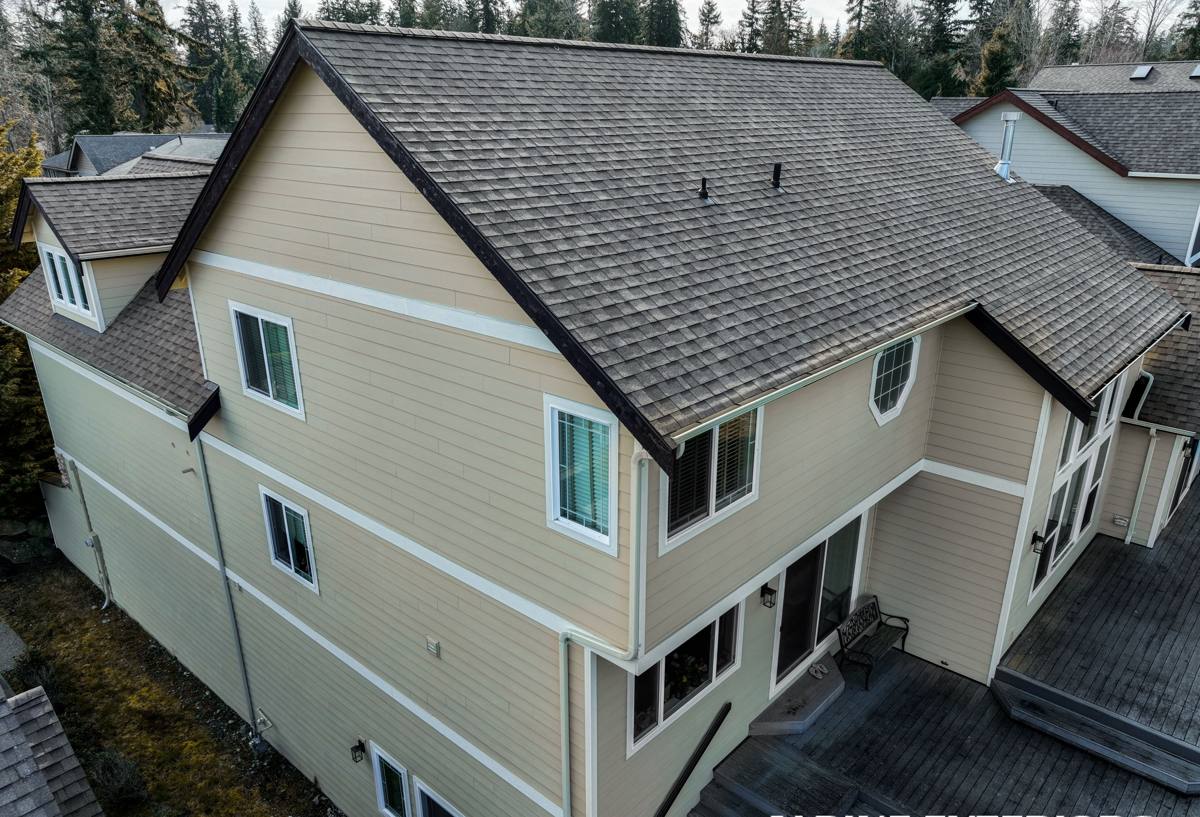
Signs Your Deck Needs Replacement, Not Just Repair
Homeowners often ask us to "just fix a board or two" and that's sometimes the right call. But there's a point where patching stops being a real fix and starts being a delay. Here's how we tell the difference on a typical inspection.
- Soft or spongy spots when you walk across the deck, especially near the house or stair landings
- Visible gaps, cracking, or splintering at the ledger board where the deck attaches to the house
- Rust streaks running down from screws, nails, or metal joist hangers
- Posts that feel loose or wobble when pushed, which often points to a failing or undersized footing
- Persistent moss or dark staining that comes back within weeks of cleaning
- A deck more than 15-20 years old built to older code, with no visible flashing at the house connection
One or two of these on their own might mean a repair. Several at once, or any structural movement at the posts or ledger, usually means the frame itself has been compromised and a full replacement is the more honest recommendation.
What a Correct Deck Replacement Actually Involves
The Frame Is What Actually Matters
Decking boards get all the attention because they're what you see, but the framing underneath — ledger, beams, joists, posts, and footings — is what determines whether a deck lasts 10 years or 30. A replacement done right starts by pulling the old ledger board completely and installing proper flashing between the deck and the house wall. This single detail is responsible for more deck failures in this climate than almost anything else, because a poorly flashed ledger lets water track directly into the house's rim joist, not just the deck frame.
Joist hangers, structural screws, and any fasteners in contact with pressure-treated lumber need to be rated for that contact — untreated or standard-grade metal corrodes quickly next to treated wood, and even faster with salt air in the mix. Footings get checked or replaced to current frost-depth and bearing requirements, not just reused because they're "probably fine."
Decking Material Choices
Once the frame is solid, the decking surface itself is a tradeoff between upfront cost, appearance, and how much upkeep you're willing to do. There's no single "best" material — it depends on your budget and how hands-on you want to be with maintenance.
| Material | Typical Lifespan Here | Maintenance | Notes for This Climate |
|---|---|---|---|
| Pressure-treated wood | 10-15 years | Annual cleaning, re-sealing every 1-2 years | Most affordable; needs consistent upkeep to resist moss and moisture absorption |
| Cedar | 15-20 years | Cleaning, periodic oiling/sealing | Naturally rot-resistant but still needs sealing against driving rain and moss |
| Composite decking | 25-30 years | Occasional washing, no sealing | Resists moisture and moss buildup well; higher upfront cost |
| PVC/capped polymer | 25-30+ years | Occasional washing | Fully moisture-resistant surface; best for heavy shade and persistent moss areas |
We don't push one material on every job. A sun-exposed deck that dries out between rains can do fine with well-maintained wood. A shaded, moss-prone spot near trees or a slope is usually a better fit for composite or PVC, simply because it stays wetter longer no matter how well it's built.
How We Handle a Deck Replacement, Start to Finish
- On-site assessment — we check the ledger connection, posts, footings, and framing before ever talking about decking material, because the frame determines the real scope of work
- Honest scope and estimate — you get a clear breakdown of what's structural (non-negotiable) versus what's a choice (material, railing style, layout)
- Demo and disposal — full removal of the old deck surface and any compromised framing, hauled off the site
- Framing rebuild — new or reinforced ledger with proper flashing, corrosion-resistant fasteners, and footings brought up to current standards
- Decking installation — your chosen material installed with attention to drainage gaps and airflow underneath, which matters more here than in a drier climate
- Railings and finish details — code-compliant railing height and baluster spacing, stairs, and any trim work
- Final walkthrough — we go over care and maintenance specific to the material you chose before we consider the job done
Permits and Code Considerations
Most deck replacements that involve rebuilding the structure — not just swapping boards on an existing sound frame — require a permit and inspection in Whatcom County. This isn't paperwork for its own sake; it's what confirms the ledger flashing, footing depth, and railing height actually meet current code, which matters both for safety and for resale down the road. We handle the permit process as part of the job rather than leaving it for the homeowner to sort out separately.
Maintenance That Actually Extends Deck Life Here
The material you choose only gets you part of the way. How the deck is cared for after installation matters just as much in an area with this much moss and rain.
- Sweep debris and fallen leaves off the deck regularly — trapped organic matter holds moisture and feeds moss growth
- Keep gutters and downspouts clear so rain isn't dumping directly onto or near the deck structure
- Wash off moss and algae as soon as it appears rather than letting it establish through a full wet season
- For wood decks, re-seal on the schedule recommended for the product — skipping a year is often when hidden rot gets its start
- Check the area where the deck meets the house once or twice a year for any staining, gaps, or soft wood
- Keep planters and furniture feet off direct wood contact where possible, or move them periodically, since standing contact points trap moisture
What Affects the Cost of a Deck Replacement
Every deck is different, so exact pricing depends on size, material, and site conditions. These are the main factors that move the number up or down.
| Factor | Why It Matters |
|---|---|
| Deck size and layout | More square footage and multi-level designs mean more framing, decking, and labor |
| Decking material | Composite and PVC cost more upfront than wood but need far less ongoing maintenance |
| Ledger and framing condition | Rotted framing or a poorly flashed ledger adds rebuild scope beyond the visible surface |
| Footing and post condition | Undersized or shifted footings may need to be replaced to meet current code |
| Railing style | Basic wood railing costs less than metal cable, glass panel, or composite railing systems |
| Site access | Decks on slopes, over water features, or with limited equipment access take more labor to demo and rebuild |
We give straightforward, itemized estimates so you can see what's driving the cost — not a single lump number with no explanation behind it.
Why It Matters Hiring a Crew That Already Works This Area
A deck built to a generic spec sheet can look fine on day one and still fail early in a climate like this. Crews who regularly work Sudden Valley and the broader Ferndale area already know which details can't be skipped — the ledger flashing, the corrosion-resistant fasteners, the drainage gap spacing that keeps moisture from pooling under composite decking. That familiarity comes from working this specific combination of salt air, rain patterns, and moss exposure repeatedly, not from a one-size-fits-all installation approach.
It also means fewer surprises during the permit and inspection process, since local code requirements and typical site conditions — soil, drainage, slope — are already familiar territory rather than something being figured out for the first time on your job.
Get a Straight Answer on Your Deck
If your deck is showing soft spots, rust stains, persistent moss, or is simply old enough that you're wondering whether it's still safe, we're happy to take a look. We'll give you an honest read on whether you're looking at a repair or a full replacement, walk through material options that make sense for your site, and put together a clear, no-pressure estimate — no obligation to move forward. Use the form below to get started.