 Ferndale
 Why Sudden Valley Roofs Age Differently
Sudden Valley sits in a part of Whatcom County where tree cover, lake moisture, and weather coming off the water combine to put more stress on a roof than most homeowners realize. Salt-laden air moves inland with the driving rain that's normal for this region, and it settles into fastener heads, flashing seams, and any spot where a roof system has started to fail. Add in the tree canopy that gives so many Sudden Valley lots their privacy, and you get roofs that stay shaded and damp for long stretches of the year. That combination is exactly what shortens the life of a roof faster than the manufacturer's warranty paperwork ever accounts for.
None of this means a roof in Sudden Valley is doomed early. It means the replacement has to be built for these specific conditions, not installed the same way you'd do it on an open, sunny lot on the other side of the county. That's the difference between a roof that looks fine for a few years and one that actually holds up through another decade or two of Whatcom County winters.
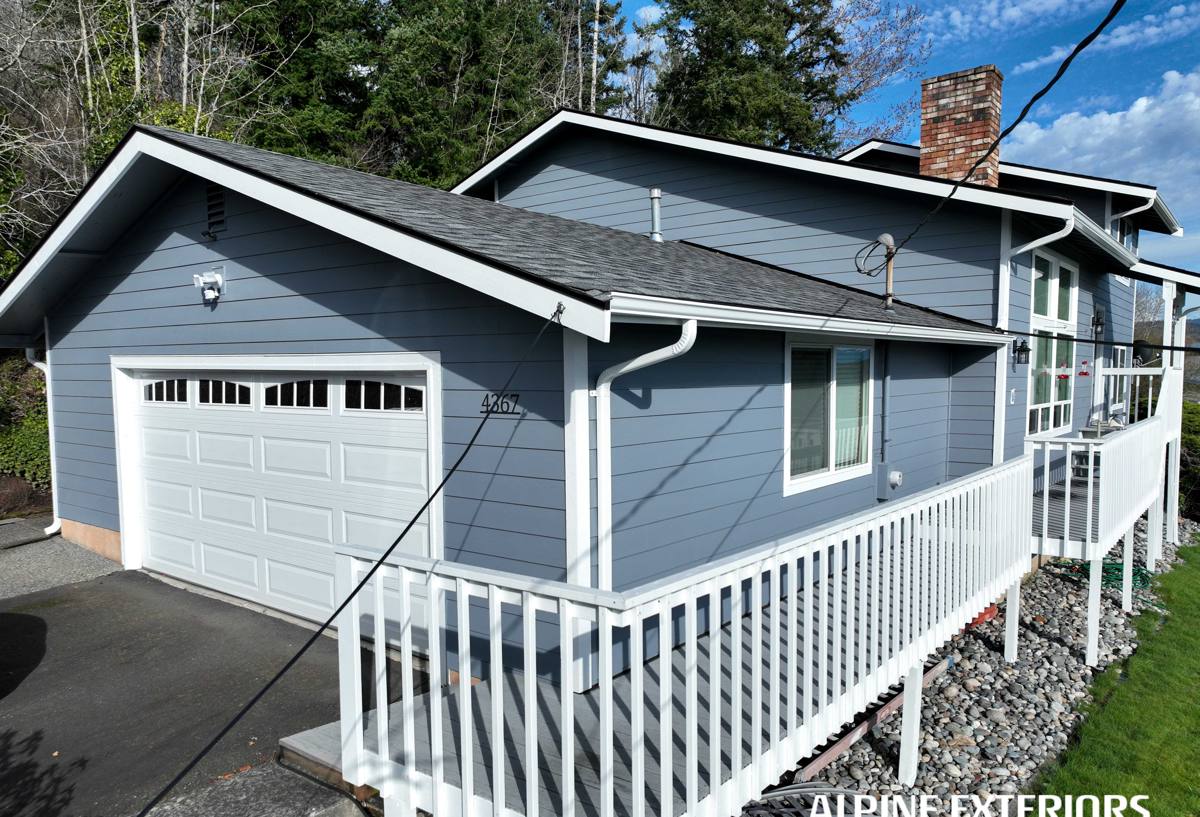
How to Tell a Sudden Valley Roof Needs Replacing, Not Just Repair
Repairs make sense when a roof has isolated damage on an otherwise sound system. Replacement becomes the honest recommendation once the underlying materials — decking, underlayment, flashing — have aged out together, which is common on shaded, moss-prone roofs where moisture has had years to work into the layers you can't see from the ground.
- Granule loss heavy enough that you can see bare asphalt on multiple slopes, not just one weathered patch
- Moss or algae growth that keeps coming back within months of cleaning, especially on north-facing or tree-shaded sections
- Soft spots or noticeable sagging when walked, which usually means the decking underneath has taken on moisture
- Repeated leaks in different spots each winter rather than one recurring trouble area
- Shingles curling, cracking, or lifting at the edges — a sign the material has reached the end of its service life, not just cosmetic wear
If a roof is showing two or more of these at once, a patch is usually a short-term fix that costs money now and again in a year or two. A straight answer about replacement versus repair is part of doing this job honestly.
What a Correct Roof Replacement Actually Involves
Full Tear-Off and Decking Inspection
A correct replacement starts with removing the existing roofing down to the decking, not layering new material over old. That's the only way to actually see what the roof is dealing with underneath — soft or delaminated plywood, rusted fasteners, or framing that's been quietly absorbing moisture. Any decking that doesn't pass inspection gets replaced before anything new goes down.
Underlayment and Ice-and-Water Protection
In a climate that sees as much sustained rain as this part of Washington does, underlayment is doing more work than most homeowners assume. We use synthetic underlayment across the field and self-adhering ice-and-water shield at eaves, valleys, and around penetrations — the spots where wind-driven rain is most likely to find a way in.
Flashing and Ventilation
Flashing around chimneys, skylights, and wall intersections is one of the most common failure points on older roofs, and it's frequently reused or patched instead of properly replaced. We install new flashing as part of every replacement. Ventilation matters just as much — a roof that can't breathe traps moisture in the attic, which speeds up decking rot and can encourage moss growth from underneath as well as above.
Moss-Resistant Details
For roofs on shaded, tree-covered lots, we typically install zinc or copper control strips near the ridge. As rain washes over them, trace metal ions inhibit moss and algae regrowth on the slopes below — a passive, low-maintenance layer of protection that's well suited to a lot that doesn't get much direct sun.
Choosing the Right Roofing Material for a Wooded, Wet Lot
There isn't one "best" material for every Sudden Valley home — it depends on the roof's pitch, how much shade it gets, and what you want to spend on both installation and long-term upkeep. Here's how the common options actually compare in this climate.
| Material | How It Handles Moss & Moisture | Typical Lifespan | Trade-Offs |
|---|---|---|---|
| Architectural asphalt shingle | Good when paired with proper ventilation and zinc strips; algae-resistant granule options are available from major manufacturers | 25-30 years | Most affordable upfront; needs periodic moss checks on shaded slopes |
| Standing-seam metal | Excellent — smooth surface sheds water fast and gives moss little to grip | 40-50+ years | Higher upfront cost; requires an experienced installer for a clean, leak-free finish |
| Synthetic/composite shake | Very good moisture resistance without the maintenance burden of real wood shakes | 30-40 years | Mid-to-upper cost range; appearance varies by manufacturer |
We don't install traditional wood shake or shingle roofing as a standard offering. In a climate this wet and shaded, wood roofing demands a level of ongoing maintenance and moisture management that most homeowners don't want to sign up for, and the failure points tend to show up sooner than with the alternatives above. Composite shake products give you a similar look without that maintenance burden.
Cost Factors Specific to Sudden Valley Homes
Every estimate is specific to the roof in front of us, but a few things consistently move the number up or down on jobs in this community:
- Pitch and roof complexity — steeper slopes and multiple valleys or dormers take more labor and safety setup than a simple gable roof
- Tree clearance — lots with heavy canopy sometimes need limbs trimmed back before work starts, which affects both moss exposure going forward and crew access during the job
- Decking condition — moisture damage found during tear-off means plywood replacement, which isn't always visible from a roof inspection alone
- Material choice — asphalt, metal, and composite shake sit at different price points, as shown above
- Access and staging — driveway length, slope, and where a dumpster or material delivery can realistically sit on a wooded lot
We walk through all of these during the estimate so there aren't surprises once the tear-off starts.
Our Roof Replacement Process, Start to Finish
- On-site inspection and a written estimate that spells out material, scope, and price
- Scheduling that accounts for weather windows — we don't tear off a roof ahead of a forecast that won't let us get it dried in
- Property protection: tarps and plywood over landscaping, siding, and windows before work begins
- Full tear-off and decking inspection, with any repairs approved before we cover them up
- Underlayment, ice-and-water shield, new flashing, and ventilation components installed
- New roofing material installed per manufacturer specifications
- Full site cleanup, including a magnetic nail sweep of the yard and driveway
- Final walkthrough so you can see the finished roof and ask questions before we consider the job done
Permits, Design Guidelines, and Site Access
Roof replacements in Whatcom County typically require a building permit, and we handle that process as part of the job rather than leaving it to the homeowner. If your property is part of a community with design review or architectural guidelines — as is common in planned neighborhoods like Sudden Valley — we're glad to work within whatever material or color approval process applies; just let us know what's required and we'll build it into the timeline.
Site access is worth thinking about early, too. Wooded lots with longer or narrower driveways sometimes need a slightly different staging plan for material delivery and dumpster placement than a straightforward in-town lot. We plan for that during the estimate, not on the morning the crew shows up.
Why Hiring a Crew That Already Works in Sudden Valley Matters
A roof replacement in this part of Whatcom County isn't the same job as one on a dry, open lot elsewhere in the state. A crew that already understands how shade, moisture, and tree cover behave here will make different, better-informed calls — on ventilation, on where moss-control details actually pay off, and on how to stage a job around a wooded driveway without tearing up the yard. That familiarity shows up in fewer surprises during the tear-off and in a roof that's actually built for the conditions it has to survive.
Questions to Ask Before You Hire
Whoever you choose for a job this size, it's worth confirming a few basics before signing anything:
- Are they licensed and insured to do roofing work in Washington State?
- Will the estimate spell out materials, underlayment, and flashing specifics — not just a lump-sum number?
- Do they pull the required permit themselves, or leave that to you?
- What's their plan for decking repair if it's needed, and how is that priced?
- Can they explain, in plain terms, why they're recommending one material over another for your specific roof?
A contractor who answers these clearly and without hedging is one worth trusting with a roof over your head for the next few decades.
If your roof in Sudden Valley is showing its age or you just want an honest read on where it stands, we're happy to take a look. Use the form below to request a free, no-pressure estimate.