 Ferndale
 Building Decks That Actually Hold Up in Lynden
Lynden sits in the flat, fertile stretch of Whatcom County between Ferndale and the Canadian border, and while it doesn't get the wind-off-the-water punishment that some coastal neighborhoods see, it shares the same wet marine climate that defines exterior work across this whole region. Long stretches of drizzle, saturated ground for much of the year, and a moss season that can run from October through May all put real demands on an outdoor structure. A deck built here has to be more than good-looking — it has to shed water, resist rot at every joint, and keep working when it's damp for weeks at a time.
We build custom decks for homeowners throughout the Ferndale and Lynden area, and the lessons don't change much from yard to yard: drainage first, material selection second, and craftsmanship at every connection point. This page walks through what that actually looks like for a Lynden project — not generic deck-building advice, but the specific things we pay attention to because of where you live.
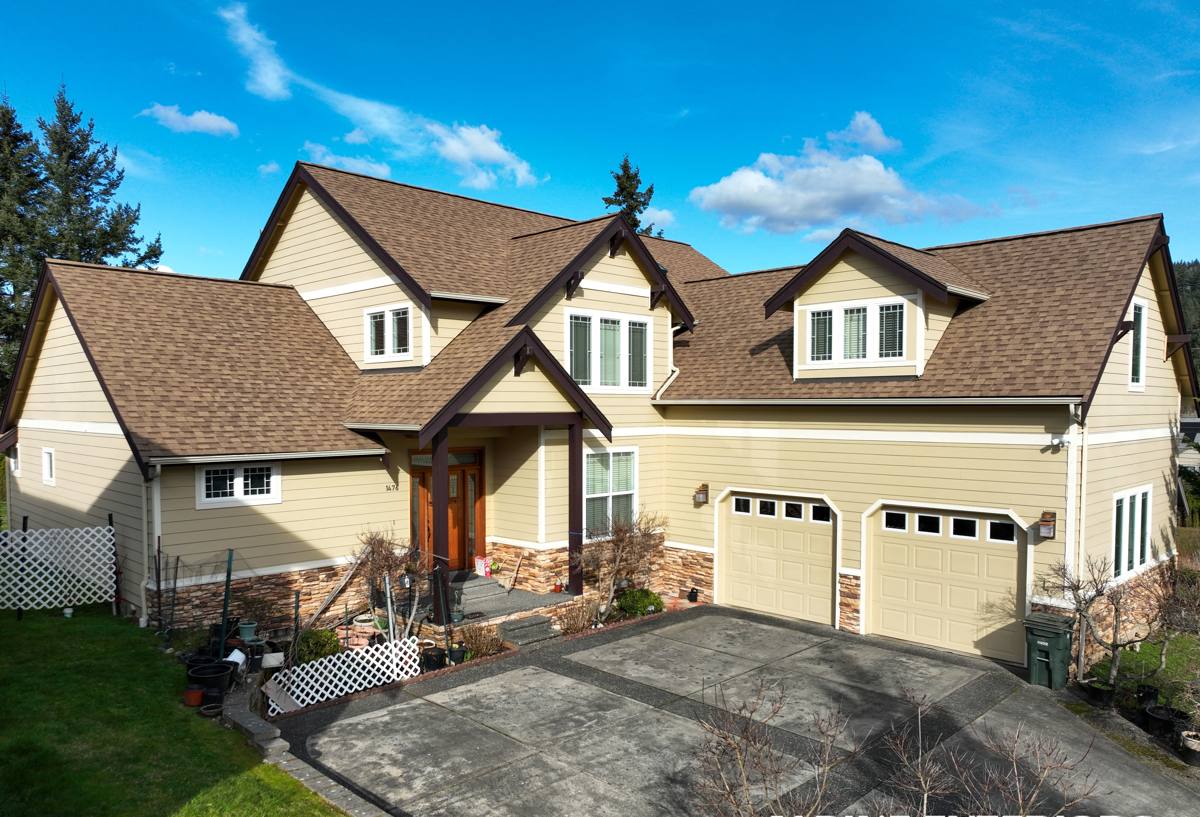
What Whatcom County Weather Does to an Outdoor Deck
Salt air, driving rain, and a long moss season all take their toll on anything built outdoors in this part of the state, and decks take more of that abuse than almost any other structure on a property because they're horizontal — every board is a small catch basin unless it's built to drain.
The three problems we design around
- Standing moisture: Flat or poorly-spaced decking traps water against the wood, which is the single biggest cause of premature rot and fastener failure we see.
- Moss and algae growth: Shaded decks, especially those under mature trees common on Lynden lots, stay damp longer and grow moss fast, which becomes a slip hazard as much as a maintenance headache.
- Freeze-thaw cycling: Whatcom County doesn't get deep freezes often, but the repeated freeze-thaw swings of a marine winter still work water into any gap, seam, or crack that wasn't sealed correctly the first time.
None of these are solved by a nicer board — they're solved by the framing, the fasteners, and the flashing decisions made before the first deck board ever goes down.
Getting the Structure Right: What's Underneath Matters Most
A deck that looks great for the first two summers and then starts failing is almost always a framing problem, not a decking problem. This is where most of our attention goes on every Lynden project.
Ledger board and house connection
Where the deck attaches to the house is the single most common failure point in Pacific Northwest deck construction, because it's the joint most exposed to water running down siding and pooling behind the ledger. We flash this connection properly — a continuous metal flashing that directs water out and away from the house band joist, not a bead of caulk hoping to hold back years of rain.
Footings and post bases
Lynden's soil holds moisture well, which is good for farmland and tough on buried wood. We use concrete footings set below frost depth with post bases that keep wood posts fully off the concrete and out of standing water, rather than burying posts directly in the ground the way older decks in the area were often built.
Joist spacing and drainage slope
Every deck we frame is built with a slight slope away from the house — usually about a quarter inch per foot — so water has somewhere to go instead of pooling on the surface or, worse, running back toward the foundation.
Choosing the Right Decking Material for a Wet Climate
There's no single "best" decking material — there's a best material for your budget, your maintenance appetite, and how much shade your yard gets. Here's how the common options actually perform in this climate:
| Material | Moisture Performance | Maintenance | Typical Lifespan Here |
|---|---|---|---|
| Pressure-treated lumber | Good if sealed regularly; prone to checking and splintering if neglected | Annual cleaning, re-sealing every 1-2 years | 15-20 years |
| Cedar | Naturally rot-resistant, ages gracefully, still needs sealing to hold color | Cleaning plus periodic stain/seal | 20-25 years |
| Composite decking | Excellent — doesn't absorb water or rot, but can grow surface algae in shaded, damp spots | Periodic washing, no staining or sealing | 25-30+ years |
| PVC/capped polymer | Best moisture resistance of any option; fully sealed surface | Occasional washing | 25-30+ years |
For heavily shaded Lynden lots — especially yards backed by trees or fencing that block afternoon sun — we usually steer homeowners toward composite or capped polymer, simply because moss and algae get a foothold faster on wood in low-light, high-moisture spots. That's a maintenance-burden conversation, not a knock on wood decking; a well-sealed cedar deck in a sunnier yard can look excellent for decades.
Fasteners and hardware
We use stainless steel or coated hardware rated for ground contact and wet exposure throughout, including hidden fastener systems where the decking allows it. Standard interior-grade screws or nails will streak and corrode within a year or two in this climate, and that's a detail that's invisible on install day but obvious five years later.
Design Choices That Matter for Local Lots
Beyond materials, a few design decisions consistently pay off for Lynden properties specifically:
- Board spacing: Slightly wider gaps between boards help water and debris pass through instead of collecting, which matters more here than in a drier climate.
- Railing material: Metal cable or aluminum railings hold up better than painted wood railings, which tend to need repainting every few years as moisture works into joints and corners.
- Roof or pergola coverage: A partial cover over part of the deck extends usable outdoor time significantly during Lynden's long wet season and reduces UV and moisture exposure on that section of decking.
- Under-deck drainage systems: For raised decks, an under-deck drainage system can turn the space underneath into usable dry storage or patio space instead of a perpetually damp crawl area.
Our Process, Start to Finish
Homeowners in Lynden are usually juggling a few different contractors for exterior projects, so we keep our process straightforward and predictable:
- On-site consultation: We walk the yard, look at drainage patterns, sun exposure, and how the deck will connect to the house, and talk through your priorities and budget.
- Design and material selection: We put together a plan with specific material recommendations based on the site conditions we found, not a one-size-fits-all package.
- Permitting: Most decks above a certain height or attached to the home require a permit through Whatcom County or the applicable local jurisdiction. We handle that paperwork so you don't have to track it down yourself.
- Framing and inspection: We build the structural frame first, including footings, ledger flashing, and joists, and get it inspected before decking goes on top.
- Decking, railing, and finishing: The visible layer goes on last — decking boards, railings, stairs, and any lighting or finishing details.
- Final walkthrough: We go over the finished deck with you, including care instructions specific to whatever material you chose.
Permits and Code in Whatcom County
Deck permitting requirements depend on height, attachment method, and square footage, and Whatcom County has specific rules around guardrail height, stair geometry, and structural connections that don't always match what you'll find in generic online deck plans. Building to code isn't just a box to check — proper railing height and stair rise/run are safety details that matter more on a deck that's regularly wet and can get slick. We manage the permit process as part of every project so the structure is signed off and sound, not just installed.
Keeping Your Deck in Good Shape Year-Round
A well-built deck in this climate is still a deck that needs some seasonal attention. Here's the basic maintenance rhythm we recommend to Lynden homeowners regardless of material:
- Sweep leaves and debris off the deck surface regularly in fall, since trapped organic matter holds moisture against the boards and feeds moss growth.
- Clean the deck surface at least once a year with a deck-safe cleaner to knock back algae and moss before it gets established.
- Check and clear any gaps between boards or drainage points that may have filled with debris.
- For wood decks, inspect the seal or stain each spring and reapply before the wet season sets in if water is no longer beading on the surface.
- Look over railings, stairs, and fasteners once a year for any signs of corrosion, loosening, or splitting.
- Trim back overhanging branches where possible to reduce shade and speed up drying time after rain.
Why Work With a Crew That Already Builds in This Area
A deck built to a national average spec doesn't always hold up to a Whatcom County winter. We're based in Ferndale and build decks throughout the surrounding area, including Lynden, which means the flashing details, fastener choices, and drainage slopes we use aren't theoretical — they're the same details we've seen matter on decks a few miles from your own. That local familiarity shows up in small decisions: knowing which shaded yards need extra attention to moss resistance, knowing how the county's permitting process runs, and knowing which materials are worth the added cost here versus which ones don't earn their price tag in this climate.
If you're planning a new deck or replacing one that's showing its age, we're happy to come take a look and talk through what would actually work best for your yard. There's no pressure and no obligation — just a straightforward assessment and a free estimate using the form below.