 Ferndale
 Asphalt Shingle Roofing Built for Lynden's Climate
Lynden sits far enough inland to escape some of the coastal punishment that hits Ferndale and the rest of Whatcom County, but it still gets the same wet, gray marine air moving up from Bellingham Bay and the Strait of Georgia. Add in driving rain off the Pacific storm track, cool damp summers, and a moss season that can run eight or nine months out of the year, and you have a climate that is genuinely hard on a roof. Asphalt shingles handle this weather well when they're installed correctly. They handle it badly when they're not. This page is about what "correctly" actually means for a Lynden roof, and why the difference matters more here than it would in a drier part of the country.
We work on asphalt shingle roofs throughout Ferndale and Whatcom County, including Lynden, and we've seen the same failure patterns come up again and again on homes that were roofed cheaply or roofed by out-of-area crews unfamiliar with Pacific Northwest moisture behavior. This page walks through what a correct asphalt shingle roof looks like for a Lynden home, what our process involves, and what to ask before you hire anyone to work on your roof.
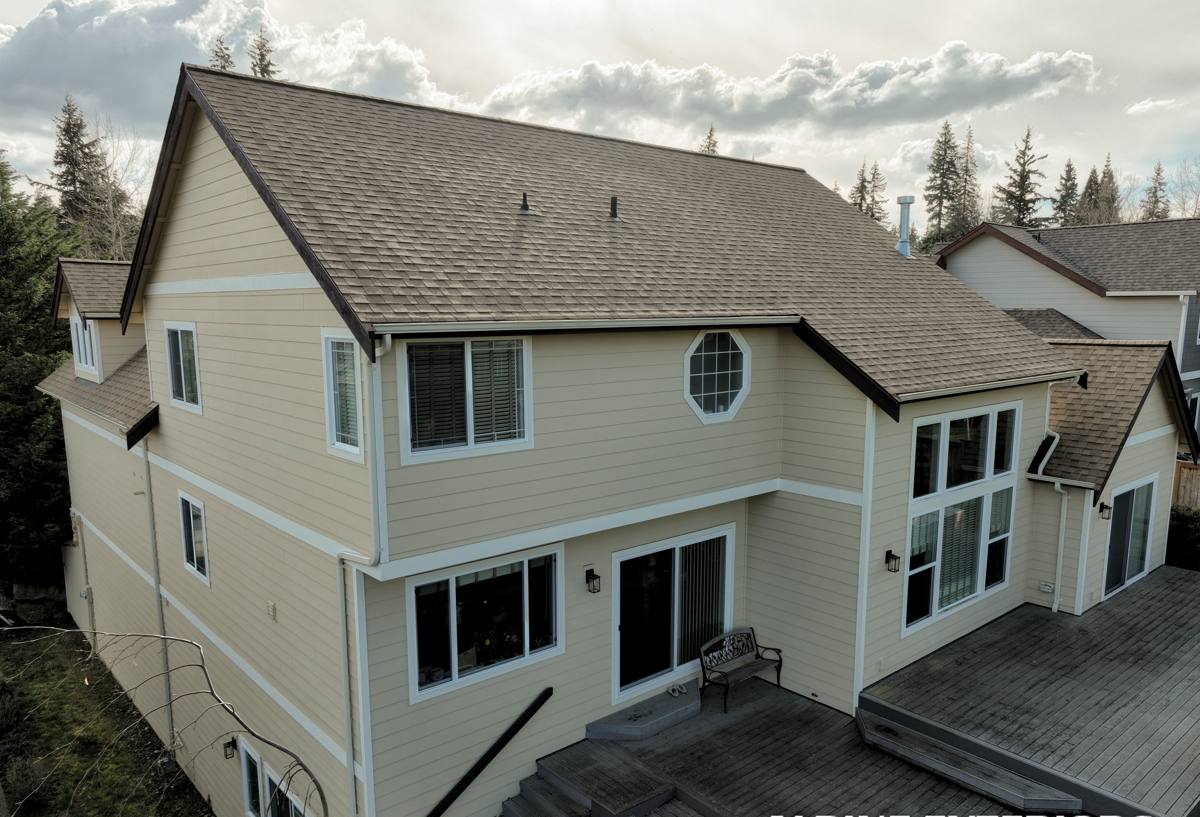
What Lynden's Weather Actually Does to a Roof
Moss and Organic Growth
Whatcom County's combination of mild temperatures, shade from mature trees, and long stretches of damp weather is close to ideal for moss growth. Moss isn't just cosmetic. It holds moisture directly against the shingle surface, works its way under shingle tabs and edges, and lifts them slightly over time — which is exactly the kind of small gap that lets wind-driven rain get underneath the roofing system. A roof that's shedding water fine in July can be quietly compromised by moss creep by the following spring.
Driving Rain and Wind
Lynden gets its share of wind-driven rain events, especially in fall and winter storms. Rain that's moving sideways instead of falling straight down tests every seam, nail line, and flashing detail on a roof. A shingle roof that's nailed correctly, sealed correctly, and flashed correctly at every transition will shrug this off. One with shortcuts in any of those areas won't.
Temperature Swings and Freeze-Thaw
Whatcom County doesn't get brutal winters, but it does get repeated freeze-thaw cycling — nights near or below freezing followed by wet, warmer days. Water that's worked into a crack, a nail hole, or a poorly sealed shingle edge can freeze, expand, and widen that opening. Over years, this is how small installation flaws turn into real leaks.
Salt-Influenced Air
While Lynden is more inland than the immediate Whatcom County coastline, the region as a whole sits close enough to Puget Sound and the Strait of Georgia that salt-tinged marine air is a factor, particularly on metal components — flashing, fasteners, vents, and drip edge. Lower-grade or mismatched metal accelerates corrosion faster here than it would further from the water.
What a Correct Asphalt Shingle Roof Involves
A shingle roof is a system, not a single product. The shingle itself gets most of the attention, but it's only doing its job well if everything underneath and around it is done right.
- Deck inspection and repair — any soft, delaminated, or water-damaged sheathing gets replaced before new roofing goes down, not covered up.
- Ice-and-water shield at vulnerable areas — valleys, eaves, and roof-to-wall transitions get a self-adhering waterproof membrane, not just felt.
- Synthetic underlayment — a water-resistant layer across the full deck, correctly lapped so every course sheds water into the one below it.
- Proper starter strip — a dedicated starter course along eaves and rakes, not cut-down field shingles, to seal the first row against wind lift.
- Correct nailing pattern and nail count — placed in the manufacturer's nailing zone, not high or low, with the right number of fasteners per shingle for our wind exposure.
- New flashing at every penetration — chimneys, skylights, plumbing vents, and wall transitions get new step, counter, and apron flashing rather than reused or caulked-over old metal.
- Balanced ventilation — intake at the eaves and exhaust at the ridge, sized to move air through the attic and keep the underside of the deck dry.
- Ridge cap shingles — purpose-made ridge cap product, not field shingles bent over the ridge, for a durable, weather-tight finish.
Skip any one of these steps and the roof may still look fine for a year or two. In Lynden's climate, the gaps tend to show up as leaks, moss-driven lifting, or premature granule loss well before the shingle's rated lifespan is up.
Choosing a Shingle Line for Whatcom County
Not every asphalt shingle is built the same way, and the right choice depends on your roof's exposure, your budget, and how long you plan to own the home. We walk homeowners through the real tradeoffs rather than just upselling the most expensive option.
| Shingle Type | Typical Lifespan | Best For | Local Consideration |
|---|---|---|---|
| 3-tab (economy) | 15–20 years | Budget-driven projects, rentals, outbuildings | Thinner profile is more vulnerable to wind lift and moss intrusion at edges |
| Architectural / laminate | 25–30 years | Most primary residences | Heavier, more wind-resistant, and the standard we recommend for full re-roofs here |
| Premium / designer laminate | 30+ years | Steep, highly visible roofs; higher-end homes | Best granule adhesion and impact resistance for long-term moss and weather exposure |
Beyond the shingle line itself, algae-resistant (AR) granules are worth the modest upcost almost everywhere in this region — they slow the growth of the dark streaking and organic buildup that our damp climate encourages. We generally steer homeowners away from the thinnest economy shingles for full roof replacements here, not because they're a bad product outright, but because Whatcom County's moss pressure and wind-driven rain punish a thin, low-tab-count shingle faster than they punish a heavier laminate — it's a maintenance and longevity tradeoff, not a defect claim.
Our Process for a Lynden Roofing Project
1. On-Site Assessment
We inspect the existing roof from the ground and, where safe and useful, from the roof surface itself — checking shingle condition, flashing, ventilation, moss and organic buildup, and signs of deck damage or past leaks. We also look at tree cover and roof orientation, since both affect how much moss pressure a given roof plane will see.
2. Written Scope and Estimate
You get a clear, itemized estimate covering tear-off, deck repair allowances, underlayment, flashing, shingle selection, and ventilation work — no vague lump-sum "roofing" line item. You should know exactly what you're paying for before work starts.
3. Tear-Off and Deck Inspection
We remove the old roofing down to the deck rather than layering over it. This is the only way to actually see and fix deck damage, and it's the only way to install underlayment and flashing correctly.
4. Underlayment, Flashing, and Shingle Installation
Waterproof membrane at vulnerable areas, synthetic underlayment across the field, new flashing at every penetration and transition, then shingles installed to manufacturer nailing specs for wind resistance.
5. Ventilation Check
We confirm intake and exhaust ventilation is balanced for the attic space. Poor ventilation shortens shingle life from underneath, which is easy to miss if you're only looking at the roof from outside.
6. Final Walkthrough
We walk the completed roof and the property with you, cover cleanup, and go over the workmanship warranty and manufacturer material warranty in plain terms.
Why Local Experience Matters for This Job
Asphalt shingle installation isn't exotic work, but doing it well in Whatcom County means designing around this region's specific moisture and moss behavior — not just following a generic install guide written for a drier climate. A crew that works Ferndale, Lynden, and the surrounding county regularly knows which roof orientations collect the most moss locally, how much ventilation a typical attic here actually needs, and which flashing details tend to fail first under our driving winter rain. That's knowledge you build by working the same weather year after year, not something you can fully substitute with a manufacturer spec sheet.
There's also a practical accountability argument. A roofer who's local and plans to keep working in this area has a direct incentive to do the job right the first time and to stand behind the workmanship warranty if something does come up. That's a very different incentive structure than a traveling crew that's gone before the first wet season tests their work.
Maintenance That Actually Extends Roof Life Here
Even a well-installed shingle roof benefits from basic upkeep in this climate. None of this is complicated, but it's the kind of thing that's easy to let slide for years — and that neglect is what shortens roof life in Whatcom County more than almost anything else.
- Keep gutters clear so water isn't backing up under the eave edge during heavy rain.
- Have moss treated or gently removed before it builds up thick enough to lift shingle edges — don't power-wash a shingle roof, which strips granules.
- Trim back tree limbs that overhang the roof to reduce shade, debris, and moss pressure.
- Check attic ventilation isn't blocked by insulation at the eaves.
- Have flashing around chimneys, skylights, and vents visually checked every couple of years, since these are the most common leak points on an otherwise sound roof.
Signs Your Lynden Roof Needs Attention
Most shingle roof failures don't happen suddenly — they show warning signs first. Homeowners who catch these early usually deal with a repair instead of a full replacement.
- Granules collecting in gutters or at downspout outlets in noticeable amounts.
- Shingle tabs that are curling, cupping, or visibly lifting at the edges.
- Thick moss mats, especially on north-facing or shaded roof planes.
- Dark streaking across the shingle field (algae growth, not necessarily structural, but a sign moisture is sitting on the surface).
- Daylight visible through the attic roof deck, or damp insulation after a storm.
- Missing or damaged shingles after a wind event.
If you're seeing any of these, it's worth having the roof looked at before the next storm season rather than after a leak shows up on your ceiling.
Get a Free, No-Pressure Estimate
If your Lynden home is due for a new roof, showing signs of wear, or you just want an honest read on how many years it has left, we're happy to come take a look. There's no obligation and no pressure — just a straight assessment and a clear, itemized estimate you can use to make the right call for your home. The form below gets you started.