 Ferndale
 Why Windows in Lynden Take More Punishment Than People Expect
Lynden sits inland from the coast, but that doesn't spare it from the weather that defines this corner of Whatcom County. Wind-driven rain moves through the Nooksack Valley for months at a stretch, humidity sits high enough to keep moss and algae active nearly year-round, and older window units simply weren't built with that combination in mind. Whether a home is closer to Lynden's farmland or nearer the salt air along Ferndale's coastline, the underlying problem is the same: moisture finds any gap, and it doesn't take a break for the season to change.
Older aluminum-frame or single-pane windows, and even early-generation vinyl units from the 80s and 90s, weren't engineered for this much sustained moisture exposure. Over time, seals fail, frames warp slightly, and condensation starts showing up between panes or along the interior sill. None of that is dramatic on its own, but it adds up to higher heating bills, drafty rooms, and slow water intrusion that can affect the framing around the window opening long before it's visible from inside the house.
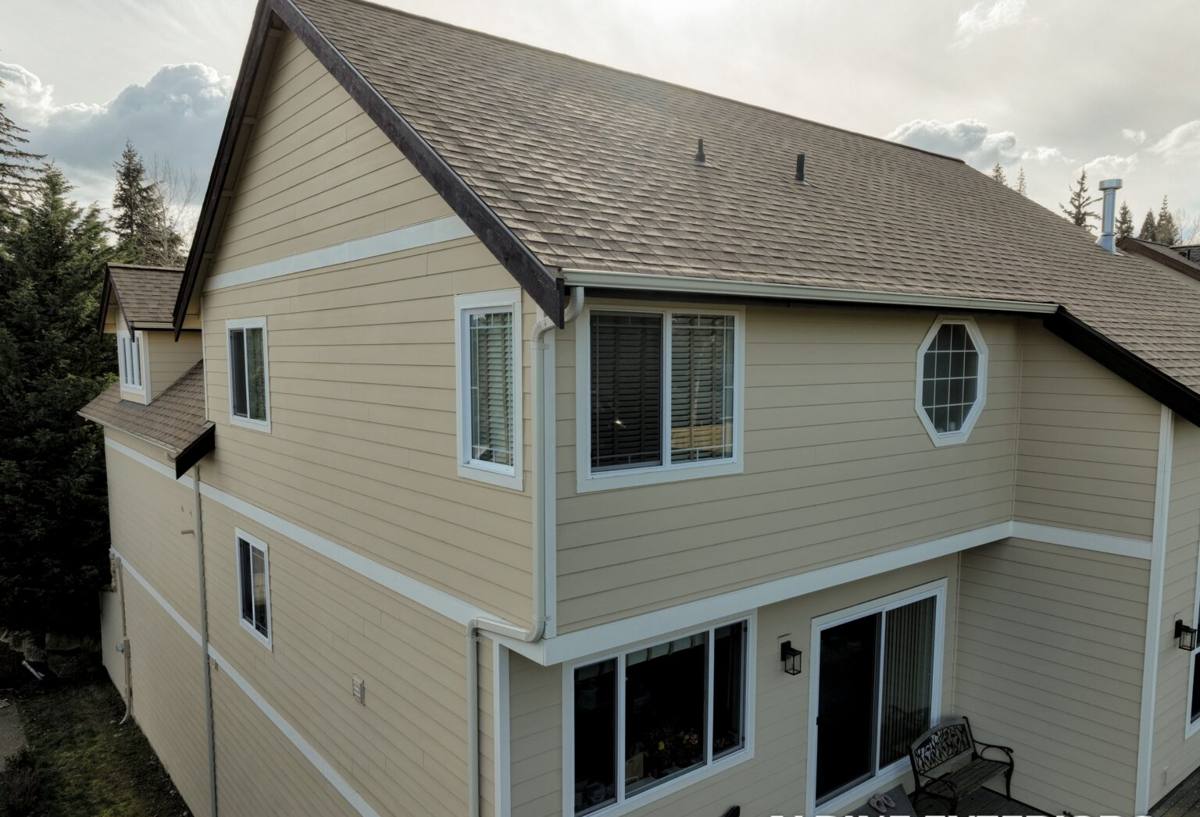
What "Energy-Efficient" Actually Means for a Window
It's a phrase that gets used loosely, so it's worth being specific. A genuinely energy-efficient window is a system — glass, gas fill, coating, frame, and installation — working together. The individual components matter less than how they perform as a whole, and that performance is measured, not guessed at.
The Numbers Worth Knowing
- U-Factor — measures how well the window resists heat loss. Lower is better; this is the single most important number for our climate, where keeping heat in matters more than keeping heat out.
- SHGC (Solar Heat Gain Coefficient) — measures how much solar heat passes through. Less critical here than in sunnier climates, but still relevant on south-facing walls.
- Air Leakage — measures how much air passes through the window assembly itself. Lower numbers mean fewer drafts and less moisture-laden air working its way into the wall cavity.
- NFRC Label — the independent rating sticker on the glass. If a window doesn't have one, there's no way to verify the efficiency claims being made about it.
Gas fills (typically argon) between panes and low-E coatings on the glass both improve U-factor without changing how the window looks from the street. Neither is a gimmick — both are standard on any quality double-pane unit today.
Frame Material: The Trade-Offs
| Frame Material | How It Handles Our Climate | Maintenance |
|---|---|---|
| Vinyl | Won't rot or corrode; expands and contracts with temperature but handles moisture well when properly installed | Low — occasional cleaning, no painting |
| Fiberglass | Very stable in temperature swings and moisture; holds paint well if a color change is wanted later | Low — more durable long-term than vinyl in some cases |
| Wood-clad | Good insulator, but the cladding seams are a point where water can work in over years of driving rain if not detailed carefully | Higher — requires attention to seams and finish over time |
| Aluminum | Conducts heat and cold efficiently, which works against energy efficiency; prone to condensation in a wet climate | Low, but poor thermal performance |
We don't push homeowners toward one brand or material across the board. We do explain, honestly, why aluminum-frame replacements are a poor match for this climate's thermal and moisture demands, and why vinyl or fiberglass tend to be the more sensible long-term choice for most Lynden homes.
Signs Your Current Windows Are Costing You Money
Most homeowners don't replace windows because one shattered — they replace them because the house started telling them something was wrong. Worth checking for:
- Visible fog or moisture trapped between panes (a failed seal, not a cleaning problem)
- Drafts you can feel near the frame even with the window fully latched
- Moss or dark staining building up on the sill or exterior trim faster than the rest of the siding
- Difficulty opening, closing, or locking — often a sign the frame has shifted slightly
- Noticeably higher heating bills compared to homes of similar size nearby
- Cold spots near windows even when the rest of the room feels comfortable
- Soft or discolored wood trim around the window opening on the exterior
Any one of these can be a minor fix. Several at once, especially on a home more than 20 years old, usually means the windows and their surrounding flashing have reached the end of their useful life together.
What a Correct Installation Actually Involves
The window unit itself is only part of the job. In a climate that sends rain sideways for days at a time, the installation detailing is what determines whether that window performs for 20 years or starts leaking in three.
The Steps That Matter Most
- Removing the old unit carefully to inspect the framing and sheathing underneath for hidden rot or moisture damage before it's covered back up.
- Repairing any compromised framing — installing a new window into a soft or damaged opening just hides the problem, it doesn't fix it.
- Proper flashing integration — the window's flashing has to tie into the home's weather-resistive barrier and siding in the correct order (bottom, sides, then top) so water is always directed outward, never trapped behind the wall.
- Sealing without over-sealing — caulking every seam sounds thorough, but windows also need a way to drain and vent moisture that does get in. A correct install balances sealing the right joints and leaving weep paths open.
- Shimming and squaring the unit so it operates smoothly and the seal around the frame is consistent on all four sides.
- Insulating the gap between the window frame and the rough opening with a low-expansion foam or backer rod, not just stuffed fiberglass.
- Interior and exterior trim reinstalled or replaced so the finished look matches the rest of the home.
Skipping or rushing any one of these steps is how a brand-new, high-rated window ends up performing no better than the one it replaced — sometimes worse, because a poor seal can trap moisture against framing that was previously able to dry out.
Our Process, Start to Finish
We keep the process straightforward and try not to add steps that don't serve the homeowner:
- Walk-through and assessment — we look at existing windows, framing condition, and how the home is oriented to wind and rain exposure.
- Honest recommendation — which windows make sense for the home and budget, and which upgrades are genuinely worth it versus optional.
- Clear estimate — written, itemized, no pressure to decide on the spot.
- Scheduling around weather — we plan installs to minimize how long any opening is exposed, which matters more here than in drier climates.
- Installation — one opening at a time, so the home is never left with multiple exposed openings at once.
- Cleanup and walkthrough — confirming operation, checking seals, and making sure the site is left clean.
What Affects the Cost
| Factor | Why It Matters |
|---|---|
| Number of openings | Straightforward — more windows means more material and labor |
| Window size and style | Custom shapes, large picture windows, and bay/bow configurations cost more than standard double-hung units |
| Frame material | Fiberglass typically costs more upfront than vinyl but can last longer with less maintenance |
| Condition of existing framing | Hidden rot or water damage found during removal adds repair time before the new window can go in |
| Glass upgrades | Triple-pane, higher-performance low-E coatings, or specialty tempered glass all add cost for added performance |
| Trim and finish work | Matching existing interior trim or upgrading exterior trim adds labor beyond the window install itself |
We don't quote a flat per-window price because these factors genuinely change the number. What we do provide is a written estimate that breaks the cost down so you can see exactly what you're paying for and where, if needed, adjustments could bring the project within budget.
Why a Crew That Already Works in Lynden Matters
Window installation isn't a generic task that performs the same everywhere. A crew that's replaced windows across Whatcom County knows how the moss season behaves against north-facing walls, how driving rain off the valley tests flashing details that would hold up fine somewhere drier, and which framing issues tend to show up in homes of a certain age in this area. That's not a marketing point — it's the difference between an installer following a manual and one who knows what to check for before a problem becomes visible.
It also means someone is local when a question comes up after the job is done — about warranty coverage, a trim detail, or how the windows are holding up through their first wet winter. We're a Ferndale-based crew that works throughout this region, and Lynden homes get the same attention to moisture detailing that we'd put into a job three miles from our own shop.
Living With Your New Windows Through Whatcom County's Seasons
A well-installed, energy-efficient window is close to maintenance-free, but a few habits keep it performing at its best through the wet months:
- Clear moss or debris from sills and tracks before it holds moisture against the frame
- Check exterior caulking annually, particularly after a hard winter, and touch up any cracked sections
- Keep gutters and downspouts clear so water isn't sheeting down across window openings
- Operate and lock windows periodically even in rooms that don't get much use, to keep hardware and seals functioning correctly
- Watch for condensation between panes — it's the clearest sign a seal has failed, even years after installation
None of this takes much time, but it's the kind of small attention that gets the full lifespan out of a window investment instead of an early replacement.
If your Lynden home has windows that are drafty, foggy, hard to operate, or just old enough that you're wondering, we're happy to take a look and give you a straight answer — no pressure, no upsell. Use the form below to request a free estimate.