 Ferndale
 Window Installation Built for How Lynden Actually Weathers
Lynden sits in the Nooksack Valley, close enough to the Strait of Georgia and the Salish Sea that the marine air off the water shapes almost every exterior decision a homeowner makes here. Winters are long, wet, and mild rather than cold and dry, which means windows spend more months of the year fighting moisture than fighting frost. A window that's installed correctly in a drier climate can still fail here within a few years if the flashing, sealant, and drainage details weren't built for driving rain and a moss season that can stretch from October into May.
Window installation isn't just a carpentry task — it's a water management task first and a carpentry task second. Get the water management wrong and no amount of expensive glass or hardware will keep the wall behind it dry.
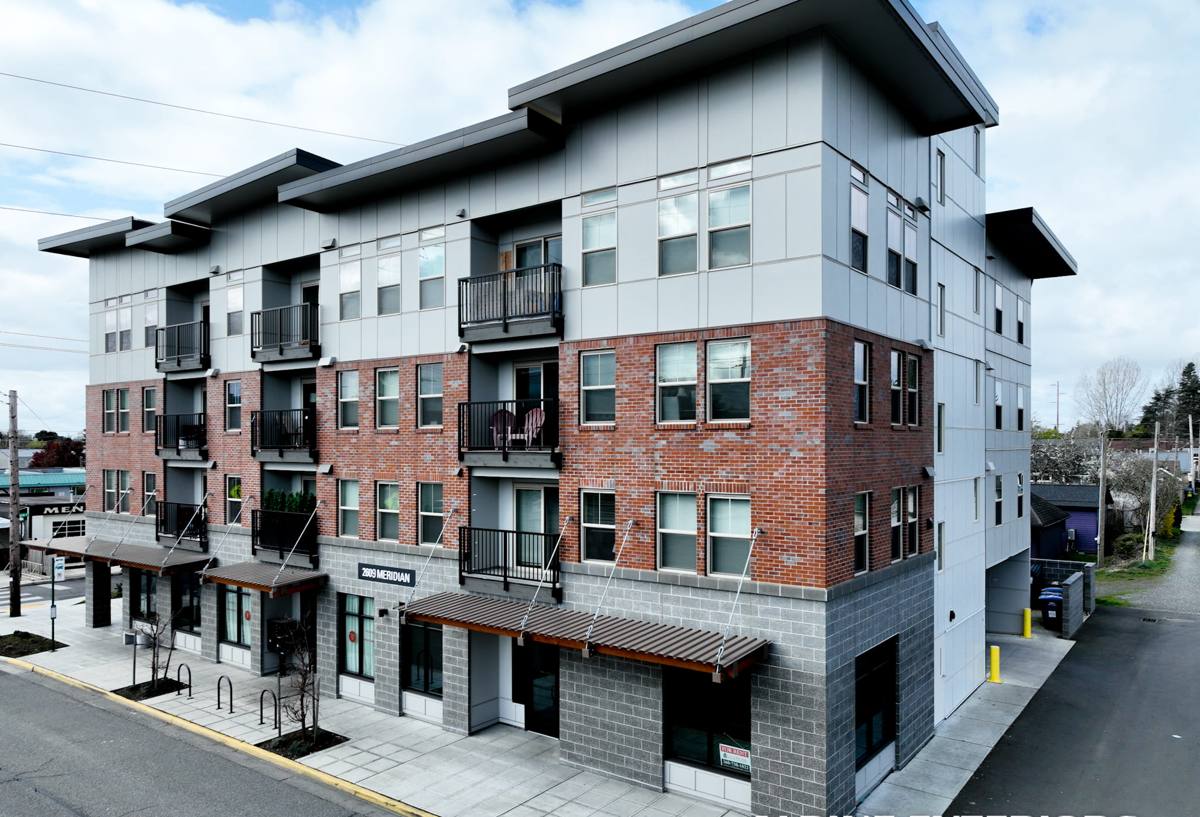
What Whatcom County Weather Does to a Poor Installation
Most window failures we get called out to inspect in Lynden aren't glass failures — they're installation failures. The window itself is usually fine. The problem is what's happening around it.
Wind-Driven Rain
Rain here rarely falls straight down. Wind off the valley pushes it sideways, which means it gets tested against gaps, seams, and trim joints that a calm-weather install would never expose. Without proper flashing and sealant detail, that wind-driven rain finds its way behind the window frame instead of running off it.
Salt-Influenced Marine Air
Proximity to the Strait of Georgia means the broader region deals with salt-laden air that accelerates corrosion on hardware, fasteners, and lower-grade metal components. It's a slower process than direct wind-driven rain damage, but over a decade or more it adds up — especially on window components that weren't specified for a coastal-influenced climate.
Extended Moss and Mold Season
Cool, damp, low-sun conditions for much of the year create ideal growing conditions for moss and mold on anything that stays wet — including window sills, trim, and the caulking around a frame. Once moss or mold gets a foothold in a gap that shouldn't exist, it holds moisture against the wood or sheathing behind it, which is how a small installation flaw turns into a rot problem.
Signs a Lynden Home's Windows Need Attention
- Fogging or visible moisture between panes (failed seal on an insulated glass unit)
- Soft or discolored trim or sill wood, especially on south and west-facing walls
- Drafts you can feel near the frame even when the window is fully latched
- Difficulty opening, closing, or locking — often a sign the frame has shifted or swollen
- Visible gaps between the window frame and siding or trim
- Moss or dark staining building up on the sill or lower frame
- Noticeably higher heating bills in winter without another explanation
Any one of these on its own isn't necessarily an emergency. Several of them together, especially on an older home, usually means it's time for a real evaluation rather than another round of caulk.
What a Correct Window Installation Actually Involves
A window installation done right is mostly invisible once it's finished — you shouldn't be able to see most of the work that actually protects the wall. That's exactly why it's worth understanding what should be happening behind the trim.
Flashing and Water Management
Before a new window ever goes in, the rough opening needs a sill pan — a small, sloped drainage plane at the bottom of the opening that gives any water that gets past the window somewhere to go besides straight down into your wall framing. Flashing tape integrates with the house's weather-resistive barrier above and to the sides of the opening, shingle-style, so water is always directed outward and downward, never trapped behind a layer that holds it in.
Air Sealing and Insulation
The gap between the window frame and the rough opening needs to be filled with a low-expansion foam or backer rod and sealant — not stuffed with fiberglass batting, which does little to stop air movement and nothing to stop bulk water. Over-filling with high-expansion foam can bow a frame and cause the window to operate poorly for the life of the install, so the right product and the right technique both matter.
Trim, Sealant, and Finish Work
Exterior trim and sealant joints are the last line of defense and the first thing weather attacks. Sealant needs to be applied to a clean, dry surface, in the right joints — not everywhere, since some gaps are intentionally left open as weep points to let any incidental moisture drain back out. Sealing a weep point closed by mistake is a common cause of trapped moisture behind trim.
Water Testing
On exposed elevations, we check that trim, sealant, and flashing are actually shedding water the way they're supposed to before we call the job finished — not just that the window opens, closes, and looks good from the curb.
Choosing the Right Window for a Lynden Home
There's no single "best" window for every house — the right choice depends on your home's age, exposure, and how much upkeep you want to take on. Here's how the common options compare for this climate:
| Window Frame Type | How It Handles Moisture | Maintenance | Best Fit |
|---|---|---|---|
| Vinyl | Won't rot; performs well in wet climates | Low — no painting or sealing needed | Most homes; strong value for the climate |
| Fiberglass | Very stable, minimal expansion/contraction | Low | Homes wanting longer-term durability, willing to pay more upfront |
| Wood (unclad) | Attractive but vulnerable to prolonged moisture exposure | High — regular painting/sealing required | Historic-style homes with an owner committed to upkeep |
| Wood-clad (exterior aluminum or vinyl over wood) | Good — cladding shields the wood from direct weather | Moderate | Owners who want a wood interior look with less exterior maintenance |
| Aluminum | Durable but conducts heat and cold; can condense | Low | Less common for residential use in this climate due to condensation risk |
For most Lynden homes, we point people toward vinyl or fiberglass frames with a Low-E glass coating and argon gas fill between panes. Low-E coatings cut down on heat loss during our long heating season, and the sealed argon gas space improves the window's insulating value without adding real maintenance burden. On homes with a specific architectural look to preserve, wood-clad options let you keep that appearance without taking on the full maintenance schedule of unclad wood.
Our Window Installation Process
- On-site assessment. We look at your current windows, the condition of the framing and sheathing around them, and any existing moisture or drafting issues before recommending anything.
- Product selection. We walk through frame material, glass package, and style options based on your home's exposure and your budget — no upsell for the sake of it.
- Careful removal. Old windows come out without unnecessary damage to surrounding trim or siding, and we inspect the opening for hidden rot or past water intrusion before proceeding.
- Flashing and prep. Sill pan flashing and weather-resistive barrier integration happen before the new window ever gets set — this is the step that determines how the window performs for the next 20+ years.
- Installation and air sealing. The window is set plumb and level, shimmed correctly, and sealed with the right products in the right places.
- Trim and finish. Exterior trim is reinstalled or replaced to match your home, with sealant joints placed correctly and weep points left clear.
- Final check. We confirm operation, look at the finished exterior detailing, and walk the job with you before we consider it done.
Why a Crew That Already Works Lynden Makes a Difference
Window installation quality comes down to details that don't show up in a sales brochure — how the flashing integrates with your specific siding type, how much clearance your home's trim style allows, and what your particular exposure to wind and rain actually demands. A crew that's worked on homes throughout Whatcom County has already seen how Lynden's older farmhouses, mid-century ranches, and newer builds each handle moisture differently, and adjusts the installation approach accordingly instead of using one generic method on every job.
Local presence also matters after the install. If a question comes up six months or six years later — a sticky sash, a sealant joint that needs a touch-up, a warranty question — you're calling a crew that's still working in your area, not chasing down a company that only passed through once.
What to Ask Before You Hire
- Are you licensed and insured to do this work in Washington State?
- Do you install sill pan flashing on every window, or only when asked?
- What's your approach to weep points and drainage on trim details?
- What warranty covers the installation labor, separate from the manufacturer's product warranty?
- Can you explain, in plain terms, why you'd recommend one window product over another for my home?
A contractor who can answer these clearly and specifically — not with a generic pitch — is one worth trusting with an opening in your exterior wall.
Get a Straightforward Estimate
If your Lynden home has windows that are drafty, fogged, hard to operate, or just original to a house that's due for an upgrade, we're happy to take a look and give you an honest read on what you actually need — no pressure, no inflated scope. Fill out the form below for a free estimate.