 Ferndale
 Siding Replacement in Lynden: Getting It Right the First Time
Lynden homes sit in the northern stretch of Whatcom County, where salt-tinged marine air, wind-driven rain, and a moss season that can run most of the year all work on a house at the same time. Siding replacement here isn't just a cosmetic upgrade — it's the single biggest opportunity a homeowner gets to correct years of water intrusion, poor flashing, and material choices that were never really suited to this climate in the first place. Get it right, and a home is set up for another quarter-century with minimal fuss. Get it wrong, and the same problems just come back under a fresh coat of paint.
This page is specifically about full siding replacement for Lynden properties, not spot repair and not a general overview of siding as a product category. If you're at the point of tearing off old siding and starting over, here's what that actually involves and what we've learned doing it in this specific climate.
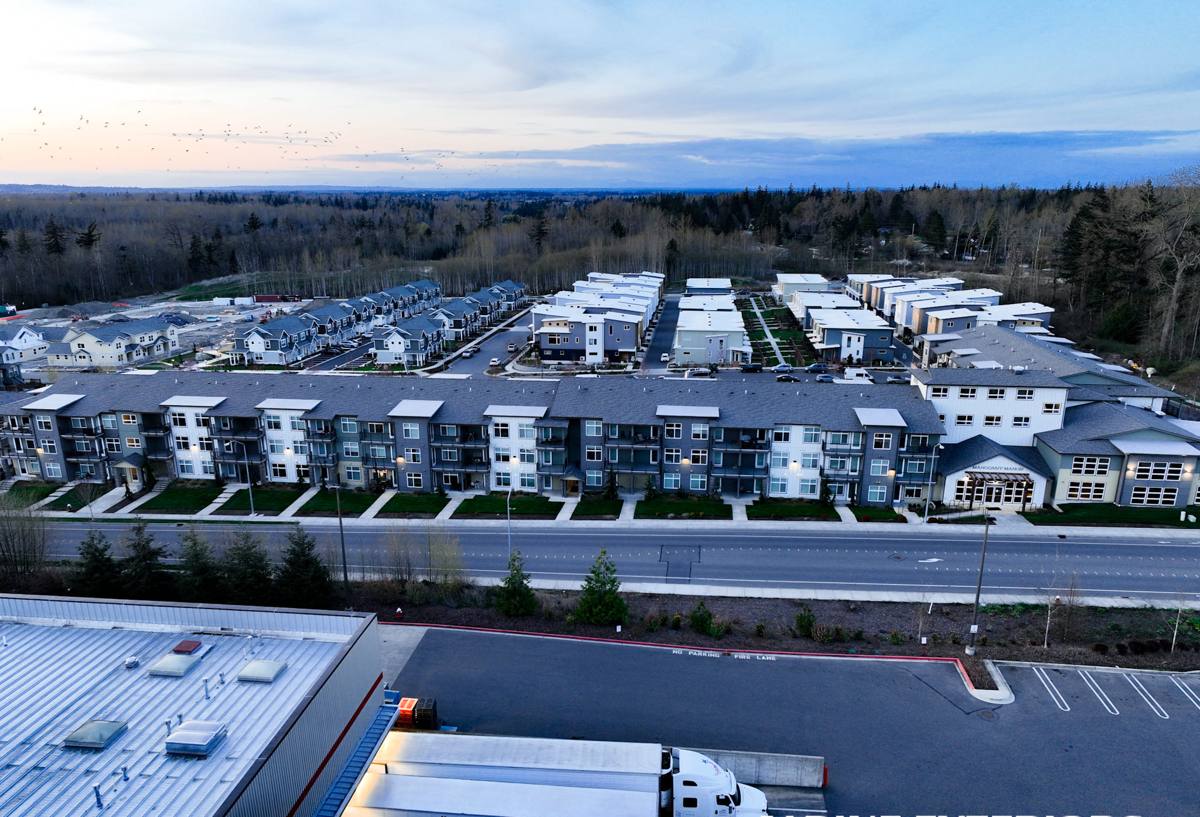
Why Lynden Homes Need Siding Replaced, Not Just Patched
Repair makes sense when the problem is isolated: a cracked panel, a section damaged by a fallen branch, a bit of trim that rotted from a bad seal. Replacement becomes the right call when the damage is systemic, which is common on Lynden homes once siding gets past the fifteen-to-twenty-year mark in this climate.
Signs Point to Replacement, Not Repair
- Soft or spongy spots in more than one area of the wall, suggesting moisture has reached the sheathing underneath
- Widespread cupping, warping, or bowing across multiple courses of siding, not just one panel
- Persistent moss or mildew staining that returns within a season of cleaning, even on walls that get some sun
- Paint that won't hold anymore no matter how well the surface is prepped before each repaint
- Visible gaps at seams, corners, and trim joints across the house rather than one isolated spot
- A house that's been sided with a lower-grade material and is due for its second or third repaint within a decade
When we walk a Lynden property for a replacement estimate, we're looking at more than the visible siding. Moisture that's been getting behind panels for years often means some amount of sheathing repair is part of the job too, and that's something we'd rather find and price honestly upfront than discover halfway through a tear-off.
What Lynden's Climate Demands From New Siding
Salt Air
Even set back from open water, Lynden gets a steady dose of salt-laden air moving through this part of the county. Salt accelerates corrosion in fasteners and metal flashing and can break down lower-grade finishes faster than a drier inland climate would. A siding replacement done right specifies corrosion-resistant fastening and flashing hardware as a baseline, not an add-on.
Driving Rain
Rain here rarely falls straight down. Wind pushes it sideways into lap joints, trim details, and anywhere a seam isn't sealed correctly. A siding system that would perform fine in a calm, dry climate can fail on a Lynden home specifically because water works in from the side rather than from above. That's a detailing and sequencing issue as much as a material issue — house wrap, flashing, and lap order all matter as much as the siding product itself.
A Long Moss Season
Mild temperatures, shade, and consistent moisture add up to a moss and mildew season that can run most of the year on north-facing or tree-shaded walls, which describes a good number of Lynden lots. Any siding that's even slightly porous, or that holds moisture against the substrate, becomes a growth surface over time. New siding is the chance to also address grading, gutter placement, and vegetation clearance near the walls so the replacement doesn't just repeat the same growth pattern in a few years.
What a Correct Siding Replacement Involves
A siding replacement is really several jobs stacked on top of each other, and skipping steps to save a day of labor is one of the more common ways a re-side underperforms in this climate.
- Full tear-off: Old siding and trim removed down to the sheathing, not overlaid, so nothing gets sealed in behind the new material.
- Sheathing inspection and repair: Any soft, water-damaged, or rotted sheathing gets replaced before anything new goes on the wall. This is where a rushed job cuts corners that homeowners can't see once siding is back on.
- Weather-resistive barrier: A correctly lapped house wrap or building paper goes on next, installed shingle-style so water sheds down and out rather than tracking behind it.
- Flashing at every penetration: Windows, doors, vents, hose bibs, and any wall-to-roof transition get properly flashed before siding closes over them. This is one of the highest-leverage steps for preventing the next round of water damage.
- Siding installation to manufacturer spec: Correct fastener type, spacing, and nailing pattern, proper gaps at butt joints, and correct clearance from grade, decks, and roof lines.
- Trim and caulking: Finish trim installed and sealed at the specific joints that actually need it, not caulked everywhere as a substitute for correct flashing.
Why We Install Only James Hardie Fiber Cement
We used to offer a wider range of siding products for replacement jobs. We narrowed to one system after seeing which materials actually held up on tear-offs and service calls across Whatcom County, including in Lynden, and which ones kept coming back with the same problems.
| Consideration | What James Hardie Offers |
|---|---|
| Fire performance | Non-combustible fiber cement core, unlike wood-based siding products |
| Finish durability | Factory-applied ColorPlus finish, cured under controlled conditions rather than painted on site |
| Climate engineering | HZ5 product line built specifically for regions with heavy moisture exposure and freeze-thaw cycling |
| Dimensional stability | Doesn't swell, warp, or cup the way engineered wood can after repeated wet seasons |
| Warranty | Strong transferable warranty when installed to manufacturer specification |
We don't install LP SmartSide, vinyl siding, Cemplank, Allura, primed spruce, or cedar. Each has legitimate uses and homeowners who are happy with them elsewhere. But for a full replacement on a Lynden home, where the siding is expected to hold up against salt air, driving rain, and a long moss season for decades, we've made the professional call to install one system we fully stand behind rather than offer a cheaper alternative that shifts maintenance risk back onto the homeowner a few years down the line.
What Drives the Cost of a Replacement
Every Lynden home is different, so we won't quote a number without seeing the property, but these are the factors that actually move the price on a full siding replacement.
| Factor | Why It Matters |
|---|---|
| Home size and wall area | More square footage means more material and labor, the most direct cost driver |
| Trim and architectural detail | Multiple gables, dormers, and cut-in trim take significantly more time than a simple rectangular wall |
| Sheathing condition | Water-damaged sheathing found during tear-off adds material and labor that a surface-level estimate can't predict |
| Siding profile chosen | Lap, shingle, and board-and-batten profiles vary in material and installation time |
| Story height and access | Two-story walls and difficult access points add scaffolding or lift time |
| Existing paint or coating | Lead-safe removal procedures may apply on older homes, which affects tear-off time and disposal |
Our Process for Lynden Replacement Projects
We start with an on-site walkthrough so we can see the actual condition of the walls, not just estimate from a photo. From there we give a written scope and price that accounts for what we can see and flags what we won't know for certain until tear-off, like sheathing condition behind existing siding. Once work starts, we handle the tear-off, any needed sheathing repair, weather barrier and flashing installation, and the full Hardie install in sequence, with the property kept as clean and protected as possible throughout. We walk the finished job with the homeowner before calling it done, and we're upfront if we find something during tear-off that changes the scope, rather than surprising anyone with it on the final invoice.
Why Local Experience Matters for This Job
A crew that replaces siding across Whatcom County year-round sees how salt air, wind-driven rain, and moss actually behave on real houses over full seasons, not just how a product performs on a spec sheet. That shapes practical decisions during a Lynden replacement: which wall orientations need extra flashing attention, how much clearance to leave at grade given how wet this ground stays, and which corners genuinely aren't worth cutting. Lynden's mix of open farmland and proximity to the water means those decisions aren't identical to every other town in the county, and a crew that already works here accounts for that instead of applying the same generic approach everywhere.
Roofing, Windows, and Decks Alongside a Re-Side
Siding replacement is also a natural point to address related exterior issues, since a tear-off exposes problems that are otherwise hidden. A leaking roof-to-wall transition, a poorly flashed window, or a deck ledger trapping moisture against the house can all be masquerading as siding damage. Because we also handle roofing, windows, and decks, we can flag and address those issues as part of the same project instead of a homeowner discovering them separately a year later.
If your Lynden home needs siding replaced, or you'd like an honest opinion on whether repair or full replacement makes more sense, we're glad to take a look. Reach out using the form below to schedule a free, no-pressure estimate.