 Ferndale
 Roof Repair Built for Lynden's Weather, Not a Generic Climate
Lynden sits a little inland from Ferndale, out past the reach of the salt-laden air that works on roofs closer to Bellingham Bay. That doesn't mean Lynden roofs get an easy ride. The same Pacific storm systems that push driving rain into Ferndale roll straight through Whatcom County's farmland and settle over Lynden just as hard, and the region's long, wet, mild winters bring the same extended moss season that every roof in this corner of Washington has to deal with. A roof repair here has to account for near-constant moisture, shifting temperatures overnight, and long stretches where a roof simply doesn't get a chance to fully dry out between storms.
That combination is why so many "small" roof problems in this area don't stay small. A minor flashing gap or a patch of lifted shingles that would dry out and sit quiet in a drier climate instead stays damp for days or weeks, working its way into decking and framing. Repairing a roof correctly here means understanding that moisture timeline, not just patching the visible damage.
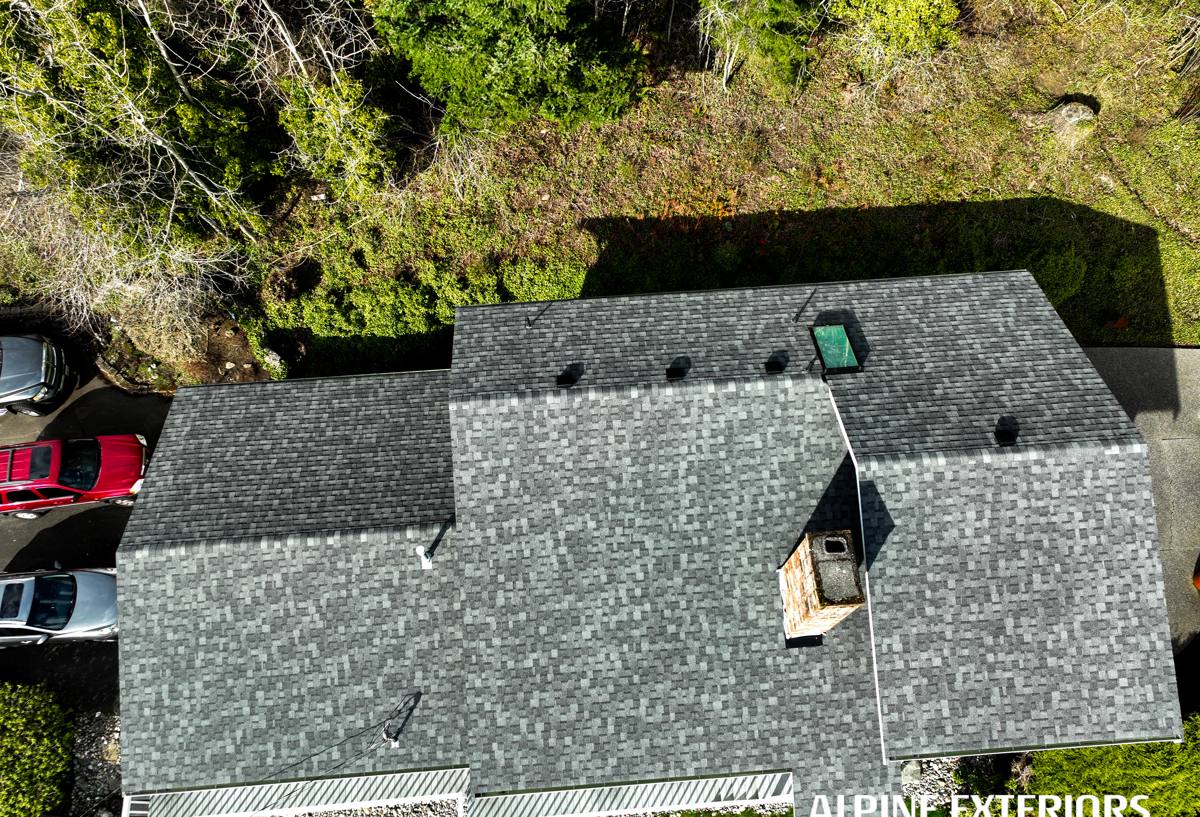
Common Roof Problems We See on Lynden Homes
Moss and Organic Growth
Moss doesn't just look bad — it holds water against the roof surface and works its way under shingle edges, lifting them and creating entry points for wind-driven rain. On roofs with heavy tree cover or north-facing slopes that don't get much sun, moss can establish itself within a couple of seasons if it isn't kept in check. By the time it's visible from the ground, it's usually already lifting shingle tabs.
Flashing Failures
Flashing around chimneys, vent pipes, skylights, and roof-to-wall transitions is the single most common source of leaks we find on repair calls, more often than worn-out field shingles. Flashing is thin metal doing a precise job, and once it's bent, corroded, or improperly lapped, water finds its way in during exactly the kind of driving, sideways rain this region gets several times a winter.
Wind-Driven Rain Intrusion
Open, exposed rooflines around agricultural land and rural properties near Lynden catch more direct wind than a roof tucked into a denser neighborhood. Wind-driven rain doesn't need a big gap to get in — it needs a small one and enough pressure, and it can push moisture uphill under shingles that would otherwise shed water fine in calm weather.
Gutter Backup and Ice Dam Edge Damage
Whatcom County winters aren't brutally cold, but they're cold enough for occasional freeze-thaw cycles at the roof edge, especially after a heavy rain event followed by a cold snap. Combined with gutters that get overwhelmed by debris from surrounding trees and fields, this is a common cause of edge rot and fascia damage that shows up as a repair call.
What a Correct Roof Repair Actually Involves
A roof repair done right isn't just sealing the spot where water is showing up inside the house. Water travels — it can enter the roof system several feet from where it eventually stains a ceiling. Our approach starts with tracing the actual entry point, not just treating the symptom.
Diagnosis Before Anything Gets Touched
We get on the roof, inspect the suspect area and everything around it — flashing, fasteners, shingle condition, decking if it's accessible — and identify the real cause before quoting a fix. A repair that only addresses the visible symptom often means a callback within a year.
Matching Materials, Not Just Patching Them
Shingles fade and weather over time, and a patch using mismatched material or the wrong weight of underlayment can create its own weak point — a seam that behaves differently than the surrounding roof under sun, cold, and wind. We match shingle profile and weight as closely as possible and use compatible underlayment and flashing metal so the repair performs as one system, not a patch bolted onto another.
Workmanship That Accounts for Moisture, Not Just Weather
In a climate where roofs rarely get a long dry stretch, technique matters more than in drier regions. Proper nailing pattern, correct shingle overlap, and flashing that's actually integrated with the underlayment (not just caulked over it) are the difference between a repair that lasts and one that's a temporary fix.
Our Repair Process, Start to Finish
- Inspection and diagnosis — We walk the roof (or use ladder and binocular inspection where a walk-on isn't safe or appropriate) and identify the actual source of the problem.
- Honest scope discussion — We tell you what we found, what's causing it, and what it will take to fix — including if we think a repair isn't the right long-term answer.
- Written estimate — Clear scope of work and pricing before anything happens, no surprise add-ons once we're on the roof.
- Repair work — Removal of damaged material, correction of the underlying cause (not just cosmetic patching), and reinstallation matched to the existing roof.
- Cleanup and walkthrough — Site cleaned up, debris and old material hauled off, and we walk you through what was done.
Repair vs. Replace: How We Help You Decide
Not every roof problem in Lynden calls for a repair, and not every repair call needs a full replacement. We look at the age of the roof, how widespread the damage is, and whether the underlying decking is still sound before recommending either path.
| Factor | Repair Usually Makes Sense | Replacement Usually Makes Sense |
|---|---|---|
| Roof age | Under 12–15 years, good overall condition | Approaching or past expected shingle lifespan |
| Extent of damage | Localized — one slope, one flashing area, one leak point | Multiple areas failing, or damage spread across several slopes |
| Decking condition | Solid, no soft spots or rot found | Soft decking, visible rot, or repeated water staining in the attic |
| Shingle condition overall | Granule loss and wear limited to the repair area | Granule loss, curling, or brittleness across the whole roof |
| History of repairs | First or second repair call on this roof | Recurring repair calls on the same roof over a few years |
We'll always give you a straight answer on which side of that table your roof falls on — we don't pad a repair job into a replacement sale, and we don't patch a roof that's genuinely at the end of its service life just to avoid a harder conversation.
Materials We Use for Repairs
For asphalt shingle roofs — still the most common roofing type on homes around Lynden — we match architectural or three-tab profiles as closely as possible to the existing roof, using quality underlayment rather than the thinnest option available. For flashing, we use corrosion-resistant metal appropriate to the application (step flashing at wall transitions, proper counter-flashing at chimneys, and pipe boots rated for UV and temperature swings rather than generic universal boots that degrade faster). For metal roofing repairs, we match panel profile and use fasteners and sealant designed for metal-to-metal movement, since a mismatched fastener is one of the more common causes of a metal roof repair failing early.
We also pay attention to ventilation while we're up there. A roof with poor attic ventilation traps moisture from inside the house against the underside of the decking, which can undermine even a well-done repair from the other direction. If we spot a ventilation issue contributing to the damage, we'll flag it as part of the estimate rather than let it quietly cause a repeat problem.
Maintenance Checklist for Lynden Homeowners
A few habits go a long way toward keeping small roof issues from becoming repair calls, especially given how long moisture tends to sit on roofs in this part of Whatcom County:
- Clear gutters at least twice a year, more often if the property has heavy tree cover nearby
- Watch for moss or dark streaking on north-facing slopes and shaded areas
- Check attic spaces after heavy storms for damp insulation, staining, or musty odor
- Have flashing around chimneys, skylights, and vent pipes inspected every few years, not just when a leak shows up
- Trim back tree branches that overhang the roof to reduce moss growth and debris buildup
- Don't ignore small interior water stains — they usually mean the roof has already been leaking for a while
Why a Local Crew That Already Works in Lynden Matters
Roof repair is a trade where local knowledge shows up in the details — knowing which flashing details tend to fail first on the roof styles common in this area, knowing how long moss season really runs here versus what a manufacturer's generic guidance assumes, and being close enough to actually respond quickly when a repair needs to happen before the next storm rolls through rather than weeks later. A crew based out of Ferndale that regularly works Lynden isn't guessing at regional conditions — it's applying what it already knows about how Whatcom County weather treats a roof over time.
Being local also means accountability. If a repair doesn't hold up the way it should, we're not a crew that drove in from out of the area for one job — we're around, and we stand behind our work because our reputation in this community depends on it.
Get a Straight Answer on Your Roof
If you're dealing with a leak, noticing moss taking hold, or just want an honest read on whether your roof needs a repair or something more, we're happy to take a look. Use the form below to request a free, no-pressure estimate — we'll tell you what we actually find, not just what's easiest to quote.