 Ferndale
 Why Birch Bay Siding Has to Work Harder
Birch Bay sits right on the water, and that changes what a home's exterior is up against every single day. Salt-laden air drifts inland off the bay, driving rain comes in sideways during winter storms, and the combination of shade, moisture, and mild temperatures gives moss and algae a long season to take hold on north-facing walls and anything shaded by trees or roof overhangs. A siding material that performs fine twenty miles inland in Ferndale or Bellingham can behave differently a few hundred yards from saltwater.
None of this means Birch Bay homes need something exotic. It means the siding, the fasteners, the flashing details, and the finish all need to be chosen and installed with that exposure in mind. That's the whole point of this page: what Birch Bay's climate actually demands from a siding job, and what we do differently because of it.
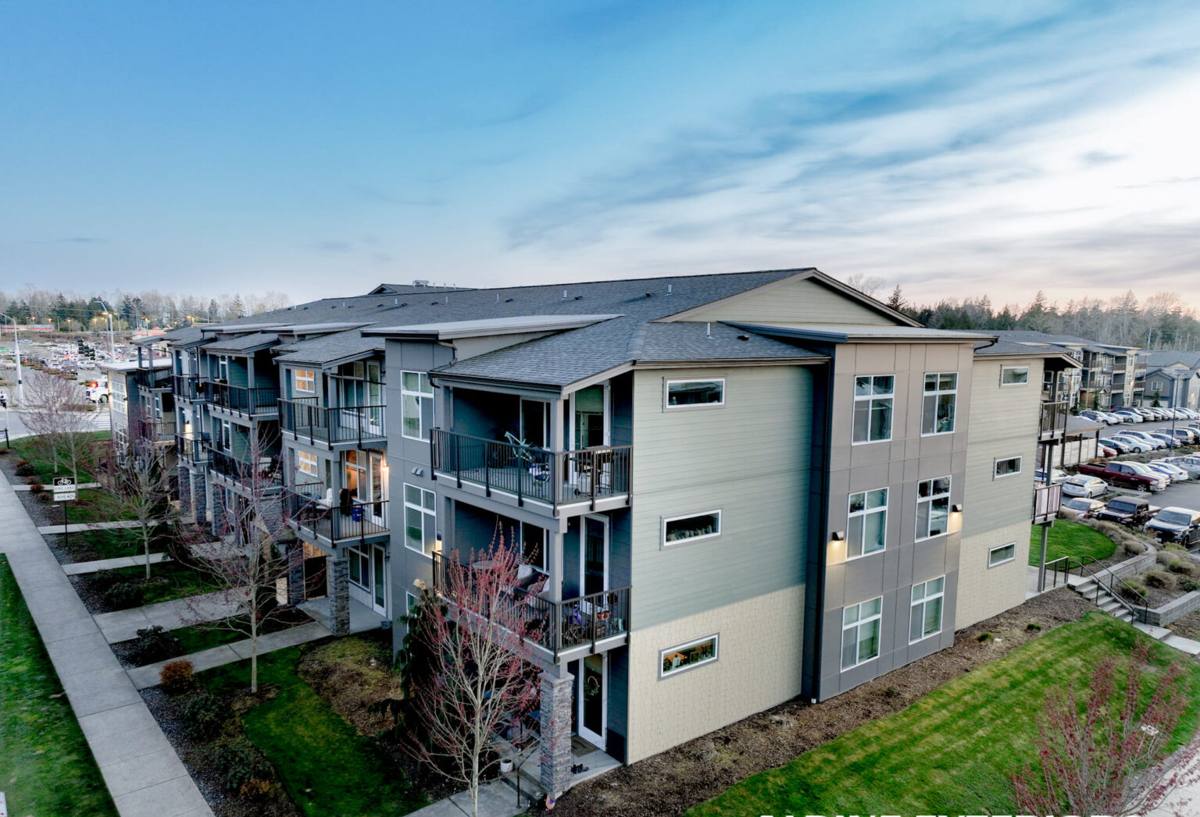
What Salt Air, Rain, and Moss Actually Do to a Wall
Salt air
Airborne salt is corrosive to metal and accelerates the breakdown of some coatings and adhesives. Over years, uncoated or poorly coated fasteners near the coast can corrode faster than the same fasteners would inland, and that corrosion can eventually stain the siding face or weaken the hold at the fastener point.
Driving, wind-blown rain
Birch Bay's exposure to wind off the water means rain doesn't just fall straight down — it gets pushed sideways into wall assemblies, laps, and trim joints that would stay dry in a more sheltered location. That puts real pressure on the water-resistive barrier behind the siding, the flashing at every penetration, and the lap joints themselves.
Moss and algae
Shaded, north- and west-facing walls near mature trees or close to the water stay damp longer between storms. That extended dampness is exactly what moss and algae need to establish. On a porous or absorbent siding surface, that growth can take hold in the material itself, not just sit on top of it — which makes it harder to clean without damaging the surface.
Why We Install James Hardie and Nothing Else
We standardized on James Hardie fiber cement siding for every job we take, including the ones in Birch Bay, and the coastal exposure is a big part of why. Hardie's fiber cement is non-combustible and doesn't rot, delaminate, or feed insects the way wood-based products can, and it holds up to repeated wetting and drying far better than materials that absorb moisture into their core. The factory-applied ColorPlus finish is baked on under controlled conditions and backed by its own finish warranty — it isn't a field-applied paint job that has to fight salt air and UV from day one.
Just as important for a place like Birch Bay: James Hardie makes engineered product lines (their "HZ" system) specifically formulated for different climate zones, including wetter, harsher exposures. That means the siding itself, not just the finish, is matched to the moisture load it's going to see. We don't install LP SmartSide, vinyl, Cemplank, Allura, primed spruce, or cedar, and the honest reason is straightforward: each of those comes with a maintenance burden, moisture vulnerability, or installation sensitivity that we're not willing to gamble on for a coastal Whatcom County home. Hardie, installed correctly, gives us a product and a warranty structure we can stand behind here.
How Hardie compares on the factors that matter most in Birch Bay
| Factor | James Hardie Fiber Cement | Vinyl | Untreated Wood / Cedar |
|---|---|---|---|
| Moisture absorption | Very low; engineered for wet climates | Doesn't absorb, but can trap moisture behind panels | Absorbs readily; prone to swelling and rot |
| Moss/algae resistance | Factory finish resists surface growth; cleanable | Resists growth but can look chalky over time | Porous surface lets growth establish in the wood |
| Salt air durability | High when fasteners/flashing are corrosion-rated | Can become brittle; seams stress in wind | Coatings break down faster near salt air |
| Fire resistance | Non-combustible | Melts/deforms under heat | Combustible |
| Finish warranty | Factory ColorPlus finish warranty | Color can fade; no factory finish warranty | Field-applied paint/stain needs recoating |
The Hardie Product Lines That Fit Birch Bay Homes
Most Birch Bay homes we work on end up with one of these, chosen based on the home's style, exposure, and existing trim:
- HardiePlank lap siding — the most common choice, available in several textures and exposure widths; works well on both waterfront-facing and inland-facing walls of the same house.
- HardiePanel vertical siding — often paired with lap siding as an accent, or used on gable ends and shop/garage structures.
- HardieShingle — for homes going for a shingle-style look without the maintenance and moisture risk of real wood shingles.
- HardieTrim — for corners, fascia, and window/door trim, so the whole exterior envelope is fiber cement rather than mixing in a wood or composite trim that ages differently than the field siding.
For this exposure, we specify Hardie's HZ5 formulation where it applies, which is engineered for wetter, harsher climates rather than the drier-climate HZ10 formulation used in other parts of the country. That distinction matters more the closer a home sits to the water.
What a Correct Installation Actually Involves
The siding material is only half the equation. James Hardie's own installation requirements exist for a reason, and skipping them is where coastal homes get into trouble — not because the product failed, but because the assembly behind it wasn't built to handle the exposure. On every Birch Bay job we:
- Verify and, where needed, replace the water-resistive barrier (weather wrap) before any siding goes back up — this is the layer doing the real work against wind-driven rain.
- Flash every window, door, and penetration so water is directed out and down, not into the wall cavity.
- Maintain the manufacturer's required clearance between the bottom of the siding and roofing, decks, and grade, so splash-back and standing moisture don't sit against the material.
- Use corrosion-resistant, coastal-rated fasteners driven to Hardie's specified pattern and depth — a real point of failure on older installs we've seen, where standard fasteners were used on a waterfront-exposed wall.
- Caulk and seal joints with products rated for the movement and moisture cycling this climate produces, and avoid over-caulking in ways that trap moisture instead of shedding it.
- Leave manufacturer-specified gaps at butt joints and trim to allow for expansion, rather than installing tight for a cleaner look that fights the material later.
Common Problems We Find on Existing Birch Bay Siding
When we're called out to look at an aging exterior in Birch Bay, a handful of issues show up repeatedly:
- Moss establishing at shaded lap joints where moisture sits longest and sun never fully dries the surface.
- Rust streaking below fasteners on older installs that used standard, non-coastal-rated nails or screws.
- Caulk failure at trim joints from movement and UV breakdown, letting water track behind the siding instead of running off.
- Siding installed too close to grade or roof lines, so splash-back keeps the bottom courses wet far longer than the rest of the wall.
Most of these are installation issues, not product issues — which is exactly why we treat the install process as the real deliverable, not just the material choice.
Our Process for a Birch Bay Siding Project
We walk the exterior with the homeowner first and note the specific exposure of each elevation — the side facing the water is not dealing with the same conditions as the side facing inland, even on the same house. From there we check the sheathing and water-resistive barrier condition once old siding comes off, since that's the layer most likely to be hiding damage from years of wind-driven rain. We install the Hardie product and trim to manufacturer spec, using coastal-rated fasteners and correct flashing at every opening, then do a final walk-through with the homeowner covering care and what to watch for given the local climate.
Caring for James Hardie Siding in a Salt Air, Moss-Prone Climate
Correctly installed Hardie siding is low-maintenance, but "low-maintenance" isn't "no-maintenance" a few hundred yards from the water. A simple seasonal routine keeps it performing:
- Rinse down shaded and north-facing walls once or twice a year to keep moss and algae from establishing, using a garden hose and soft brush rather than a pressure washer aimed directly at joints.
- Keep gutters and downspouts clear so overflow doesn't run down the wall face and keep siding wet longer than it should be.
- Trim back vegetation and tree limbs that shade walls and slow drying after storms.
- Inspect caulking at trim and penetrations every year or two, and have it renewed before it fails outright rather than after water has already gotten behind it.
- Watch for any rust staining below fasteners, which can signal non-coastal-rated hardware that should be addressed.
Why Hiring a Crew That Already Works Birch Bay Matters
Birch Bay isn't a generic Whatcom County address — it's a specific exposure profile, and a crew that installs siding across a range of inland conditions won't necessarily default to coastal-rated fasteners, HZ5-appropriate products, or the flashing discipline this exposure calls for unless they've been burned by skipping it before. We've built our process around always installing to James Hardie's full specification, and on a property like this that means treating the coastal details — fastener corrosion resistance, drainage clearance, moisture barrier condition — as standard practice, not an upgrade.
If you're looking at new siding, a repair, or just want an honest read on what your current exterior needs given where it sits, we're happy to take a look. Reach out for a free, no-pressure estimate — the form below gets you started.