 Ferndale
 Window Installation Built for Birch Bay's Coastline
Birch Bay sits right up against the Salish Sea, and that location shapes everything about how windows perform there. Homes a few miles inland in Ferndale deal with plenty of Pacific Northwest weather, but shoreline properties take a heavier hit — steady salt-laden air, wind-driven rain that comes in sideways during winter storms, and a moss season that seems to stretch longer every year. Window installation in this kind of environment isn't just about picking a product and setting it in the opening. It's about understanding how that specific location will punish a window over the next fifteen to twenty years and building the installation to hold up to it.
This page covers what Birch Bay homeowners should know before replacing or installing windows: what the climate actually does to a window assembly over time, what a correct installation looks like, how we approach the work, and why local experience in this exact area matters more than it might seem.
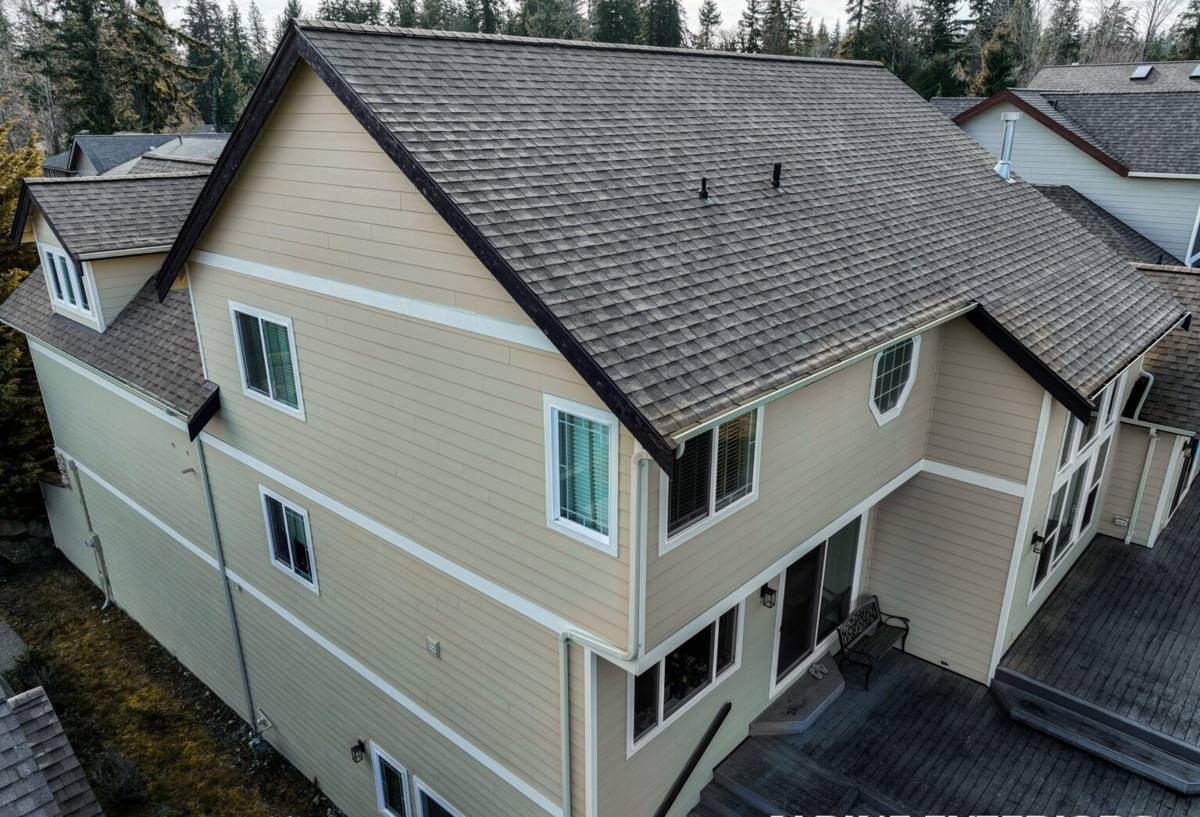
What Coastal Exposure Does to Windows Over Time
Salt air, moisture, and shade are the three forces doing most of the damage on Birch Bay homes. None of them show up overnight — they work slowly, which is exactly why so many window problems in this area get discovered only after they've already caused damage behind the wall.
Salt Air and Metal Components
Airborne salt accelerates corrosion on anything metal — hardware, hinges, screws, and especially lower-grade aluminum components. Over years of exposure, corroded hardware gets stiff, locks stop seating properly, and weep holes (the small drainage channels built into a window frame) can clog or corrode shut. Once weep holes stop draining, water that should exit the frame instead sits against it.
Driving Rain and Water Management
Wind off the water doesn't just bring rain — it drives it horizontally and forces it upward under trim and behind siding at pressures a calm-weather rain never reaches. A window that's watertight in a still downpour can still leak in a Birch Bay windstorm if the flashing and drainage plane weren't detailed for that kind of pressure. This is one of the most common causes of hidden rot we find behind older window installations near the shoreline.
Moss, Algae, and Shaded Exposures
North-facing walls, tree-shaded lots, and anywhere moisture lingers instead of drying out are prone to moss and algae growth on sills, trim, and cladding. Beyond the appearance issue, moss and algae hold moisture against wood and painted surfaces far longer than bare material would, which speeds up rot and finish failure around the window opening.
Signs a Birch Bay Home May Need Window Installation Work
Because coastal damage develops gradually, homeowners often notice the symptoms long before they connect them to the window itself. Some signs worth taking seriously:
- Soft or discolored trim, sill, or drywall directly below or around a window
- Windows that are difficult to open, close, or lock — often from swollen frames or corroded hardware
- Visible fogging or moisture between panes, which usually means a failed seal on an older double-pane unit
- Persistent moss or dark staining on sills and exterior trim that keeps returning after cleaning
- Drafts or a noticeable temperature difference near the window on windy days
- Peeling paint or bubbling finish on interior or exterior trim near the frame
- Visible daylight or gaps around the frame when viewed from inside
Any one of these on its own might be minor. Several showing up together, especially on a wall that faces the water or prevailing wind, usually means it's worth having the window and the surrounding framing looked at before a full replacement is planned.
What a Correct Window Installation Actually Involves
The window unit itself is only part of the job. In a climate like this, the installation details around it — the parts nobody sees once the trim goes back on — are what determine whether the window lasts five years or twenty-five.
Flashing and Water Management
Proper installation means a sloped sill pan that directs any water that gets past the window back outside the wall assembly, not into it. Flashing tape integrates with the house wrap in a shingle-lap pattern — meaning each layer overlaps the one below it — so water is always directed downward and outward, never trapped behind a seam. For homes taking direct wind and rain off the water, this detail matters more than the brand of window installed above it.
Insulation and Air Sealing
Gaps between the window frame and the rough opening need to be filled with an appropriate low-expansion foam or backer rod and sealant — not stuffed with fiberglass insulation alone, which does little to stop air movement. Poor air sealing shows up later as drafts and, in a humid coastal climate, as a spot where condensation can form inside the wall cavity.
Fastening and Fit
The window needs to be shimmed square and plumb before fastening, checked for even reveal on all sides, and tested for smooth operation before the opening is closed up. A window that's slightly racked in the opening will bind, wear unevenly, and stress its seals well before the end of its expected lifespan.
Choosing Materials for a Birch Bay Climate
Every window material handles salt air, moisture, and UV exposure differently. There's no single "best" choice for every home — the right pick depends on the wall's exposure, the home's style, and how much upkeep the owner wants to take on.
| Material | Coastal Moisture Resistance | Maintenance | Typical Lifespan |
|---|---|---|---|
| Vinyl | Good — won't rot or corrode, but can discolor with heavy UV/salt exposure over time | Low | 20–30 years |
| Fiberglass | Very good — stable in moisture and temperature swings, holds paint well | Low to moderate | 25–35+ years |
| Wood / Wood-Clad | Requires diligent upkeep near salt air; exterior cladding helps but exposed wood needs attention | High | Varies widely with maintenance |
| Aluminum | Prone to corrosion and thermal transfer in salt air without upgraded coatings | Moderate | 15–25 years |
For homes with direct shoreline exposure in Birch Bay, we generally steer clients toward vinyl or fiberglass for the water-facing elevations, simply because the maintenance burden of wood or bare aluminum in that specific exposure is a lot to keep up with year after year. That's a judgment based on upkeep and moisture behavior, not a knock on any manufacturer — plenty of wood windows perform fine on sheltered, inland walls.
Our Installation Process
The process is the same core steps on every job, adjusted for what we find once the old window comes out:
- On-site assessment — we look at the existing window, the wall assembly around it, and the specific exposure (wind direction, shade, water view) before recommending anything.
- Precise measurement — exact opening dimensions are taken so the replacement fits correctly without excessive shimming or gapping.
- Careful removal — the old unit comes out with attention to the condition of the rough opening, sill, and sheathing underneath.
- Repair as needed — any soft wood, rot, or compromised house wrap found during removal gets addressed before the new window goes in, not covered over.
- Flashing and installation — sill pan, flashing tape, and the window itself are installed in the proper sequence for water to shed outward.
- Insulation, sealing, and trim — the gap is sealed correctly and trim is reinstalled or replaced to match.
- Final function check — every window is opened, closed, and locked to confirm smooth operation before we consider the job finished.
What Affects the Cost of Window Installation in Birch Bay
Pricing varies enough from home to home that we won't quote a number without seeing the job, but the main cost drivers are consistent:
| Factor | Why It Matters |
|---|---|
| Window material and glass package | Vinyl, fiberglass, and glass upgrades (double vs. triple pane, low-E coatings) carry different price points |
| Condition of the existing opening | Hidden rot or moisture damage found during removal adds repair work before the new window can go in |
| Number and size of openings | Larger units and multi-window jobs typically bring a better per-window rate |
| Access and site conditions | Second-story or hard-to-access windows take more time and equipment |
| Trim and finish work | Matching existing trim profiles or upgrading exterior trim adds to the scope |
Generally, straightforward one-for-one replacements on an easily accessible wall are on the lower end of the range for a project; jobs that involve rot repair, larger openings, or matching custom trim run higher. We walk through these factors on-site so there are no surprises once work starts.
Why a Local Ferndale Crew Matters for This Job
Window installation isn't a one-size-fits-all trade — a crew that mostly works drier, more sheltered inland areas may not think twice about details that matter a great deal a few hundred yards from the water. Working regularly in Birch Bay and around Whatcom County means we already know what shoreline exposure does to a window assembly over time, we're familiar with the permitting expectations in the area, and we're close enough to come back quickly if a question comes up after the install. That local familiarity is less about any single technique and more about not having to relearn the climate on your house.
If you're noticing drafts, sticking sashes, moss buildup, or soft trim around your windows, or you're just planning ahead for a home on Birch Bay's waterfront or nearby streets, we're happy to take a look. Reach out for a free, no-pressure estimate using the form below — we'll walk the exterior with you, point out anything worth knowing, and give you a straight answer on what the job actually needs.