 Ferndale
 Birch Bay Windows Work Harder Than Most
Birch Bay sits right on the water, and that changes what a window has to deal with compared to a house a few miles inland in Ferndale or Lynden. The air carries salt. The wind comes off the bay with real force, often driving rain sideways into window frames rather than letting it run straight down. And the long, damp Whatcom County winter keeps everything — siding, trim, sills — wet or humid for months at a time, which is exactly the environment moss and mildew like best. Windows built for a drier, calmer climate tend to show their age faster out here: fogged glass, swollen frames, hardware that sticks or corrodes, and heating bills that creep up every winter as the seals give out.
Replacing windows in a spot like this isn't just about picking a more efficient product off a shelf. It's about matching the frame material, glazing, and installation method to what the bay actually throws at a house.
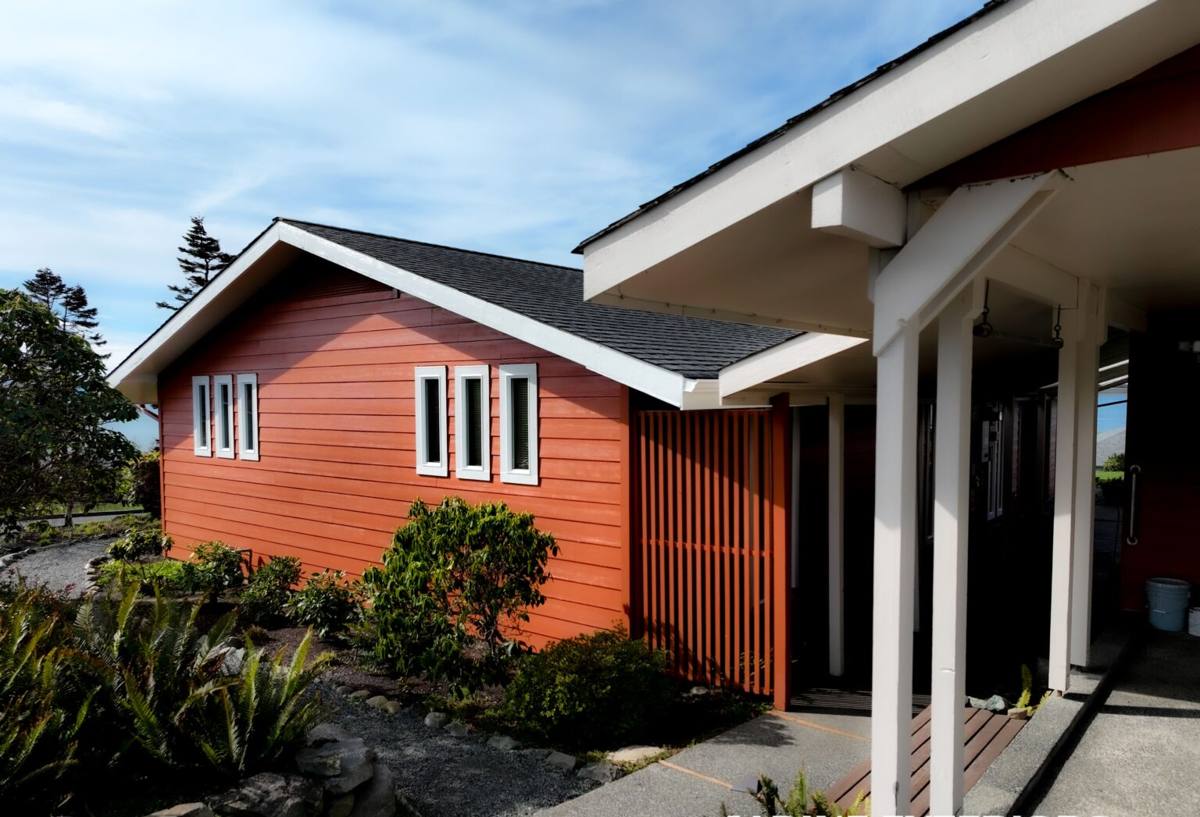
What "Energy-Efficient" Actually Means
The term gets used loosely, so it helps to know what it's really measuring. Every legitimate replacement window carries an NFRC (National Fenestration Rating Council) label with a few key numbers, and two matter most for a coastal Washington home:
- U-Factor — how well the window resists heat loss. Lower is better. This is the number that matters most for our winters, when the goal is keeping heat inside.
- SHGC (Solar Heat Gain Coefficient) — how much solar heat passes through the glass. In the Pacific Northwest we generally want a moderate SHGC rather than an extreme low number, since we do get sun exposure in summer and some passive solar warmth is welcome in winter.
Beyond the glass rating, a window's actual performance in Birch Bay depends just as much on the glazing package and how well it's sealed into the wall. Double-pane glass with a low-E coating and an argon gas fill is the baseline we recommend for most homes here. Triple-pane glass adds another layer of insulation and can be worth it on a west- or north-facing wall that takes the brunt of bay wind, but it adds weight, cost, and isn't always necessary on a well-shaded or sheltered elevation.
Warm-Edge Spacers Matter More Here Than Most Places Realize
The spacer that separates the two (or three) panes of glass affects condensation resistance at the edge of the glass — a spot where cheaper aluminum spacers conduct cold straight through and invite fogging or interior condensation during our wet months. A warm-edge spacer (foam, or a low-conductivity composite) costs little more up front and meaningfully reduces that edge condensation, which matters in a climate where the humidity rarely lets up.
Frame Materials: What Actually Holds Up on the Bay
Salt air and constant moisture are hard on some frame materials and barely bother others. Here's how the common options generally perform in a coastal Whatcom County setting:
| Frame Material | Coastal Performance | Trade-Offs |
|---|---|---|
| Vinyl | Good — won't rust or corrode, low maintenance, good insulator | Can't be repainted; quality varies a lot between manufacturers |
| Fiberglass | Very good — dimensionally stable, resists moisture and salt exposure well | Higher upfront cost than vinyl |
| Wood | Weakest in salt air/high moisture unless well-clad or meticulously maintained | Needs regular refinishing; rot risk if seals fail |
| Aluminum-clad wood | Fair to good depending on cladding quality; exposed raw aluminum hardware can corrode near salt air | Look for marine-grade or coated hardware specifically |
We don't push one material on every job. A sheltered inland-facing wall can do fine with a quality vinyl window. A wall that takes direct bay wind and salt spray is usually better served by fiberglass or a well-clad option with corrosion-resistant hardware. The right call depends on the specific exposure of that wall, not a blanket rule.
Signs Your Current Windows Are Already Costing You
Most homeowners don't replace windows until something is visibly wrong, but the energy loss usually starts well before that. Worth checking for:
- Fogging or a hazy film between the panes — the seal has failed and the gas fill is gone
- Frames that feel cold to the touch on a windy day, even with the window closed
- Visible moss, algae, or dark streaking on the sill or lower frame
- Wood trim that's soft, swollen, or shows paint failure around the window
- Drafts you can feel with a hand near the frame edge, especially during a bay wind event
- Difficulty opening, closing, or locking — a sign the frame has warped or the track has corroded
- A noticeable jump in heating costs compared to a similar-sized, similarly insulated home
Any one of these on its own isn't necessarily urgent. Several together, especially on a wall facing the water, usually means the windows are past the point where caulking and weatherstripping will fix the underlying problem.
Why Window Replacement Is a Siding Job, Not Just a Window Job
This is the part that gets skipped by installers who only do windows. A window opening isn't sealed by the window alone — it's sealed by how that window integrates with the house wrap, flashing, and siding around it. If the flashing at the head, jambs, and sill isn't done correctly, water finds its way behind the siding and into the wall cavity, and you won't see it until there's rot, staining, or a soft spot in the wall — often years later.
In a place like Birch Bay, where wind-driven rain regularly hits window walls at an angle instead of falling straight down, this detail matters more than it does in calmer inland areas. We approach window replacement as an exterior envelope job: the window, the flashing, and the siding around it all have to work together as one water-shedding system. Because we do siding work throughout Ferndale and the surrounding coastline, we're set up to handle that integration correctly rather than treating the window as an isolated swap.
Our Process, Start to Finish
Assessment
We start by looking at each window opening individually — not just the glass, but the condition of the framing, sill, and any existing water damage. Exposure matters too: a wall facing directly into bay wind gets evaluated differently than a sheltered side of the house.
Product Selection
We talk through frame material, glazing package, and where triple-pane or upgraded hardware makes sense versus where it's not worth the added cost. The goal is matching the product to the wall, not upselling the same package to every opening.
Removal and Prep
Old windows come out carefully so we can inspect the framing underneath for hidden rot or moisture damage before anything new goes in. Any compromised wood gets addressed before the new window is set — installing a new window over a damaged opening just hides the problem.
Flashing and Sealing
Proper flashing tape and sealants are installed at the sill, jambs, and head, integrated with the existing house wrap and siding so water is directed out and away from the wall assembly, not trapped behind it.
Installation and Insulation
The window is set, shimmed level and square, and the gap between the frame and the rough opening is properly insulated — not just caulked shut, which can trap moisture rather than let it escape.
Final Sealing and Cleanup
Exterior trim and caulking are finished with a sealant rated for this climate's moisture exposure, and the site is cleaned up, including hauling away the old windows.
Cost Factors to Expect
Every home and window count is different, so we don't quote a fixed price without seeing the job. In general, the biggest factors that move the price are:
| Factor | Why It Affects Cost |
|---|---|
| Frame material | Vinyl is typically the most affordable; fiberglass and clad-wood options cost more upfront |
| Glazing package | Double-pane low-E with argon is standard; triple-pane adds cost but also insulation value |
| Number and size of openings | Larger and more numerous windows increase both material and labor |
| Condition of the existing opening | Hidden rot or water damage found during removal adds repair time before the new window can go in |
| Wall exposure | Walls facing direct bay wind may warrant upgraded hardware or sealing detail, which adds modest cost |
Broadly, homeowners should expect a meaningful range between a basic vinyl replacement and a full fiberglass or clad-wood upgrade with premium glazing — we'll walk through actual numbers for your specific windows during an estimate rather than guess at a number that may not apply to your home.
Why Hiring a Crew That Already Works Birch Bay Matters
A contractor who mostly works drier, inland jobs may not think twice about wind-driven rain angles, salt exposure on hardware, or how aggressively moss establishes itself on a north-facing sill near the water. Those aren't exotic problems, but they're specific ones, and the fix is usually simple as long as someone accounts for it up front — the wrong hardware finish, a slightly under-built flashing detail, or a sealant not rated for constant moisture exposure. We work siding and window jobs throughout Ferndale and along the Whatcom County coastline, including Birch Bay, so this exposure is something we plan around rather than discover after the fact.
If your windows are drafty, fogged, or just older than you'd like them to be, we're happy to take a look and give you a straightforward, no-pressure estimate — no hard sell, just an honest read on what your home actually needs. The form below is the easiest way to get started.