 Ferndale
 Birch Bay Decks Face a Tougher Climate Than Most
Birch Bay sits right on the water, and that changes how a deck ages. Homes just a few miles inland in Ferndale deal with plenty of rain, but Birch Bay adds salt-laden air off the bay, near-constant marine humidity, and long stretches where a deck barely gets a chance to dry out between storms. That combination speeds up corrosion in fasteners, accelerates wood decay in shaded or low-airflow areas, and feeds the moss and algae growth that Whatcom County decks are known for. A deck built the same way you'd build one in a drier inland town often fails faster out here, simply because the environment is working against it year-round.
We've repaired decks throughout the Ferndale area long enough to know that "deck repair" means something different by neighborhood. In Birch Bay, the questions we ask first are about exposure to wind-driven rain, proximity to the water, how much direct sun the deck gets to dry out, and what hardware was used originally. Those answers usually explain why a deck is failing more than the age of the wood does.
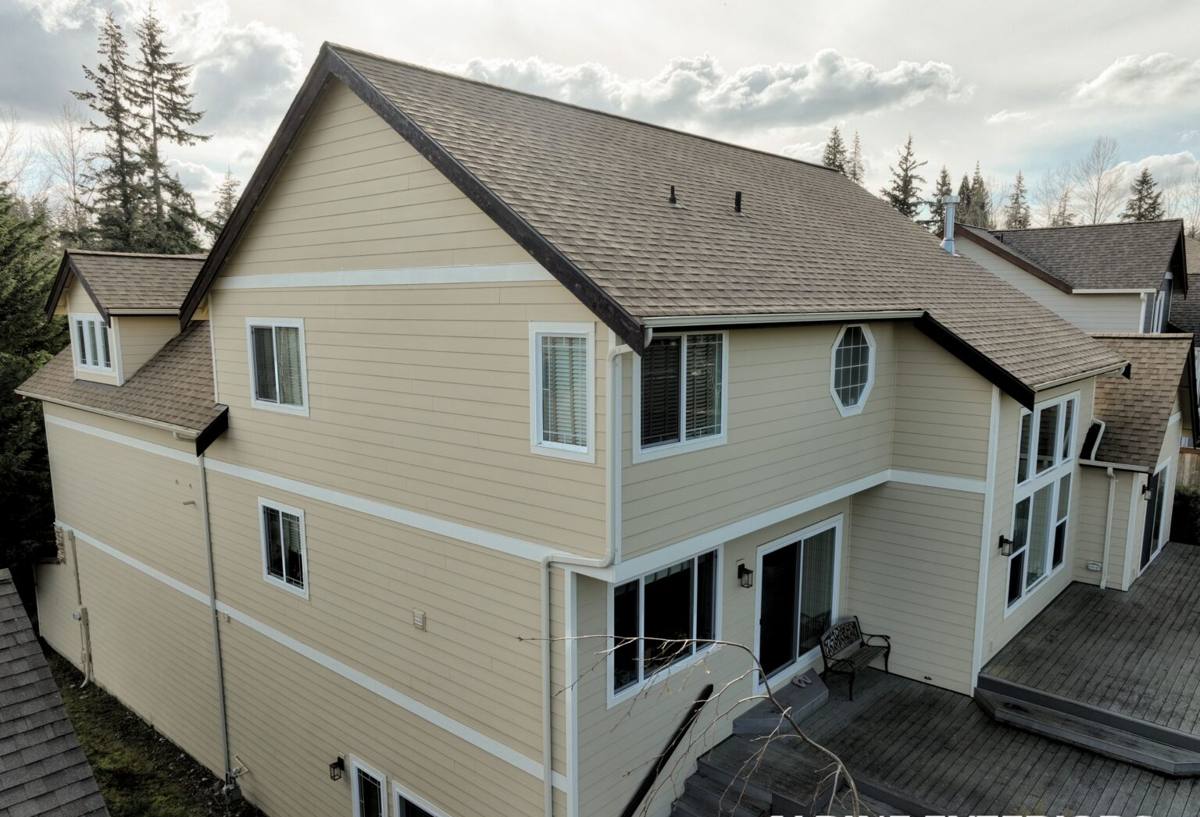
How Salt Air, Rain, and Moss Actually Damage a Deck
Salt Air and Corrosion
Salt in the air accelerates rust on anything metal — nails, screws, joist hangers, bolts, and railing hardware. Once a fastener starts rusting, it loses holding strength long before it looks obviously bad. Rust can also "bleed" into the surrounding wood, leaving dark streaks and weakening the fibers around the fastener. This is one of the most common hidden problems we find on Birch Bay decks: the decking boards look fine, but the connections underneath have quietly corroded.
Driving Rain and Trapped Moisture
Coastal storms in this part of Whatcom County often come with wind, which pushes rain sideways into areas a deck's design assumed would stay relatively dry — under railings, behind ledger boards, and into end-grain cuts. Wood absorbs water fastest through end grain, so any board that was cut on site and never resealed on the cut edge becomes a moisture entry point. Once water gets trapped between boards, under flashing, or against the house, rot sets in even if the top surface still looks okay.
Moss, Algae, and the Long Wet Season
Western Washington's moss season runs long, and a shaded deck near the water can stay damp for days after a storm passes. Moss and algae hold moisture against the wood surface, and on stairs or ramps they create a genuine slip hazard. Left alone, chronic moss growth also breaks down the wood surface over time and traps organic debris in board gaps, which speeds up rot underneath.
Signs a Deck Needs Repair — And When It Needs More Than That
Not every deck problem calls for a full rebuild, but ignoring the wrong signs turns a repair job into a replacement job. Here's how we sort it out on a typical inspection:
- Soft, spongy decking boards — usually localized rot, often repairable by replacing individual boards
- Rust streaking around fasteners — sign of corroding hardware that needs replacement before it fails
- Wobbly railings or posts — can be a simple hardware fix, or a sign of post rot at the base
- Persistent moss or dark staining on north-facing or shaded sections — usually a maintenance and drainage issue, not structural
- Gaps or separation where the deck meets the house (ledger board) — this is a structural safety issue and needs prompt attention
- Cracked or split joists, or visible sagging — usually means the substructure needs repair, not just the surface
- Nails or screws backing out across multiple boards — often points to movement in the substructure, not just old fasteners
A deck that's mostly sound with a few isolated problem areas is a good repair candidate. A deck where the ledger connection, multiple joists, and the support posts are all compromised is usually more honestly addressed with a rebuild — and we'll tell you that directly rather than patch something that isn't going to hold up through another wet season.
What a Proper Deck Repair Actually Involves
Starting Below the Surface
A repair that only replaces visible boards without checking what's underneath is a repair that doesn't last. Before we touch decking, we check the ledger board attachment (the connection to the house), the condition of the joists, the posts and footings, and the hardware holding it all together. Salt air and driving rain do most of their damage out of sight, so this step is what separates a repair that solves the problem from one that just covers it up.
Fastener and Hardware Replacement
Given how fast standard hardware corrodes in this environment, we replace compromised fasteners and connectors with hardware rated for coastal or wet-use exposure — stainless steel or heavy hot-dip galvanized, depending on the application. Using the same grade of hardware that failed the first time just resets the clock on the same problem.
Board Replacement and Matching
When individual boards need replacing, we match species, dimension, and fastening pattern as closely as possible so the repair doesn't stand out or behave differently than the surrounding deck. All cut ends get properly sealed — a detail that's easy to skip and one of the main reasons repaired sections rot again within a few years.
Drainage and Airflow Corrections
A lot of chronic moss and rot problems trace back to poor drainage or airflow under the deck rather than the decking material itself. Where it makes sense, we address board spacing, ledger flashing, and under-deck ventilation as part of the repair, since fixing the surface without fixing the moisture path just brings the homeowner back to us in a year or two.
Repair vs. Replacement: How We Help You Decide
| Factor | Leans Toward Repair | Leans Toward Replacement |
|---|---|---|
| Substructure (joists, ledger, posts) | Solid, only isolated soft spots | Widespread rot or corrosion at multiple connection points |
| Age of deck | Under 10-12 years with good original build quality | Original hardware and lumber grade were already marginal |
| Extent of damage | Contained to a few boards, stairs, or a rail section | Damage spread across most of the deck surface |
| Original construction quality | Proper flashing, spacing, and fasteners used | Signs of shortcuts — no flashing, undersized joists, mismatched hardware |
| Homeowner goals | Extend usable life a number of years | Want a material or layout change (e.g., moving to composite) |
We walk every deck with these factors in mind and give you a straight answer, including the option of a phased approach — repairing the substructure now and replacing decking boards later, for example — if that fits your budget better than doing everything at once.
Our Deck Repair Process
- On-site inspection — we check the substructure, hardware, decking surface, and drainage, and point out anything we find, good or bad
- Honest scope and estimate — a clear breakdown of what needs repair now, what can wait, and what we'd recommend replacing outright
- Repair work — structural fixes first, then hardware, then decking and railings, using materials suited to coastal exposure
- Cleanup and moss treatment — clearing debris and treating moss-prone areas so the repair starts clean, not covered in the growth that damaged it originally
- Walkthrough — we go over what was done and what maintenance will help the repair last
Maintenance That Extends a Repair's Life in Birch Bay
Given the climate, a deck repair here holds up much longer with a little seasonal attention. This isn't about selling extra services — it's genuinely what determines whether a repair lasts five years or fifteen:
- Sweep debris out of board gaps regularly so moisture and organic matter don't sit trapped
- Rinse salt residue off railings and hardware periodically, especially after storms
- Keep an eye on shaded or north-facing sections where moss returns fastest
- Reseal or restain wood decking on the manufacturer's recommended schedule, not just when it looks faded
- Check railing posts and stair stringers each fall before the wet season sets in
- Trim back vegetation that's shading the deck and slowing how fast it dries
Cost Factors for Deck Repair
Deck repair costs vary widely depending on scope, so we avoid quoting numbers before seeing the deck. In general, the biggest cost drivers are:
| Cost Driver | Why It Matters |
|---|---|
| Substructure access | Repairs requiring work under or behind the deck take more labor than surface-level fixes |
| Extent of rot or corrosion | Isolated damage is far less costly than widespread replacement of joists or hardware |
| Material match | Matching existing decking (species, width, finish) can affect material sourcing and cost |
| Hardware upgrade | Coastal-grade stainless or galvanized hardware costs more than standard fasteners but lasts longer here |
| Railing and stair code items | Bringing railings or stairs up to current safety standards may add scope |
Why Hiring a Crew That Already Works Birch Bay Matters
A contractor who mostly works drier, inland jobs may not think twice about standard hardware or skip sealing a cut end — and in a lot of the country, that's fine. It's not fine on the water in Whatcom County. We work throughout the Ferndale area, including Birch Bay, and we build every repair around what actually holds up against salt air, driving rain, and a long moss season, not what would pass in a less demanding climate. That means the right fastener grade from the start, attention to drainage and airflow, and an honest read on whether a section needs repair or replacement — instead of a patch that looks fine for one summer and fails again by the next wet season.
If your deck in Birch Bay has soft boards, rusting hardware, a wobbly rail, or persistent moss you can't get ahead of, we're happy to take a look and give you a straight assessment. Reach out for a free, no-pressure estimate using the form below.