 Ferndale
 Siding Installation Built for Sumas's Weather, Not Just Its Look
Homes in and around Sumas sit in a stretch of Whatcom County that takes real weather abuse year-round. You're close enough to the water to catch salt-laden air, far enough inland to get long, soaking rain events off the foothills, and shaded and damp enough in the wet months to grow moss on anything that holds moisture for more than a day or two. Siding here isn't just an appearance decision — it's the single largest piece of your home's weather envelope, and how it's installed matters as much as what it's made of.
We install siding for homes throughout the Ferndale area, including Sumas, and we've built our process around what actually fails on siding jobs in this specific climate: poor flashing details, caulk used as a substitute for proper water management, and panels installed tight to grade or trim with no room to shed water. A good-looking install and a correctly built install aren't always the same thing, and the difference usually doesn't show up until year three or four.
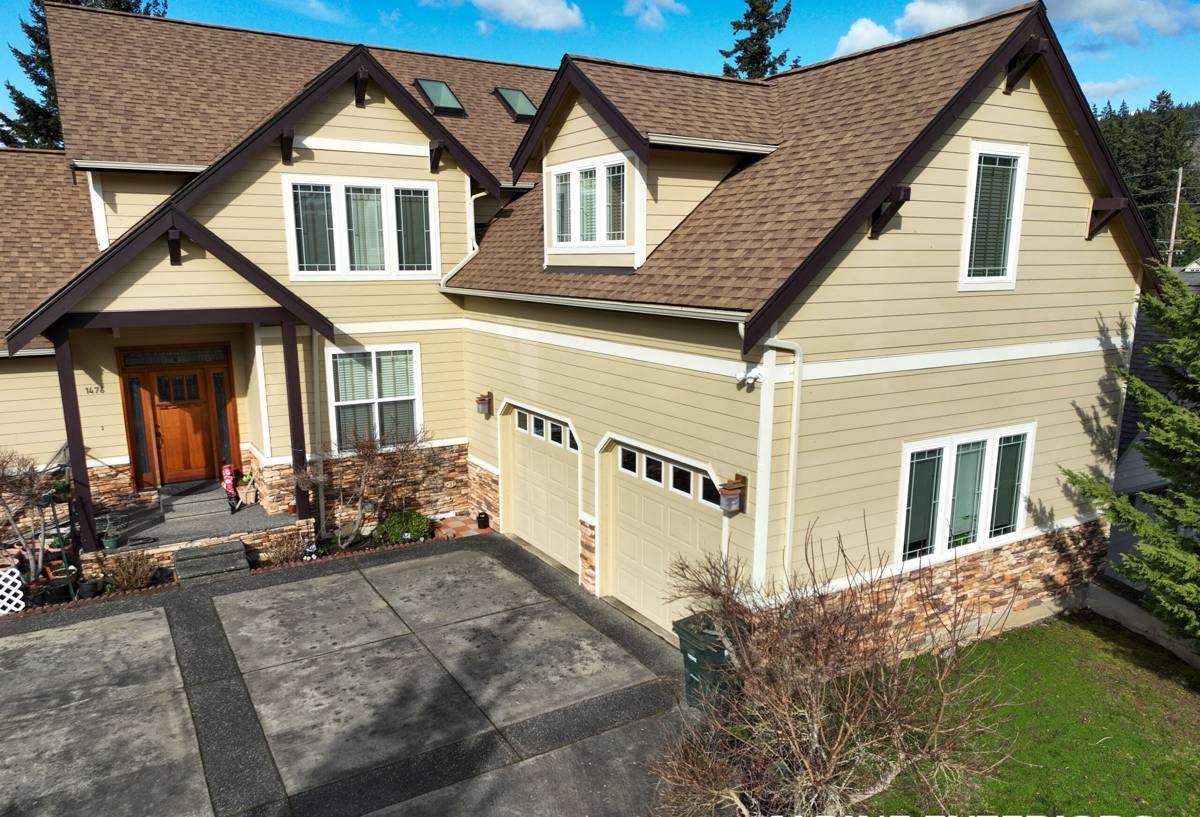
What This Climate Actually Does to Siding Over Time
Salt Air and Metal Fasteners
Even well inland from Bellingham Bay and the Strait of Georgia, moisture carries salt content that accelerates corrosion on fasteners, flashing, and trim. Cheap or mismatched fastener hardware corrodes first, staining siding and eventually loosening panels. Every fastener and flashing detail we use is chosen to hold up against this, not just against plain rainwater.
Driving Rain, Not Just Rainfall Totals
Whatcom County doesn't just get rain — it gets sideways rain during fall and winter storm systems, driven by wind off the water. That means water gets forced into laps, seams, and penetrations that would stay dry in a calmer climate. Installation details at windows, doors, and butt joints have to assume wind-driven water, not just water falling straight down.
Moss, Shade, and Standing Moisture
Tree cover and long overcast stretches keep north-facing and shaded walls damp for days after a storm passes. That's exactly the environment moss and algae need to take hold. Siding that's installed too close to grade, without enough clearance from roof lines and landscaping, or without back-ventilation stays wet longer and grows moss faster — regardless of the product on the wall.
Why We Only Install James Hardie Fiber Cement
We standardized on James Hardie siding because it's the product we trust to hold up to this specific combination of salt air, driving rain, and moss pressure without the maintenance burden or moisture risk we've seen in other materials over years of installing in this county. Hardie's fiber cement is non-combustible, dimensionally stable in swings of moisture and temperature, and finished with the ColorPlus factory coating system, which holds color far longer than field-applied paint and resists the fading and chalking that shows up on painted or primed products within a few Pacific Northwest winters.
Just as important for this region: Hardie manufactures its HZ10 product line specifically engineered for regions with cold, wet weather cycles like ours — meaning the formulation itself accounts for the freeze, thaw, and saturation pattern that's normal here. That's not marketing language we lean on lightly; it's a real reason the product performs differently than general-purpose fiber cement or wood-based alternatives in this exact climate.
We don't install vinyl, LP SmartSide, Cemplank, Allura, or primed wood siding. Each of those products has legitimate uses and reasonable manufacturers stand behind them — but for the specific stresses a Sumas-area home faces, we've made a professional decision to install one system correctly rather than several systems at a compromise. That's a standard we hold across every job, not a sales pitch on this one.
What a Correct Siding Installation Actually Involves
The siding itself is maybe half the job. The other half — the part that decides whether the installation lasts 30 years or fails at year eight — is water management behind and around the panels. On every Sumas-area installation, that includes:
- A weather-resistive barrier installed and lapped correctly, with no gaps or reverse laps that let water track behind the siding
- Rigid flashing at every window, door, and roof-to-wall transition, integrated with the barrier rather than relying on caulk alone
- Proper drainage plane or rainscreen detailing where the wall assembly calls for it, so any moisture that does get behind the siding can drain and dry
- Correct fastener placement, spacing, and depth per Hardie's installation specifications — not general carpentry judgment
- Minimum clearances from grade, roofing, decks, and horizontal surfaces so the bottom edge of the siding isn't sitting in standing water or debris
- Sealed and back-primed cut edges wherever field cuts expose raw fiber cement
Skip any one of these and the siding can still look right for a season or two. In Whatcom County's wet cycle, the gaps show up as staining, soft trim, or panels that hold moss longer than they should — usually right where a corner was cut.
Our Installation Process, Start to Finish
1. On-Site Assessment
We walk the exterior with you, looking at existing siding condition, trim, flashing, window details, and anything specific to the lot — slope, shade, tree cover, and exposure to prevailing weather. This is where we catch the site-specific issues that a phone estimate never would.
2. Tear-Off and Sheathing Check
Existing siding comes off and we inspect the sheathing underneath for rot or water damage before anything new goes up. Covering a compromised wall with new siding just hides the problem — we address it first.
3. Weather Barrier and Flashing
This is the step that matters most and shows the least once the job is done. We install and integrate the weather-resistive barrier and flashing system before a single piece of Hardie siding goes on the wall.
4. Siding Installation to Spec
Panels, fasteners, and joints are installed to James Hardie's published specifications for our climate zone — proper nailing patterns, gapping, and clearances, not shortcuts to save labor time.
5. Trim, Caulk, and Paint Touch-Up
Trim is installed and sealed at true penetration points only — caulk is a finish detail here, not a substitute for flashing. ColorPlus finish means minimal touch-up is needed, and what is needed is done with matched product.
6. Final Walkthrough
We walk the finished job with you, point out care details specific to your home's exposure, and answer questions before we consider the job done.
Installation Factors That Matter Most in This Climate
| Factor | Why It Matters in Sumas's Climate | What We Do |
|---|---|---|
| Fastener corrosion resistance | Salt-influenced air accelerates rusting of poor-grade fasteners, staining panels and loosening siding over time | Corrosion-resistant fasteners specified for coastal-influenced climates |
| Flashing at penetrations | Wind-driven rain forces water into window, door, and trim gaps that calmer climates wouldn't push water into | Rigid flashing integrated with the weather barrier at every penetration |
| Ground and grade clearance | Splash-back and standing moisture near grade feed rot and moss growth on shaded walls | Minimum clearances maintained per manufacturer spec at grade, decks, and roof lines |
| Panel product line | General-purpose siding isn't engineered for our specific freeze/soak cycle | James Hardie HZ10 line, engineered for cold and wet climate regions |
| Finish system | Field-applied paint chalks and fades faster under our overcast, moisture-heavy conditions | Factory-applied ColorPlus finish with a long-term finish warranty |
Common Mistakes We See on Older or Poorly Installed Siding
When we're called out to look at siding that's failing early, it's rarely the material's fault. It's almost always one of a short list of installation shortcuts: caulk used in place of real flashing, siding installed tight against roofing or decking with no clearance, fasteners driven too shallow or too deep, or a weather barrier that was torn, gapped, or lapped backward during install. Every one of these is invisible on the day the job is finished and expensive to fix once the wall assembly behind the siding has already taken on water damage.
This is the real argument for hiring carefully rather than hiring cheaply. Siding installation looks like a straightforward trade from the outside, but the parts that determine whether it lasts are the parts a homeowner can't see once the job wraps up.
Why a Crew That Already Works This Area Matters
A crew that regularly works Ferndale and the surrounding Whatcom County communities, including Sumas, already knows the exposure patterns that matter here — which wall orientations hold moss longest, how much clearance local drainage patterns actually require, and how the region's wind-driven storms behave differently than a textbook installation guide assumes. That local pattern recognition doesn't replace following manufacturer specs — it's what tells us where to be extra careful on a given lot before a problem ever shows up.
It also means warranty and follow-up service isn't a phone call to a call center outside the region. We stand behind our own installation work on homes we can drive to.
What to Ask Before You Hire Anyone for Siding Work
- Are they installing to the manufacturer's published specifications for our climate zone, or to general practice?
- Do they inspect and address sheathing condition before installing new siding, or just cover what's there?
- What's their approach to flashing at windows, doors, and roof lines — specifically, not in general terms?
- What warranty applies to the material, and separately, what warranty applies to their labor?
- Can they explain why they chose the specific product line they're proposing for a home in this climate?
A contractor who can answer these clearly, without hedging, is telling you something real about how they'll handle the parts of the job you won't be able to inspect yourself once it's finished.
Get a Straight Answer on Your Sumas-Area Siding Project
If your siding is showing staining, soft spots, persistent moss, or you're just planning ahead for a replacement, we're happy to take a look and give you a straight, no-pressure assessment of what your home actually needs. Use the form below to request a free estimate, and we'll walk the exterior with you and talk through the details specific to your property.